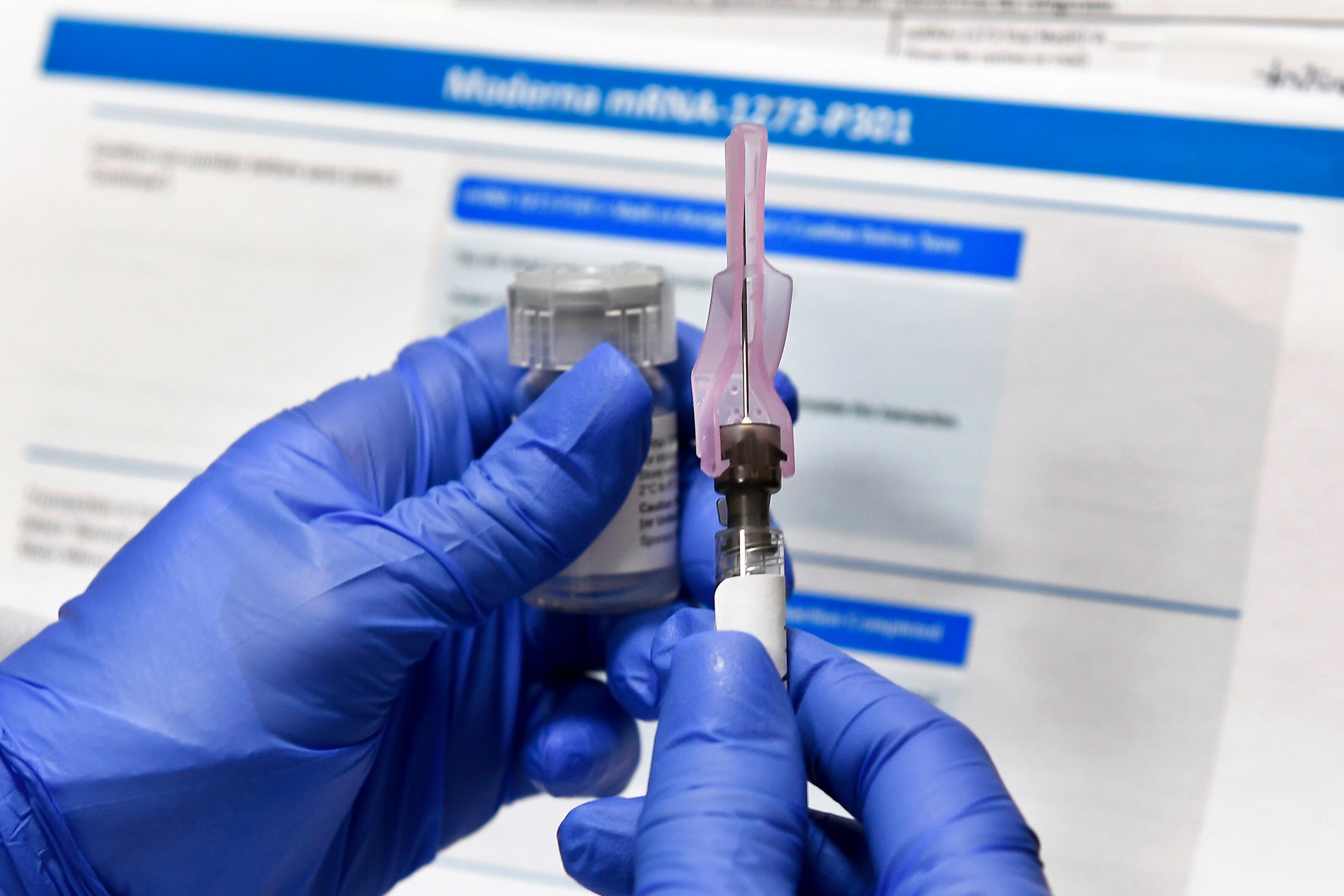
In this Monday, July 27, 2020 file photo, a nurse prepares a shot as a study of a possible COVID-19 vaccine, developed by the National Institutes of Health and Moderna Inc., gets underway in Binghamton, N.Y. On Tuesday, Sept. 8, 2020, the top executives of nine drugmakers likely to produce the first vaccines against the new coronavirus said that they will stick to the highest ethical and scientific standards in testing and manufacturing and will make the well-being of those getting vaccinated their top priority. (AP Photo/Hans Pennink)
By Linda A. Johnson
The top executives of nine drugmakers likely to produce the first vaccines against the new coronavirus signed an unprecedented pledge meant to boost public confidence in any approved vaccines.
The companies said Tuesday that they will stick to the highest ethical and scientific standards in testing and manufacturing and will make the well-being of those getting vaccinated their top priority.
The announcement comes amid worries that the U.S. Food and Drug Administration will be under political pressure to approve a vaccine before tests to prove it is safe and effective are finished.
Meanwhile, public health officials worry that if many Americans don't get the vaccine, it will be harder to reduce the spread of COVID-19.
The pledge was signed by the chief executive officers of American drugmakers Johnson & Johnson, Merck, Moderna, Novavax, and Pfizer, and European companies AstraZeneca, BioNTech, GlaxoSmithKline, and Sanofi. BioNTech has partnered with Pfizer on one of the vaccines now in the final round of human testing.
Co-founder and executive chairman of the board at Vaxxinity Lou Reese shares how the company is working to bring vaccines for chronic illnesses like heart disease and Parkinson’s to market with an eye for accessibility.
Mario Veneroso, Kingsview Asset Management Partner, weighs in on the latest economic data and whether the market is pricing in too many rate cuts for the coming year.
Apple has rolled out an update to its operating system this week with a feature called Stolen Device Protection. It makes it a lot harder for phone thieves to access key functions and settings, and users are being urged to turn it on immediately.
The U.S. economy grew at an unexpectedly brisk 3.3% annual pace from October through December as Americans showed a continued willingness to spend freely despite high interest rates and frustrating price levels.
Alan Becker, CEO and Investment Adviser Representative at Retirement Solutions Group and RSG Investments, shares his thoughts on the latest GDP data plus why he's not sold cryptocurrency as a long-term asset.
The Biden administration wants to ban another type of bank “junk fee," targeting fees that are typically charged by banks when a transaction is declined in real time.