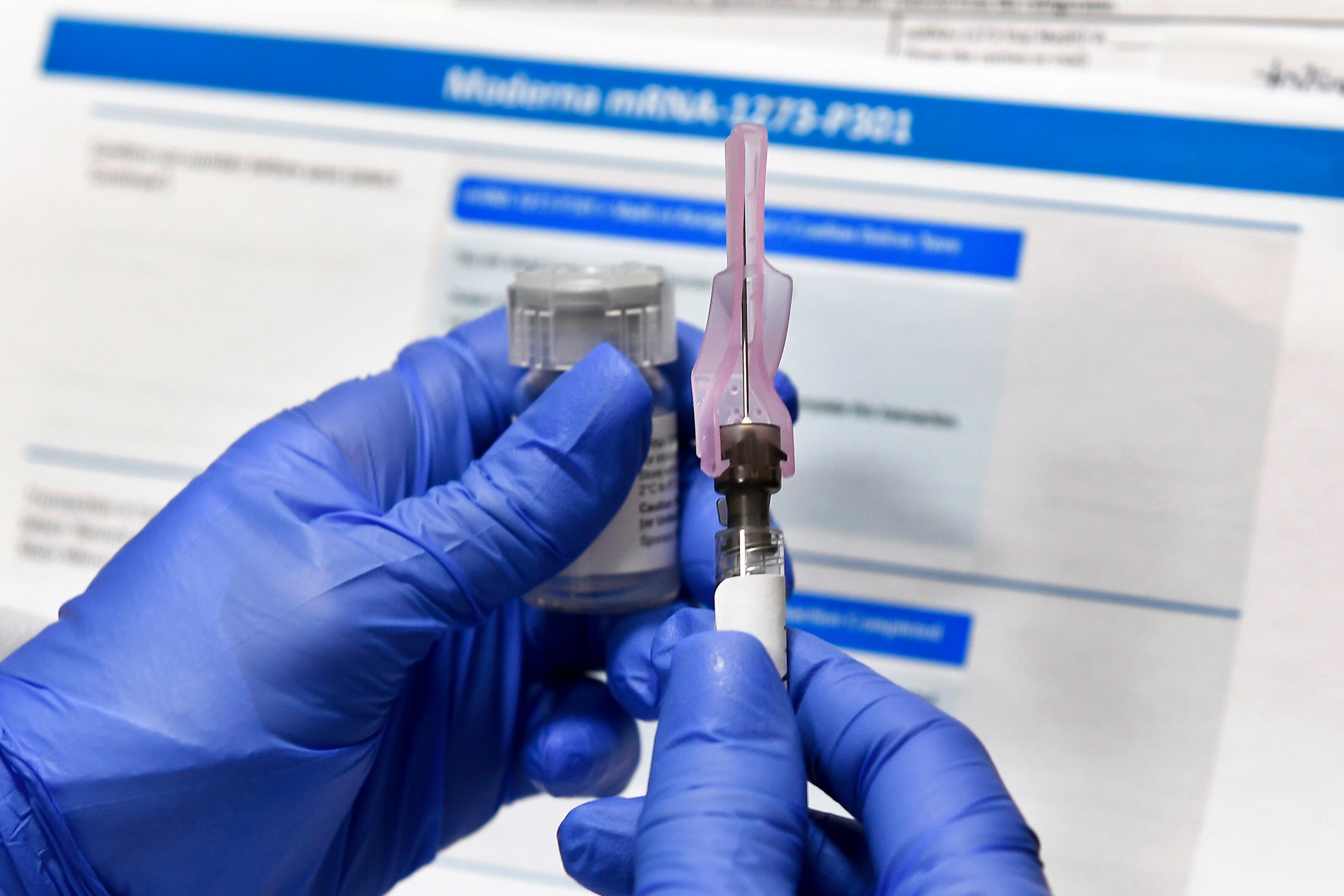
In this Monday, July 27, 2020 file photo, a nurse prepares a shot as a study of a possible COVID-19 vaccine, developed by the National Institutes of Health and Moderna Inc., gets underway in Binghamton, N.Y. On Tuesday, Sept. 8, 2020, the top executives of nine drugmakers likely to produce the first vaccines against the new coronavirus said that they will stick to the highest ethical and scientific standards in testing and manufacturing and will make the well-being of those getting vaccinated their top priority. (AP Photo/Hans Pennink)
By Linda A. Johnson
The top executives of nine drugmakers likely to produce the first vaccines against the new coronavirus signed an unprecedented pledge meant to boost public confidence in any approved vaccines.
The companies said Tuesday that they will stick to the highest ethical and scientific standards in testing and manufacturing and will make the well-being of those getting vaccinated their top priority.
The announcement comes amid worries that the U.S. Food and Drug Administration will be under political pressure to approve a vaccine before tests to prove it is safe and effective are finished.
Meanwhile, public health officials worry that if many Americans don't get the vaccine, it will be harder to reduce the spread of COVID-19.
The pledge was signed by the chief executive officers of American drugmakers Johnson & Johnson, Merck, Moderna, Novavax, and Pfizer, and European companies AstraZeneca, BioNTech, GlaxoSmithKline, and Sanofi. BioNTech has partnered with Pfizer on one of the vaccines now in the final round of human testing.
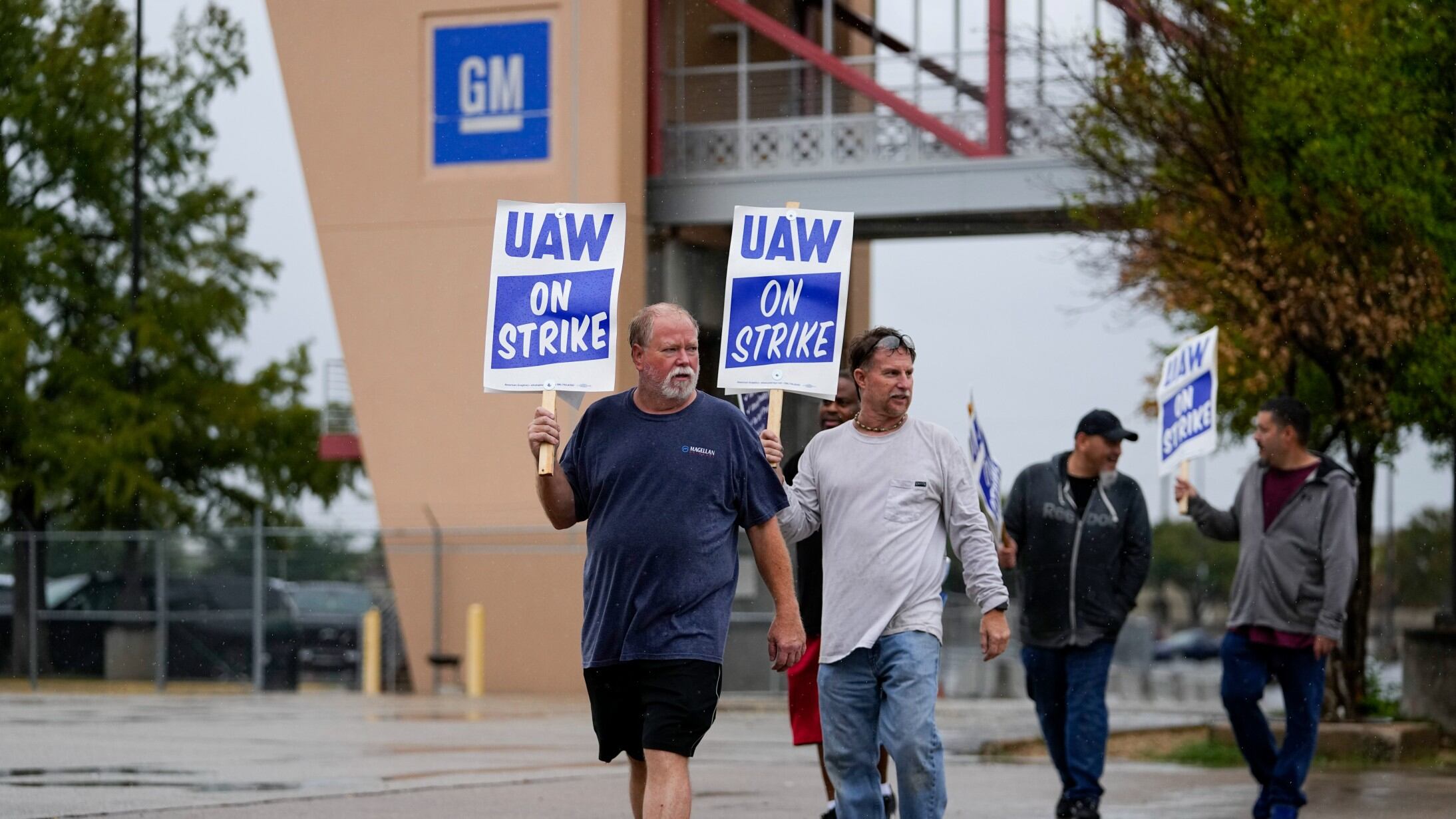
A $1 billion loss from a six-week strike did not crash GM's net income last year, which instead rose 12% — and the automaker expects improvement in 2024, too.
Accrue CEO and founder Michael Hershfield explains why Americans' credit card delinquencies are on the rise, advice on what can help, and the key difference between Boomers and Gen Z when it comes to money.
Senior Economist at Morning Consult Kayla Bruun shares thoughts on what to expect from the Fed's January meeting and where monetary policy is headed, as well as how consumers are faring.
Former Medtronic CEO and author of 'True North' Bill George explains the steps Boeing leadership must take to regain client and consumer trust after 737 Max 9 production was stopped.
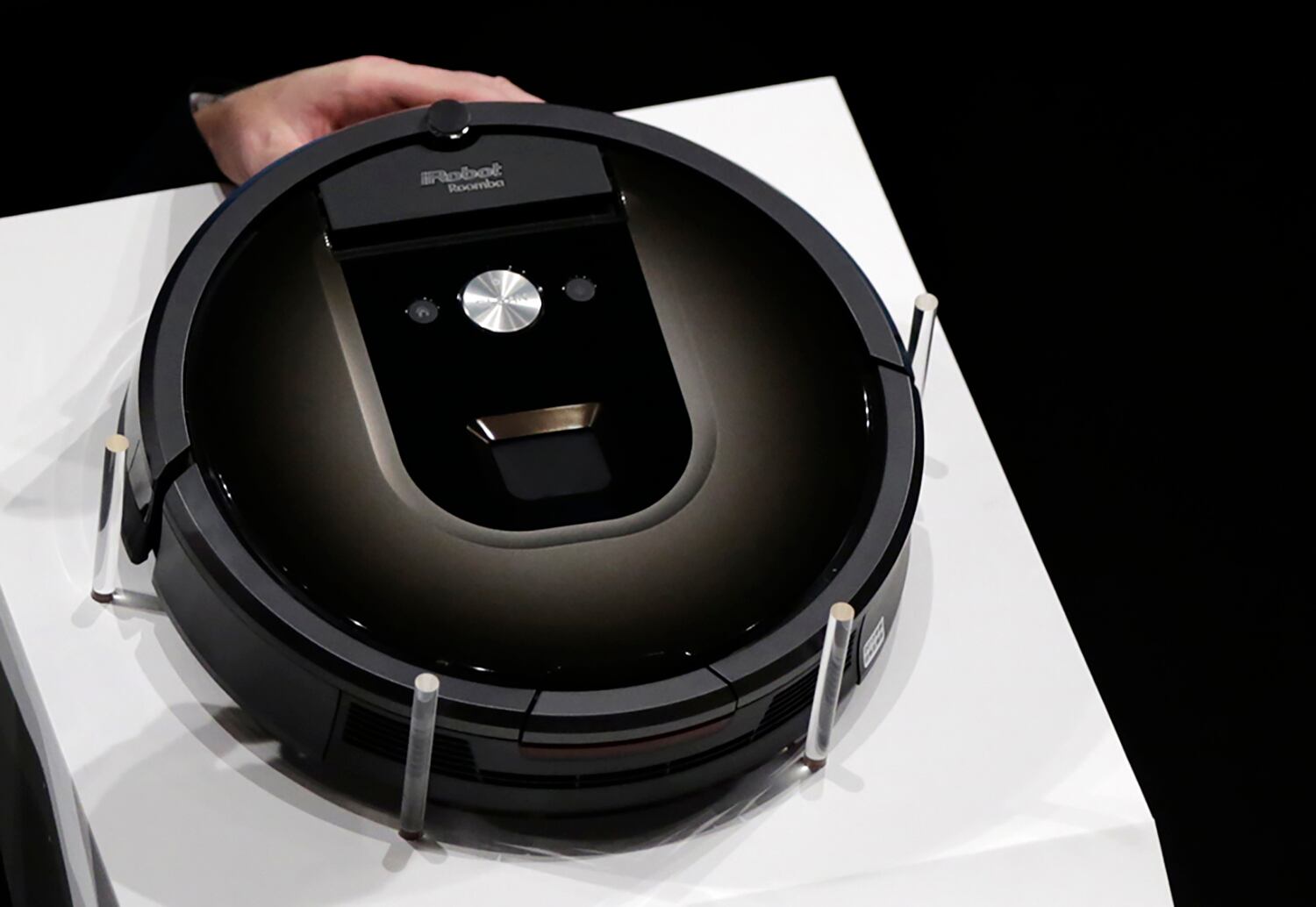
Amazon blamed "regulatory hurdles" for calling off its proposed acquisition of robot vacuum maker iRobot. Not even a Roomba could clean up the deal's antitrust scrutiny.
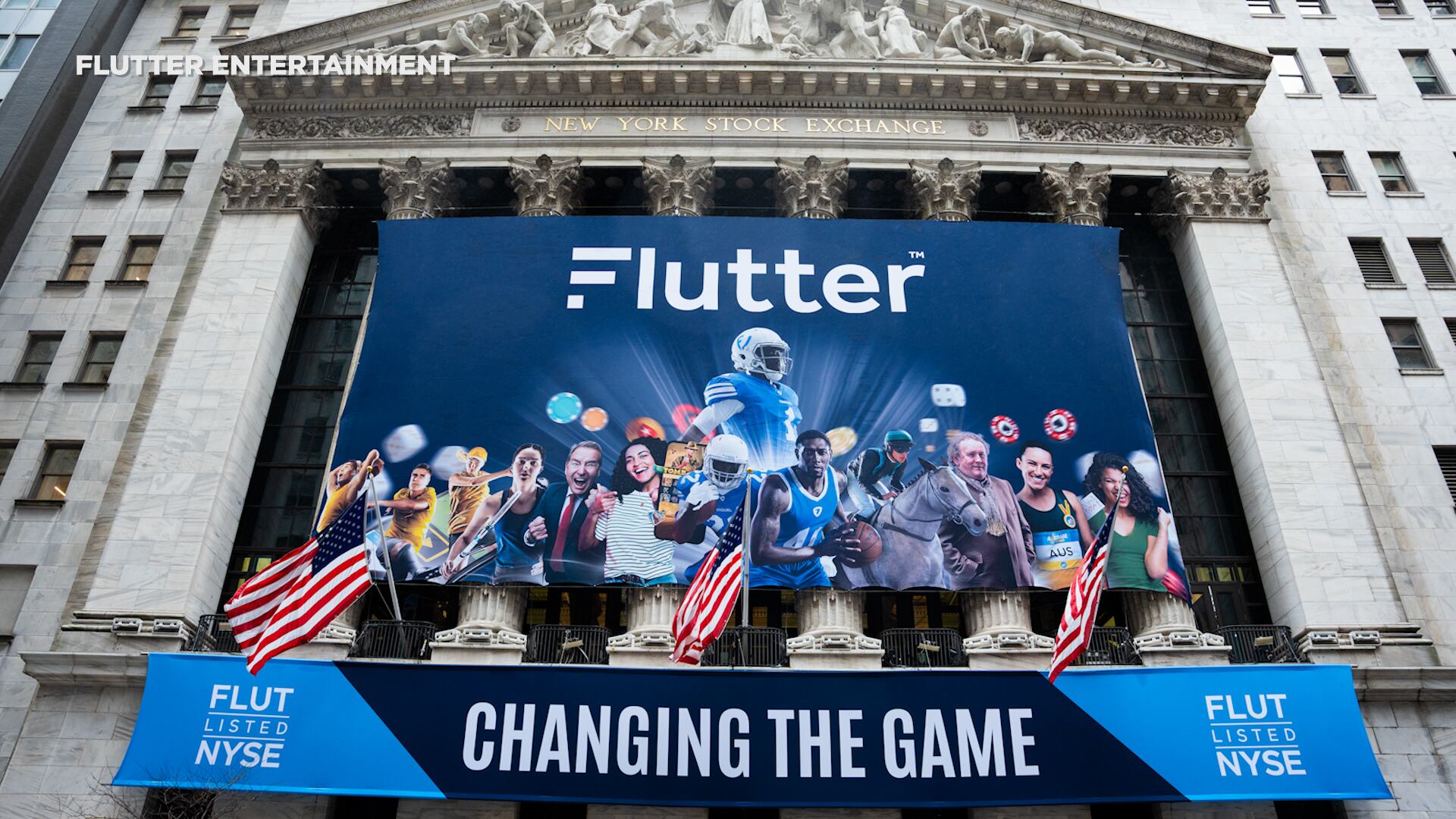
To celebrate Flutter Entertainment's debut on the NYSE, FanDuel CEO Amy Howe shares her thoughts on the company's plans for growth, the future of online sportsbetting, and Super Bowl Sunday.
Investopedia's Caleb Silver shares thoughts on the upcoming Fed meeting, why individual investors are still slightly skeptical, and what he's looking for from mega cap tech earnings.
Season's greetings! Tax season, that is. January 29 is the first day you can file your tax return. We walk you through each step — plus a checklist you can download.
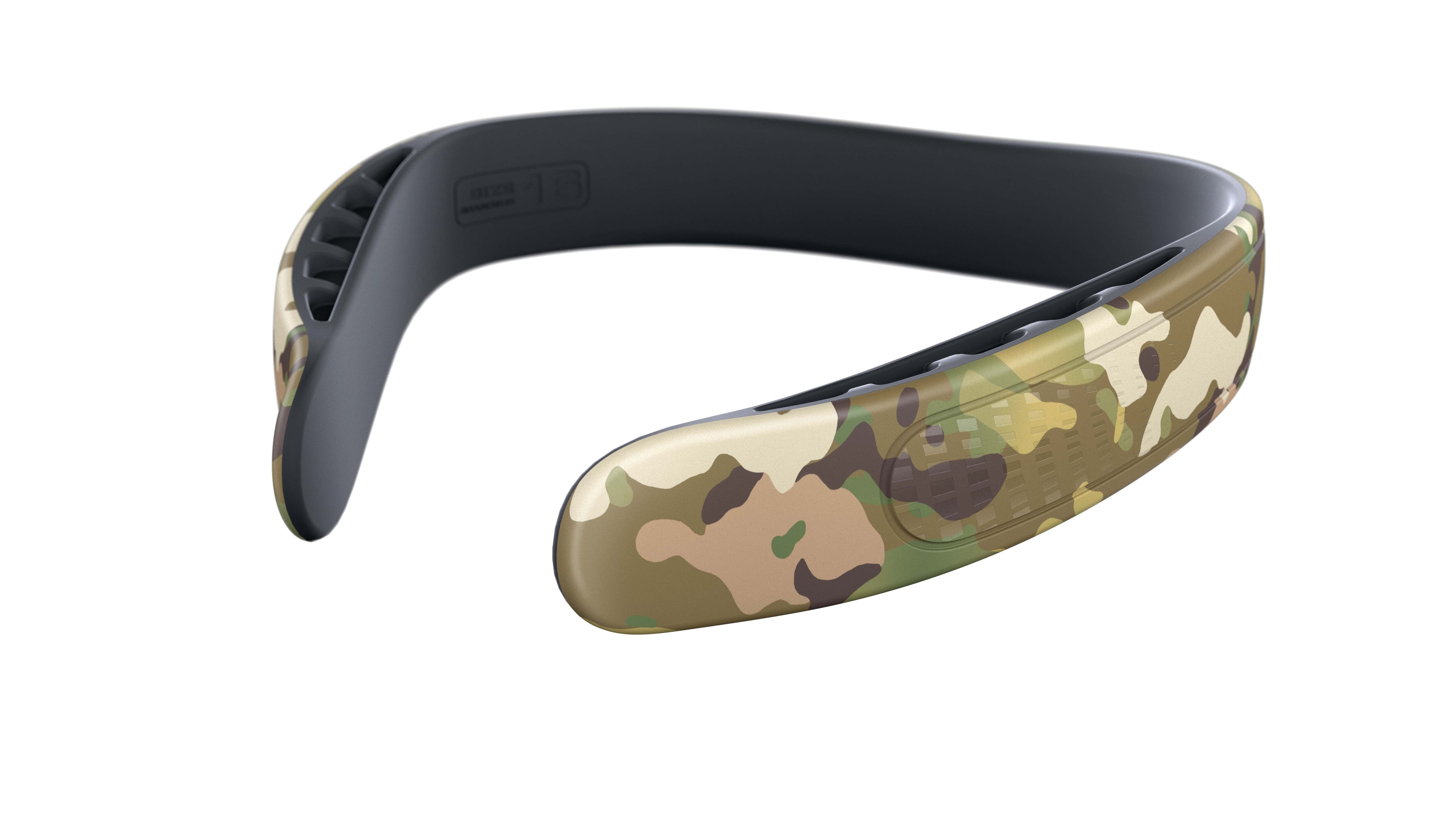
The Q-Collar helps protect athletes from impact-related concussions. Now, the U.S. Army is evaluating if the device could help reduce traumatic brain injury cased by blast weapons.