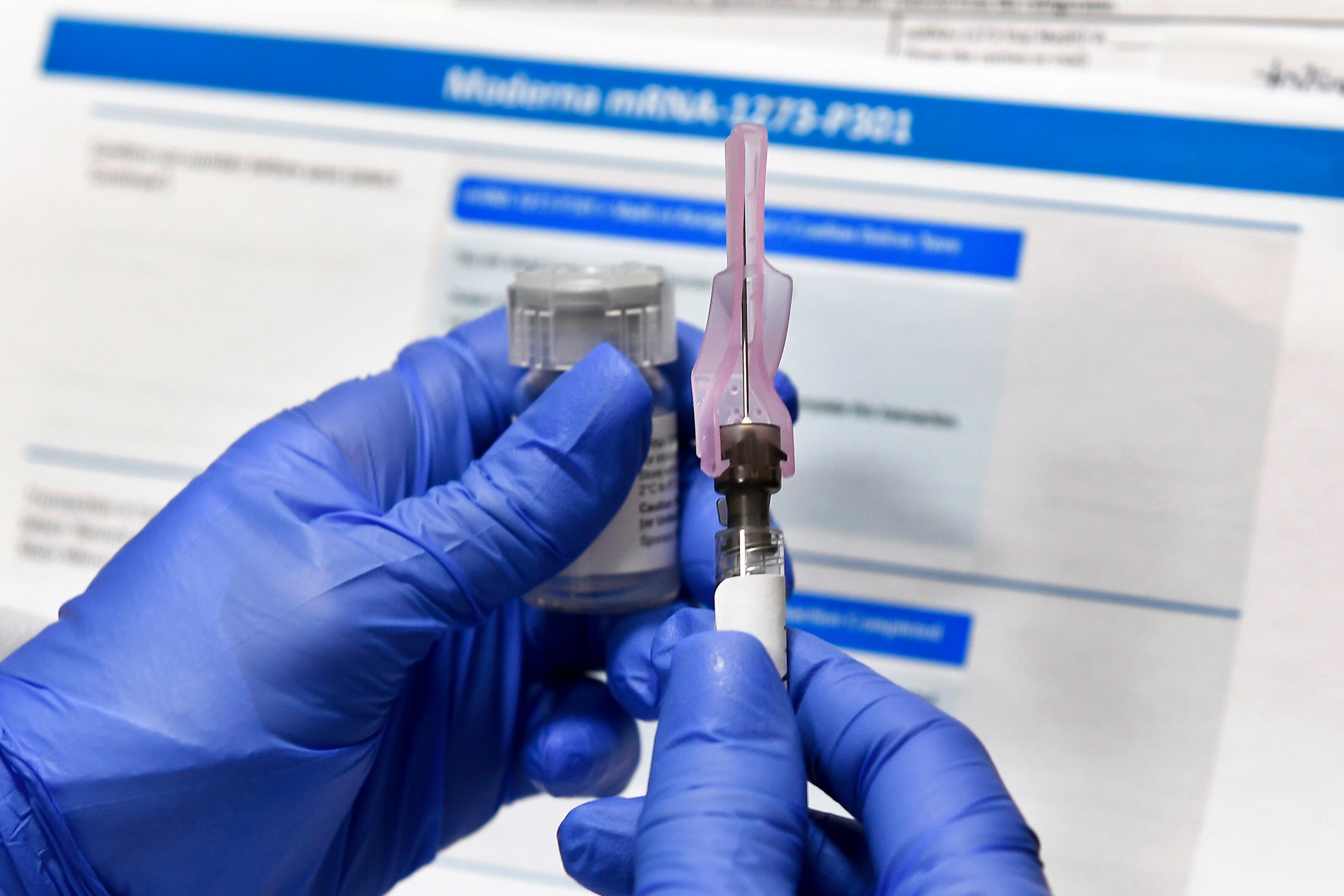
In this Monday, July 27, 2020 file photo, a nurse prepares a shot as a study of a possible COVID-19 vaccine, developed by the National Institutes of Health and Moderna Inc., gets underway in Binghamton, N.Y. On Tuesday, Sept. 8, 2020, the top executives of nine drugmakers likely to produce the first vaccines against the new coronavirus said that they will stick to the highest ethical and scientific standards in testing and manufacturing and will make the well-being of those getting vaccinated their top priority. (AP Photo/Hans Pennink)
By Linda A. Johnson
The top executives of nine drugmakers likely to produce the first vaccines against the new coronavirus signed an unprecedented pledge meant to boost public confidence in any approved vaccines.
The companies said Tuesday that they will stick to the highest ethical and scientific standards in testing and manufacturing and will make the well-being of those getting vaccinated their top priority.
The announcement comes amid worries that the U.S. Food and Drug Administration will be under political pressure to approve a vaccine before tests to prove it is safe and effective are finished.
Meanwhile, public health officials worry that if many Americans don't get the vaccine, it will be harder to reduce the spread of COVID-19.
The pledge was signed by the chief executive officers of American drugmakers Johnson & Johnson, Merck, Moderna, Novavax, and Pfizer, and European companies AstraZeneca, BioNTech, GlaxoSmithKline, and Sanofi. BioNTech has partnered with Pfizer on one of the vaccines now in the final round of human testing.
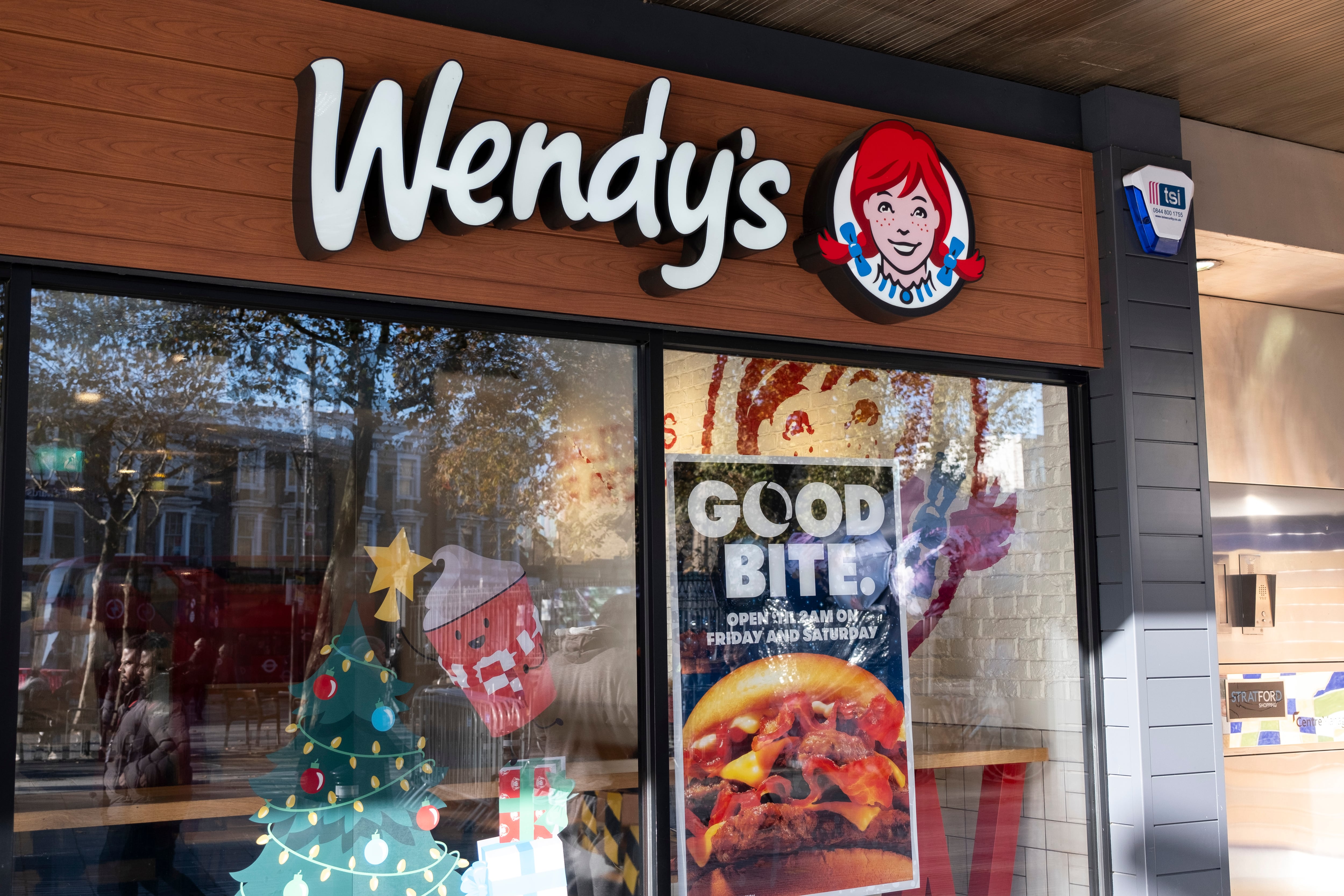
Wendy's announced they are testing out fluctuating prices throughout the day for certain products based on demand. Who will groan the most: lunch-breakers, dinner drivers or late-night goblins?
Shubha Dasgupta, CEO of Pineapple Financial, discusses incorporating artificial intelligence with its newly announced ‘Maui’ tool, plus plans for expansion.
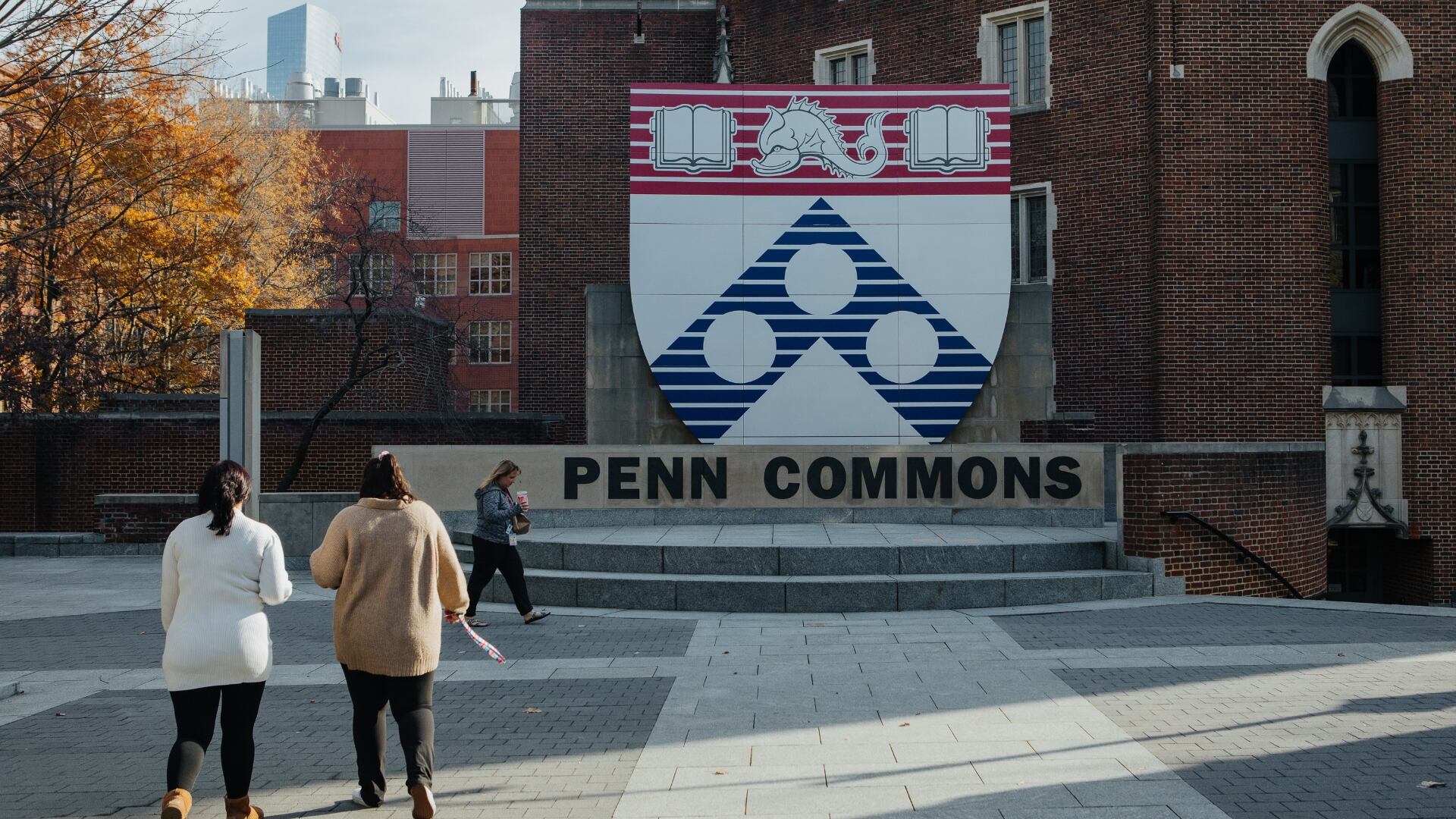
Chair of Penn Engineering’s Department of Computer and Information Science Zachary Ives shares how the department is building its artificial intelligence degree program.
Frances Stacy, Optimal Capital Director of Strategy, breaks down why the latest data indicates the economy may be struggling more than expected, plus some sectors she’s watching.
The Federal Trade Commission is suing to block a proposed merger between the two grocery stores. The FTC says the $24.6 billion deal would eliminate competition and lead to higher prices for millions of Americans.
Terecircuits CEO Wayne Rickard explains some of the other companies set to benefit from the Nvidia-led chipmaking rally, including manufacturing and toolmaking companies.
Axios reporter Erin Doherty breaks down the results from the South Carolina primary as former President Trump gets closer to winning the GOP nomination.