By Robert Burns, Eric Tucker, and Eileen Putman
Colin Powell, the boundary-breaking military leader and diplomat whose sterling reputation of service to Republican and Democratic presidents was stained by his faulty claims to justify the 2003 U.S. war in Iraq, died Monday of COVID-19 complications. He was 84.
A veteran of the Vietnam War, Powell spent 35 years in the Army and rose to the rank of four-star general before becoming the first Black chairman of the Joint Chiefs of Staff. His oversight of the U.S. invasion of Kuwait to oust the Iraqi army in 1991 made him a household name, prompting speculation for nearly a decade that he might run for president, a course he ultimately decided against.
Powell instead joined George W. Bush's administration in 2001 as secretary of state, the first Black person to represent the U.S. government on the world stage. His tenure, however, was marred by his 2003 address to the U.N. Security Council in which he cited faulty information to claim that Saddam Hussein had secretly stashed weapons of mass destruction. Such weapons never materialized, and though the Iraqi leader was removed, the war devolved into years of military and humanitarian losses.
In announcing Powell's death, his family said he had been fully vaccinated against the coronavirus. Peggy Cifrino, Powell’s longtime aide, said he had also been treated over the past few years for multiple myeloma, a blood cancer that impairs the body’s ability to fight infection. Studies have shown that those cancer patients don’t get as much protection from the COVID-19 vaccines as healthier people.
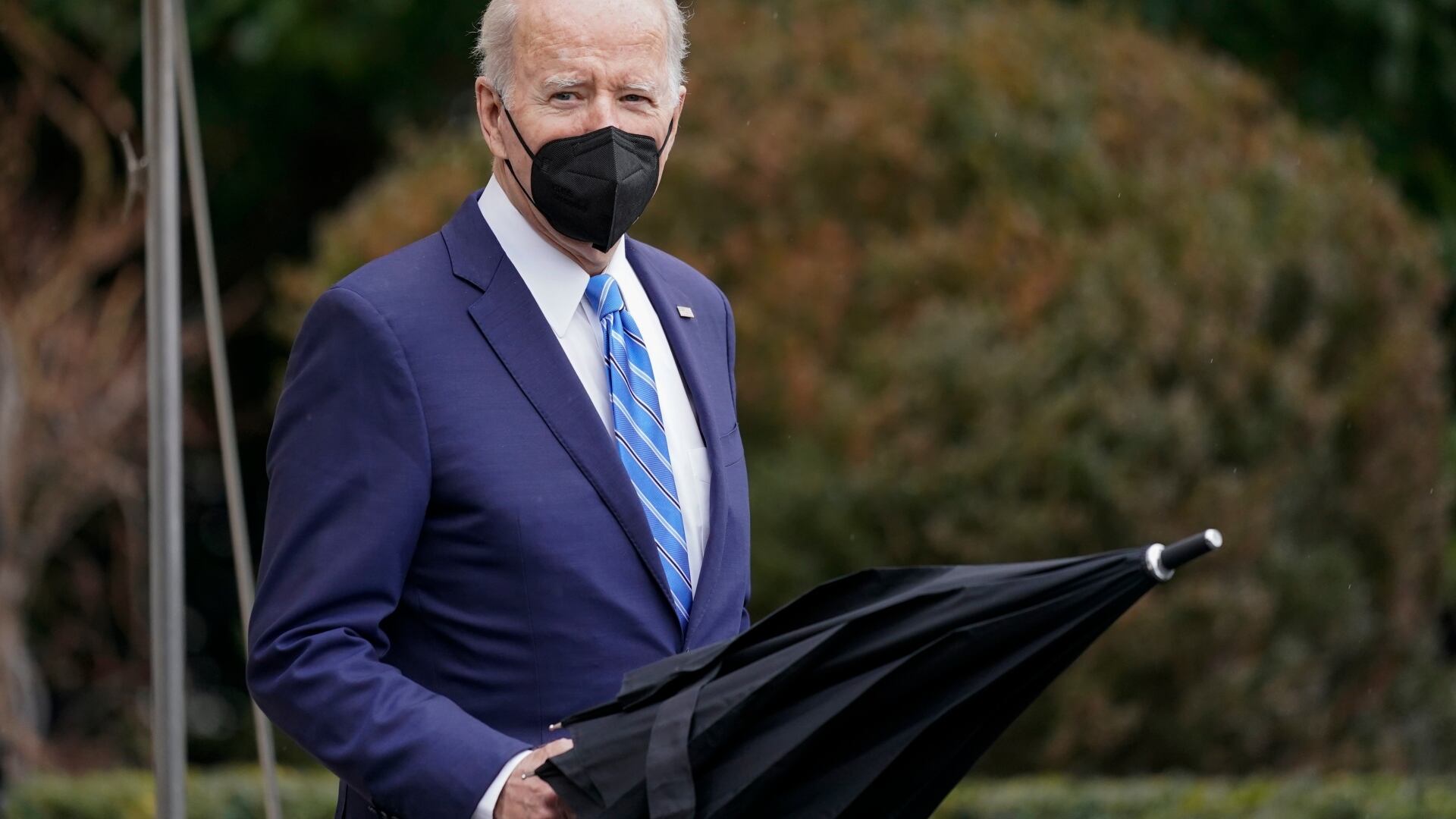
At the White House, President Joe Biden said Powell “embodied the highest ideals of both warrior and diplomat.”
Noting Powell's rise from a childhood in a fraying New York City neighborhood, Biden said, “He believed in the promise of America because he lived it. And he devoted much of his life to making that promise a reality for so many others.”
Flags were ordered lowered at government buildings, including the White House, Pentagon and State Department.
Powell's time as secretary of state was largely defined by the aftermath of the Sept. 11, 2001, terror attacks. He was the first American official to publicly blame Osama bin Laden's al-Qaida network. He made a lightning trip to Pakistan to demand that then-Pakistani President Pervez Musharraf cooperate with the United States in going after the Afghanistan-based group, which also had a presence in Pakistan, where bin Laden was later killed.
But as Washington's push for war in Iraq deepened, Powell sometimes found himself at odds with other key figures in the Bush administration, including Vice President Dick Cheney and Defense Secretary Donald Rumsfeld. Rumsfeld also died this year.
Powell's State Department was dubious of the military and intelligence communities’ conviction that Saddam possessed or was developing weapons of mass destruction. But he presented the administration’s case that Saddam posed a major regional and global threat in a strong speech to the U.N. Security Council in February 2003. The following month, Bush gave the go-ahead for the invasion.
The U.N. speech, replete with Powell's display of a vial of what he said could have been a biological weapon, was seen as a low point in his career, although he had removed some elements from the remarks that he deemed to have been based on poor intelligence assessments.
The U.S. overthrow of Saddam ended the rule of a brutal dictator. But the power vacuum and lawlessness that followed unleashed years of sectarian fighting and chaos that killed countless Iraqi civilians, sparked a lengthy insurgency, and unintentionally tilted the balance of power in the Middle East toward a U.S. rival, Iran. No Iraqi weapons of mass destruction were ever found.
Still, Powell maintained in a 2012 interview with The Associated Press that on balance, the U.S. succeeded in Iraq.
“I think we had a lot of successes,” he said. “Iraq’s terrible dictator is gone.”
Saddam was captured by U.S. forces while hiding out in northern Iraq in December 2003 and later executed by the Iraqi government. But the war dragged on. President Barack Obama pulled U.S. troops out of Iraq in 2011, but he sent advisers back in 2014 after the Islamic State group swept into the country from Syria and captured large swaths of territory.
Bush said Monday that he and former first lady Laura Bush were “deeply saddened” by Powell’s death.
“He was a great public servant” and “widely respected at home and abroad,” Bush said. “And most important, Colin was a family man and a friend. Laura and I send Alma and their children our sincere condolences as they remember the life of a great man.”
Condoleezza Rice, Powell’s successor at State and the department’s first black female secretary, praised him as “a trusted colleague and a dear friend through some very challenging times.”
Defense Secretary Lloyd Austin, a retired Army general and the first Black Pentagon chief, said the news of Powell’s death left “a hole in my heart.”
“The world lost one of the greatest leaders that we have ever witnessed,” Austin said while traveling in Europe.
Vice President Kamala Harris, the highest ranking black woman in U.S. history, also noted Powell's racial firsts.
“Every step of the way, when he filled those roles, he was by everything that he did and the way he did it, inspiring so many people,” she said. "Young servicemembers and others not only within the military, but in our nation and around the globe, took notice of what his accomplishments meant as a reflection of who we are as a nation.”
No child of privilege, Powell often framed his biography as an American success story.
“Mine is the story of a black kid of no early promise from an immigrant family of limited means who was raised in the South Bronx,” he wrote in his 1995 autobiography “My American Journey.”
It's an experience he was fond of recalling later in his life. When he appeared at the United Nations, even during his Iraq speech, he often reminisced on his childhood in New York City, where he grew up the child of Jamaican immigrants and got one of his first jobs at the Pepsi-Cola bottling plant directly across the East River from the U.N. headquarters.
Powell's path toward the military began at City College, where discovered the ROTC. When he put on his first uniform, he wrote, “I liked what I saw."
He joined the Army and in 1962 he was one of more than 16,000 military advisers sent to South Vietnam by President John F. Kennedy. A series of promotions led to the Pentagon and assignment as a military assistant to Secretary of Defense Caspar Weinberger, who became his unofficial sponsor. He later became commander of the Army’s 5th Corps in Germany and later was national security assistant to President Ronald Reagan.
During his term as Joint Chiefs chairman, his approach to war became known as the Powell Doctrine, which held that the United States should only commit forces in a conflict if it has clear and achievable objectives with public support, sufficient firepower and a strategy for ending the war.
Though he gained national prominence under Republican presidents, Powell ultimately moved away from the party.
He endorsed Democrats in the past four presidential elections, starting with Obama. He emerged as a vocal Donald Trump critic in recent years, describing Trump as “a national disgrace” who should have been removed from office through impeachment.
___
AP Writer Steve Peoples and AP Medical Writer Lauran Neergaard contributed to this report.
Updated on October 18, 2021, at 4:10 p.m. ET with additional details.