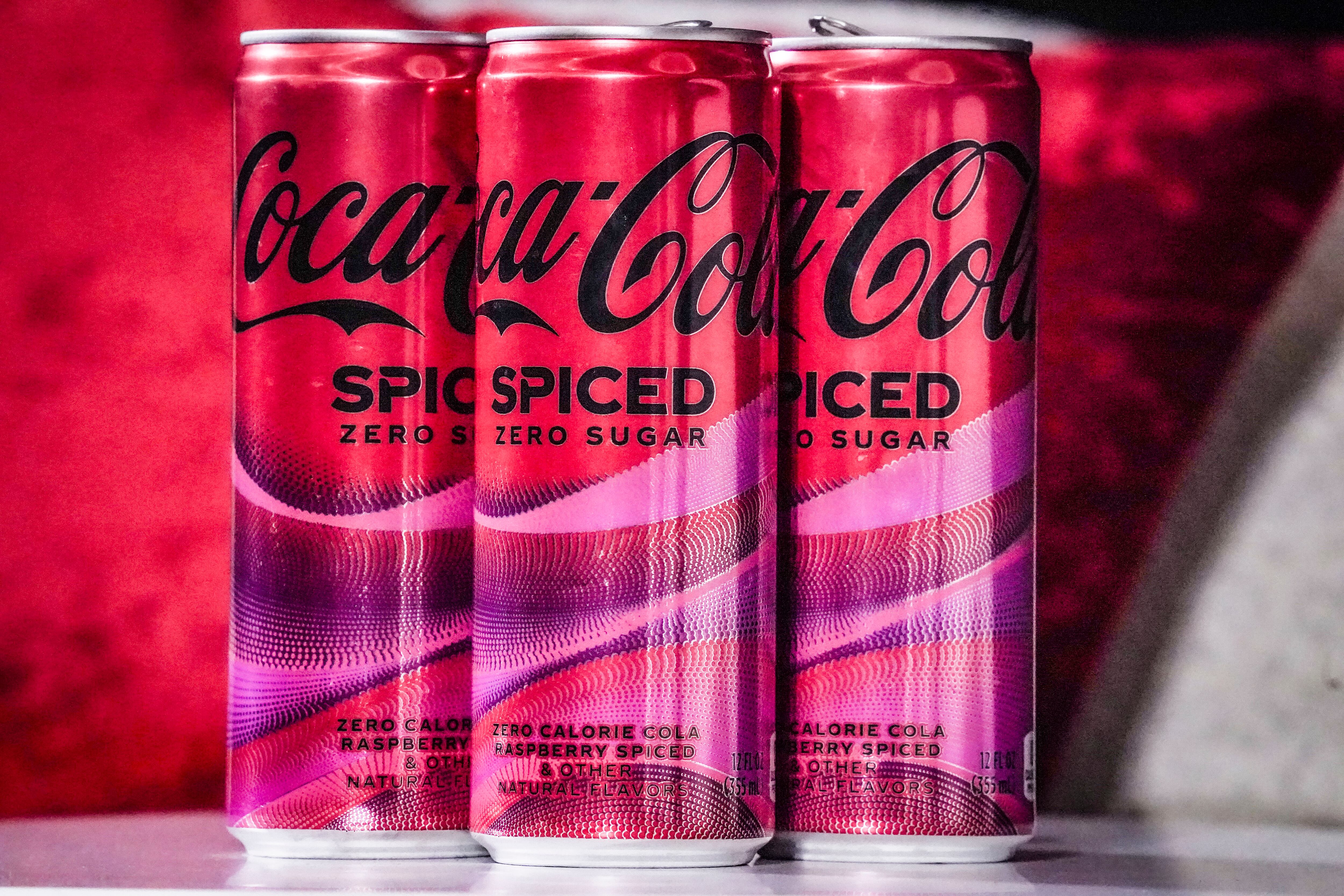
From Flamin’ Hot Cheetos to Sweet Heat Starburst, America’s snacks are getting spicier. Now, Coca-Cola wants in on the trend.

On Wednesday, the Atlanta beverage giant introduced Coca-Cola Spiced, the first new permanent offering to its North American portfolio in three years. Coca-Cola Spiced and Coca-Cola Spiced Zero Sugar will go on sale in the U.S. and Canada on Feb. 19.

Coca-Cola Spiced doesn’t have a lot of heat. The main flavor drinkers will notice is a hint of raspberry. Coke won’t name the spices it added – it guards its recipes closely – but they taste like amped-up versions of the spices in regular Coke.

“If you go to the aisles, you’ll see the amount of spiciness has gone up because consumers’ taste palettes have evolved. We realized that could be an opportunity for us,” Coca-Cola’s North American marketing chief Shakir Moin told The Associated Press in a recent interview. “Can we dial up something which is already part of our formula and bring in a taste profile that is interesting, unique, and brings in the next generation of consumers?”

Coke has been exploring ways to get younger drinkers excited about its signature cola. In 2022, it launched Coca-Cola Creations, a series of eight limited-edition Coke flavors in colorful cans and bottles. Coke experimented with adding hints of coconut, strawberry, watermelon and other flavors to the drinks.

The latest example, Coca-Cola Happy Tears, contains salt and mineral flavors. It will be sold only through TikTok on Feb. 17 in the U.S. and Great Britain.

Moin said customer research for Coca-Cola Creations fed into the development of Coca-Cola Spiced. It usually takes Coca-Cola at least a year to develop a new beverage, he said, but Coca-Cola Spiced took just seven weeks. Moin said the company hopes to replicate that speed with future new products.

“Consumers are moving faster. The market is moving forward faster. We’ve got to be faster than the speed of the market,” he said.


Share:
More In Business
OpenAI names Slack CEO Dresser as first chief of revenue
OpenAI has appointed Slack CEO Denise Dresser as its first chief of revenue. Dresser will oversee global revenue strategy and help businesses integrate AI into daily operations. OpenAI CEO Sam Altman recently emphasized improving ChatGPT, which now has over 800 million weekly users. Despite its success, OpenAI faces competition from companies like Google and concerns about profitability. The company earns money from premium ChatGPT subscriptions but hasn't ventured into advertising. Altman had recently announced delays in developing new products like AI agents and a personal assistant.
Trump approves sale of more advanced Nvidia computer chips used in AI to China
President Donald Trump says he will allow Nvidia to sell its H200 computer chip used in the development of artificial intelligence to “approved customers” in China. Trump said Monday on his social media site that he had informed China’s leader Xi Jinping and “President Xi responded positively!” There had been concerns about allowing advanced computer chips into China as it could help them to compete against the U.S. in building out AI capabilities. But there has also been a desire to develop the AI ecosystem with American companies such as chipmaker Nvidia.
Trump says Netflix deal to buy Warner Bros. ‘could be a problem’ because of size of market share
President Donald Trump says a deal struck by Netflix last week to buy Warner Bros. Discovery “could be a problem” because of the size of the combined market share. The Republican president says he will be involved in the decision about whether federal regulators should approve the deal. Trump commented Sunday when he was asked about the deal as he walked the red carpet at the Kennedy Center Honors. The $72 billion deal would bring together two of the biggest players in television and film and potentially reshape the entertainment industry.
What to know about changes to Disney parks’ disability policies
Disney's changes to a program for disabled visitors are facing challenges in federal court and through a shareholder proposal. The Disability Access Service program, which allows disabled visitors to skip long lines, was overhauled last year. Disney now mostly limits the program to those with developmental disabilities like autism who have difficulty waiting in lines. The changes have sparked criticism from some disability advocates. A shareholder proposal submitted by disability advocates calls for an independent review of Disney's disability policies. Disney plans to block this proposal, claiming it's misleading. It's the latest struggle by Disney to accommodate disabled visitors while stopping past abuses by some theme park guests.
Load More

