*By Christian Smith*
If you didn't find this weekend's dramatic climate report unsettling, read it again.
Andrew Light, distinguished senior fellow at the World Resources Institute and co-author of the report, said on Cheddar Monday that the effects of climate change are imminent ー unless the federal government acts now.
"It is threatening almost every sector of the economy ー of course more so those sectors that are dependent on natural resources," Light said.
"We should start moving with the most effective and efficient policies that can begin switching our energy sources in earnest from fossil-fuel based to non-fossil fuel based, and also begin to lead the entire country on measures towards adaptation and resilience."
The Trump administration released its dire findings on the Friday after Thanksgiving, timing many have called suspicious ー among them, Politico reporter Matt Daily, who thinks officials meant to bury the news on a holiday weekend.
"I don't know if burying it on Black Friday was a very successful tactic," Daily told Cheddar, noting that the attempt to downplay the news only handed environmental advocates a new line of criticism against the administration.
The [National Climate Assessment](https://nca2018.globalchange.gov/), which is required by federal law to be published every four years, found that climate change will cost the American economy hundreds of billions of dollars by the end of the century and will endanger thousands of American lives each year. The White House issued a [statement](https://www.nytimes.com/2018/11/25/climate/trump-climate-report.html) saying that the report, which was instituted under the Obama administration, was "largely based on the most extreme scenario” of global warming.
Daily disagreed.
"That's a bit of a stretch, to put it mildly," Daily said. "The report offers quite a wide range of what's possibly coming our way by the end of the century."
Light noted that some states and cities were already moving in the right direction ー but he added the federal government needs to take the lead.
"The U.S. federal government is not leading even though we are seeing states and cities do quite a lot," Light said.
The U.S. Senate Committee on Banking, Housing and Urban Affairs introduced legislation Tuesday requiring banks to maintain “digital dollar wallets” for coronavirus stimulus payments to consumers.
New York Governor Andrew Cuomo Wednesday afternoon said the greatest strain on the state’s health care system from the coronavirus could come in approximately 21 days, while also providing early indications about steps the state might eventually take to restart the economy.
One of the most influential industries on Capitol Hill was left out of the package that advanced early Wednesday, an apparent setback for a sector that had expected to easily secure $3 billion to fund the purchase of oil to fill the Strategic Petroleum Reserve (SPR).
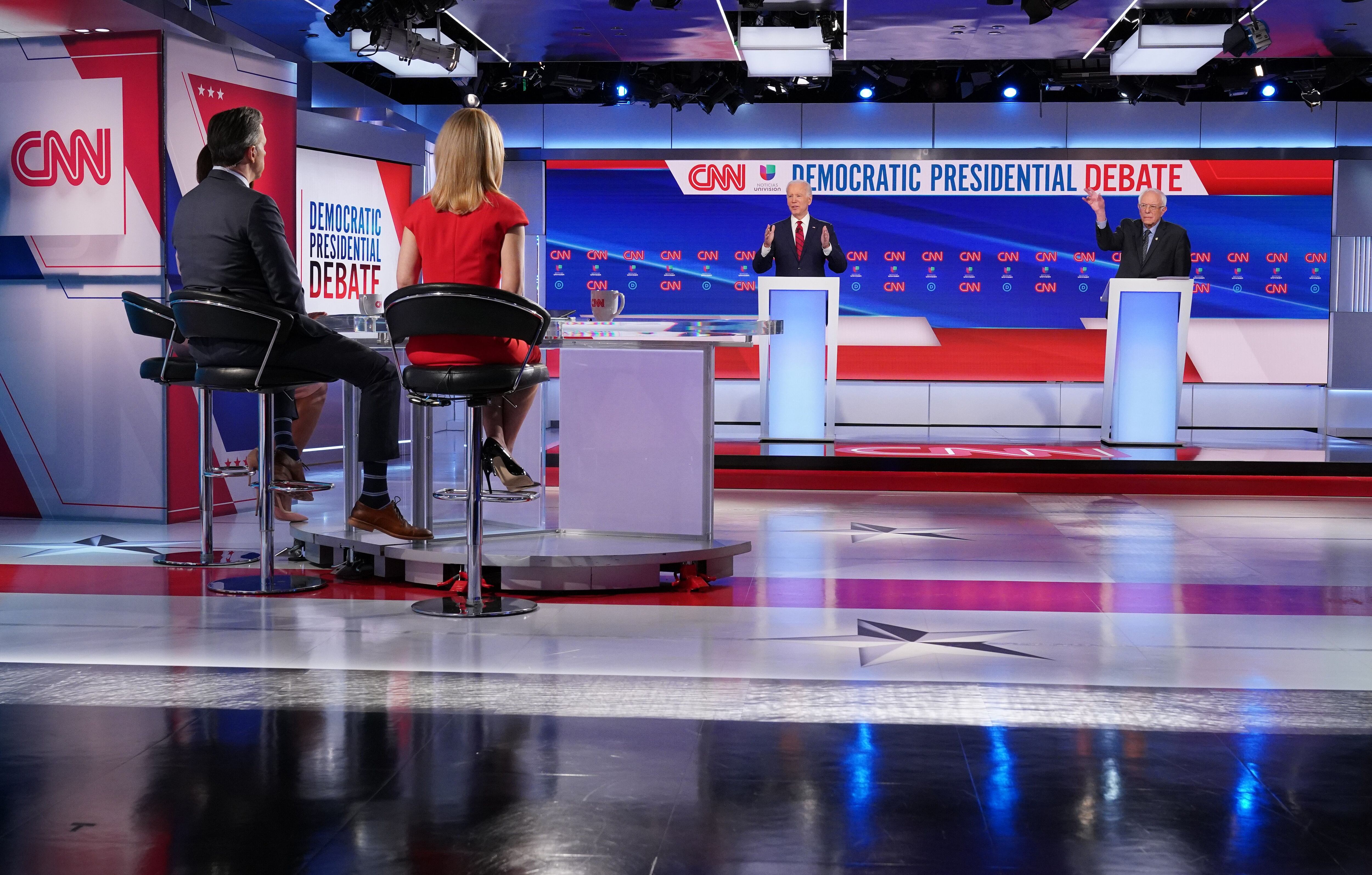
There's no 12th Democratic presidential debate on the horizon now that the nominating process is in a holding pattern due to the coronavirus pandemic.
The Senate will reconvene later Wednesday to vote on the package. But that does not mean the bill is guaranteed to land on President Donald Trump’s desk. The House of Representatives has to pass it, and that may not be an easy feat.
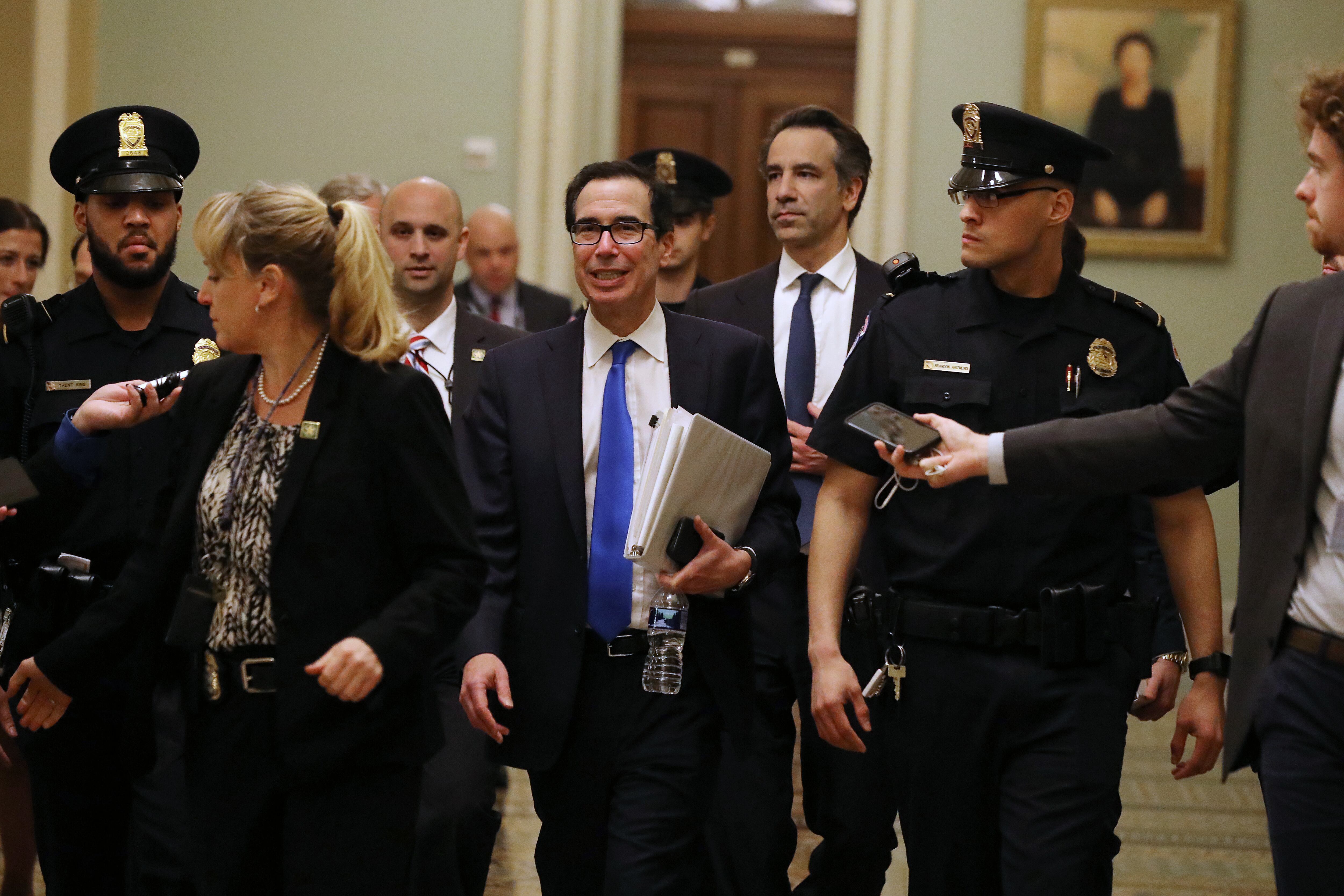
The White House and Senate leaders of both major political parties announced agreement early Wednesday on an unprecedented $2 trillion emergency bill to rush sweeping aid to businesses, workers and a health care system slammed by the coronavirus pandemic.
Stocks are moving tentatively higher in early trading on Wall Street Wednesday after Congress and the White House reached a deal to inject nearly $2 trillion of aid into an economy ravaged by the coronavirus.
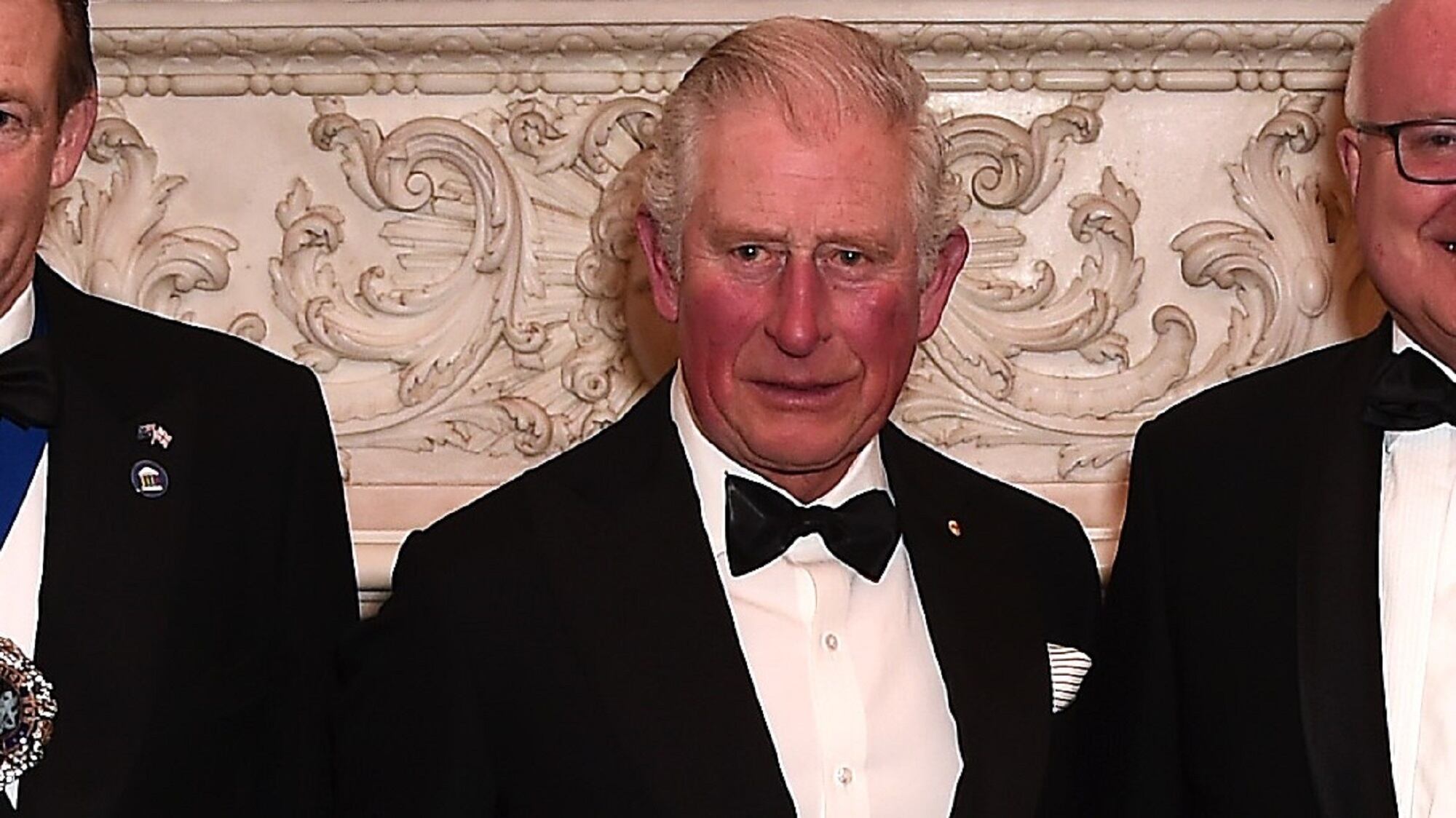
The death toll in Spain from the coronavirus shot up by more than 700 on Wednesday, surpassing China and is now second only to Italy as the pandemic spread rapidly in Europe, with even Britain’s Prince Charles testing positive for the virus.
Each piece of legislation is long: 247 pages for the Senate bill and a whopping 1,404 pages for the House bill. While we cannot distill every provision, here’s a look at some of the major differences between the two pieces of legislation.
Stocks are jumping in midday trading on Wall Street Tuesday amid expectations that Congress is nearing a deal on a big coronavirus relief bill. That would follow more aggressive steps from the Federal Reserve announced a day earlier to support lending and bond markets.