By Martin Crutsinger 

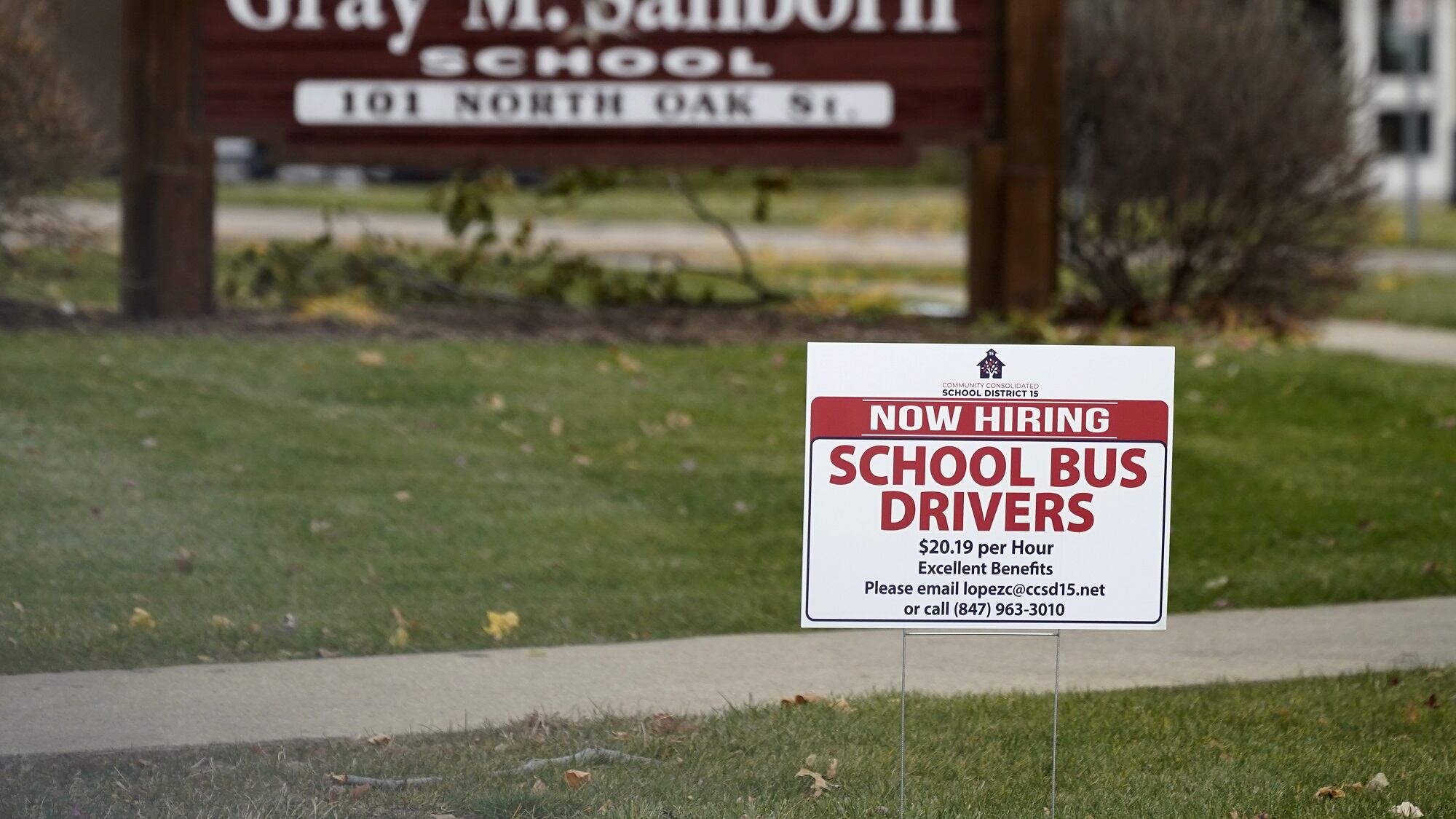
The number of Americans seeking unemployment benefits fell by 19,000 last week to still historically high 787,000 as a resurgent coronavirus grips the U.S. economy.

While at the lowest level in four weeks, the new figures released Thursday by the Labor Department are nearly four times higher than last year at this point before the coronavirus struck. Employers continue to cut jobs as rising coronavirus infections keep many people at home and state and local governments re-impose restrictions.

Jobless claims were running around 225,000 a week before the pandemic struck with force last March, causing weekly jobless claims to surge to a high of 6.9 million in late March as efforts to contain the virus sent the economy into a deep recession.

The government said that the total number of people receiving traditional unemployment benefits fell by 103,000 to 5.2 million for the week ending Dec. 19, compared with the previous week.

The four-week average for claims which smooths out weekly variations rose last week to 836,750, an increase of 17,750 from the previous week.

Economists believe that the holidays, in addition to broad confusion over the status of a Covid-19 relief package, suppressed applications for benefits last week.

Congress finally passed a $900 billion relief bill that would boost benefit payments and extend two unemployment assistance programs tied to job losses from the pandemic. However, President Donald Trump called the measure a “disgrace” because in his view it did not provide enough in direct payments to individuals.

Trump eventually signed the measure on Sunday but sought to pressure Congress to boost the stimulus payments to individuals from the $600 in the bill to $2,000. The Democratic-controlled House quickly passed legislation to meet Trump's demand, but the Republican-led Senate checked that momentum.

Senate Majority Leader Mitch McConnell said Wednesday that the proposal to boost payments to $2,000 has “no realistic path to quickly pass the Senate.”

Meanwhile, the government has begun sending out the smaller payments to millions of Americans. The $600 payment is going to individuals with incomes up to $75,000.

Analysts believe the $900 billion package as it now stands will give the economy a boost, but only as long there are no major problems with the rollout of COVID-19 vaccinations.

Earlier this month, Trump administration officials said they planned to have 20 million doses of the vaccine distributed by the end of the year. But according to data provided by the Centers for Disease Control, just over 11.4 million doses have been distributed and only 2.1 million people have received their first dose.

President Donald Trump deflected criticism about the pace of the vaccine program, saying that it's “up to the States to distribute the vaccines.”

Most economists believe the U.S. economy will rebound at some point next year.

“While prospects for the economy later in 2021 are upbeat, the economy and labor market will have to navigate some difficult terrain between now and then and we expect (jobless) claims to remain elevated,” said Nancy Vanden Houten, lead U.S. economist at Oxford Economics.

Updated on December 31, 2020, at 11:12 a.m. ET with the latest details.

Share:
More In Business
SEC Proposes Major Overhaul of Retail Trading Structure
Jack Miller, Head of Trading at Baird, joined Closing Bell to break down how the Securities and Exchange Commission's proposals would change the landscape for individual investors, as they face stiff opposition from brokerages like Robinhood.
Robotics Automation Technology Company Symbotic, Aiming to Transform Supply Chains, Debuts on Nasdaq
Robotics automation technology company Symbotic made its market debut on the Nasdaq via a SPAC merger with SVF Investment Corp. 3, a special purpose acquisition company sponsored by an affiliate of SoftBank Investment Advisers. Symbotic rang the Opening Bell at the Nasdaq to celebrate the occasion this morning. Its debut on Wall Street comes amid an urgent need for logistics solutions, as it aims to reimagine supply chains with its A.I.-powered robotic and software platform. Tom Earnst, CFO of Symbotic, and Vikas Parekh, managing partner at Softbank Investment Advisors, join Cheddar News' Closing Bell to discuss.
Elon Musk's World: Starlink IPO Delay, Twitter Data & BYD Batteries
Michelle Castillo joined Closing Bell to break down Elon Musk's announcement to SpaceX employees that the Starlink internet business might not see itself as an IPO until 2025, Twitter planning to hand over the user data he requested as a condition of the acquisition, and Warren Buffet-backed Chinese EV company BYD stating it will be supplying batteries to Tesla "very soon."
Re-Wiring to a Career as a Ghostwriter
At the age of 65, Judy Katz, who ran her own public relations firm for years, was looking for a change. After retirement, she started a brand-new business as an author and ghostwriter of books. Judy Katz joins Jamie Hopkins to discuss finding a new beginning as a ghostwriter and living life to the fullest post-retirement.
Meta to Attend Cannes Lions International Festival of Creativity
Meta announced its plans to join the Cannes Lions International Festival of Creativity. This is leaving businesses and customers wondering what the tech giant has in store for the event. Nicola Mendelsohn, the vice president of the global business group at Meta, joined Cheddar News to preview what the tech giant will discuss at this year's festival. "We're going to be showcasing more about reels. We're going to be talking about our commerce solutions, are messaging solutions, and of course, the method of us speaking of new ways to kind of connect with customers," she said.
UK Experimenting With 4-Day Work Week; Companies 'Ghosted' by New Hires
On today's episode of On The Job: Cheddar gets a look at how the salon and beauty industry has pivoted throughout the pandemic; Mark Brim, President of Aquent's Recruiting Division Vitamin T, breaks down how remote work has transformed hiring and recruiting process across the board; Julie Bauke, President & Chief Career Strategist at The Bauke Group, breaks down why companies are being 'ghosted' by new hires, and what repercussions can come from this.
How Remote Work is Expanding Talent Pools Around the Globe
Mark Brim, President of Aquent's Recruiting Division Vitamin T, joins On The Job to discuss how remote work has transformed hiring and recruiting process across the board, and the latest trends surrounding remote hiring across the globe.
Load More