By Zen Soo
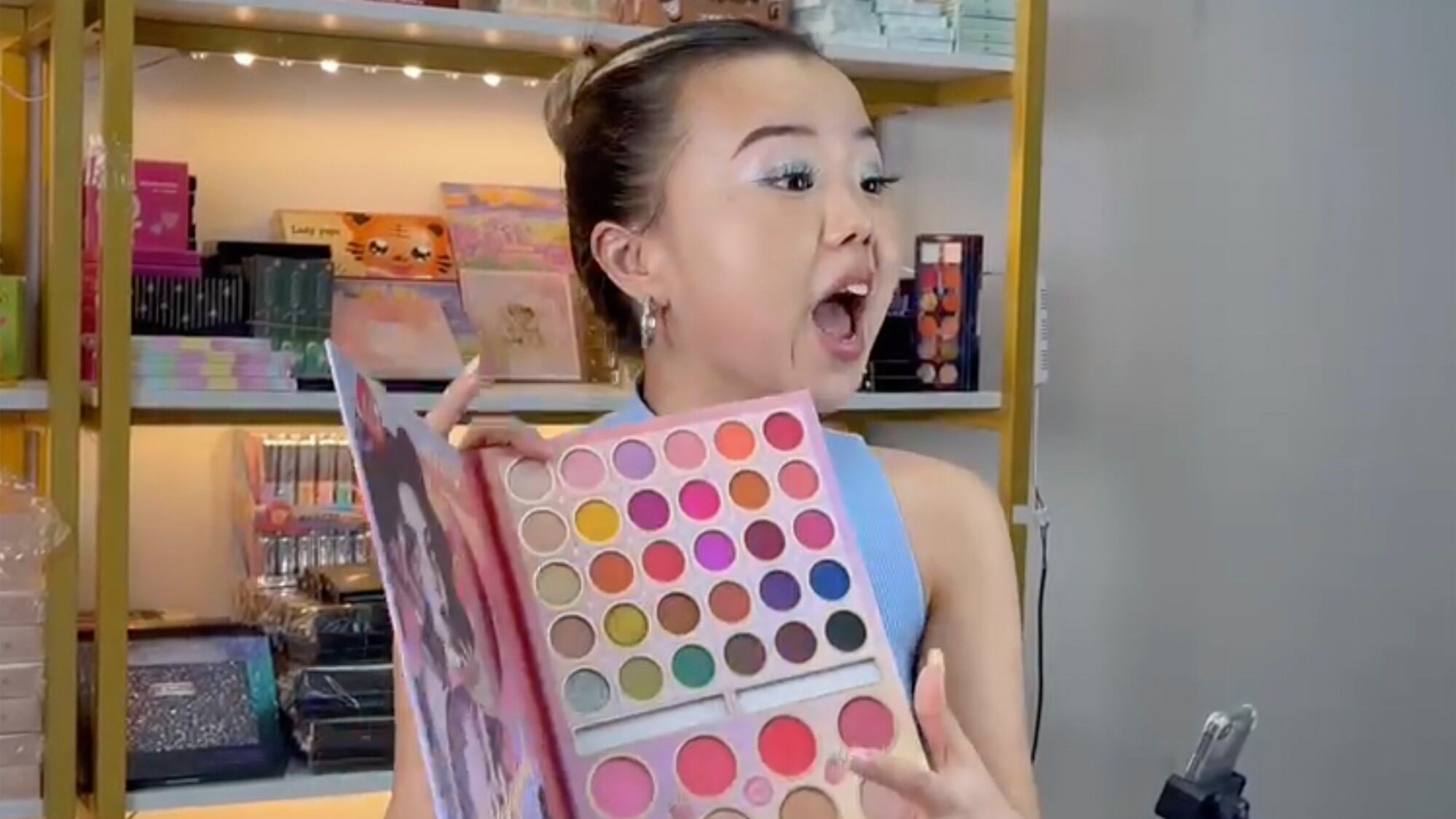
Chinese livestreamers have set their sights on TikTok shoppers in the U.S. and Europe, hawking everything from bags and apparel to crystals with their eyes on a potentially lucrative market, despite uncertainties over the platform's future in the U.S. and elsewhere.
In China, where livestreaming ecommerce is forecast to reach 4.9 trillion yuan ($676 billion) by the year's end, popular hosts like “Lipstick King” Austin Li rack up tens of millions of dollars in sales during a single livestream. Many brands, including L'Oreal, Nike and Louis Vuitton, have begun using livestreaming to reach more shoppers.
But the highly-competitive livestreaming market in China has led some hosts to look to Western markets to carve out niches for themselves.
Oreo Deng, a former English tutor, sells jewelry to U.S. customers by livestreaming on TikTok, delivering her sales pitches in English for about four to six hours a day.
“I wanted to try livestreaming on TikTok because it aligned with my experiences as an English tutor and my past jobs working in cross-border e-commerce,” Deng said.
Since 2019, western e-commerce platforms like Amazon and Facebook have experimented with livestreaming e-commerce after seeing the success of Chinese platforms like Alibaba's Tmall and Taobao, and Douyin, TikTok's Chinese counterpart in China.
TikTok started testing its live shopping feature last year. Registered merchants from the U.S., Indonesia, Vietnam and Singapore, among other countries, can now sell via livestreams online.
But livestreaming e-commerce has yet to take off in the U.S. The livestreaming e-commerce market in the U.S. — the world’s biggest consumer market — is expected to grow to $68 billion by 2026, according to research and advisory firm Coresight Research.
The relatively lukewarm reception led Facebook to shut down its live shopping feature last year. As for TikTok, the platform has the added risk of potentially facing U.S. restrictions due to tensions between Beijing and Washington.
TikTok, whose parent company is Chinese technology firm ByteDance, has been criticized for its Chinese ties and accused of being a national security risk due to the data it collects.
TikTok did not provide comment for this story.
Despite the scrutiny faced by TikTok, many Chinese hosts view the U.S. as a vast ocean of opportunity, an emerging market that has yet to be saturated with livestreaming hosts.
“There’s more opportunity for growth to target America because the competition is so fierce in China,” said Shaun Rein, founder and managing director of China Market Research Group in Shanghai. “Livestreaming in the U.S. is at a beginning starting point. There’s more opportunity to grab market share.”
Rein also said that Chinese merchants can often price items higher in the U.S., where customers are accustomed to paying higher prices compared to in China, where product margins are often razor-thin.
“The format is going to work, because it’s been proven,” said Jacob Cooke, CEO of e-commerce consultancy WPIC.
Smaller companies, including those in China that are attempting to sell on TikTok, might lack enough data on what customers want in markets like the U.S, he said. “Once they do get that figured out, they’ll start to have very good success,” Cooke said.
For some U.S. shoppers, the livestream format is a fascinating form of entertainment.
Freisa Weaver, a 36-year-old who lives in Florida, stumbled on a TikTok livestream selling crystals 10 months ago. It employed a popular tactic called a “lucky scoop” where buyers pay a set price to receive several random items scooped from a large container of crystals. TikTok earlier this year banned this practice from livestreams to comply with gambling laws, although some sellers still offer grab bags of goodies which appear to be scooped off-camera.
“I came across it scrolling through TikTok and at first I was entertained by the lucky scoops,” Weaver said, describing livestreaming shopping as an addictive hobby. “Now I’m a regular buyer in some of the live feeds on TikTok."
“I personally enjoy the interactions with the host and the possibility of finding something special and unique just for me,” she said
Her favorite channel is Meow Crystals, an account operated by Chinese streaming hosts that often does flash sales selling crystals for as little as $2, and grab bags of crystals from $10. TikTok has yet to roll out its in-built shopping feature on a wide scale, so many streamers, including those from Meow Crystals, often redirect viewers to place orders on an external website.
“The host is willing to go to the warehouse for you and get special items, or they remember what you like and offer it to you as soon as you are online,” Weaver said.
Chinese livestreaming hosts try various tactics to stand out and build a loyal customer base. For some, it’s personalized customer service, while others use quirky catchphrases and concoct flamboyant online personalities to keep their customers entertained.
“Every host is always experimenting and develops their own tactics,” Deng, the livestream host said, declining to share the secrets of her own approach.
Boot camps to teach Chinese livestreamers how to increase their sales have sprung up, including a popular one hosted by Yan Guanghua, one of TikTok earliest livestreamers in China.
Like Deng, Yan is a former English tutor who turned to TikTok livestreaming after a government crackdown on the private education industry.
Yan started out hawking yoga clothes, electronics and apparel online. Finding she had a knack for selling to customers via livestreaming, she at times has racked up sales of 5,000 pounds ($6,510) per stream selling to customers in Britain.
Now she charges about $1,000 for two-day boot camps she holds two or three times a month, teaching people how to sell more on livestreams.
Yan says she has trained more than 600 people, mostly from China but also from the U.S. and Africa.
Like many other TikTok livestreaming hosts, she hopes the overseas livestreaming e-commerce market will take off like it has in China.
“It’s hard to say what the future of this industry is. It's difficult to predict,” Yan said. “But what we know is that TikTok is the most popular platform right now and there is still opportunity here.”