*By Jacqueline Corba*
The Chinese gaming firm Huya made its public market debut Friday, trading up as much as 41 percent from its IPO price of $12.
"We are very glad," said Huya's chief financial officer, Henry Sha, in an interview with Cheddar shortly after the company began trading on the New York Stock Exchange. "The e-sports environment in the U.S. market is quite good. A lot of gamers, a lot of e-sports are enthusiastic here, so we believe that the U.S. investor, the U.S. market can understand more about our company."
Huya's live-gaming platform has an average of 40 million active monthly users on mobile. In 2017, revenue was $344 million.
Sha said China is the primary market for Huya, but there is great potential among gamers in the United States.
Huya aims to raise $165 million in its public offering, Sha said, with the intention of using the capital to invest in e-sports and content creators.
Chinese entertainment giant Tencent is the second-largest stakeholder in Huya, and will maintain its 39.5 percent ownership. "We are very excited about future collaboration with Tencent," said Sha.
For the full interview, [click here](https://cheddar.com/videos/huya-soars-in-market-debut).
Carlo and Baker preview President Biden's address to the nation as Omicron becomes the new dominant Covid strain. Plus, Trump gets booed for getting his booster and the White House gets a new puppy.
Alinda Mashiku, Conjunction Analysis and Risk Assessment Deputy Manager at the NASA Goddard Space Flight Center, joins Future of Space: Humankind's Leap Forward to explain how space debris is threatening operations in space at a time when more satellites are being deployed.
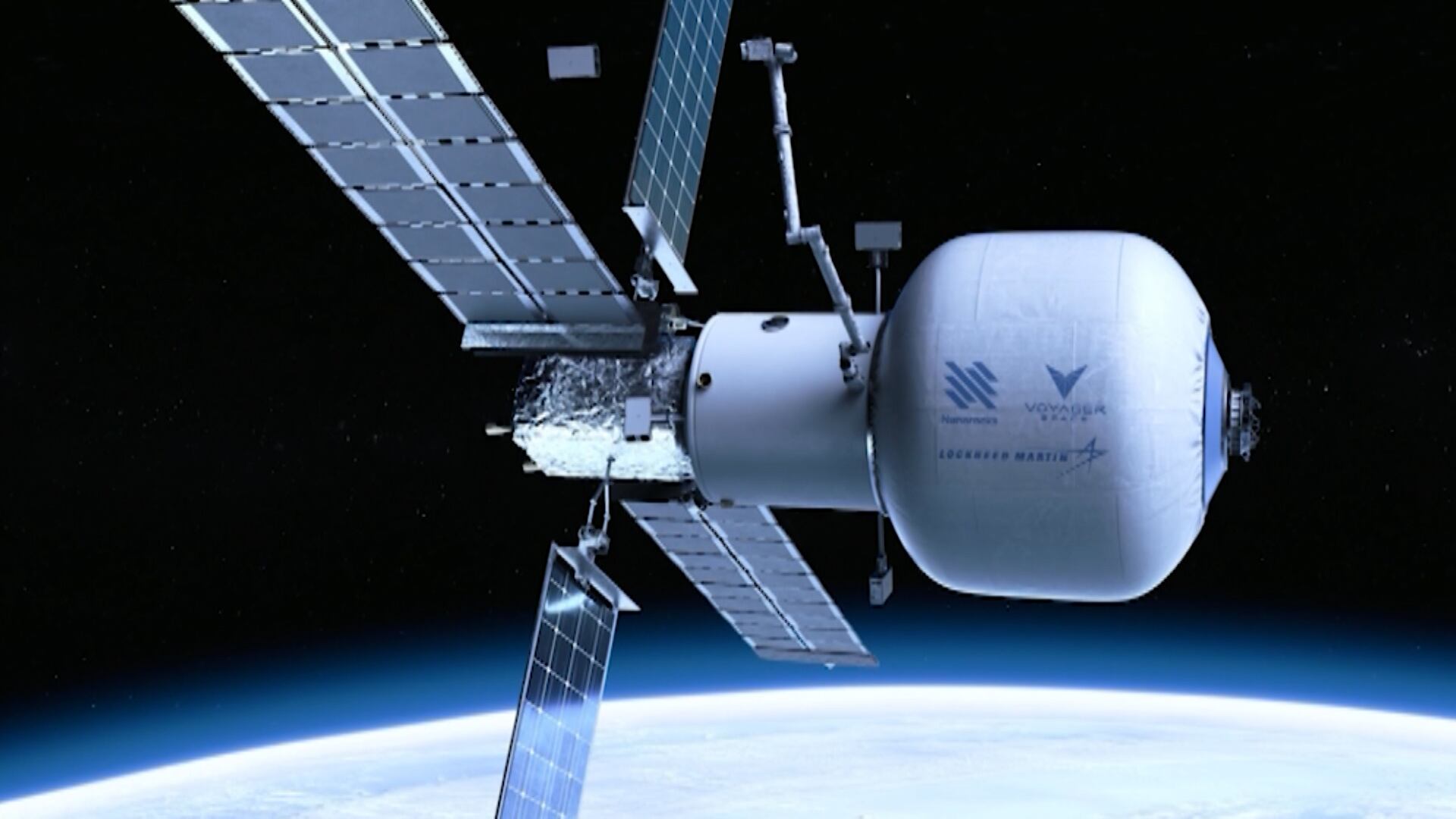
Marshall Smith, Senior Vice President of Space Systems at Nanoracks and Kirk Shireman, Vice President of the Lunar Exploration Campaign at Lockheed Martin join Future of Space: Humankind's Leap Forward to discuss upcoming plans for developing their Starlab commercial space station after being awarded a $160 million contract by NASA.
The billionaire space race took off in 2021, making major strides in space tourism. That growth is only expected to skyrocket in the next year, as the government and private institutions and companies look to shape the final frontier's exploration. Cheddar News dives into the biggest moments of the year in space, and what comes next for space travel and tourism.
E-commerce data platform Rokt is prepping for an IPO as it comes off of a $325 million Series E fundraise, and CEO Bruce Buchanan joined Cheddar to discuss the future of his company. He explained how Rokt uses data science to optimize the consumer experience with their clients and discussed the goal to go public in 2023. "We're at a size and scale now where it's important we can give liquidity to investors, we can use the public markets to attract more talent, and we can use the public markets also to go on and acquire more businesses," he said. "We think it's about time that we do list."
Chloe and Halle Bailey are no strangers to hard work. The sisters got their start performing covers on YouTube and have become a force in the music industry. Since then, the two have spread their wings beyond their duo group to individual projects. Now they're coming together to face off in the LG OLED Ultimate Gaming Showdown. Chloe and Halle join Cheddar News to discuss.