By Sam McNeil
Three Chinese astronauts arrived Thursday at China's new space station at the start of a three-month mission, marking another milestone in the country’s ambitious space program.
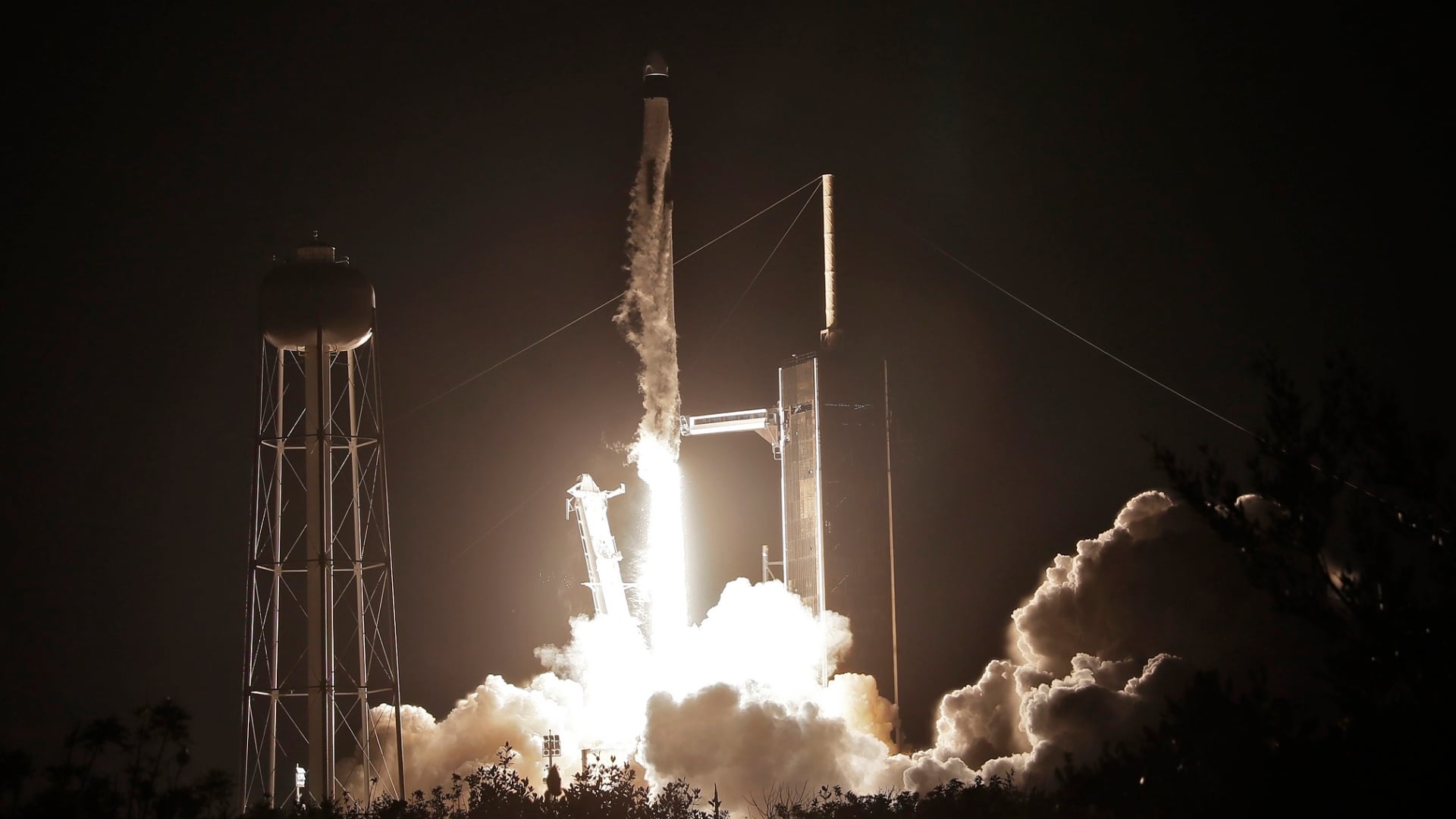
Their Shenzhou-12 craft connected with the space station module about six hours after taking off from the Jiuquan launch center on the edge of the Gobi Desert.
About three hours later, commander Nie Haisheng, 56, followed by Liu Boming, 54, and space rookie Tang Hongbo, 45, opened the hatches and floated into the Tianhe-1 core living module. Pictures showed them busy at work unpacking equipment.
“This represents the first time Chinese have entered their own space station,” state broadcaster CCTV said on its nightly news broadcast.
The crew will carry out experiments, test equipment, conduct maintenance and prepare the station for receiving two laboratory modules next year. The mission brings to 14 the number of astronauts China has launched into space since 2003, becoming only the third country after the former Soviet Union and the United States to do so on its own.
All appears to have gone smoothly so far. China's leaders hope the mission will be a complete success as the ruling Communist Party prepares to celebrate the centenary of its founding next month.
The astronauts were seen off by space officials, other uniformed military personnel and a crowd of children waving flowers and flags and singing patriotic songs before blasting off at 9:22 a.m (0122 GMT) atop a Long March-2F Y12 rocket.
The rocket dropped its boosters about two minutes into the flight followed by the cowling surrounding Shenzhou-12. After about 10 minutes it separated from the rocket's upper section, extended its solar panels and shortly afterward entered orbit.
About a half-dozen adjustments took place over the following six hours to line up the spaceship for docking with the Tianhe-1, or Heavenly Harmony, module at about 4 p.m. (0800 GMT).
The travel time is down from the two days it took to reach China's earlier experimental space stations, a result of a “great many breakthroughs and innovations," the mission’s deputy chief designer, Gao Xu, told state broadcaster CCTV.
“So the astronauts can have a good rest in space which should make them less tired," Gao said.
Other improvements include an increase in the number of automated and remote-controlled systems that should “significantly lessen the pressure on the astronauts," Gao said.
Two astronauts on those past missions were women, and while this first station crew is all male, women are expected to be part of future station crews.
The mission is the third of 11 planned through next year to add the additional sections to the station and send up crews and supplies. A fresh three-member crew and a cargo ship with supplies will be sent in three months.
China is not a participant in the International Space Station, largely as a result of U.S. objections to the Chinese programs secrecy and close military ties. However, China has been stepping up cooperation with Russia and a host of other countries, and its station may continue operating beyond the International Space Station, which is reaching the end of its functional life.
China landed a probe on Mars last month that carried a rover, the Zhurong, and earlier landed a probe and rover on the moon's less explored far side and brought back the first lunar samples by any country’s space program since the 1970s.
China and Russia this week also unveiled an ambitious plan for a joint International Lunar Research Station running through 2036. That could compete and possibly conflict with the multinational Artemis Accords, a blueprint for space cooperation that supports NASA’s plans to return humans to the moon by 2024 and to launch an historic human mission to Mars.
After the Tianhe-1 was launched in April, the rocket that carried it into space made an uncontrolled reentry to Earth, though China dismissed criticism of the potential safety hazard. Usually, discarded rocket stages reenter the atmosphere soon after liftoff, normally over water, and don’t go into orbit.
The rocket used Thursday is of a different type and the components that will reenter are expected to burn up long before they could be a danger, said Ji Qiming, assistant director of the China Manned Space Agency.