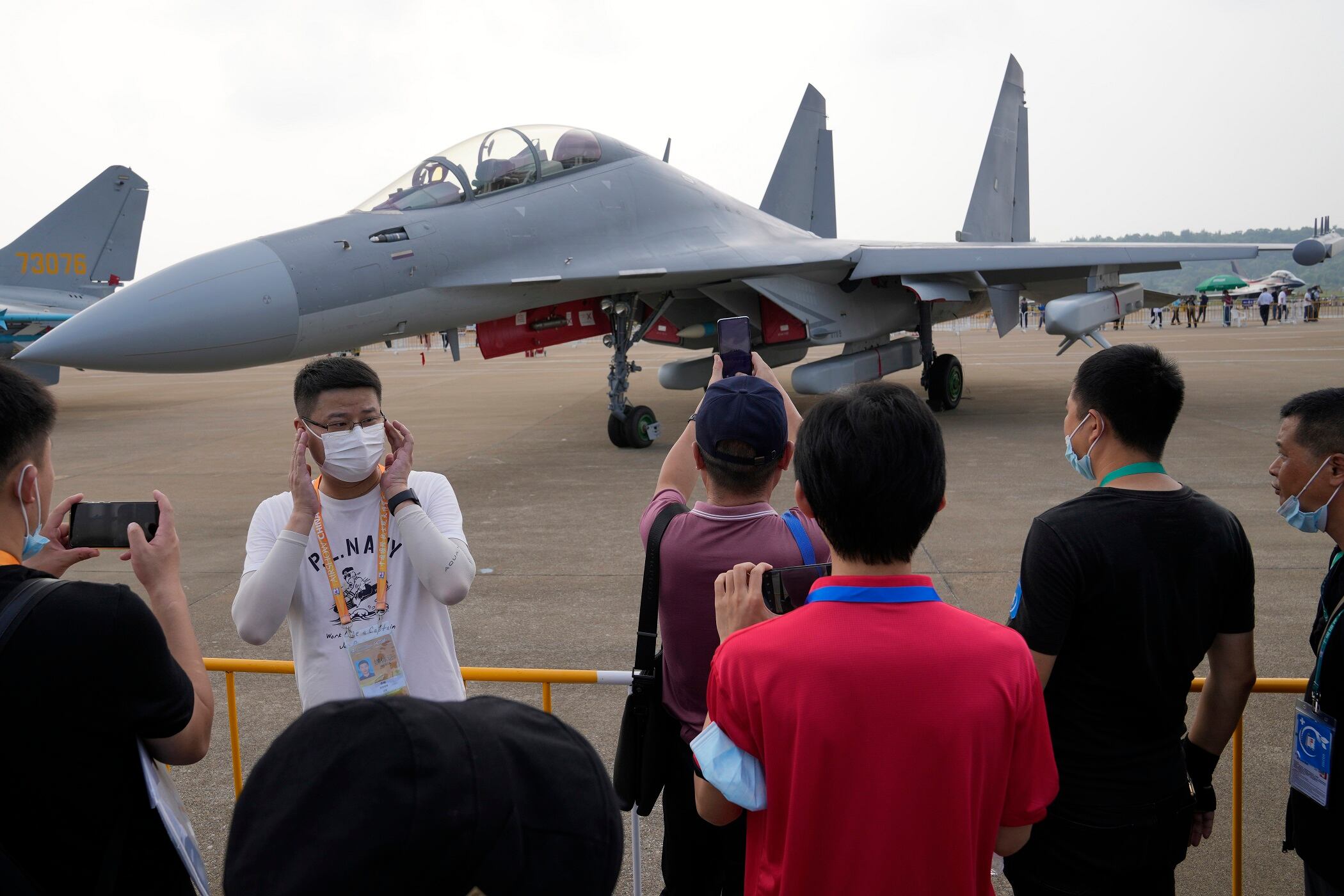
Visitors look at the Chinese military's J-16D electronic warfare airplane during 13th China International Aviation and Aerospace Exhibition, also known as Airshow China 2021, on Wednesday, Sept. 29, 2021, in Zhuhai in southern China's Guangdong province. China flew 39 warplanes, including 24 J-16s and 10 J-10s, toward Taiwan, Sunday, Jan. 23, 2022, in its largest such sortie of the new year, continuing a pattern that the island has answered by scrambling its own jets in response. (AP Photo/Ng Han Guan)
By Huiszhong Wu
China flew 39 warplanes toward Taiwan in its largest such sortie of the new year, amid tensions over the self-ruled island's future and as the U.S. pushes to assert its presence in the region.
The Chinese formation Sunday night included 24 J-16 fighter jets and 10 J-10 jets, among other support and electronic warfare aircraft, according to Taiwan's defense ministry.
Taiwan's air force scrambled its own jets and tracked the People's Liberation Army planes on its air defense radar systems, the ministry said.
The Chinese sortie came as the U.S. military said that two of its carrier strike groups were sailing on Sunday in the South China Sea, led by USS Carl Vinson and USS Abraham Lincoln. They engaged in anti-submarine, air and combat readiness operations.
China’s Ministry of Foreign Affairs declined to comment on why the PLA had flown such a large sortie on Monday, saying it was not a diplomatic matter.
Taiwan and China split during a civil war in 1949, but China claims the island as its own territory. Beijing has used diplomatic and military means to isolate and intimidate the self-ruled island, but the U.S. has continued to support Taiwan by selling it advanced weapons and fighter planes.
Chinese pilots have been flying towards Taiwan on a near-daily basis in the past year and a half, since Taiwan's government started publishing the data regularly. The largest sortie was 56 warplanes on a single day last October.
The activity has generally been in the air space southwest of the island and falls into a zone that Taiwan's military says it monitors out of national security considerations.
Tensions have been high since Taiwanese citizens elected Tsai Ing-wen as president in 2016, to which Beijing responded by cutting off previously established communications with the island's government. Tsai's predecessor was friendly to China and had endorsed Beijing's claim that the two are part of a single Chinese nation.
The U.S. regularly carries out exercises in the South China Sea in what it calls freedom of navigation operations, in line with international law.
___
Associated Press video producer Liu Zheng in Beijing contributed to this report.
Will Larkins, president and co-founder of Winter Park High School's Queer Student Union and one of the organizers of its
'Say Gay Anyway' walkout, joined Cheddar News to discuss their recent opinion piece for The New York Times titled "Florida's 'Don't Say Gay' Bill Will Hurt Teens Like Me."
Russia's military advances in Ukraine appear to have stalled, as heavy casualties, equipment losses, and a lack of progress on the ground take a toll. Despite the horrific damage caused by the attack, Ukraine's military has held up better than many experts predicted. Elliot Ackerman, author and Marine Corps Veteran, joined Cheddar's Opening Bell to discuss why Ukraine's defense response been such a surprise, and what a stalemate in the war might look like.
Catching you up on what you Need to Know on Mar 21, 2022, with updates on the Russian invasion in Ukraine, a Boeing 737-800 plane carrying 132 people crashed in China, Canadian Pacific rail workers on strike, another possible COVID surge, and the SEC's new climate rules for businesses.
Judge Ketanji Brown Jackson has told senators that she will defend the Constitution and decide cases “without fear or favor” if she is confirmed to the Supreme Court.
David Stryzewski, CEO of Sound Planning Group, joins Cheddar News' Closing Bell, where he says he believes pent-up demand is driving stocks higher and explains how Wednesday's Fed decision continues to impact investor sentiment.
Rachel Thomas, the co-founder and CEO of the non-profit Lean In, joined Cheddar amid Women's History Month, to discuss how the organization is taking on issues that continue to impact the workplace through its Circles program. "These are a program that brings women together in small groups, usually 8 to 12, for support, camaraderie, and to learn together," she said. "We also we have a lot of curriculum so women can learn how to navigate workplace biases, how to negotiate with women." Thomas also applauded President Biden's recent call to action on equal pay for women, noting that businesses must do more to be cognizant of inherent gender and racial biases.
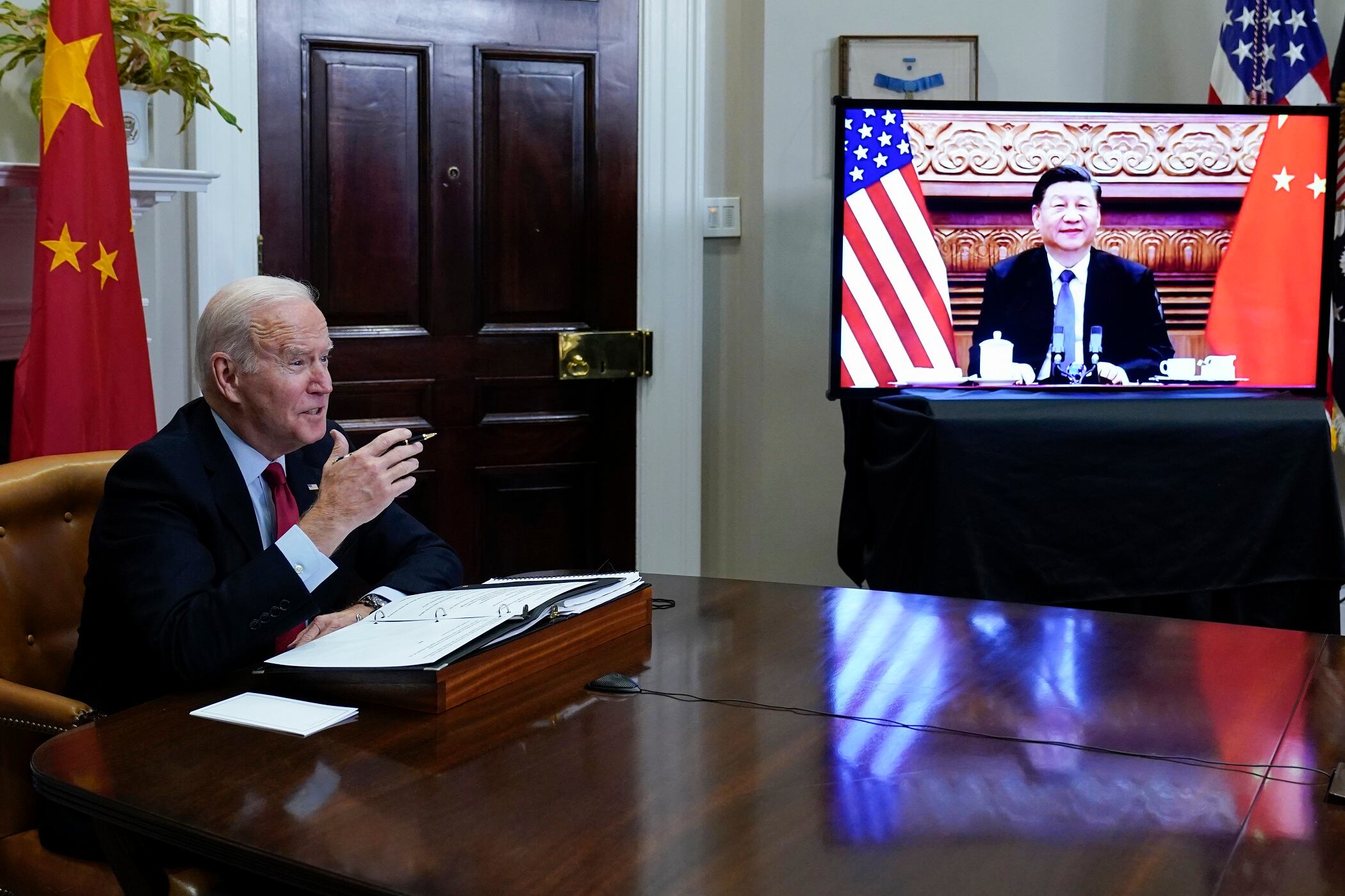
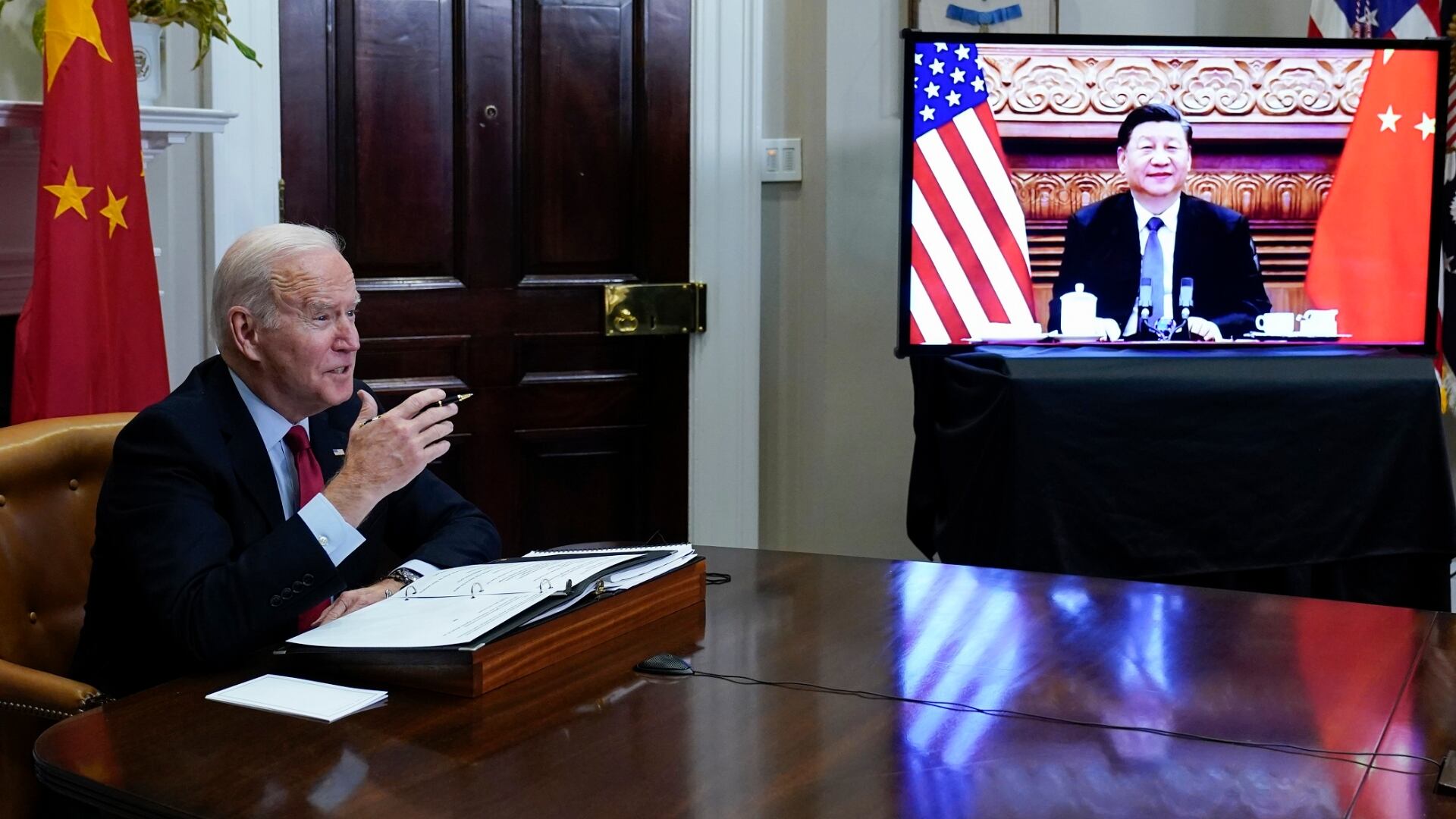
President Joe Biden and China’s Xi Jinping spoke Friday for nearly two hours via a video call as the White House looks to deter Beijing from providing military or economic assistance for Russia’s invasion of Ukraine.
The Senate has passed the Sunshine Protection Act to permanently set U.S. clocks to daylight saving time — meaning you won't need to change them twice a year. Senator Sheldon Whitehouse (D-R.I.) joined Cheddar News to talk about something that hasn't been changed in almost half a century. “Well, I think if you were to start from scratch and have somebody come in and say here's my idea, we're going to have two different times during the year and you're going to shift back and forth between different times and have to reset all your clocks twice a year, you'd probably throw that person out as like having a screw loose," he said regarding the status quo.
Catching you up on what you Need to Know on Mar 18, 2022, with updates on the war in Ukraine, President Biden’s meeting with Xi Jinping, Meta removing a deepfake video of Volodymyr Zelenskyy, Britney Griner, vaccine updates, and tech news.