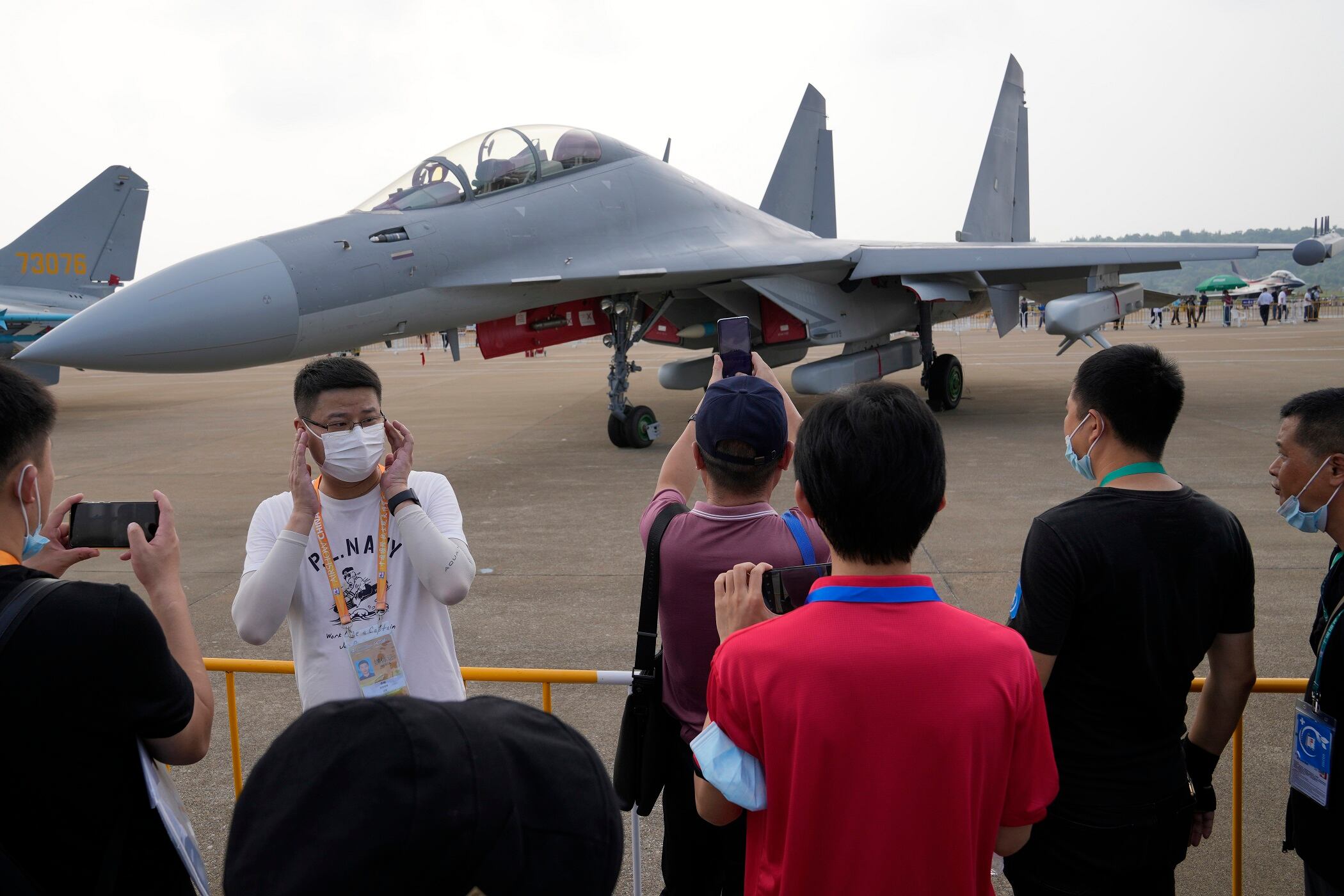
Visitors look at the Chinese military's J-16D electronic warfare airplane during 13th China International Aviation and Aerospace Exhibition, also known as Airshow China 2021, on Wednesday, Sept. 29, 2021, in Zhuhai in southern China's Guangdong province. China flew 39 warplanes, including 24 J-16s and 10 J-10s, toward Taiwan, Sunday, Jan. 23, 2022, in its largest such sortie of the new year, continuing a pattern that the island has answered by scrambling its own jets in response. (AP Photo/Ng Han Guan)
By Huiszhong Wu
China flew 39 warplanes toward Taiwan in its largest such sortie of the new year, amid tensions over the self-ruled island's future and as the U.S. pushes to assert its presence in the region.
The Chinese formation Sunday night included 24 J-16 fighter jets and 10 J-10 jets, among other support and electronic warfare aircraft, according to Taiwan's defense ministry.
Taiwan's air force scrambled its own jets and tracked the People's Liberation Army planes on its air defense radar systems, the ministry said.
The Chinese sortie came as the U.S. military said that two of its carrier strike groups were sailing on Sunday in the South China Sea, led by USS Carl Vinson and USS Abraham Lincoln. They engaged in anti-submarine, air and combat readiness operations.
China’s Ministry of Foreign Affairs declined to comment on why the PLA had flown such a large sortie on Monday, saying it was not a diplomatic matter.
Taiwan and China split during a civil war in 1949, but China claims the island as its own territory. Beijing has used diplomatic and military means to isolate and intimidate the self-ruled island, but the U.S. has continued to support Taiwan by selling it advanced weapons and fighter planes.
Chinese pilots have been flying towards Taiwan on a near-daily basis in the past year and a half, since Taiwan's government started publishing the data regularly. The largest sortie was 56 warplanes on a single day last October.
The activity has generally been in the air space southwest of the island and falls into a zone that Taiwan's military says it monitors out of national security considerations.
Tensions have been high since Taiwanese citizens elected Tsai Ing-wen as president in 2016, to which Beijing responded by cutting off previously established communications with the island's government. Tsai's predecessor was friendly to China and had endorsed Beijing's claim that the two are part of a single Chinese nation.
The U.S. regularly carries out exercises in the South China Sea in what it calls freedom of navigation operations, in line with international law.
___
Associated Press video producer Liu Zheng in Beijing contributed to this report.
Emily Tisch Sussman, senior advisor at Paid Leave US, joined Cheddar's "Between Bells" to discuss paid leave being stripped from the latest budget bill and why it is crucial for parents to have paid time off. Sussman said the pandemic, in particular, highlighted the disparity between women, who left the work force in droves to care for family, and men who continue to work and be rehired as impacted sectors of the economy return.
The Dow, S&P, and Nasdaq each ended Friday's session at a record high as stocks rallied into the green. Chris Vecchio, Senior Analyst at DailyFX, joins Cheddar News' Closing Bell, where he says this was an 'October to remember' for Wall Street.
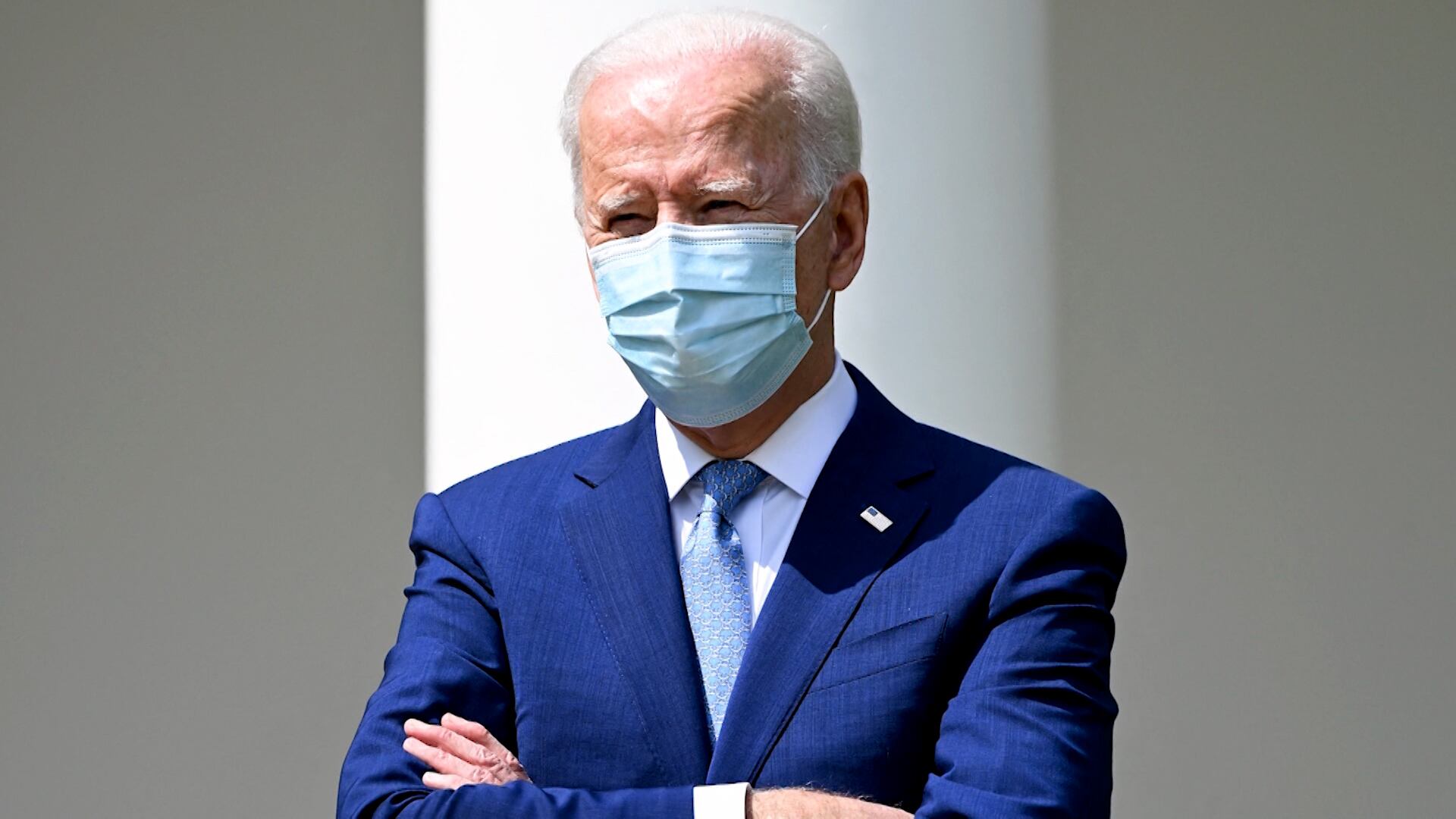
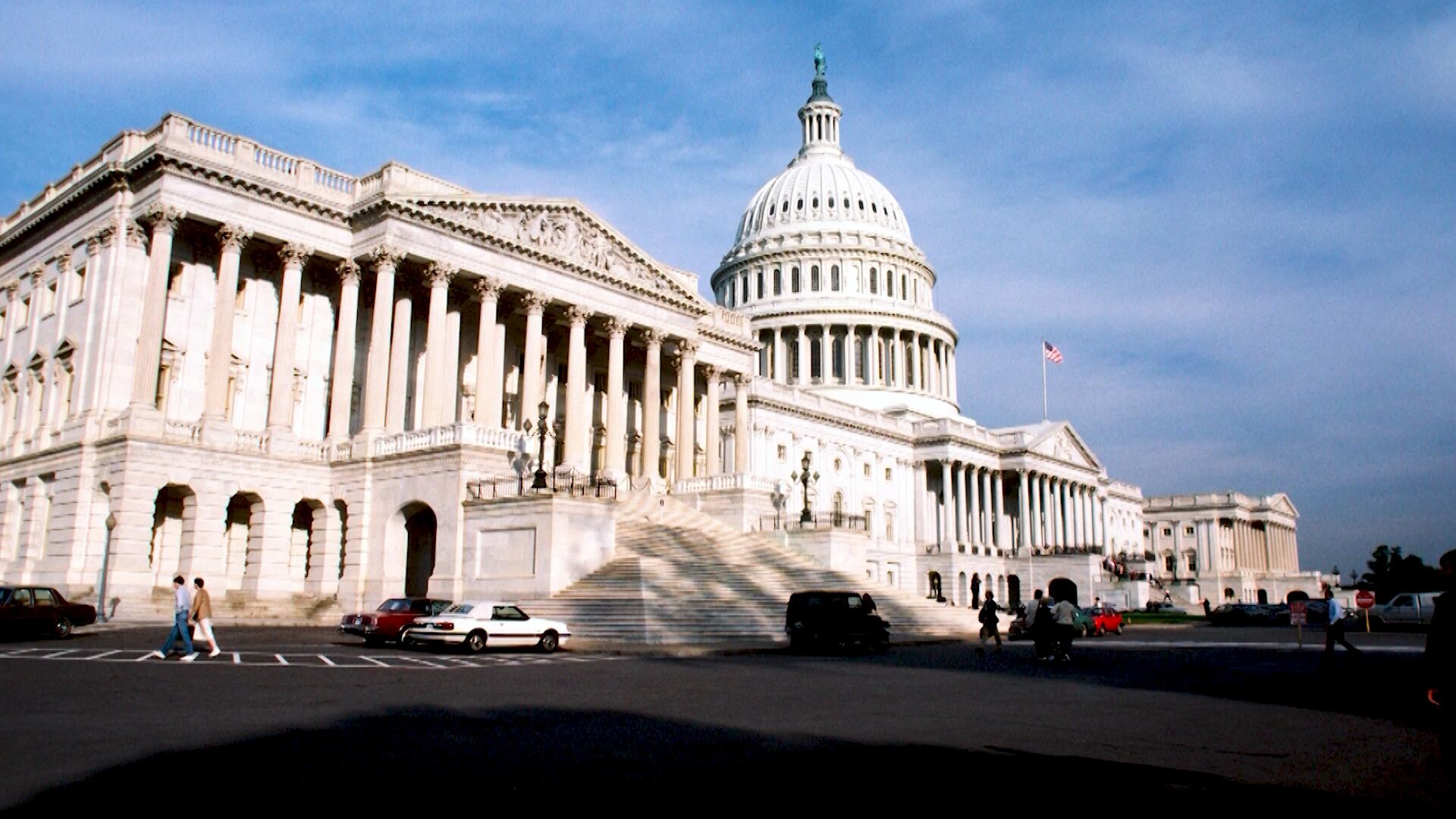
Alex Gangitano, White House Correspondent for The Hill, joined Cheddar to discuss the chaos surrounding democrats in congress as they try to advance President Biden's agenda.
Kathy Mulvey, the Accountability Campaign Director for the Union of Concerned Scientists, joined Cheddar News to break down Thursday's congressional hearing on climate change with big oil executives and lobbyists.
Carlo and Baker cover Facebook's big rebrand, the latest on Biden's economic agenda and more. Plus, ranking the best Halloween candy and the worst couple's costumes.
As President Joe Biden heads to Europe for the G20 and the United Nations COP26 climate meeting, he has announced a new $1.75 trillion spending framework. Senate Democrats are reportedly close to agreeing on passing the legislation, but it hangs in the balance as President Biden and other world leaders will meet at COP26 and Biden looks to proclaim the U.S. a leader on climate issues. Vox Senior Reporter Rebecca Leber joins Cheddar News' Closing Bell to discuss the $555 billion worth of clean energy initiatives Biden included in the framework, and how Democrats' continuing negotiations undermine U.S. climate leadership.
Christopher Romaka, advocacy lead at Good Counsel Services, explains how the non-profit is still working to get Afghan refugees out of the country, which fell to the Taliban back in August.