China on Monday said more than 10 U.S. high-altitude balloons have flown in its airspace during the past year without its permission, following Washington's accusation that Beijing operates a fleet of surveillance balloons around the world. The United States denied that it operates any surveillance balloons over China.
The Chinese allegation came after the U.S. shot down a suspected Chinese spy balloon that had crossed from Alaska to South Carolina, sparking a new crisis in bilateral relations that have spiraled to their lowest level in decades.
Foreign Ministry spokesperson Wang Wenbin gave no details about the alleged U.S. balloons, how they had been dealt with or whether they had government or military links.
“It is also common for U.S. balloons to illegally enter the airspace of other countries," Wang said at a daily briefing. “Since last year, U.S. high-altitude balloons have illegally flown over China’s airspace more than 10 times without the approval of Chinese authorities."
Wang said the U.S. should “first reflect on itself and change course, rather than smear and instigate a confrontation."
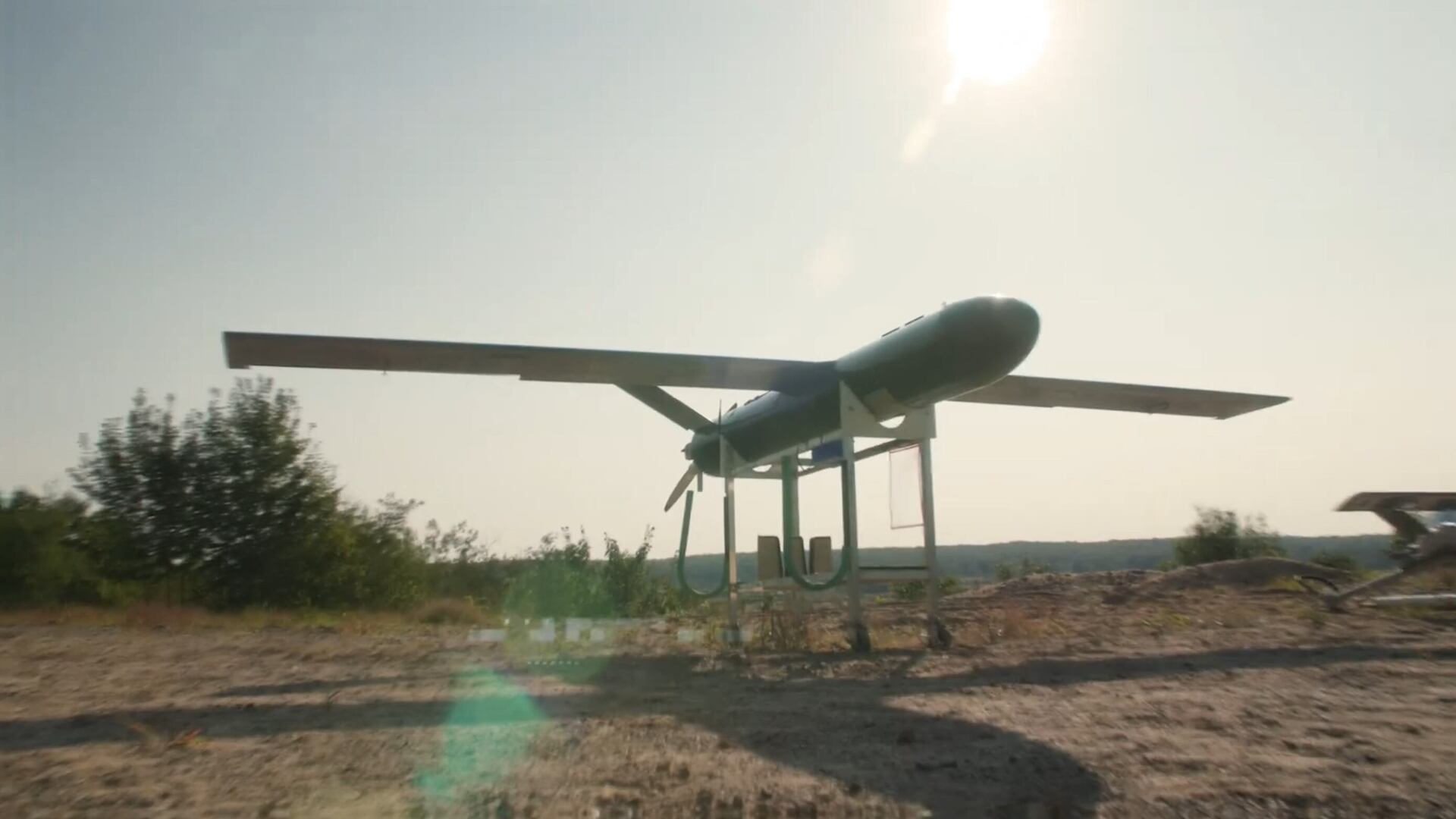
China says the balloon shot down by the U.S. was an unmanned airship made for meteorological research that had been blown off course. It has accused the U.S. of overreacting by shooting it down and threatened to take unspecified action in response.
In Washington, National Security Council spokesperson Adrienne Watson said Monday that any claim that the U.S. government operates surveillance balloons over China is false.
“It is China that has a high-altitude surveillance balloon program for intelligence collection, connected to the People’s Liberation Army, that it has used to violate the sovereignty of the United States and over 40 countries across five continents,” Watson said.
“This is the latest example of China scrambling to do damage control. It has repeatedly and wrongly claimed the surveillance balloon it sent over the United States was a weather balloon and to this day has failed to offer any credible explanations for its intrusion into our airspace and the airspace of others.”
Following the balloon incident, U.S. Secretary of State Antony Blinken canceled a visit to Beijing that many had hoped would put the brakes on the sharp decline in relations over Taiwan, trade, human rights and threatening Chinese actions in the disputed South China Sea.
Also Monday, the Philippines accused a Chinese coast guard ship of targeting a Philippine coast guard vessel with a military-grade laser and temporarily blinding some of its crew in the South China Sea, calling it a “blatant” violation of Manila’s sovereign rights.
Wang said a Philippine coast guard vessel had trespassed into Chinese waters without permission on Feb. 6 and that Chinese coast guard vessels responded “professionally and with restraint." China claims virtually all of the strategic waterway and has been steadily building up its maritime forces and island outposts.
“China and the Philippines are maintaining communication through diplomatic channels in this regard,” Wang said. China's Defense Ministry did not immediately respond to a question about the incident.
Adding to tensions, a U.S. fighter jet shot down an “unidentified object” over Lake Huron on Sunday on orders from President Joe Biden. It was the fourth such downing in eight days in an extraordinary chain of events over U.S. airspace that Pentagon officials believe has no peacetime precedent.
The Chinese balloon shot down by the U.S. was equipped to detect and collect intelligence signals as part of a huge, military-linked aerial surveillance program that targeted more than 40 countries, the Biden administration declared Thursday, citing imagery from American U-2 spy planes.
Part of the reason for the repeated shootdowns is a “heightened alert” following the alleged Chinese spy balloon, Gen. Glen VanHerck, head of NORAD and the U.S. Northern Command, said in a briefing with reporters.
The United States has since placed economic restrictions on six Chinese entities it said are linked to Beijing’s aerospace programs as part of its response to the incident. The U.S. House of Representatives also voted unanimously to condemn China for a “brazen violation” of U.S. sovereignty and efforts to “deceive the international community through false claims about its intelligence collection campaigns.”
Wang, the Chinese spokesperson, repeated China's dismissal of such claims, saying, “the frequent firing of advanced missiles by the U.S. to shoot down the objects is an overreaction of overexertion.”
___
Associated Press writer Zeke Miller in Washington, D.C., contributed to this report.