It is hard to go an entire day without scrolling through social media, checking in on family members and friends, and double-tapping on their posts. 

That may explain why attitudes toward social media giants like Facebook and Twitter are mixed among Americans ahead of the 2020 election. 

A new Cheddar poll found more than 40 percent of Americans believe that Facebook (45 percent) and Twitter (44 percent) are treating political content the same when it comes to flagging and deleting certain posts, regardless of ideology. But one in five still think the platforms unfairly target conservative content — that number jumps to nearly 40 percent among Republicans. 

More than half of Democrats and nearly half of Independents believe these companies treat political speech the same. 

This reveals some of the clearest fractures among different voter groups when it comes to attitudes toward social media platforms and the content that they host. 

About a third of Americans believe that Facebook and Twitter should remove posts believed to be false but around half of Americans (Facebook: 55 percent, Twitter 47 percent) believe those posts should stay up — though more than half of those people say the content should include a disclaimer. 

This poll collected responses after social media platforms removed a controversial article published by the New York Post regarding a laptop with compromising information that purportedly belonged to Hunter Biden, leading to outrage among conservative groups who likened it to a violation of the First Amendment. It led to allegations that social media companies remove speech they dislike rather than removing speech that violates their terms of service. Now lawmakers are pushing for testimony from those companies’ CEOs about the censorship of conservative content and calling for more regulation of the platforms. 

Section 230 has become a buzzword on Capitol Hill around social media regulation. The obscure part of the Communications Decency Act gives social media companies wide liability protection over content posted on their sites. 

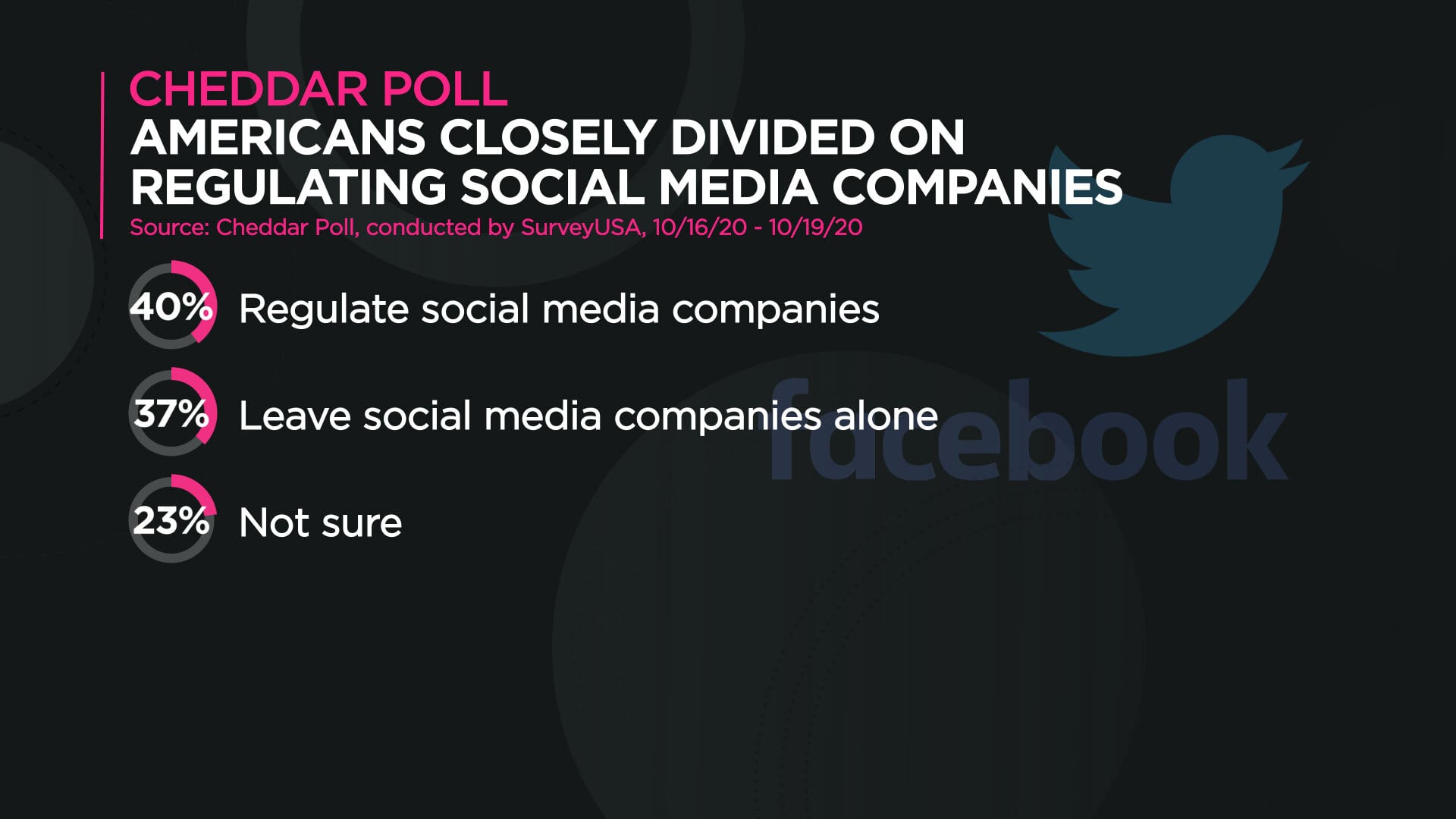
But regardless of how often lawmakers rail against Section 230 protections, it does not seem to have the same impact when it comes to American sentiment. Slightly more Americans believe the government should regulate technology platforms versus allowing them to regulate themselves, 40 percent to 37 percent respectively. 
This comes as those lawmakers argue about the legal loopholes that allow social media giants to profit off of content on their platforms but are not held accountable for that content. Many conservative legislators in particular are concerned about the regulation of conservative speech, despite conservative content routinely making up the top posts on Facebook each week. 

This also tracks with the trend among self-described conservatives who largely believe that conservative-leaning content is more censored than any other content. 

It’s a message that has been reinforced by the White House, where President Donald Trump has held official presidential events to combat perceived social media bias, filling the Rose Garden with popular right-leaning online personalities and launching a tool in 2019 encouraging people to report incidents of social media bias. That portal is now closed, but that messaging may explain why the president holds a slight lead on the topic of which candidate is best equipped to handle powerful social media companies. Overall, 42 percent of people said Trump will best respond to a world where social media companies hold a lot of power, compared to 38 percent for former Vice President Joe Biden, the Democratic presidential nominee. 

Americans under 35 and older than 65 see Biden as slightly better to manage social media power than Trump, while people in the middle age ranges give the edge to Trump. Men rank Trump as better to handle social media giants, while women say it would be Biden. 

It’s clear, though, that no matter who is elected president on Election Day, social media companies will face a great deal of scrutiny in the future. This week, the Department of Justice filed antitrust charges against technology giant Google and many lawmakers have suggested the same must be done for Facebook and other social media platforms. 

Social media CEOs will continue to be questioned by lawmakers on their influence on the American electorate, but if it’s difficult to chart a legislative path forward, it may be due to divisions among the American people when it comes to attitudes toward social media and the regulation of these companies. 

This poll of 2,000 adults was conducted between October 16 and October 19 exclusively for Cheddar by SurveyUSA.
Share:
More In Politics
WSJ: Andrew Cuomo Planning His Political Comeback
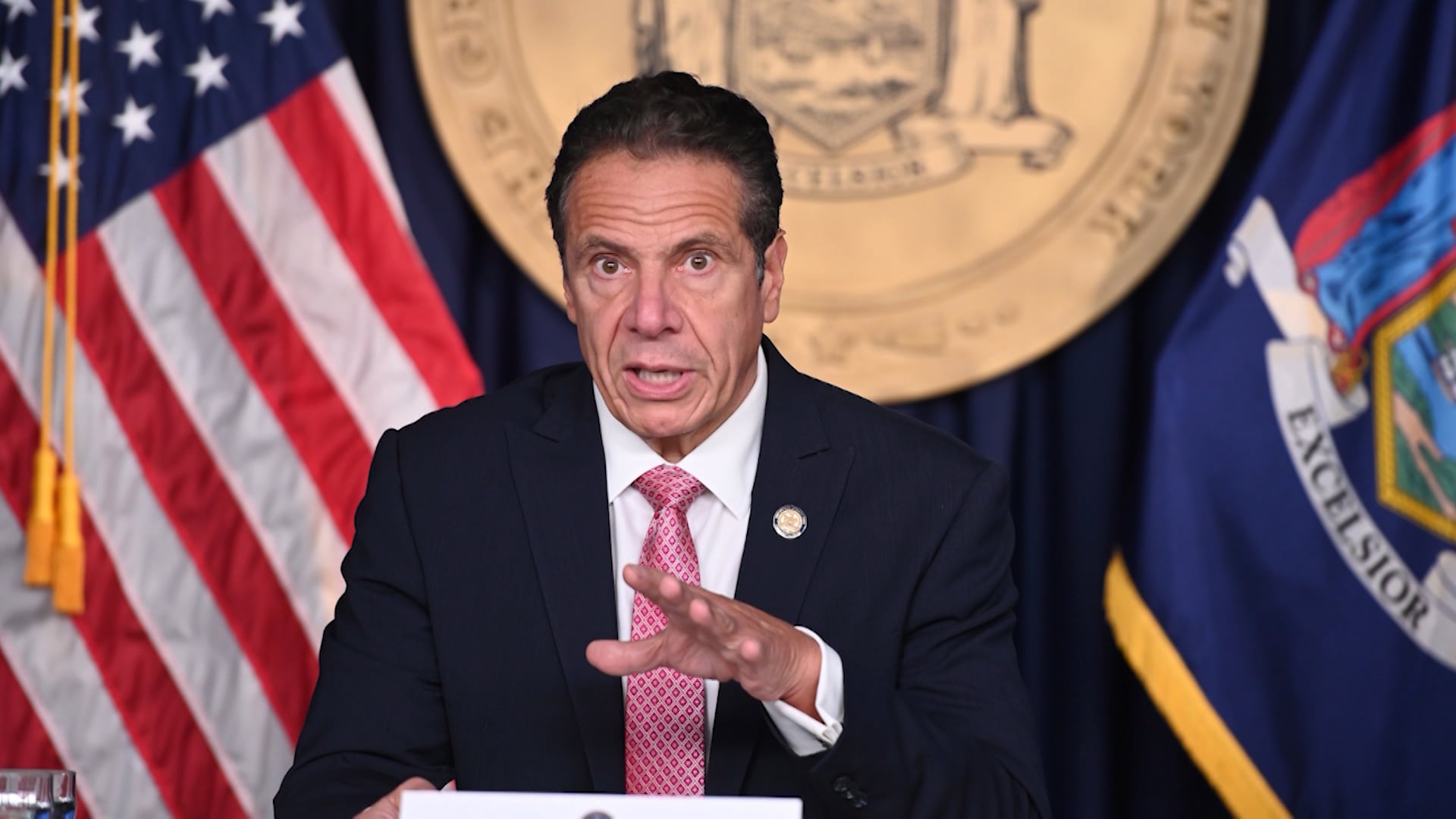
Andrew Cuomo is reportedly planning his comeback. According to the Wall Street Journal, the former New York governor and his aides are considering how to make his first public appearance since he abruptly resigned last August amid sexual harassment allegations. Jake Lahut, politics reporter for Insider, joined Cheddar's Opening Bell to discuss Cuomo's potential return to politics.
UK Prime Minister Boris Johnson's Top Aides Quit Over Scandal
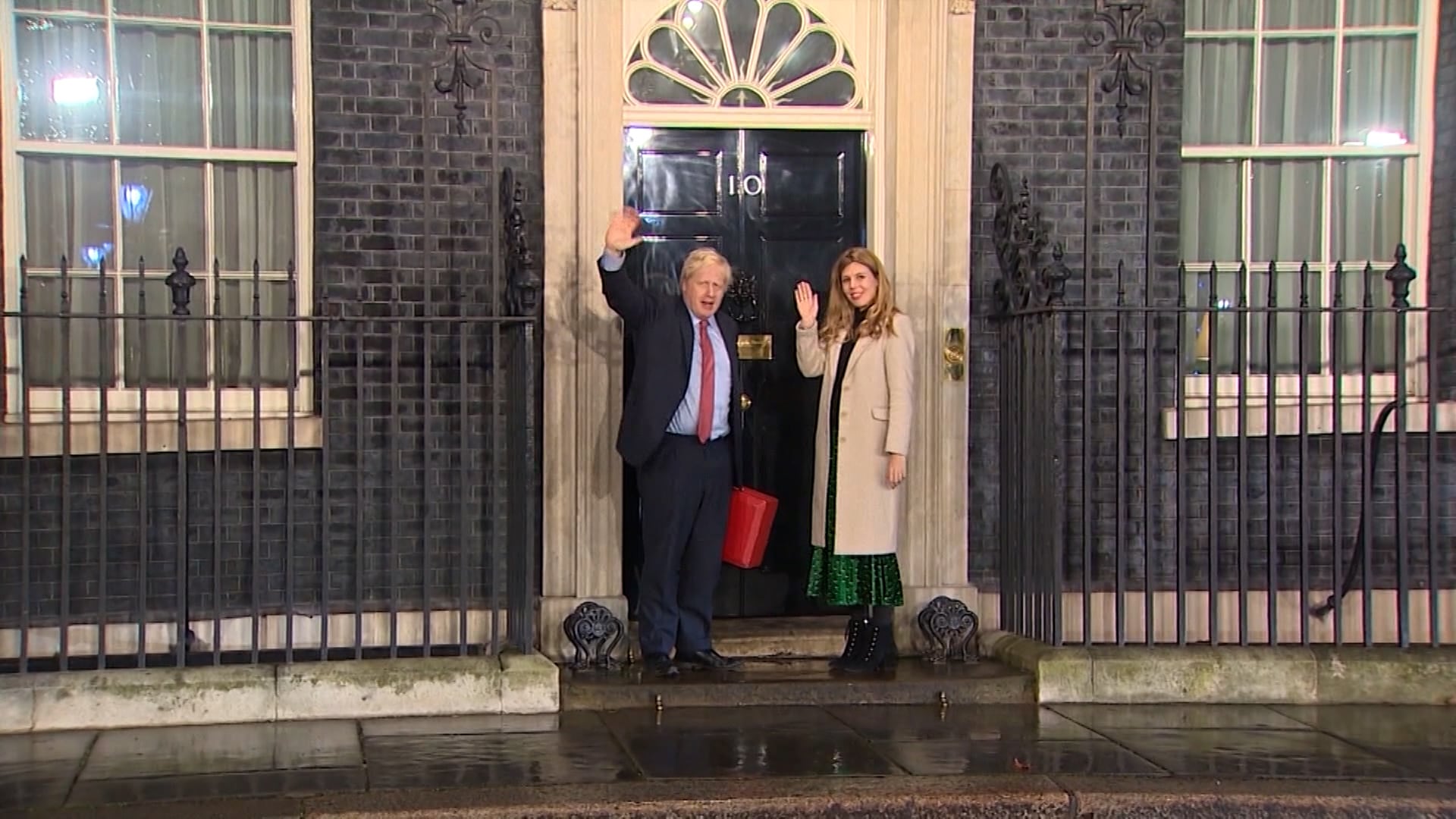
The pressure is on for UK Prime Minister Boris Johnson - after his closest aides handed in their resignations this week. It comes after a report found that 16 parties had taken place at Downing Street while Covid lockdown protocols were in place in the region. Ari Aramesh, Attorney & National Security/Foreign Policy Analyst joined Cheddar's Opening Bell to discuss.
President Biden Orders 3,000 Troops To Eastern Europe Amid Russia-Ukraine Tensions
President Biden has ordered about 3,000 U.S. troops to Eastern Europe as Russia refuses to back off its pressure on Ukraine. The deployments to Poland, Germany, and Romania are a show of support to NATO allies concerned about a potential Russian invasion of Ukraine. This is in addition to the 8,500 troops put on high alert. David Tafuri, former Obama campaign foreign policy advisor and former State Department official, joined Cheddar to discuss what this move means for U.S.-Russia relations.
Peng Shuai Reappearance With IOC in China Raises More Questions
After tennis player Peng Shuai made an explicit sexual assault allegation toward a former Chinese government official, she disappeared from the public eye. Her recent reappearance with the IOC alongside a Chinese Olympic committee official raised eyebrows and renewed concerns for her safety. Asian affairs expert Gordon Chang, author of "The Coming Collapse of China," joined Wake Up With Cheddar to discuss Peng Shuai's retraction and the various human rights controversies swirling at the Beijing games. "It's clear that the IOC was working with Beijing to make sure that she did not express herself freely," Chang said. "So really this is the IOC being complicit in these mechanisms of control over Peng."
The 2022 Beijing Olympics Kick Off
The opening ceremony of the 2022 winter Olympics has kicked off at the Beijing national stadium. 150,000 spectators are in attendance for the games inside the 'closed loop' system separating Olympic personnel from the public. Cheddar News spoke with Brian Cazenueve, Sports Illustrated contributor, to share the highlights you may have missed and much more.
Biden Administration Working To Address TikTok's Security Risk
The Biden Administration is set to revise federal rules to address potential security risks from foreign-owned apps, mainly Tiktok. This comes after the White House opted not to pursue a forced shutdown of the Chinese-owned video sharing platform. Under these new rules, federal oversight would be expanded to explicitly include apps that could be used by foreign adversaries to steal or otherwise obtain data. Senior Fellow at the Foundation for Defense of Democracies, Craig Singleton, joined Cheddar to discuss more.
Will The Texas Grid Fail Again? ERCOT Says They Are 'Ready For This Storm'
Although this week's weather is predicted to be less severe than the 2021 storm, Texans are preparing for the worst - stocking up on supplies and emptying shelves in grocery stores, once again. Some Texans still have not recovered from last year's tragedy, and are heading into the next few weeks with anxiety for what's to come. Leslie Beyer, CEO of the Houston-based energy workforce & technology council, joins Cheddar News to discuss if the Texas grid will fail again.
The Black Student Debt Crisis and the Racial Wealth Gap Divide
Student loan debt continues to be a major concern for tens of millions of Americans who collectively owe about $1.7 trillion. Black college students often take on larger amounts of student debt in order to pay for a higher education. In turn, they are more likely to struggle post-graduation with repaying their debt, creating a racial wealth gap divide. Andre Perry, senior fellow at Brookings Institution joined All Hands to help break down the black student debt crisis.
President Biden on Shutting Down Iron Pipeline to Prevent Gun Violence in NYC Visit
After two NYPD officers were killed with an illegal gun, President Biden made a trip to New York City to speak on the issue of gun violence fed by the "iron pipeline" of illegal firearms that make their way from the South to the Big Apple. Kris Brown, the president of the gun violence prevention organization Brady United, joined Cheddar to discuss what this visit from the president could mean for the future of gun laws in America. "He's asked Congress to pass things like expanding the Brady background check system, but with the filibuster a barrier to so much action right now in the Congress, he's looking at solutions that involve funding at the federal level and really involve enforcement."
Load More