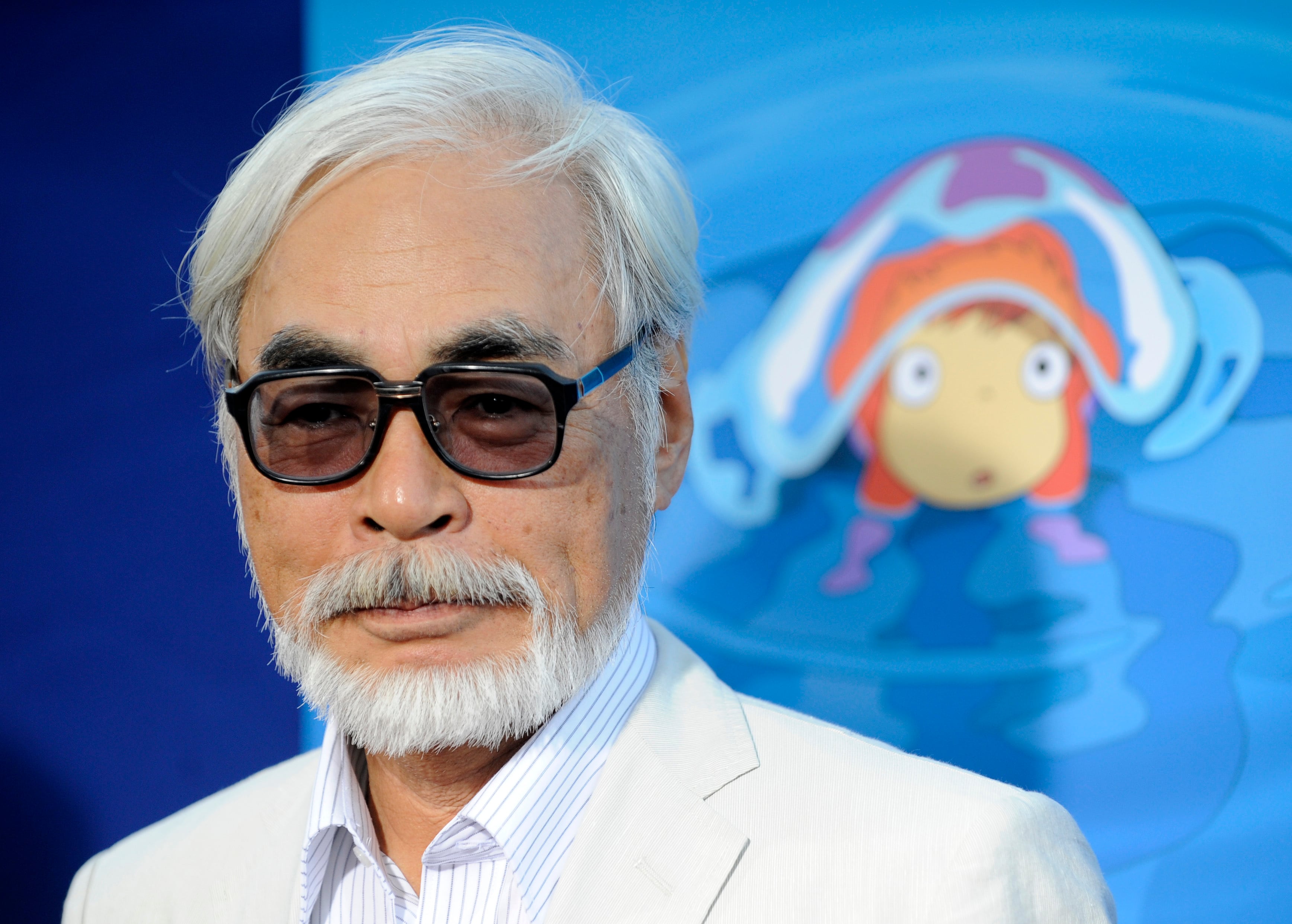
LOS ANGELES (AP) — Fans of Studio Ghibli, the famed Japanese animation studio behind “Spirited Away” and other beloved movies, were delighted this week when a new version of ChatGPT let them transform popular internet memes or personal photos into the distinct style of Ghibli founder Hayao Miyazaki.
But the trend also highlighted ethical concerns about artificial intelligence tools trained on copyrighted creative works and what that means for the future livelihoods of human artists. Miyazaki, 84, known for his hand-drawn approach and whimsical storytelling, has expressed skepticism about AI's role in animation.
Janu Lingeswaran wasn't thinking much about that when he uploaded a photo of his 3-year-old ragdoll cat, Mali, into ChatGPT's new image generator tool on Wednesday. He then asked ChatGPT to convert it to the Ghibli style, instantly making an anime image that looked like Mali but also one of the painstakingly drawn feline characters that populate Miyazaki movies such as “My Neighbor Totoro” or “Kiki's Delivery Service.”
“I really fell in love with the result,” said Lingeswaran, an entrepreneur who lives near Aachen, Germany. “We're thinking of printing it out and hanging it on the wall.”
Similar results gave the Ghibli style to iconic images, such as the casual look of Turkish pistol shooter Yusuf Dikec in a T-shirt and one hand in his pocket on his way to winning a silver medal at the 2024 Olympics. Or the famed “Disaster Girl” meme of a 4-year-old turning to the camera with a slight smile as a house fire rages in the background.
ChatGPT maker OpenAI, which is fighting copyright lawsuits over its flagship chatbot, has largely encouraged the “Ghiblification” experiments and its CEO Sam Altman changed his profile on social media platform X into a Ghibli-style portrait. In a technical paper posted Tuesday, the company had said the new tool would be taking a “conservative approach” in the way it mimics the aesthetics of individual artists.
“We added a refusal which triggers when a user attempts to generate an image in the style of a living artist,” it said. But the company added in a statement that it “permits broader studio styles — which people have used to generate and share some truly delightful and inspired original fan creations.”
Studio Ghibli in Japan declined to comment Friday.
As users posted their Ghibli-style images on social media, Miyazaki’s previous comments on AI animation also began to resurface. When Miyazaki was shown an AI demo in 2016, he said he was “utterly disgusted” by the display, according to documentary footage of the interaction. The person demonstrating the animation, which showed a writhing body dragging itself by its head, explained that AI could “present us grotesque movements that we humans can’t imagine.” It could be used for zombie movements, the person said.
That prompted Miyazaki to tell a story.
“Every morning, not in recent days, I see my friend who has a disability,” Miyazaki said. “It’s so hard for him just to do a high five; his arm with stiff muscle can’t reach out to my hand. Now, thinking of him, I can’t watch this stuff and find it interesting. Whoever creates this stuff has no idea what pain is.”
He said he would “never wish to incorporate this technology into my work at all.”
“I strongly feel that this is an insult to life itself,” he added.
Josh Weigensberg, a partner at the law firm Pryor Cashman, said that one question the Ghibli-style AI art raises is whether the AI model was trained on Miyazaki or Studio Ghibli’s work. That in turn “raises the question of, ‘Well, do they have a license or permission to do that training or not?’” he said.
OpenAI didn’t respond to a question Thursday about whether it had a license.
Weigensberg added that if a work was licensed for training, it might make sense for a company to permit this type of use. But if this type of use is happening without consent and compensation, he said, it could be “problematic.”
Weigensberg said that there is a general principle “at the 30,000-foot view” that “style” is not copyrightable. But sometimes, he said, what people are actually thinking of when they say “style” could be "more specific, discernible, discrete elements of a work of art,” he said.
“A ‘Howl’s Moving Castle' or ‘Spirited Away,’ you could freeze a frame in any of those films and point to specific things, and then look at the output of generative AI and see identical elements or substantially similar elements in that output,” he said. “Just stopping at, ‘Oh, well, style isn’t protectable under copyright law.’ That's not necessarily the end of the inquiry.”
Artist Karla Ortiz, who grew up watching Miyazaki’s movies and is suing other AI image generators for copyright infringement in a case that’s still pending, called it “another clear example of how companies like OpenAI just do not care about the work of artists and the livelihoods of artists.”
“That’s using Ghibli’s branding, their name, their work, their reputation, to promote (OpenAI) products,” Ortiz said. “It’s an insult. It’s exploitation.”
Ortiz was further enraged when President Donald Trump’s administration jumped into the meme trend Thursday, using the White House’s official X account to post a Ghibli-style image of a weeping woman from the Dominican Republic recently arrested by U.S. immigration agents. The White House and OpenAI didn’t immediately respond to requests for comment on how the image was made.
“To see something so brilliant, as wonderful as Miyazaki’s work be butchered to generate something so foul,” Ortiz wrote on social media, adding that she hoped Studio Ghibli sues “the hell out of” OpenAI for this.
—————-
O'Brien reported from Providence, Rhode Island. AP writer Yuri Kageyama in Tokyo contributed to this report.
—————-
The Associated Press and OpenAI have a licensing and technology agreement that allows OpenAI access to part of AP’s text archives.