DAVID BAUDER AP Media Writer
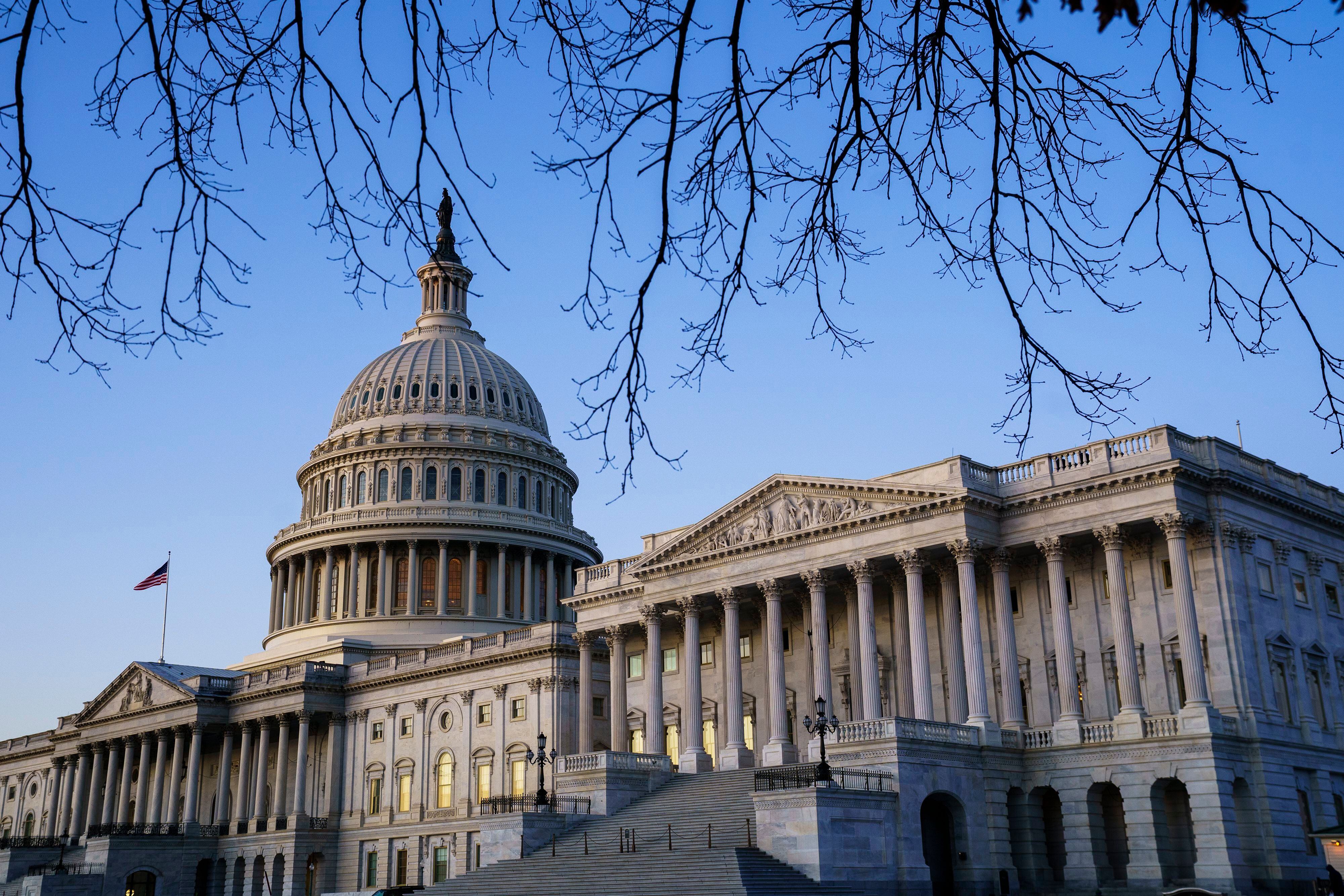
NEW YORK (AP) — Americans who want to follow President Donald Trump's impeachment saga and Hollywood mogul Harvey Weinstein's rape trial through the media will sit in obstructed seats.
Both events begin in earnest this week — with Senate arguments over Trump's impeachment beginning Tuesday and opening statements in the Weinstein case Wednesday. Both have been the subject of behind-the-scenes wrangling over media access.
Far from an esoteric exercise, the limited media access affects what the public is able to see and, just as importantly, who controls the narrative.
C-SPAN, joined by the other major television networks, objects to the Senate's plan to essentially allow only two camera views of the impeachment trial from the Senate floor. One would focus on whoever is speaking at the time and the other would be a wider shot of the Senate itself, said Terry Murphy, C-SPAN's vice president of programming, on Monday.
More camera shots are generally permitted during special events, but not in this case, he said.
It means, for example, that pictures of how individual senators are reacting to testimony, what groups gather together for informal confabs, or any demonstrations that may take place will generally go missing. The Senate will be the arbiter of what pictures go out, Murphy said.
“The citizen who gets to sit in the gallery gets a lot better view than the person sitting inside the living room at home,” Murphy said. “All we ask is that the person watching from home get the same view.”
Restrictions on reporters who sit in the press gallery, including having to go through metal detectors to enter and not being allowed to transmit messages electronically while there, may minimize the immediate value of having those eyes on sight.
“Can anyone name a time when free flow of information is more important than when impeachment is the issue and the nation is bitterly divided?” said Tom Bettag, a veteran news producer who now teaches journalism at the University of Maryland. "For any one side to try to control the news can only inflame the situation.”
Typically, reporters have generous access to politicians in the hallways outside. Most senators are keen to talk, although the reaction of Arizona Sen. Martha McSally last week, who called CNN's Manu Raju a “liberal hack” when he tried to ask her a question, illustrate these are fraught times.
For the public and politicians, information gleaned from these conversations can fill in the blanks about what is happening behind the scenes and how testimony was being taken.
So journalists were alarmed when initial rules were put in place that would pen in reporters directly outside the Senate chamber and chill attempts at conversations. There's been some progress loosening those rules; reporters were assured Monday that Capitol police would no longer try to break up any interviews they saw in Capitol hallways, as happened late last week, said Sarah Wire, a reporter for the Los Angeles Times and chair of the Standing Committee on Correspondents, which is responsible for credentialing reporters.
“It is one of the most important moments in American history,” Wire said. “Having reporters speak to senators is important, and not just the senators who choose to speak to reporters.”
Christopher Isham, Washington bureau chief for CBS News, said discussions are “still fairly fluid” in terms of making it easier for senators who want to talk. He's optimistic that the public will ultimately have roughly the same access to the impeachment trial through the media as it did for President Bill Clinton's trial.
A spokesman for Senate Majority Leader Mitch McConnell did not immediately return a message seeking comment. Not everyone is sympathetic to the journalists' arguments, however.
“It's like people complaining at the airport that they have to go through security,” said Tim Graham of the conservative watchdog Media Research Center. “Welcome to living in America. And they wonder why they're so unpopular.”
The American Civil Liberties Union, which together with several other groups sent a letter to the Senate last week, urged the leaders not to slide back to 20th Century technology at a time more can be done to let the public know what the politicians are up to.
Bettag, once executive producer at ABC's “Nightline,” said any differences in news coverage of the impeachment trial caused by media restrictions is likely to be so subtle that most viewers won't notice. But it's important for news organizations to fight them, since without that things are likely to tighten even further in the future.
Cable news networks CNN, Fox News Channel and MSNBC are expected to cover every minute of the impeachment trial, mirroring coverage of the House hearings. ABC, CBS and NBC will also have extensive coverage but haven't committed to showing each minute of the hearings.
By comparison, the much-anticipated Weinstein trial will be much harder for the public to follow. The once-powerful Hollywood producer, whose behavior gave rise to the #MeToo movement, is on trial in a New York courtroom on charges that he raped a woman in a hotel room in 2013 and forced oral sex on another in 2006.
New York state courts infrequently allow or are equipped to provide television coverage, and despite efforts by Court TV, state Supreme Court Justice James Burke is not permitting cameras in this case. Any depiction of Weinstein listening to testimony in the trial will come from sketch artists.
Reporters permitted in the courtroom will not be allowed to have phones or any recording devices; they won't be allowed to text, tweet or email anything to the outside world, according to rules issued by Burke.
News organizations have also been unsuccessfully pushing for an “overflow” room at the state Supreme Court, which would allow more reporters room on site.