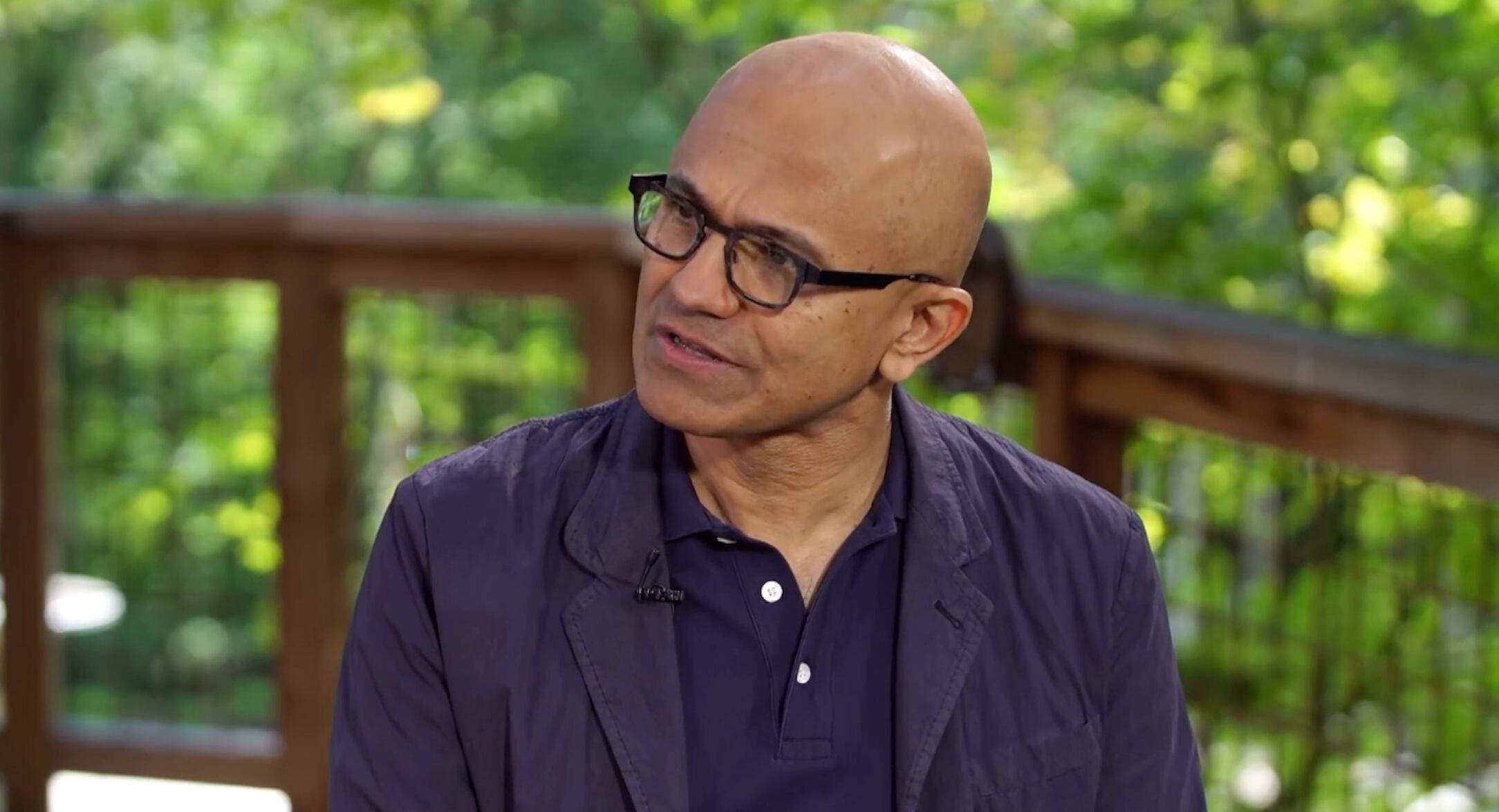
Amid ongoing resistance from employees about Microsoft's contracts with the U.S. military, CEO Satya Nadella issued a broad defense this week of the company's work with the U.S government and said America's democratic process serves as a key check on the deployment of new technology.
"We are absolutely going to partner and serve our government and its agencies," Nadella said in a wide-ranging exclusive interview with Cheddar's Hope King.
"In our democracy, we've elected them to protect the freedoms we all as citizens enjoy," he said. "We have a set of ethical principles and so does our government. If anything, they, and the democratic process will ensure that those ethical principles are kept top of mind."
"So we really rely, as you know, both [as] a corporate citizen as well as citizens in this country, to be able to make sure that we never cross any line as a nation or as a company or as an individual."
In November of last year, Microsoft won a nearly $500 million contract from the military to develop its HoloLens mixed reality technology for combat-training purposes, stoking backlash from some of its employees. Now the company is competing against Amazon for a $10 billion cloud-computing contract from the Department of Defense.
The project, known as the Joint Enterprise Defense Infrastructure plan, or JEDI for short, would allow the military to accelerate war planning and improve its fighting capabilities.
In the interview, Nadella also addressed the growing calls from many elected officials — from Senator Elizabeth Warren to President Trump — for the government to rein in big tech companies like Microsoft, Google, Facebook, and Apple.
Federal agencies have also grown more eager to investigate big tech over antitrust and privacy issues. Just this week, the Federal Trade Commission agreed to a $5 billion settlement with Facebook in a case that grew out of the widespread privacy violations in the Cambridge Analytica scandal.
Nadella, who has been with Microsoft for nearly three decades, has seen this before with antitrust cases in the late 90s. Now, however, Microsoft and the rest of the tech sector faces dissection from all corners of the world. A hotter spotlight comes with the territory of growth, and companies like his have to address their role in this time and space.
"As technology has become more important and more pervasive in our lives and in our societies across all sectors, it's a given that there's going to be more scrutiny, and a look at us as an industry. And we have to mature," he said. "We can't just simplify the world just because it's convenient for us."
When asked if he supports regulation and how it might break any existing business, Nadella replied: "Let's just be okay — and trust — that the overall ability for regulators to come up with systems that protect the broader society is something that we should not shy away from."
Still, the executive warned that "anything that is over-regulated could have its own unintended consequences."
Cheddar also asked Nadella about how he thinks about the security of foreign technology — such as the effective banning of the Chinese telecoms firm Huawei from the U.S. — and ongoing trade issues.
"We are an American-based multinational company so therefore we are subject to American laws and the laws of the United States," he said. "That said, I think one of the things that we are very clear on is that we should not conflate too many things. There is trust in technology, which broadly needs to be there, and then there are trade issues that are political issues between countries that need to get resolved."
The Microsoft executive acknowledged that, on trade, countries will act in their own interests.
"We as a multinational company are fundamentally responsible for ensuring that we're creating surplus in all those communities and countries," he said.
Microsoft recently disputed reports that the company would move some of its production out of China amid the ongoing US-China trade dispute.
For part one of the interview, click here.