By Michelle Chapman
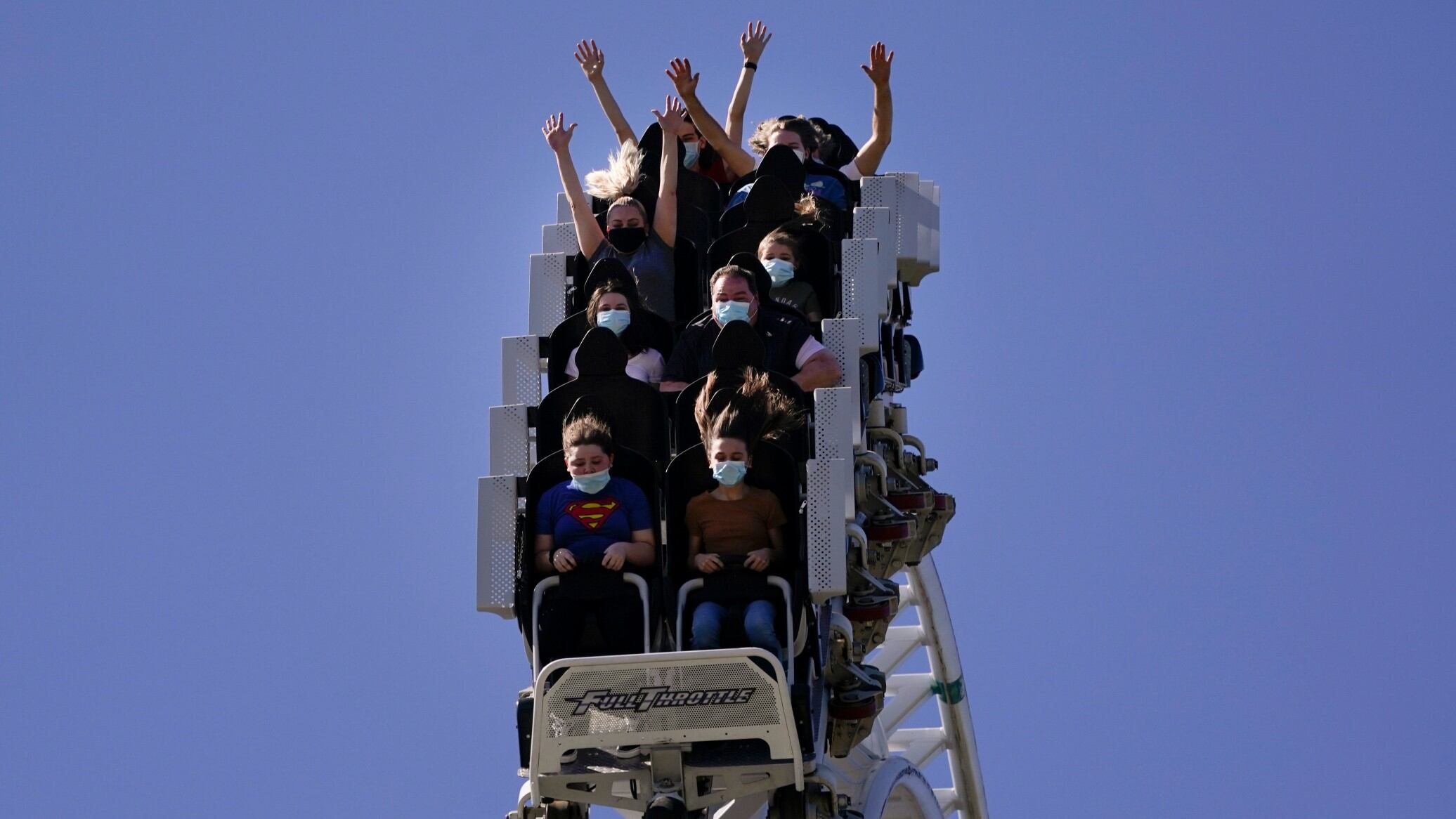
Cedar Fair and Six Flags are merging to create an expansive amusement park operator with operations spread across 17 U.S. states and three countries.
The combined company, worth more than $3.5 billion, will boast 27 amusement parks, 15 water parks and nine resort properties in the U.S., Canada, and Mexico. It will also have entertainment partnerships and a portfolio of intellectual property including Looney Tunes, DC Comics and Peanuts.
Amusement parks have seen an uptick in revenue but have struggled to raise attendance since the pandemic, even as other entertainment sectors have bounced back. A tie-up between two huge players is expected to at least lower costs.
Cedar Fair reported an attendance of 12.4 million guests in its third quarter, a 1% increase from a year earlier. Six Flags announced a 16% rise in its third-quarter attendance, which totaled 9.3 million guests.
But amusement parks, including Six Flags, has struggled to get people through the gates, said James Hardiman at Citi Investment Research.
“Whereas the theme park industry as a whole has been under significant pressure since the start of the pandemic, Six Flags has created additional pressure of its own, with a volatile new attendance and pricing strategy that has struggled to take root, alienating its core customers and leading to dramatic drops in visitation along the way,” Hardiman wrote.
Six Flags and Cedar Fair, which have little geographical overlap, anticipate $120 million in cost savings within two years of closing the deal.
Six Flags and Cedar Fair have talked about potential deals before, with Six Flags previously making an offer for Cedar Fair in 2019, but it was turned down. SeaWorld approached Cedar Fair with a bid last year, but that proposal was also rejected.
Under the agreement announced Thursday, Cedar Fair unitholders will receive one share of common stock in the combined company for each unit owned, while Six Flags shareholders will receive 0.5800 shares of stock in the combined company for each share owned.
Cedar Fair unitholders will own approximately 51.2% of the combined company, while Six Flags shareholders will own about 48.8%.
“Our merger with Six Flags will bring together two of North America’s iconic amusement park companies to establish a highly diversified footprint and a more robust operating model to enhance park offerings and performance,” Cedar Fair CEO Richard Zimmerman said in a prepared statement.
Zimmerman will be president and CEO of the combined company. Selim Bassoul, president and CEO of Six Flags, will become executive chairman.
The companies said that given their broader geographic footprint as a single company, seasonal volatility should moderate.
The company's newly formed board will include six directors from Cedar Fair and six directors from Six Flags.
The company will be headquartered in Charlotte, North Carolina, and will keep significant finance and administrative operations in Sandusky, Ohio, where Cedar Fair is based.
Six Flags is now based in Arlington, Texas.
Once the deal closes, the combined company will operate under the name Six Flags and trade under the ticker symbol “FUN” on the New York Stock Exchange.
The transaction, which was approved by both companies' boards, is targeted to close in the first half of next year. It still needs approval from Six Flags shareholders.
Shares of Six Flags Entertainment Corp. and Cedar Fair LP were essentially flat before the opening bell Thursday, but both are up more than 9% this week after rumors of a deal began to spread.