Empty airport at sunset, 3D generated image, generic location. (Getty Images- gremlin)
A surge in COVID-19 infections overseas in places like China has prompted the U.S. Centers for Disease Control and Prevention to consider testing airplane wastewater for the virus.
The agency announced plans to begin inspecting airplane wastewater last month and now it is looking to clear a legal hurdle. Scientists have already found that testing wastewater for traces of the COVID-19 is a viable process and agreed that the method can act as a new defense weapon against the spread of the virus in the U.S.
An upgraded line of defense is needed as requiring international travelers to test negative for the virus before entering the country has been proven to not completely mitigate the spread of the virus. In December 2021, an airplane wastewater analysis of a flight from Ethiopia to France showed that despite passengers testing negative for COVID-19, the omicron variant was still present in waste.
Experts suggested that analyzing airplane wastewater can even help scientists determine how vaccines should be updated.
"If you do have a new variant that's coming and you have a wastewater sample, it's going to be more concentrated coming out of a smaller sewer shed or an airport," Sandra McLellan, professor of freshwater sciences at the University of Wisconsin-Milwaukee, told NBC. "If you just look in the municipal wastewater, you could miss it."
When it comes to a potential legal dispute in assessing airplane wastewater, some countries could consider airplanes their own territory and removing anything from them could be considered theft, according to Kata Farkas, research officer at Bangor University and contributor to a new airplane wastewater study.
A new analysis shows that sales in the metaverse real estate land topped $500 million in 2021. The recent surge in sales came as a result of Facebook's decision to rebrand itself as Meta in hopes to focus more on the metaverse. According to investors and analytic firms, those numbers could jump even higher and reach a billion bucks by 2025. Ceo of Republic Realm, Janine Yorio, joined Cheddar to discuss more.
In January alone, the gaming sector has seen three major acquisitions. Yesterday, Sony added to the flurry of M&A activity in the gaming space, snatching up game developer 'Bungie' for $3.6 billion dollars. Renee Gittins, executive director at the International Gaming Developers Association, joins Cheddar News to discuss.
Google’s philanthropy arm, Google.org, recently announced a $10 million grant for the AARP Foundation to aid in teaching digital skills to low income older workers. As the implementation of hybrid work expands, a greater emphasis is being placed on helping workers 50 years old and up — especially among women and people of color — to be digitally literate in order to keep the workplace generationally diverse. Lisa Marsh Ryerson, president of the AARP Foundation, joined Cheddar News to talk about the curriculum of the partnership. "Those of us who are 50 and older are not digital natives, so we do have a learning curve that we have to address," she noted.
AT&T announced earlier today it is spinning off its media properties in WarnerMedia in a merger with Discovery in a $43 billion deal.Scott Rostan, founder and CEO at Training The Street, joined Cheddar to talk about what the unwinding of the telecom giant's Time Warner media properties means for investors. "I think the investor sentiment is they're digesting the new information, and they're looking into the dividend, especially the reduction of the dividend," said Rostan, noting the transaction allows AT&T to focus on its core telecommunications business.
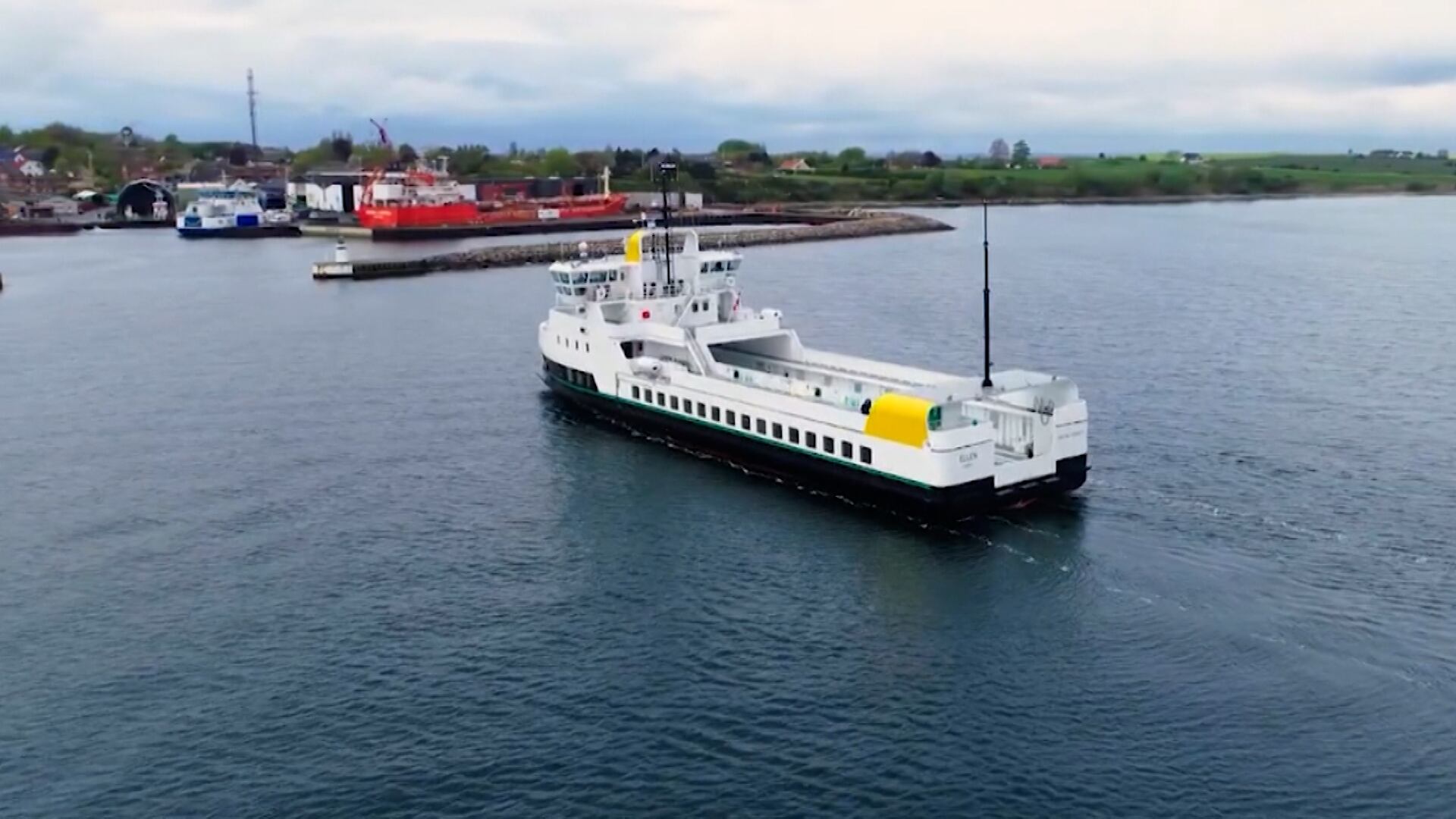
A 2021 report from UK Research and Innovation found that the shipping industry makes up at least 2.5 percent of the world's total CO2 emissions. It's a problem that energy solutions company, Leclanché, is trying to solve. Founded in 1909, the company has been developing and producing batteries for more than 100 years. Today, Leclanché's lithium-ion battery is used to electrify not just ships, but also railroad locomotives, trucks, and specialty vehicles. Cheddar News spoke with Pierre Blanc, chief technology and industrial officer of Leclanché, to discuss.
Amazon is betting that ammonia could be the fuel of the future, participating in a Series A round for the Brooklyn-based company Amogy in December. Amogy aims to de-carbonize transportation with a clean energy system that uses ammonia as a renewable fuel. Amogy is partnering with Amazon on its first commercial product - an ammonia-powered cargo-shipping vessel. Amogy CEO Seonghoon Woo joins Cheddar Climate to discuss.