In this Oct. 27, 2020, file photo, a young passenger pulls his bag as he walks through Salt Lake City International Airport, in Salt Lake City. (AP Photo/Rick Bowmer, File)
By Mike Stobbe and Heather Hollingsworth
With the coronavirus surging out of control, the nation’s top public health agency pleaded with Americans on Thursday not to travel for Thanksgiving and not to spend the holiday with people from outside their household.
It was some of the firmest guidance yet from the government on curtailing traditional gatherings to fight the outbreak.
The Centers for Disease Control and Prevention issued the recommendations just one week before Thanksgiving, at a time when diagnosed infections, hospitalizations and deaths are skyrocketing across the country. In many areas, the health care system is being squeezed by a combination of sick patients filling up beds and medical workers falling ill themselves.
The CDC’s Dr. Erin Sauber-Schatz cited more than 1 million new cases in the U.S. over the past week as the reason for the new guidance
“The safest way to celebrate Thanksgiving this year is at home with the people in your household,” she said.
If families do decide to include returning college students, military members or others for turkey and stuffing, the CDC is recommending that the hosts take added precautions: Gatherings should be outdoors if possible, with people keeping 6 feet apart and wearing masks and just one person serving the food.
Where Americans heed the warning is another matter. The deadly comeback by the virus has been blamed in part on pandemic fatigue, or people getting tired of masks and other precautions. And surges were seen last summer after Memorial Day and July, despite blunt warnings from health authorities.
The United States has seen more than 11 million diagnosed infections and over 250,000 deaths from the coronavirus. CDC scientists believe that somewhere around 40% of people who are infected do not have obvious symptoms but can still spread the virus.
On December 25, 2021, NASA got into the holiday spirit by launching the James Webb Space Telescope, the largest and most powerful space science observatory in history.
It is intended to succeed the Hubble Space Telescope as NASA's flagship mission in astrophysics and is able to view objects too old and distant for Hubble. Gregory Robinson, director of NASA's James Webb Space Telescope program, joins Cheddar News' Closing Bell to discuss the mission. "I think a lot of what we don't know today is what I'm expecting to find and certainly really understand what took place more than 13.5 billion years ago and see the formation of some of the first galaxies in our universe," said Robinson.
Every few years, the Olympics roll around to prove that, yes, the world’s best athletes can jump farther, swim faster, and generally crush records that would’ve been impossible just a few decades ago. Take ski jumping - the world record has increased by well over 200 meters in fewer than 100 years. Responsible for this is a lot of intentional engineering of equipment and hills, but perhaps the biggest change is thanks to one act of human daring. Watch to find out how!
YouTube creator platform Spotter recently announced $200 million in Series D financing at a valuation of $1.7 billion, led by SoftBank Vision Fund 2. Spotter allows YouTubers to license the rights to their video catalogs in exchange for large sums of cash paid upfront. The company's clients include some of YouTube's most popular personalities, with a combined total of more than 1.2 billion subscribers. Aaron Debevoise, founder and CEO of Spotter, joins Cheddar News' Closing Bell to discuss.
What if we added the equivalent of over 1300 football fields to the tip of Manhattan? This was the proposal of a recent op-ed in The New York Times - increasing the size of the borough by about 12% in order to mitigate two of its most pressing problems. There’s evidence from all over the world that doing this can be a useful technique for crowded ocean-side cities. But the process to do so - reclaiming land from the ocean - is rife with potential downsides. So is this a proportional response to gigantic problems? Or a zany harebrained scheme that’ll do more harm than good?
Marti Bledsoe Post, executive director of On Our Sleeves, joins Cheddar News to discuss the latest study finding the impact children's mental health can have on working parents.
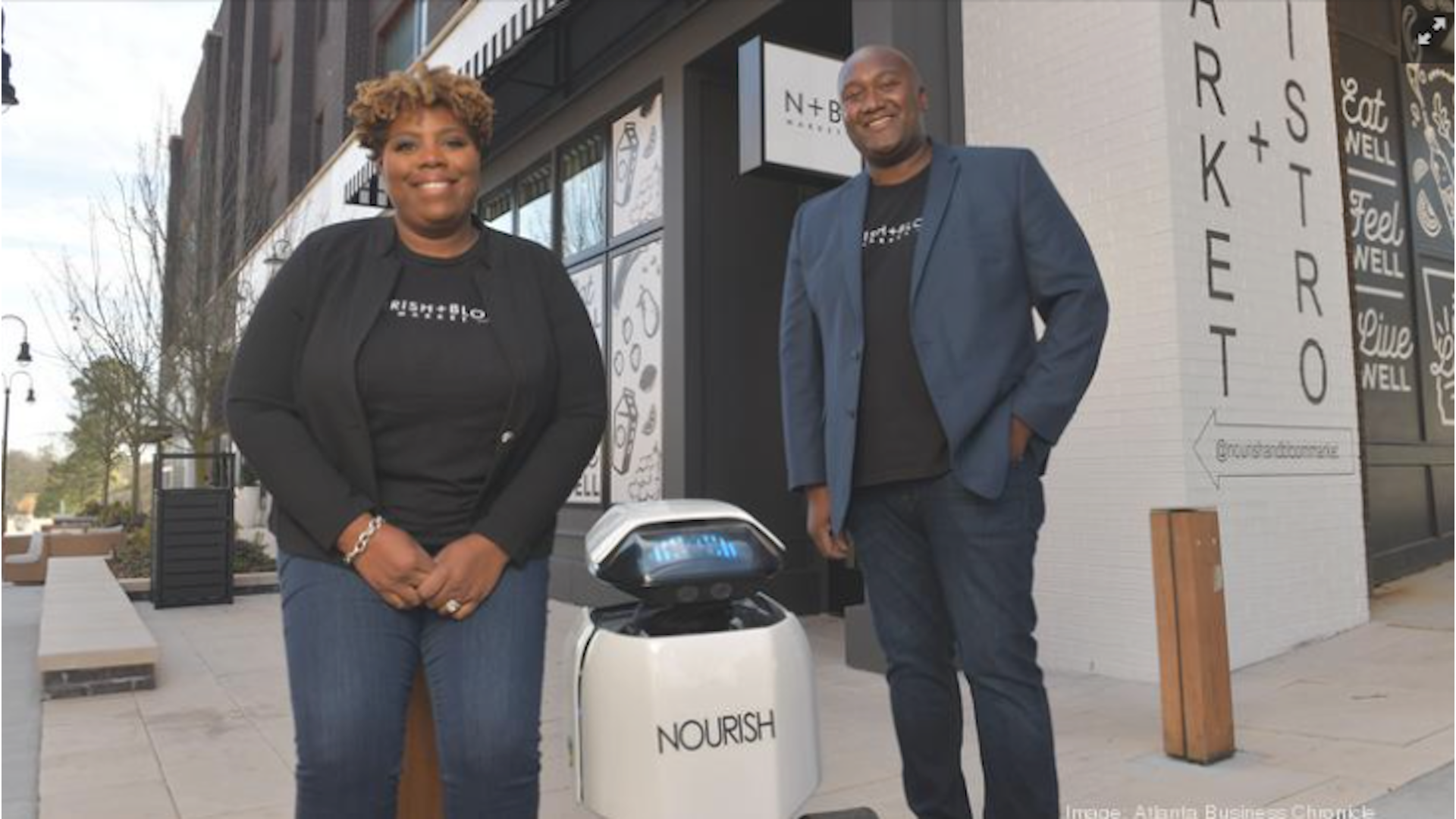
Jamie Hemmings and Jilea Hemmings, owners and founders of Nourish + Bloom Market, join Cheddar News to talk about the inspiration behind creating their cashierless grocery store.
Bartholomew Jones and Renata Henderson, co-owners of Cxffeeblack, join Cheddar News to discuss how they are merging Black culture with coffee in Memphis.
Dr. Daniel Bober, psychiatrist and certified addiction medicine physician, joins Cheddar News to offer tips on how parents and guardians can talk to their children about what's happening in Ukraine.