The field of Democratic presidential hopefuls grew a little smaller today as former Housing Secretary Julián Castro announced he is dropping out of the race.
Election Day may still be 311 days away, but campaign season started more than two years ago when former Rep. John Delaney announced his bid for the presidency. Shortly after, 29 Democrats joined Delaney, a field that has slowly whittled itself down to the 14 candidates.
Castro never broke into the rank of top contenders but left a mark on the race with his progressive politics and efforts to move the conversations forward on border control and immigration. Castro, who was the only Latino candidate in the race, now joins a different growing field: the dropouts. The field began as the most racially diverse in Democratic history, but the departures of Castro and Senator Kamala Harris leave the competition looking more similar to past presidential races.
Castro, the 45-year-old former San Antonio mayor, who spent a year in the race, is almost 10 years older than another mayor vying for young voters. Well, another former mayor. On January 1, Pete Buttigieg’s second term as South Bend, Indiana Mayor came to an end. In December 2018, he had announced he would not seek a third term, weeks before he started an exploratory committee for a presidential run.
Buttigieg became the youngest mayor of a city with a population of more than 100,000 when he was just 29, but on the trail, he has come under fire for a lack of experience. In last month’s Democratic debate, the sixth of its kind, Senator Amy Klobuchar, one of only four remaining women in the race, challenged former-Mayor Pete for his lack of national governance experience and contended a woman who was a mayor of a small city would not have been taken as seriously.
The candidate from Indiana has also faced criticism in the national spotlight for his handling of policing issues in South Bend. Most recently, he struggled with the fallout after a fatal police shooting of a 54-year-old black man in September. He has been confronted by voters about police violence and shrinking diversity on the that city's police force.
While politicians continue to knock Buttigieg’s experience, his fundraising numbers may tell a more promising story. His team announced it had raised $24.7 million in the fourth quarter of 2019, which was the second-highest total announced by Democratic contenders so far.
President Donald Trump, whose New Year’s celebrations may have been tempered by an incoming year that is expected to include an impeachment trial and another election, announced he had raised $46 million last quarter.
Buttigieg is polling in fourth place, behind Biden, Senator Bernie Sanders, and Senator Elizbeth Warren, according to the RealClearPolitics national poll average.
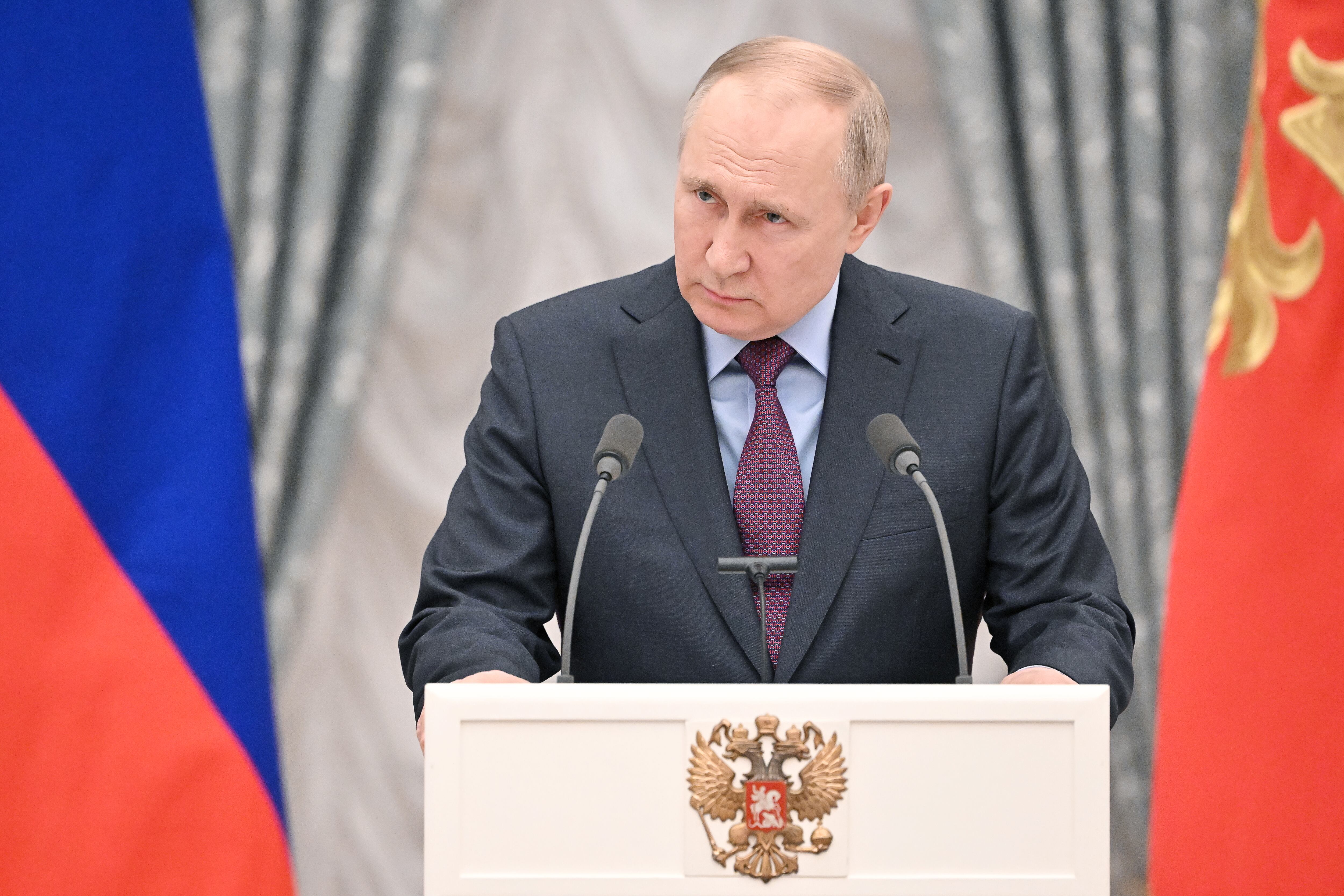
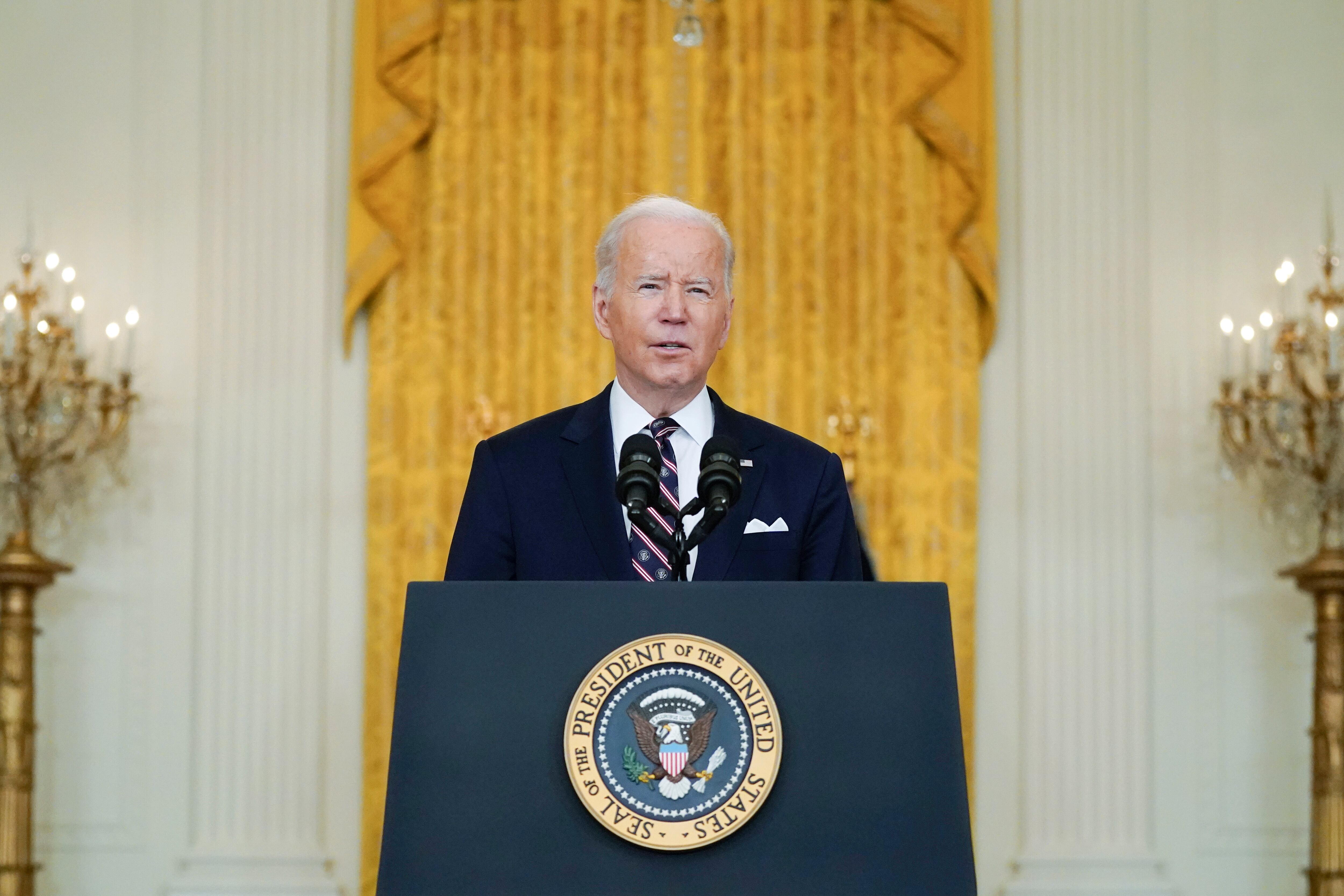
President Joe Biden said Tuesday that the U.S. will begin to impose sanctions on Russia, calling recent troop movement into Ukraine an 'invasion.' Biden and other government officials including from the State Department have begun to classify the Russian troop movement as an invasion after Russian President Vladimir Putin ordered troops to two independent Ukrainian areas in an alleged "peacekeeping" mission — which the West considers an act of aggression. Biden said Russia will continue to pay 'an even steeper price' if it continues sending troops into Ukraine. What happens next? Will Putin find a way around these sanctions? Ariel Cohen, senior fellow at the Atlantic Council, joins Closing Bell to discuss Biden's remarks, how the West will protect Ukraine since it doesn't belong to NATO, and more.
Russian lawmakers have given President Vladimir Putin a military force authorization in Ukraine, and President Biden has described Putin's announcement declaring the independence of two provinces within Ukraine and his subsequent deployment of peacekeepers as tantamount to "invasion. David Tafuri, a former Obama campaign foreign policy advisor and Bush State Department official, joined Cheddar News to discuss. "The Ukrainian military occupies more than 70 percent of those provinces still," Tafuri said, noting Putin alleged having a responsibility to defend those regions. "This would put Ukrainian forces and Russian forces right at each other engaged. And that might be how the war starts."
The major indexes ended Tuesday's session sharply lower due to escalating tensions between Russia and Ukraine. Bill Stone, Chief Investment Officer at The Glenview Trust Company, joins Cheddar News' Closing Bell, where he reminds viewers that Wall Street doesn't like uncertainty, and more of the recent losses are due to geopolitics than inflation.
Karim Hijazi, CEO of Prevailion, joins Cheddar News' Closing Bell, where he says that crypto's decentralized nature will pose obstacles for the FBI's new crypto unit, but it will also make progress with items such as managing fraudulent exchanges.
The Retail Industry Leaders Association released a report alleging the safety risks, economic losses, and potential job losses they link to a surge in shoplifting crimes in the United States. Lisa LaBruno, senior EVP of retail operations at the trade organization, joined Cheddar News to discuss the impact of websites that allow for the resale of unverified goods and passing the INFORM Consumers Act to stamp it out. “We need to hold the online marketplaces accountable for being a favored venue for criminals to resell stolen product," LaBruno said. "And that is exactly what the INFORM Act is designed to do."
The East-West faceoff over Ukraine has escalated dramatically, with Russian lawmakers authorizing President Vladimir Putin to use military force outside his country and President Biden and European leaders responding by slapping sanctions on Russian oligarchs and banks.
Stocks closed broadly lower Tuesday after Russia sent forces into Ukraine’s eastern region and the U.S., European Union and U.K. responded with economic sanctions.