Canopy CEO: We'll 'Disrupt the Heck' Out of Pharma
*By Carlo Versano*
At the end of a week that saw the nascent cannabis sector soar to record valuations (with enough [volatility](https://cheddar.com/videos/making-sense-of-tilrays-stock-chart) to make your head spin), at least one exec isn't getting high off his own supply.
Bruce Linton, CEO of Canopy Growth ($CGC), told Cheddar Friday that he is focused on using a recent $4 billion cash injection from Constellation Brands to accelerate his business operations as new markets open up for legal marijuana use.
The market for legal pot went from a handful of countries like Canada, where Canopy is based, to now over 30 globally, Linton said in an interview, and Constellation's stake "is the kind of rocket fuel we need."
As speculators send the stocks higher ー Canopy is up 100 percent since the August deal, while Tilray ($TLRY) is up 1,000 percent since its July IPO ー Linton is keeping his nose to the grindstone developing new uses for cannabis, illustrated by the 39 patents Canopy filed in the last year just for sleep-related cannabinoid products. He sees other uses as well, from anxiety to sports recovery, which begs the question: is Canopy a pharma company?
"We're going to have enough intellectual property and activity that it would be difficult for pharma companies...not to need to play with us," Linton said. "We're going to disrupt the heck out of them."
Speaking of disruption, Linton said he wasn't bothered by parallels with the dot-com bubble of the early 2000s. He said Canopy had more in common with a Google or Amazon ー established businesses with strong fundamentals ー than any of the internet stocks that were relegated to the tech boneyard after the bubble popped.
But for an industry like cannabis that is entirely dependent on regulation, there will always be a risk, Linton noted. For every country like Canada, which legalized medical marijuana in 2001 and will allow recreational use starting October 17, there's an Italy ー where medical marijuana is legal but heavily restricted ー or a Japan ー where it is strictly outlawed. Put another way, Canopy may have the best legal pot cultivation and distribution in the world, but its long-term success on a global scale may be capped by shifting regulatory and political climates.
Still, Linton sees the writing on the wall in places like South America, Australia, and the EU. As regulatory barriers come down, he said Canopy's strong production operations will lead the market.
"People can fight for who's going to be the second best," Linton said. "We're going to be the best and the largest and the most dominant on the planet over the next decade."
For full interview [click here](https://cheddar.com/videos/canopy-growth-blazing-a-trail).
Plant-based hair extension company Rebundle recently raised $1.4 million in a pre-seed round led by M25. The company based in St. Louis says it is revolutionizing hair extensions with more comfort and less waste. Rebundle's braiding hair is made from a non-toxic, biodegradable plant, which the company says is better for the scalp and the environment. Rebundle Co-Founder and CEO Ciara Imani May and Co-Founder and CMO Danielle Washington joined Cheddar News' Closing Bell to discuss.
Soildus Labs, a market compliance and surveillance technology provider for crypto firms, has spearheaded the launch of the Crypto Market Integrity Coalition, a pledge committing to a safe and sensibly-regulated crypto industry. Kathy Kraninger, VP of Regulatory Affairs at Solidus Labs, discusses on Cheddar News' Closing Bell the biggest problems in the digital asset space that this new initiative plans to solve.
Stocks closed mixed Monday as a broader tech sell-off continued, leading the Nasdaq to close down 0.58%. Investors are keeping an eye on earnings, and also looking ahead to Thursday's CPI data, which will give an idea of how hot inflation could still be running. Steve Sosnick, Chief Strategist at Interactive Brokers, joins Closing Bell to discuss today's close, the Federal Reserve's plans to raise interest rates and taper asset purchasing, his 2022 market outlook, and more.
The global chip shortage continues to weigh on the automotive industry. For example, Ford says it is suspending or cutting production at eight of its factories in North America through next week due to the shortage. Balu Balakrishnan, President and CEO of Power Integrations, joins Cheddar News' Closing Bell, where he elaborates on why the chip shortage has dragged into 2022.
Peloton has weathered a seemingly never-ending storm the past few months: PR blunders, sinking customer demand, and in recent weeks, reported cost-cutting and potential layoffs. Now, several companies are said to be in the mix as potential buyers: Amazon, Netflix, Disney, and Apple. How likely is it that one of these companies pursues a deal — and how likely is it that it will be Apple who buys Peloton? Dan Ives, Managing Director of Equity Research at Wedbush Securities, joins Closing Bell to discuss his thoughts about Apple pursuing a Peloton takeover,
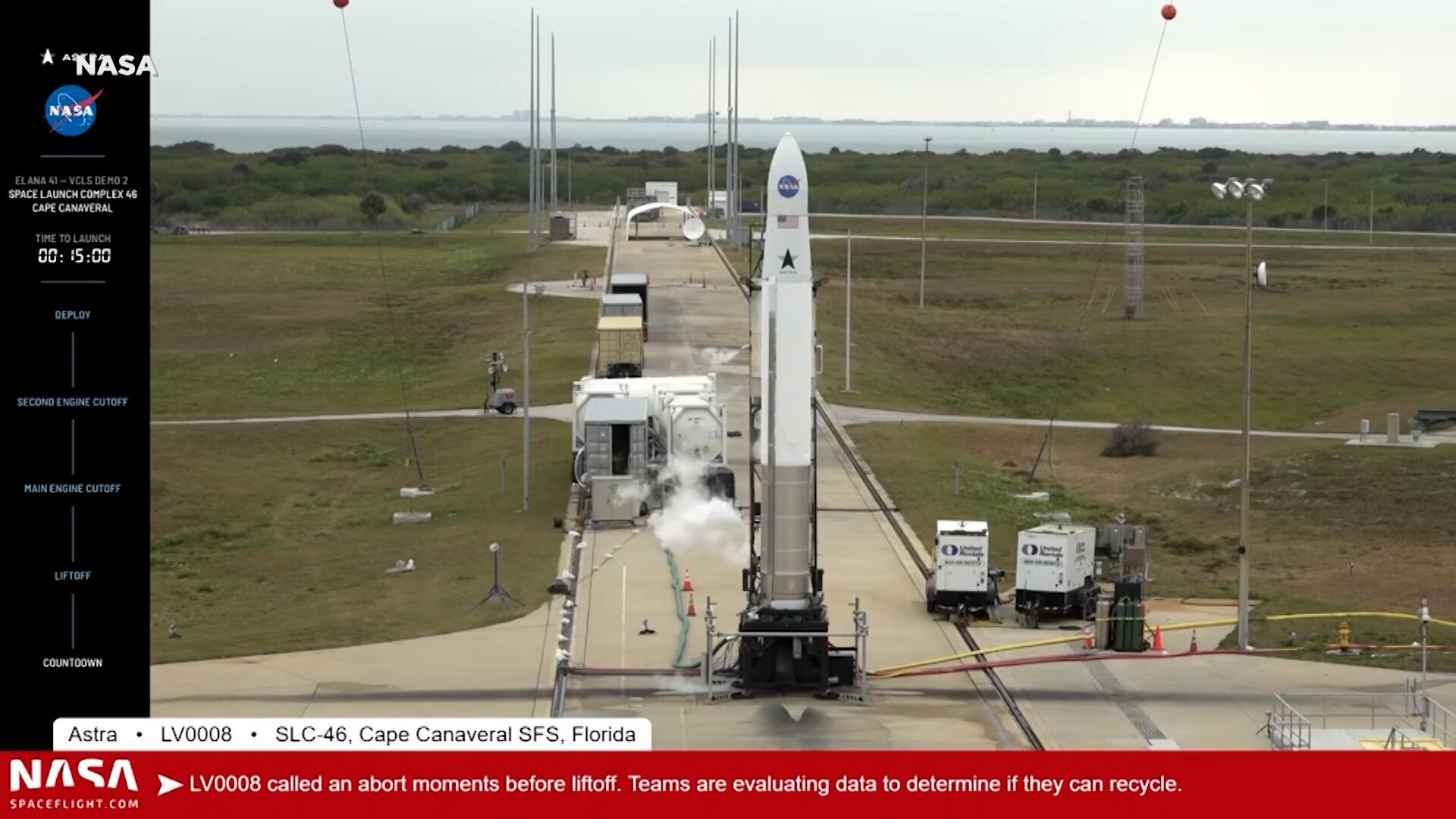
Astra aborted the launch for NASA ELaNa 41 Mission out of Cape Canaveral on Monday due to what was described as a minor issue, but the company's stock fell nearly 14 percent following the news. Jim Cantrell, CEO and co-founder of Phantom Space, which builds and launches spacecraft of its own, joined Cheddar to discuss the scrubbed mission. “The last thing you want is for this to go wrong, you're better to err on the side of safety expectations,” Cantrell explained, noting that the mission delay was a normal event.
Dating app Bumble announced its first acquisition, expanding into Europe by picking up Fruitz, a French Platform. The Fruitz app allows its users to convey dating preferences through fruit metaphors.
Meat production giant Tyson Foods reported a beat on its Q1 earnings. In spite of obstacles posed by supply chain issues and inflation, the company exceeded expectations on earnings per share and revenue.