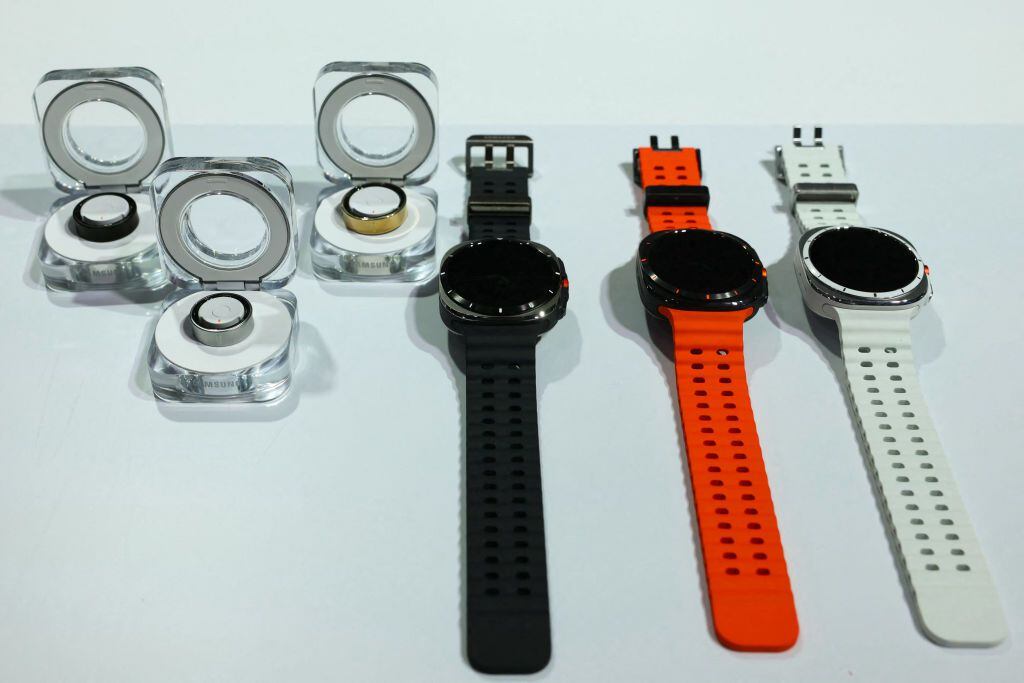
Samsung’s new Galaxy S9 may be meant to compete with the iPhone 8, but Android Central’s Russell Holly says the latest device could give even Apple’s high-end smartphone a run for its money.
“It’s going to be an interesting price for people who are looking to not spend that $1,000 price tag [for an iPhone X],” the senior editor told Cheddar.
At $720, the S9 is priced a little higher than the iPhone 8 ($700) but less than the 8 Plus ($800) and comes in well under Apple’s premium product.
The lack of a sticker shock isn’t the only draw for consumers, says Holly. Though the phone looks a lot like Samsung’s well-received S8, it's packed with a few attractive upgrades.
The S9’s camera operates at 960 frames per second in slow motion and also has “a physical aperture for better low-light and daylight situations,” says Holly. And the S9’s new processor gives its battery a lot more juice than the S8.
Another notable feature is the S9’s AR emoji function, which is built into the camera itself. This allows users to share their AR emojis across other apps “instead of just the one purpose that you have with Apple [animojis in the iPhone X].”
Samsung dropped the S9 and S9+ at the World Mobile Congress in Barcelona, which takes place this week through Friday.
For the full interview, [click here](https://cheddar.com/videos/calling-the-2018-mobile-world-congress-to-order).
Amid a backdrop of ongoing tariff uncertainty, more and more gamers are facing price hikes. Microsoft raised recommended retailer pricing for its Xbox consoles and controllers around the world this week. Its Xbox Series S, for example, now starts at $379.99 in the U.S. — up $80 from the $299.99 price tag that debuted in 2020. And its more powerful Xbox Series X will be $599.99 going forward, a $100 jump from its previous $499.99 listing. The tech giant didn’t mention tariffs specifically, but cited wider “market conditions and the rising cost of development.” Beyond the U.S., Microsoft also laid out Xbox price adjustments for Europe, the U.K. and Australia. The company said all other countries would also receive updates locally.
Apple CEO Tim Cook said Thursday that the majority of iPhones sold in the U.S. in the current fiscal quarter will be sourced from India, while iPads and other devices will come from Vietnam as the company works to avoid the impact of President Trump’s tariffs on its business. Apple’s earnings for the first three months of the year topped Wall Street’s expectations thanks to high demand for its iPhones, and the company said tariffs had a limited effect on the fiscal second quarter’s results. Cook added that for the current quarter, assuming things don’t change, Apple expects to see $900 million added to its costs as a result of the tariffs.
Visa is hoping to hand your credit card to an artificial intelligence “agent” that can find and buy clothes, groceries, airplane tickets and other items on your behalf.
Shares of Deliveroo, the food delivery service based in London, are hitting three-year highs on Monday after it received a $3.6 billion proposed takeover offer from DoorDash.
X, the social media platform owned by Trump adviser Elon Musk, is challenging the constitutionality of a Minnesota ban on using deepfakes to influence elections and harm candidates.