By Don Thompson

California is transforming baseball stadiums, fairgrounds and even a Disneyland Resort parking lot into mass vaccination sites as the coronavirus surge overwhelms hospitals and sets a deadly new record in the state.

California's COVID-19 death toll reached 30,000 on Monday, according to data collected by Johns Hopkins University.

It took six months for the nation's most populous state to reach 10,000 deaths but barely a month to jump from 20,000 to 30,000 deaths. California ranks third nationally for COVID-19-related deaths, behind Texas and New York, which is No. 1 with nearly 40,000.

Public health officials have estimated about 12% of those who catch the virus will require hospital care, usually several weeks after infection as they get sicker.

Gov. Gavin Newsom and public health officials are counting on widespread vaccinations to help stem the tide of new infections, starting with medical workers and the most vulnerable elderly, such as those in care homes.

Newsom acknowledged the rollout of vaccines has been too slow and he pledged 1 million shots will be administered this week, more than twice what’s been done so far.

That effort will require what Newsom called an “all-hands-on-deck approach,” including having vaccinations dispensed by pharmacists and pharmacy technicians, dentists, paramedics and emergency medical technicians, and members of the California National Guard.

Orange County, south of L.A. County, announced Monday that its first mass vaccination site will be at a Disneyland Resort parking lot in Anaheim. It's one of five sites to be set up to vaccinate thousands of people daily.

The sites are “absolutely critical in stopping this deadly virus," county Supervisor Dough Chaffee said in a statement.

The state will vastly expand its effort with new mass vaccination sites at parking lots for LA’s Dodger Stadium, Petco Park in San Diego and the CalExpo fairgrounds in Sacramento.

Cars lined up early Monday near the downtown stadium in San Diego, where officials aimed to inoculate 5,000 health care workers a day.

“It’s kind of like a Disneyland ride” with cars moving through, said Heather Buschman, spokeswoman for UC San Diego Health, whose medical staff was administering the shots. She said people seemed eager to be vaccinated, with more than 12,500 health care workers in San Diego County initially scheduling an appointment.

By week's end, the city of Los Angeles planned to convert its huge COVID-19 testing site at Dodger Stadium into a vaccination center that can handle 12,000 inoculations daily.

Los Angeles County is an epicenter for the COVID-19 outbreak, accounting for some 40% of California's virus-related deaths and a huge number of new cases.

On Monday, nearly 8,000 people were hospitalized in Los Angeles County, which had fewer than 50 intensive care units available in an area with a population of 10 million people, said Dr. Christina Ghaly, county director of Health Services.

While the county saw a dip in new cases, the director of public health, Barbara Ferrer, said that probably is due to decreased testing after the New Year's holiday. She predicted another increase in cases from people who gathered together unsafely over the holiday.

Ferrer also said COVID-19 is still killing someone in the county every eight minutes, on average.

There is a sliver of hope, with new hospitalizations statewide down from about 3,500 a day earlier this month to about 2,500. Some forecasts say the hospitalizations will level off by the end of the month.

Yet recent frightening jumps in new positive cases show the state may simply have bought itself time to prepare for what officials still expect to be a “surge on top of a surge” in the next few weeks driven by New Year's celebrations, officials said.

Still, the state may get “a little breathing room” for hospitals that have seen their staff and oxygen supplies stretched thin, and for 1,000 newly arriving contract medical workers to be augmented by another 1,000 or so before the surge peaks, said Dr. Mark Ghaly, secretary of the California Health and Human Services Agency.

Lawmakers also continued to plead with people to keep social distancing to slow the spread of infection. In L.A. County, residents were being urged to wear a mask even when at home if they go outside regularly and live with someone elderly or otherwise at high risk.

“Dying from COVID in the hospital means dying alone,” county Board of Supervisors Chair Hilda Solis said. “Visitors are not allowed into hospitals for their own safety. Families are sharing their final goodbyes on tablets and mobile phones."

“One of the more heartbreaking conversations that our health care workers share is about these last words when children apologize to their parents and grandparents for bringing COVID into their homes, for getting them sick," Solis said. “And these apologies are just some of the last words that loved ones will ever hear."

Watson reported from San Diego. Associated Press writers John Antczak, Robert Jablon and Christopher Weber in Los Angeles contributed to this report.

Share:
More In Science
Climate Experts Attend House Committee Meeting in Place of Big Oil Board Members
After months of investigation, board members from U.S. big oil companies were slated to appear before a House oversight committee this week to discuss their respective roles in pushing for climate initiatives internally. However, all four board members from Exxon, Shell, Chevron, and BP said they couldn't attend due to scheduling conflicts. Climate experts are testifying in their place about how effective big oil's climate promises have been so far. Meanwhile, President Joe Biden's lead science adviser Eric Lander has resigned after an investigation found he violated workplace policy. What will this mean for Biden's climate agenda? Amy Harder, executive editor of Cipher, a publication by Breakthrough Energy, joins Cheddar Climate to discuss.
Will The Texas Grid Fail Again? ERCOT Says They Are 'Ready For This Storm'
Although this week's weather is predicted to be less severe than the 2021 storm, Texans are preparing for the worst - stocking up on supplies and emptying shelves in grocery stores, once again. Some Texans still have not recovered from last year's tragedy, and are heading into the next few weeks with anxiety for what's to come. Leslie Beyer, CEO of the Houston-based energy workforce & technology council, joins Cheddar News to discuss if the Texas grid will fail again.
American Red Cross Calls for Donors Amid Worst Blood Shortage in Over a Decade
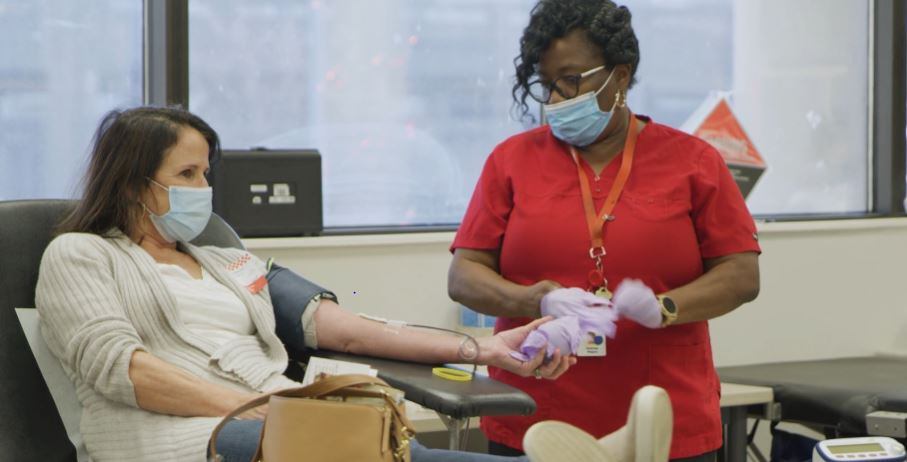
The American Red Cross has declared its first-ever "national blood crisis" in the United States. Since COVID hit the U.S. in March 2020, blood donations have declined by 10 percent. American Red Cross Medical Director, Dr. Baia Lasky joined Cheddar News to discuss the country facing the worst blood shortage in over a decade. Dr. Lasky noted that as much as 40 percent of Americans are eligible to donate blood but only about 4 percent do so. "This is going to be ongoing," she said. "This is not an acute shortage. We really do need the commitment of people to come out and donate and donate again." Appointments to donate can be made by using the Red Cross Donor App, at RedCrossBlood.org, or calling 1-800-RED CROSS (1-800-733-2767).
NFL Awards $1 Million to Study Impact of Cannabis and CBD on Pain Management
Eight months after the National Football League announced $1 million in research into cannabinoids, the NFL-NFLPA Joint Pain Management Committee has awarded the funding to two teams of medical researchers at the University of California San Diego and the University of Regina. The NFL says the studies will investigate the effects of cannabinoids on pain management and neuroprotection from concussion in elite football players, respectively. Cheddar correspondent Chloe Ailello spoke with Jeff Miller, the executive vice president of communications, public affairs, and policy for the NFL, about the studies, as well as the recent lawsuit filed against the NFL by former Miami Dolphins head coach Brian Flores. "Maybe we can learn things from other alternative pain approaches that are going to benefit our player population and then sports medicine as a whole," Miller said.
How A.I. is Reinventing Remembrance; Biodiversity of the Humboldt Current
On this episode of Cheddar Innovates: CEO of HereAfter AI discusses how artificial intelligence can be used to preserve family history and stories, and allow you to 'talk' to loved ones that have passed; Creator of the board game 'Travel Explore Discover' explains how she came up with the idea for this informative and educational board game, and how she's using the proceeds to give back to her community; Cheddar gets a look at Curiosity Stream's 'The Humboldt Current.'
Long COVID: Millions Dealing with Residual Symptoms
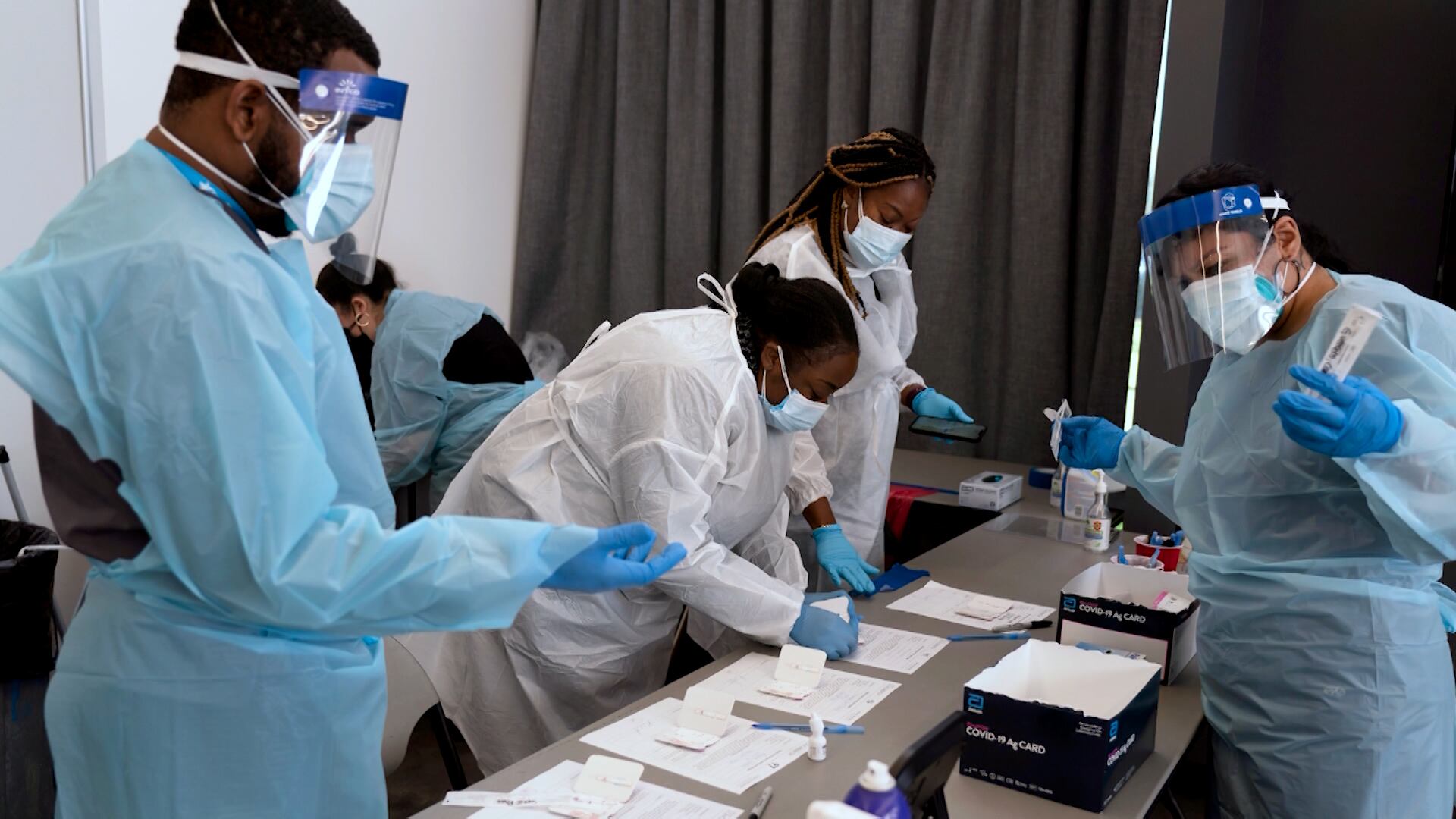
Immunologist Dr. Purvi Parikh of the Allergy & Asthma Network joined Cheddar News to break down long Covid, in which Covid symptoms remain up to two years after infection; a phenomenon that has so far mystified health experts.
Factorial Energy Raises $200 Million to Accelerate Commercialization of Its Solid-State Batteries for Electric Vehicles
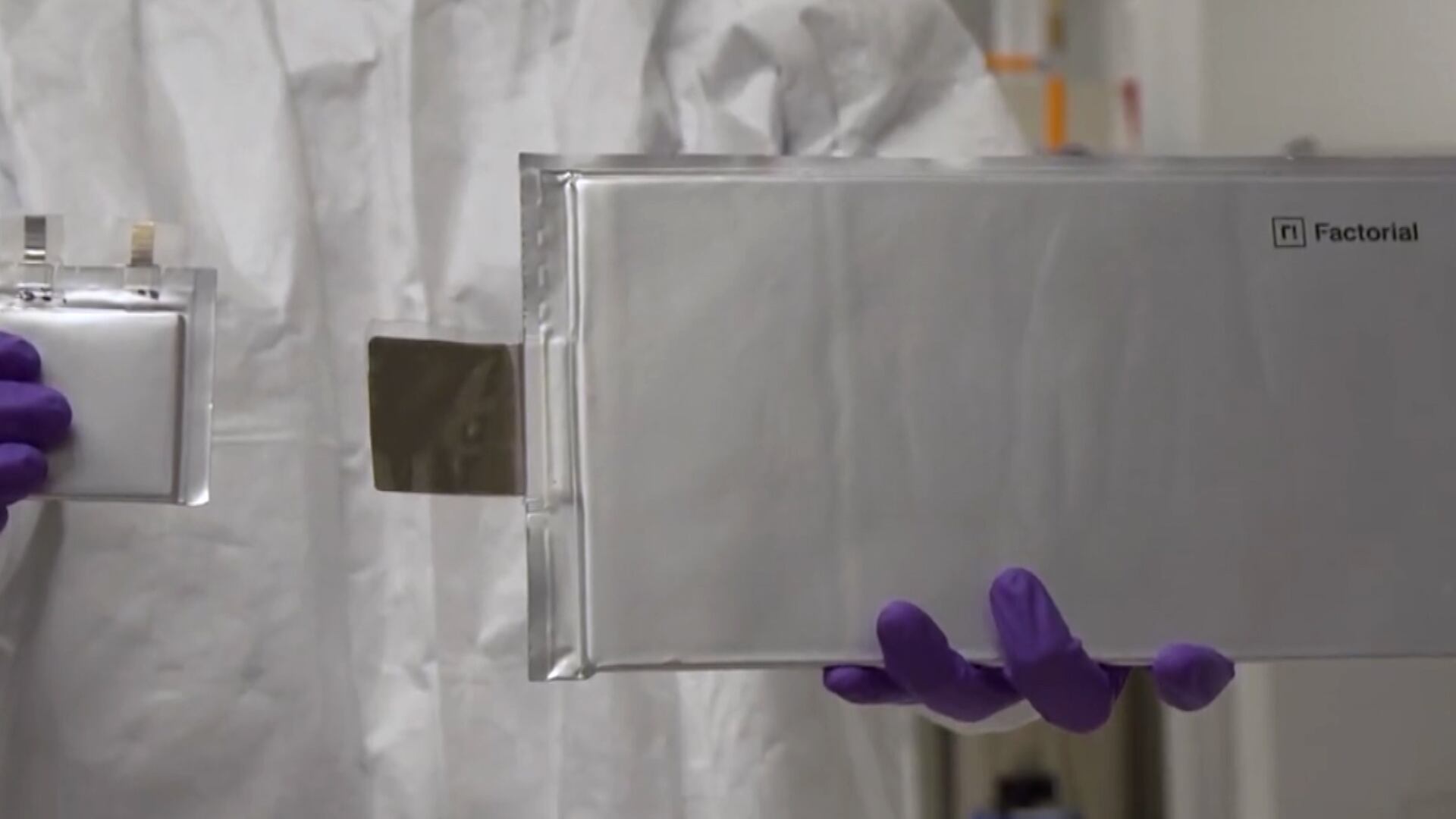
Solid-state battery maker Factorial Energy recently raised $200 million in a Series D round led by Mercedes-Benz and Stellantis. Factorial says the funding will be used to accelerate commercial production and deployment of its solid-state battery technology, which the company says is safer, and offers up to 50% more driving range than current lithium-ion technology. Factorial also has joint development agreements (announced in late 2021) with Mercedes-Benz, Stellantis, and Hyundai, three of the top 10 global automotive manufacturers, to commercialize its batteries. Factorial CEO Siyu Huang joined Cheddar News' Closing Bell to discuss.
Energy Storage Solutions Company Leclanché Powers EV Fleets to Reduce Emissisions
A 2021 report from UK Research and Innovation found that the shipping industry makes up at least 2.5 percent of the world's total CO2 emissions. It's a problem that energy solutions company, Leclanché, is trying to solve. Founded in 1909, the company has been developing and producing batteries for more than 100 years. Today, Leclanché's lithium-ion battery is used to electrify not just ships, but also railroad locomotives, trucks, and specialty vehicles. Cheddar News spoke with Pierre Blanc, chief technology and industrial officer of Leclanché, to discuss.
Load More