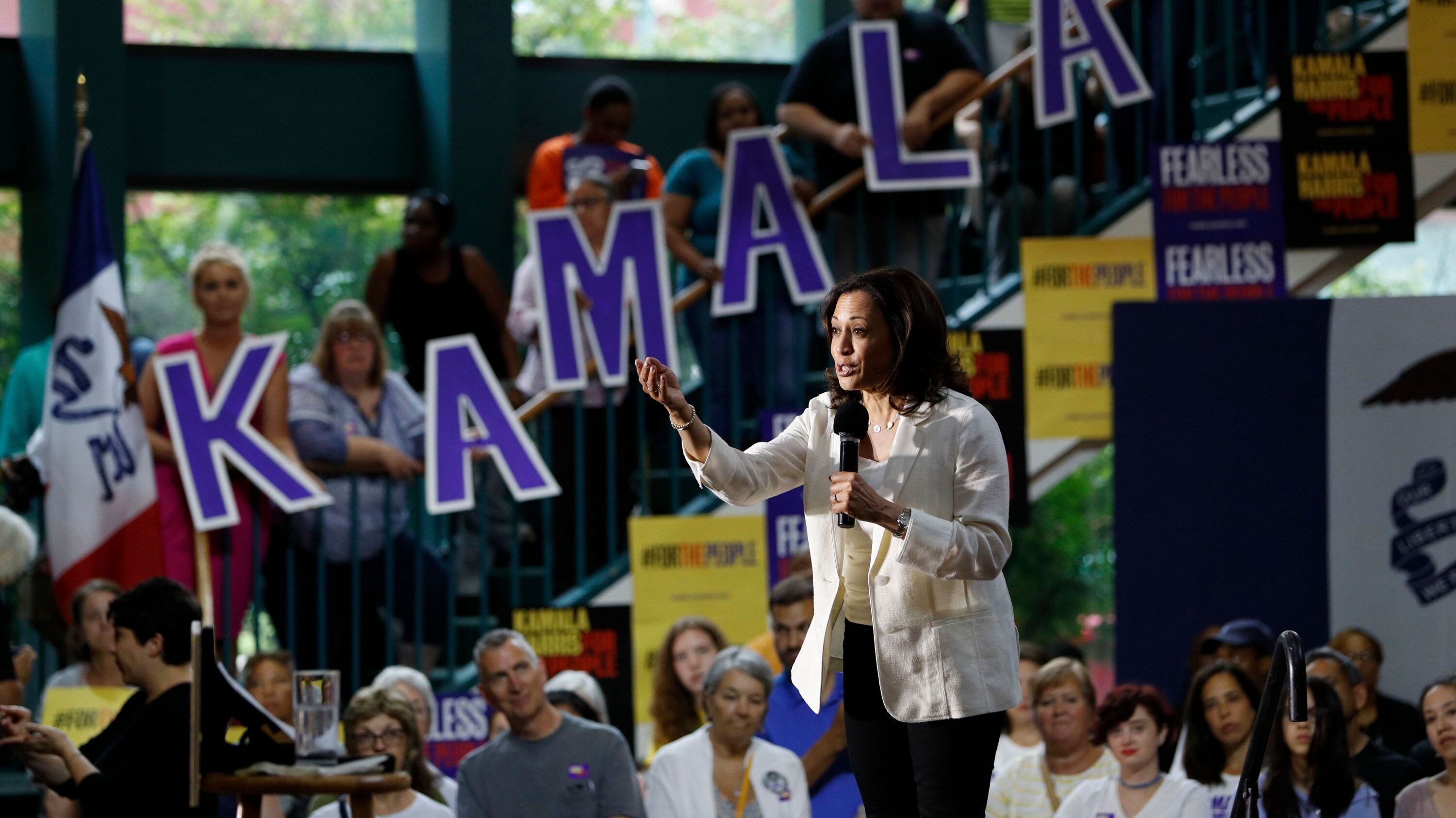
Senator Kamala Harris, who was once seen as a top tier contender for the 2020 Democratic presidential nomination, dropped out of the race on Tuesday.
"I've taken stock and looked at this from every angle, and over the last few days have come to one of the hardest decisions of my life," the California senator wrote in a note to supporters. "My campaign for president simply doesn't have the financial resources we need to continue."
Harris spent the early days of her campaign as a promising candidate, rising as high as second place in the Real Clear Politics poll average in July, but has struggled with finances as well as reports of staff disorganization and infighting, according to the New York Times.
By November, she was polling in the low single digits and laid off her New Hampshire field team to increase her focus on Iowa's first-in-the-nation caucuses on February 3.
Though she had shifted focus to the Hawkeye State, she lacked the cash to run TV ads in Iowa, a state in which Harris had not run an ad in three months. Only recently, support for a super PAC made up of former aides to pay for advertising began to gain traction within the campaign.
Harris was one of seven candidates who had already qualified for the sixth debate, which will be held in her home state of California, before today's announcement.
The senator had started her campaign in front of a crowd of20,000 in Oakland, according to her campaign, and said she is withdrawing "with deep regret — but also with deep gratitude."
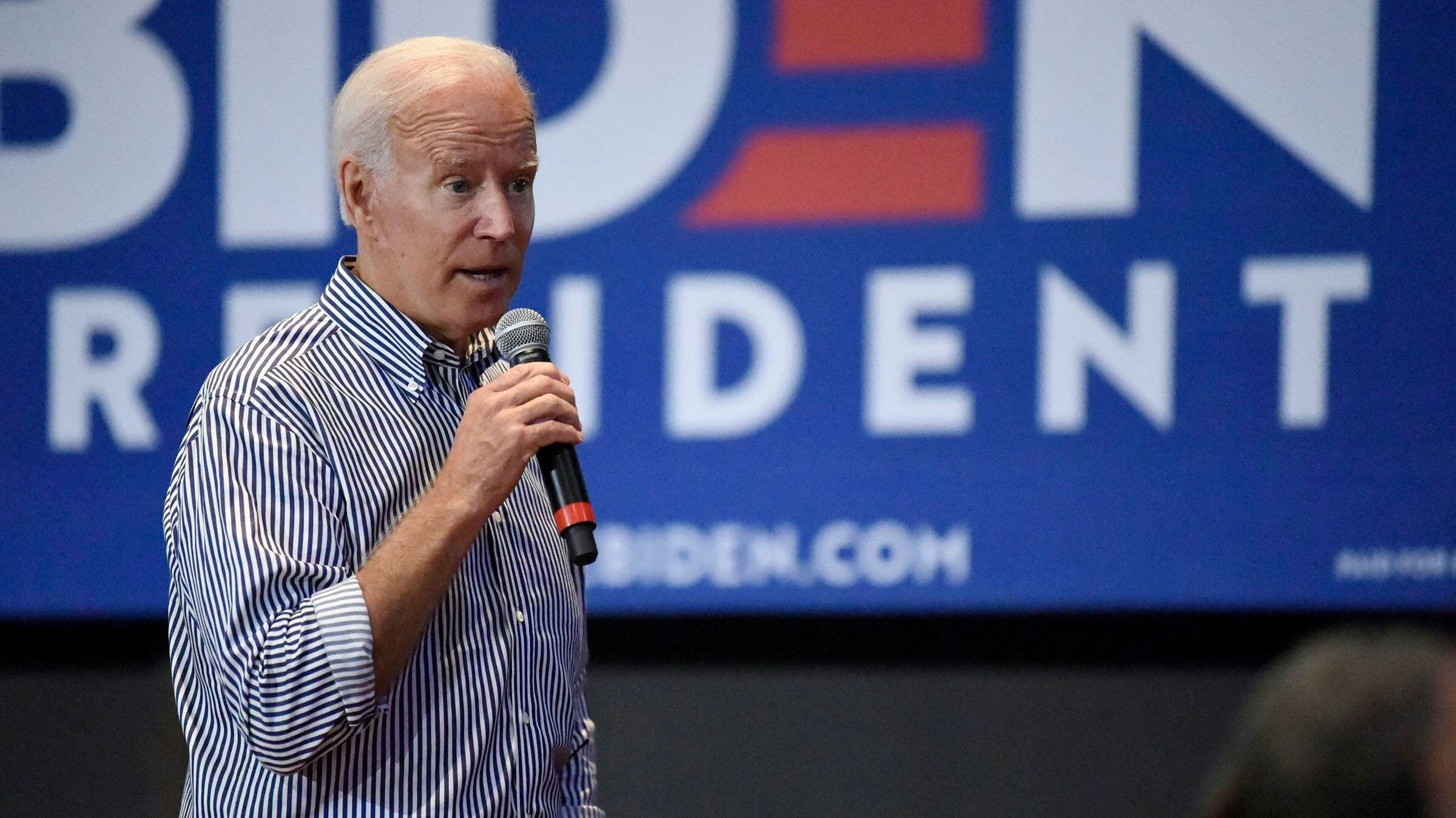
Patrick Murray, director of the Monmouth University Polling Institute, admitted Wednesday that a poll showing a statistical dead heat between Joe Biden, Bernie Sanders, and Elizabeth Warren, was an outlier among polls.
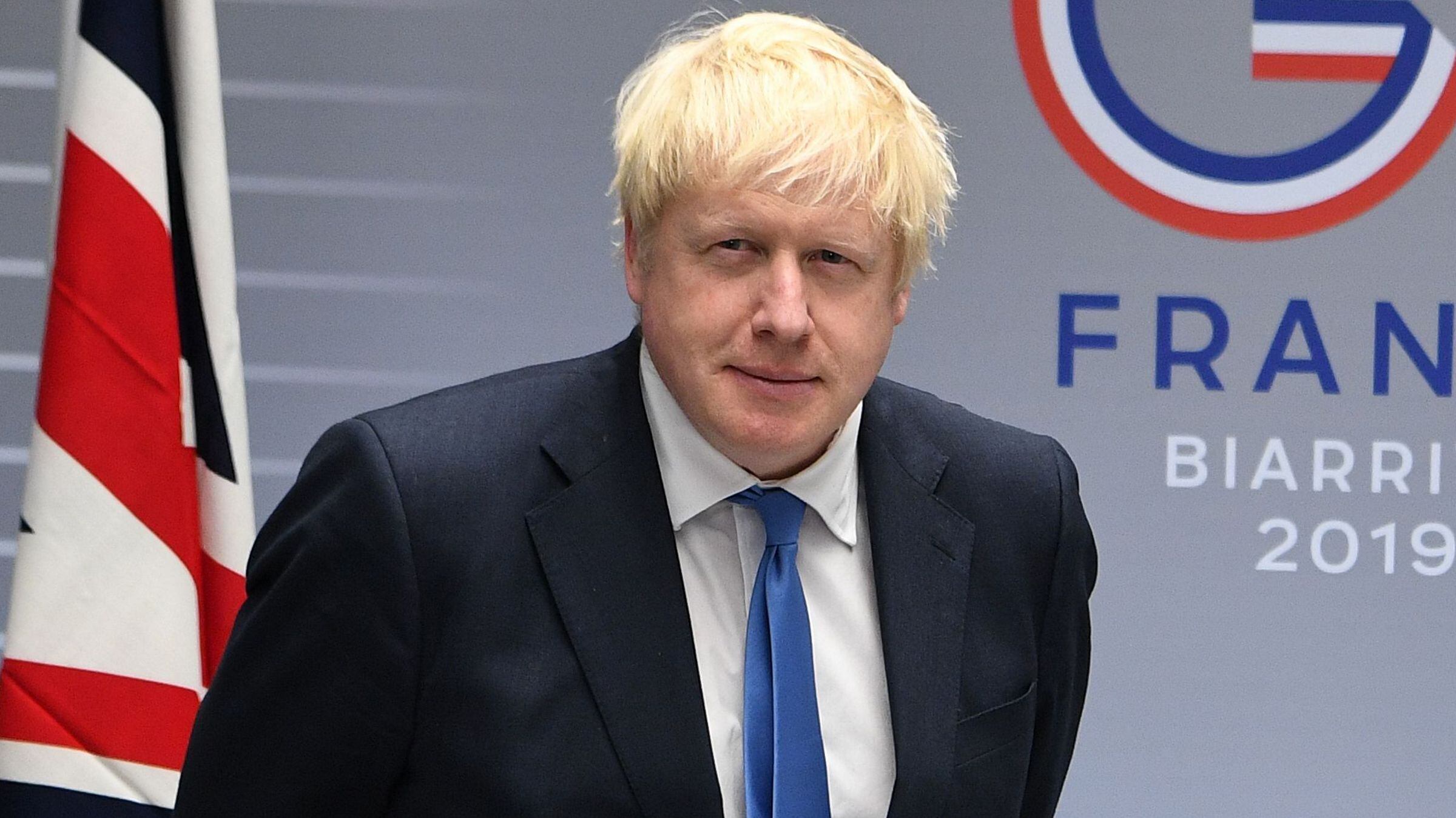
The British pound sterling fell sharply after British PM Boris Johnson announced he was asking for Parliament to be suspended from mid-September until mid-October ー a highly controversial move that critics say is intended to keep MPs from avoiding a no-deal Brexit and plunged the British government into crisis once again, two months before a looming deadline.
These are the headlines you Need 2 Know for Wednesday, Aug. 28, 2019.
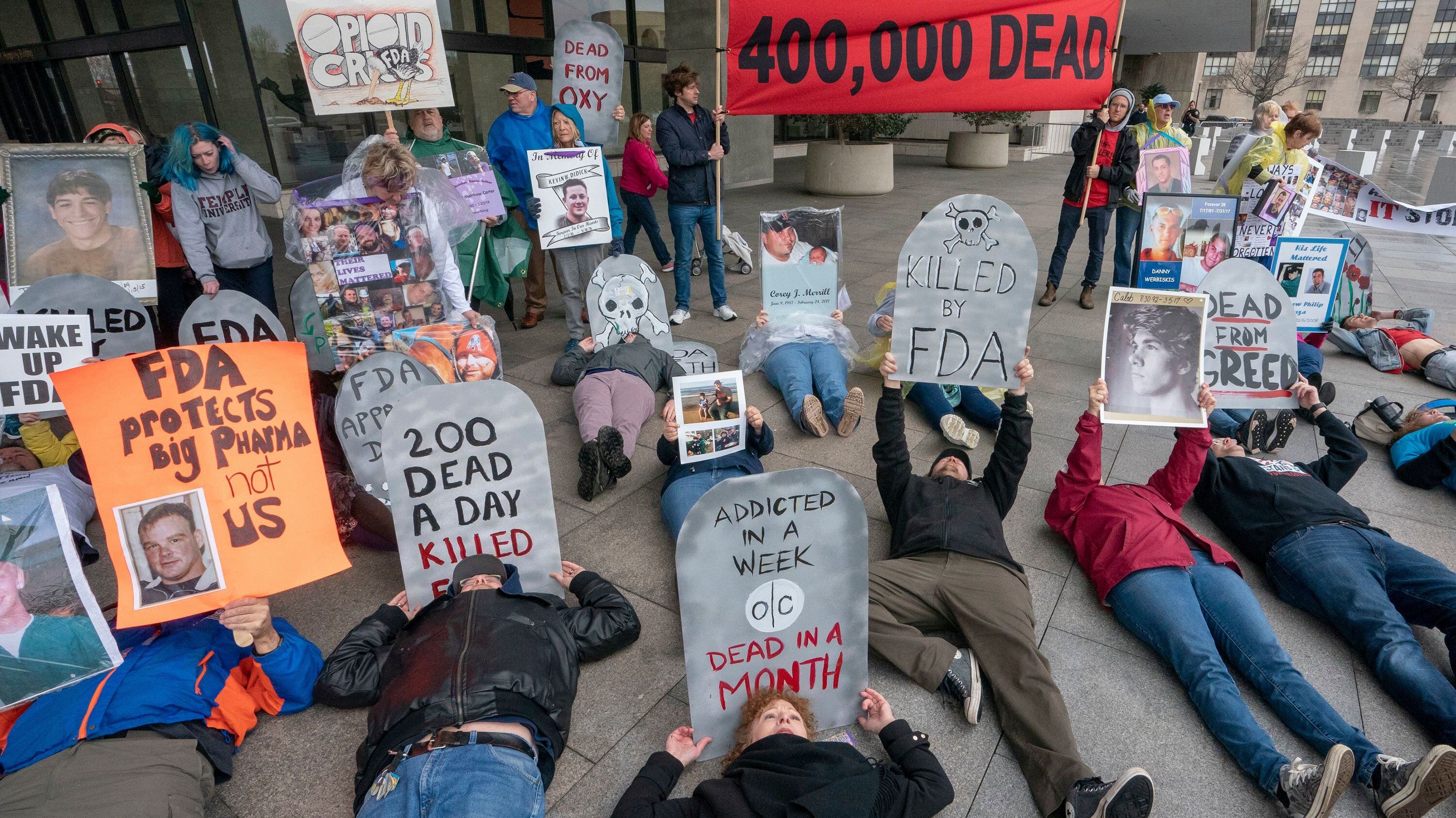
The inventor of the nasal spray that can reverse an opioid overdose believes the $570 million judgment against Johnson & Johnson shows that states are taking the crisis "seriously."
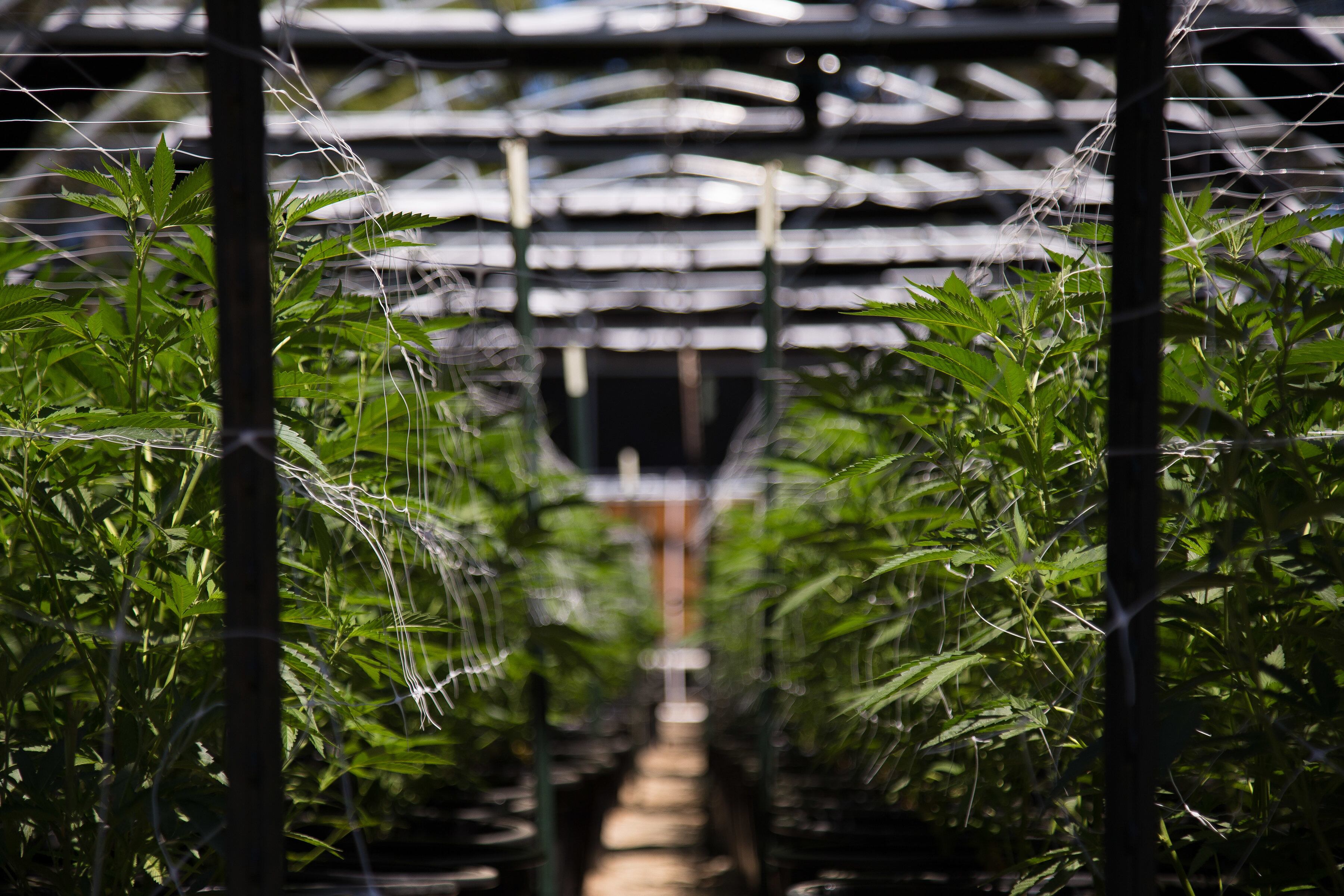
On the back of a groundbreaking partnership with data heavyweights Deloitte and Nielsen, cannabis industry intelligence company Headset on Monday announced the launch of its real time analytics tool in the province of Alberta, marking its official debut in the Canadian market. Stakeholders anticipate the data Headset Insights generates ー first in Alberta, and eventually across all of Canada ー will serve as a road map for companies outside of cannabis looking to penetrate the industry, and for Canadian cannabis companies as the market grows more diverse and competitive.
An Oklahoma judge ruled that Johnson & Johnson pay over $570 million in damages — a far cry from the $17 billion requested — for causing the opioid crisis in the Sooner state.
The U.S. president reiterated his position that Russia should be invited back into the coalition of the world's largest economies despite the lingering issue of Russia's occupation of Ukrainian territory.
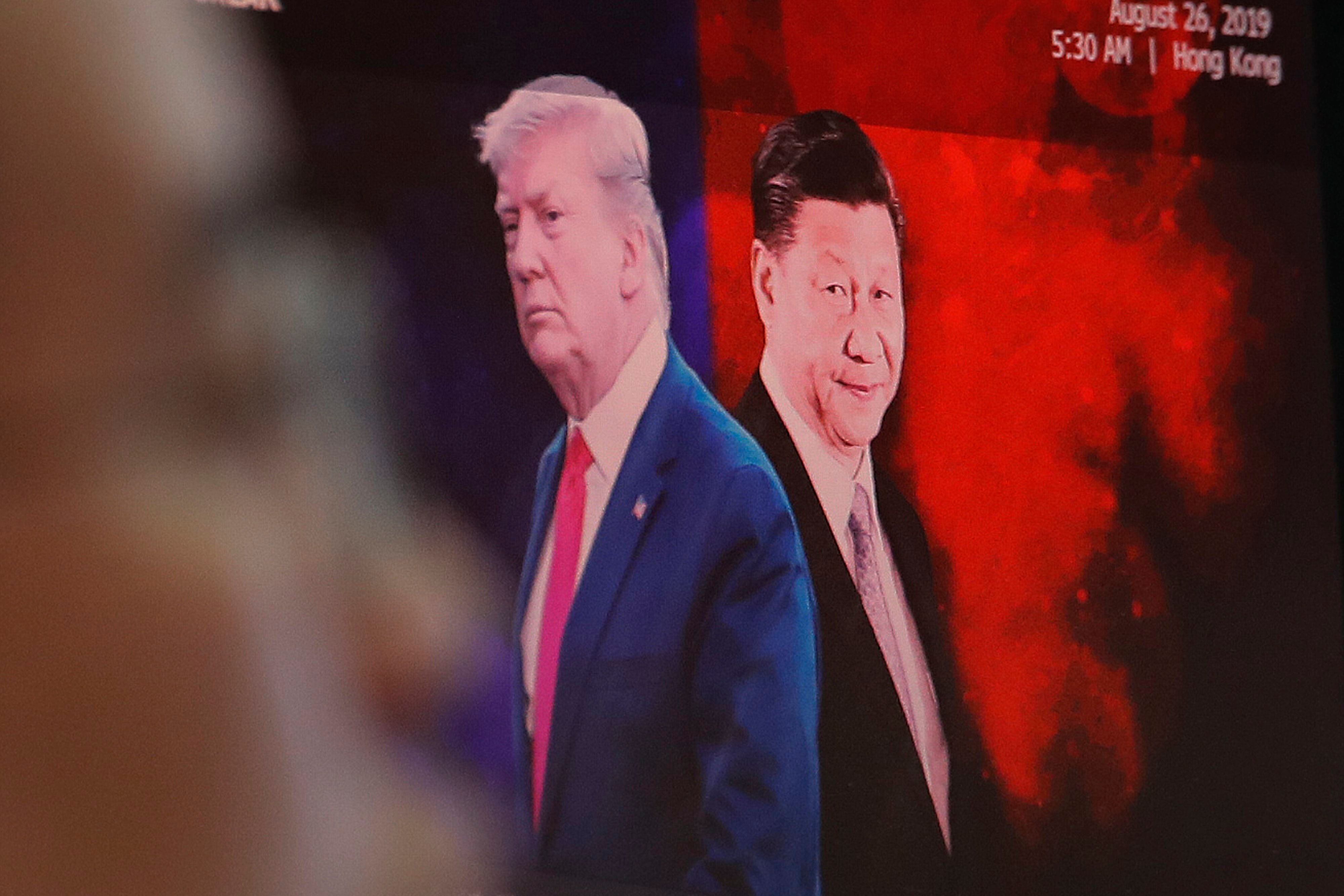
Speaking from the G7 summit in Biarritz, France, Trump said that Chinese negotiators had called U.S. officials and requested a new round of talks.
Gravy Analytics, a location-based marketing technology company, analyzed the smartphone data of people who attended the 111 solo Democratic presidential candidate events held in June and July.
The trade war between the U.S. and China escalated throughout the day Friday, culminating with President Trump announcing that the U.S. will significantly hike tariffs on nearly all Chinese imports. The decision came in response to China proclaiming earlier in the day that it would hit $75 billion worth of U.S. goods with new retaliatory tariffs.