In this Dec. 7, 2020, file photo, a person wearing a protective mask walks in front of the skyline on Bernal Heights Hill during the coronavirus pandemic in San Francisco. California's population has declined for the first time in its history. State officials announced Friday, May 7, 2021, that the nation's most populous state lost 182,083 people in 2020. California's population is now just under 39.5 million. (AP Photo/Jeff Chiu, File)
By Adam Beam
California’s population fell by more than 182,000 people in 2020, marking the first year-over-year loss ever recorded for the nation’s most populous state.
State officials announced Friday that California’s population dipped 0.46% to just under 39.5 million people from January 2020 to January 2021.
The news comes one week after the U.S. Census Bureau announced a paltry population growth for California, resulting in the state losing a congressional seat for the first time because it grew more slowly than other states over the past decade.
But the census numbers reflect the state’s population in April 2020. The new state numbers released Friday reflect the state’s population as of January 2021.
California became a state in 1850 on the heels of a gold rush that prompted people to seek their fortune out west. The population soared following World War II with the help of a robust defense and aerospace industry. It boomed again in the 1980s and 1990s as technology companies put Silicon Valley on the map.
But the growth slowed after the end of the Cold War in the 1990s when the federal government cut back on defense spending and again in the years before the Great Recession in the late 2000s.
State officials say California has seen more people leave than move in from other states for much of the last three decades. However, that had been offset by international immigration and births so that California continued to grow.
That changed in 2020. State officials say a declining birth rate, plus reductions in international immigration and an increase in deaths because of the coronavirus, led to the state's first-ever year-over-year population loss.
California had a negative international migration in 2020, which state officials say was a direct impact from the Trump administration's decision to stop issuing new visas for much of that year. Coronavirus restrictions around the world also caused about a 29% decline in international students coming to California or about 53,000 people.
Plus, about 51,000 people died from the coronavirus in California last year. That's a 19% increase above the state's average death rate for the past three years. In all, 51 of the state's 58 counties posted death rates above the three-year average — including 12 that had increases of 20% or more.
In a news release, the California Department of Finance said it expects the state to return to a “slightly positive annual growth” for the 2021 calendar year. Those numbers will be released next May.
The state's population has become a political issue this year in light of the effort to recall Gov. Gavin Newsom, with Republicans blaming high taxes and the governor's policies for people fleeing the state. From 2010 to 2020, about 6.1 million people left California for other states compared to about 4.9 million people who moved to California from other states, according to an analysis of census data by the Public Policy Institute of California.
The Department of Finances population estimate comes from a number of sources, including birth and death counts, the number of new driver's licenses and address changes, school enrollments, and federal tax returns.
On December 25, 2021, NASA got into the holiday spirit by launching the James Webb Space Telescope, the largest and most powerful space science observatory in history.
It is intended to succeed the Hubble Space Telescope as NASA's flagship mission in astrophysics and is able to view objects too old and distant for Hubble. Gregory Robinson, director of NASA's James Webb Space Telescope program, joins Cheddar News' Closing Bell to discuss the mission. "I think a lot of what we don't know today is what I'm expecting to find and certainly really understand what took place more than 13.5 billion years ago and see the formation of some of the first galaxies in our universe," said Robinson.
Every few years, the Olympics roll around to prove that, yes, the world’s best athletes can jump farther, swim faster, and generally crush records that would’ve been impossible just a few decades ago. Take ski jumping - the world record has increased by well over 200 meters in fewer than 100 years. Responsible for this is a lot of intentional engineering of equipment and hills, but perhaps the biggest change is thanks to one act of human daring. Watch to find out how!
YouTube creator platform Spotter recently announced $200 million in Series D financing at a valuation of $1.7 billion, led by SoftBank Vision Fund 2. Spotter allows YouTubers to license the rights to their video catalogs in exchange for large sums of cash paid upfront. The company's clients include some of YouTube's most popular personalities, with a combined total of more than 1.2 billion subscribers. Aaron Debevoise, founder and CEO of Spotter, joins Cheddar News' Closing Bell to discuss.
What if we added the equivalent of over 1300 football fields to the tip of Manhattan? This was the proposal of a recent op-ed in The New York Times - increasing the size of the borough by about 12% in order to mitigate two of its most pressing problems. There’s evidence from all over the world that doing this can be a useful technique for crowded ocean-side cities. But the process to do so - reclaiming land from the ocean - is rife with potential downsides. So is this a proportional response to gigantic problems? Or a zany harebrained scheme that’ll do more harm than good?
Marti Bledsoe Post, executive director of On Our Sleeves, joins Cheddar News to discuss the latest study finding the impact children's mental health can have on working parents.
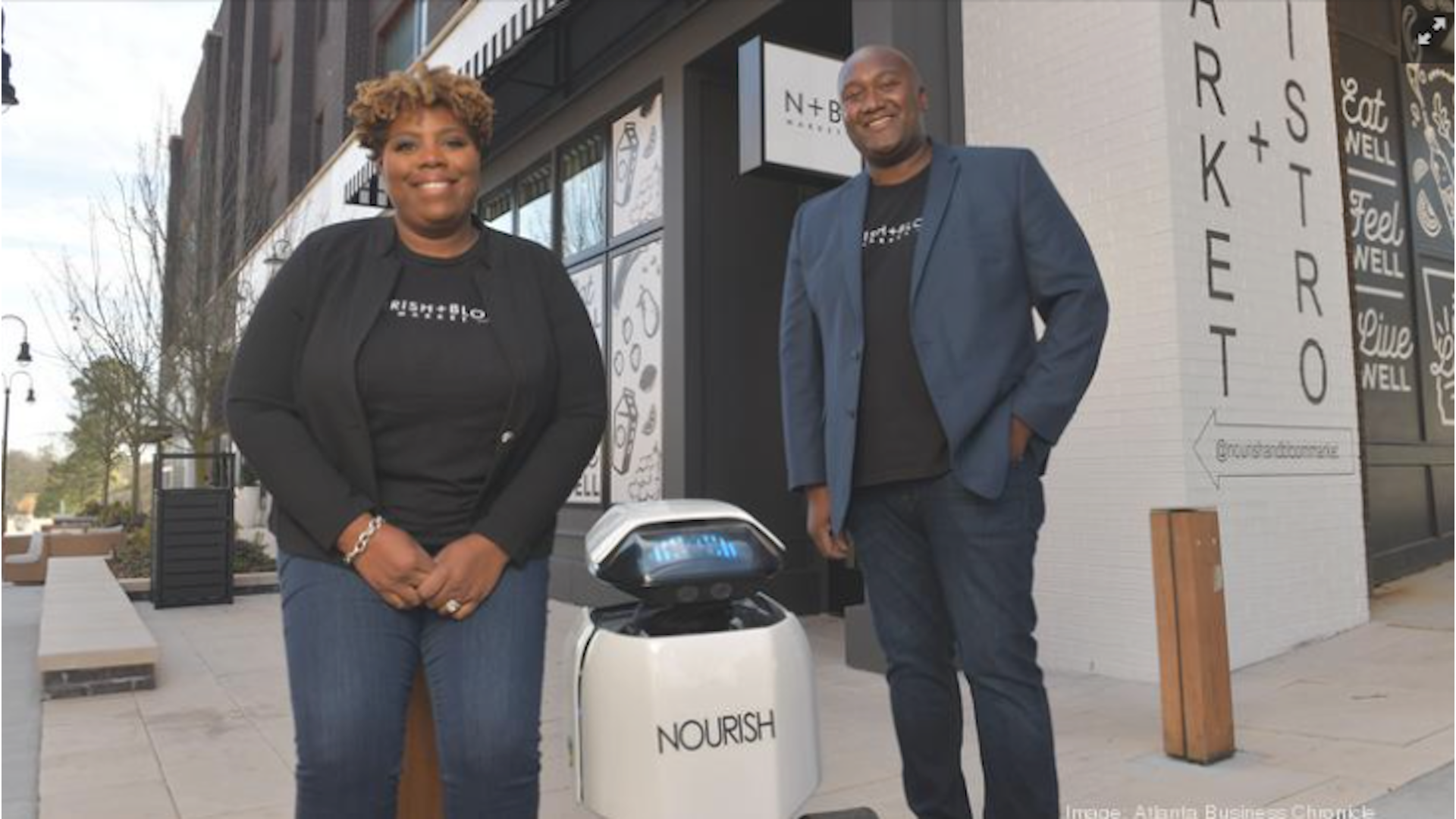
Jamie Hemmings and Jilea Hemmings, owners and founders of Nourish + Bloom Market, join Cheddar News to talk about the inspiration behind creating their cashierless grocery store.
Bartholomew Jones and Renata Henderson, co-owners of Cxffeeblack, join Cheddar News to discuss how they are merging Black culture with coffee in Memphis.
Dr. Daniel Bober, psychiatrist and certified addiction medicine physician, joins Cheddar News to offer tips on how parents and guardians can talk to their children about what's happening in Ukraine.
Abigail Pringle serves as president, international and chief development officer at Wendy’s. She joins Cheddar News to discuss the company's Q4 earnings and its diversity initiative for franchise owners.