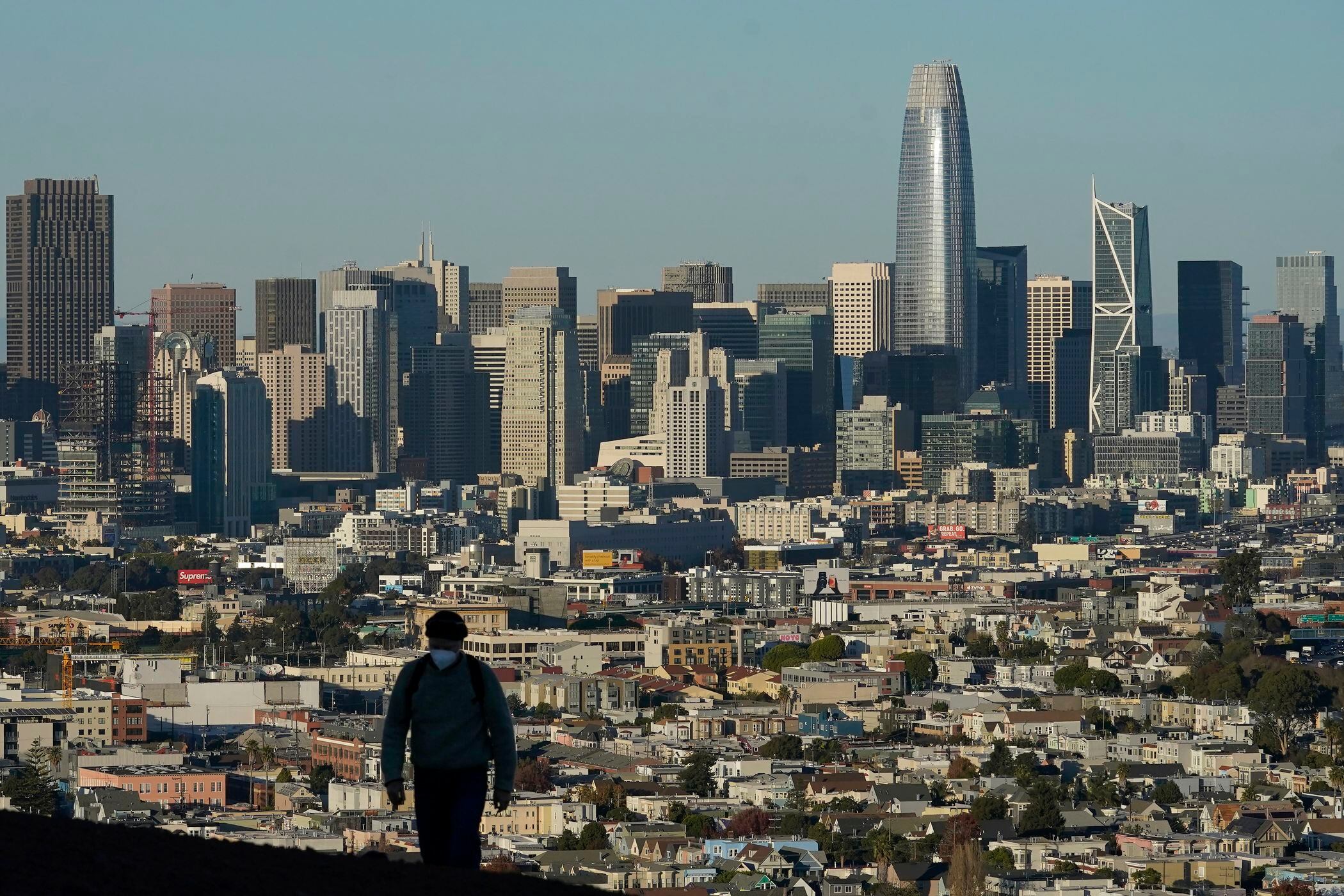
In this Dec. 7, 2020, file photo, a person wearing a protective mask walks in front of the skyline on Bernal Heights Hill during the coronavirus pandemic in San Francisco. California's population has declined for the first time in its history. State officials announced Friday, May 7, 2021, that the nation's most populous state lost 182,083 people in 2020. California's population is now just under 39.5 million. (AP Photo/Jeff Chiu, File)
By Adam Beam
California’s population fell by more than 182,000 people in 2020, marking the first year-over-year loss ever recorded for the nation’s most populous state.
State officials announced Friday that California’s population dipped 0.46% to just under 39.5 million people from January 2020 to January 2021.
The news comes one week after the U.S. Census Bureau announced a paltry population growth for California, resulting in the state losing a congressional seat for the first time because it grew more slowly than other states over the past decade.
But the census numbers reflect the state’s population in April 2020. The new state numbers released Friday reflect the state’s population as of January 2021.
California became a state in 1850 on the heels of a gold rush that prompted people to seek their fortune out west. The population soared following World War II with the help of a robust defense and aerospace industry. It boomed again in the 1980s and 1990s as technology companies put Silicon Valley on the map.
But the growth slowed after the end of the Cold War in the 1990s when the federal government cut back on defense spending and again in the years before the Great Recession in the late 2000s.
State officials say California has seen more people leave than move in from other states for much of the last three decades. However, that had been offset by international immigration and births so that California continued to grow.
That changed in 2020. State officials say a declining birth rate, plus reductions in international immigration and an increase in deaths because of the coronavirus, led to the state's first-ever year-over-year population loss.
California had a negative international migration in 2020, which state officials say was a direct impact from the Trump administration's decision to stop issuing new visas for much of that year. Coronavirus restrictions around the world also caused about a 29% decline in international students coming to California or about 53,000 people.
Plus, about 51,000 people died from the coronavirus in California last year. That's a 19% increase above the state's average death rate for the past three years. In all, 51 of the state's 58 counties posted death rates above the three-year average — including 12 that had increases of 20% or more.
In a news release, the California Department of Finance said it expects the state to return to a “slightly positive annual growth” for the 2021 calendar year. Those numbers will be released next May.
The state's population has become a political issue this year in light of the effort to recall Gov. Gavin Newsom, with Republicans blaming high taxes and the governor's policies for people fleeing the state. From 2010 to 2020, about 6.1 million people left California for other states compared to about 4.9 million people who moved to California from other states, according to an analysis of census data by the Public Policy Institute of California.
The Department of Finances population estimate comes from a number of sources, including birth and death counts, the number of new driver's licenses and address changes, school enrollments, and federal tax returns.
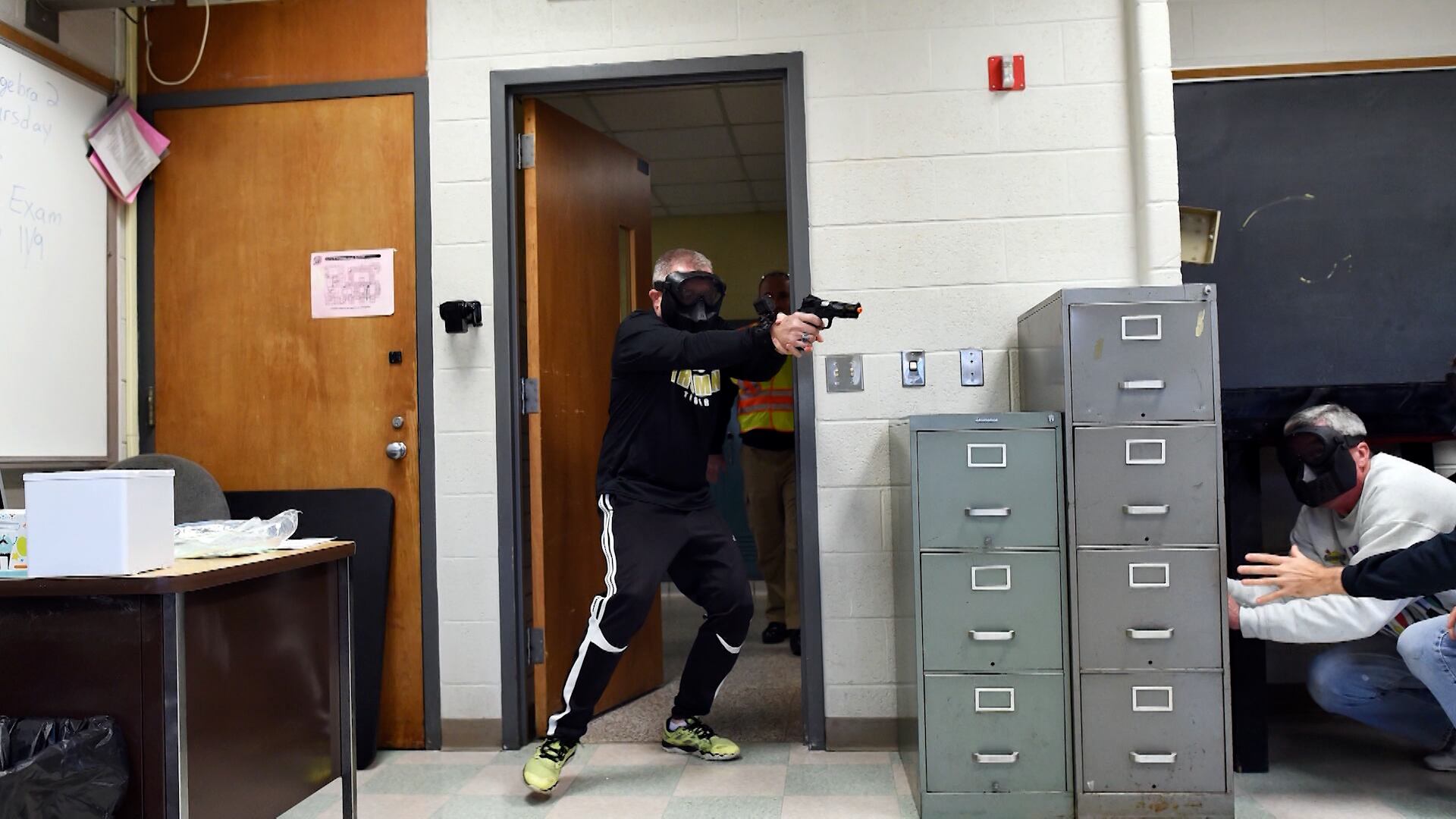
The most recent school shooting in Michigan is highlighting the tragic fact that U.S. shootings on campuses are ticking up. The aftermath of these incidents leaves students, faculty, and families suffering intense trauma with lasting effects. Darby Fox, an adolescent family therapist, joins Cheddar News to discuss how school shootings impact the mental health of students and their families.
With so many high-profile court cases taking over the media, from the trial over the murder of Ahmaud Arbery to the trial of Kyle Rittenhouse to the ongoing Elizabeth Holmes trial, Cheddar took a look at these cases and why there is such a big interest in them. Rachel Fiset, a white collar criminal defense lawyer and partner with Zeiback, Fiset, and Coleman, and Bryan Hance, attorney-at-law, professor, and academic program director of the pre-law and paralegal studies program at National University, joined Cheddar for a roundtable discussion on why there is so much public interest in so-called courtroom drama.
2022 is just around the corner and one of the world's most famous trendspotters says that there is a wide-ranging mix of trends coming up in the new year that could impact businesses, culture, and our society at large.
Trendspotter and cultural zeitgeist analyst Marian Salzman, joined Cheddar to discuss more.
Spotify has just officially released its 2021 'Wrapped'. For the past few years, the streaming giant has been presenting customers with their listening habits from the prior year, including favorite artists, most listened to the genre, podcasts, songs you name it. However, critics say this method just shows how apps can collect our data. CEO of Prevailion Karim Hijazi, joined Cheddar to discuss more.
Recent internal documents obtained by the New York Times reveal how exactly TikTok's algorithm works. The report highlights how the app is mainly focused on retaining two metrics which are retention and time spent. In addition, the document titled, "TikTok Algo 101" details how the algorithm understands human nature from when we get bored to our sensitivity and culture ques. It means the app monitors will kind of videos you like. Professor of Computer Science at the University of California in San Diego Julian McCauley, joined Cheddar to discuss more.
According to a recent study by a group of international researchers, artificial intelligence can predict new illegal drugs before they hit the streets. This method could help save lives and fight crime. Professor of Computing Science at the University of Alberta, joined Cheddar to discuss more.
Carlo and Baker discuss the sweeping new vaccine mandate in NYC that will target all private businesses. Plus, Trump's media venture gets its CEO and more.
A lockout is now in place for Major League Baseball. The collective bargaining agreement between the league and players association expired at 11:59 p.m. Wednesday night.
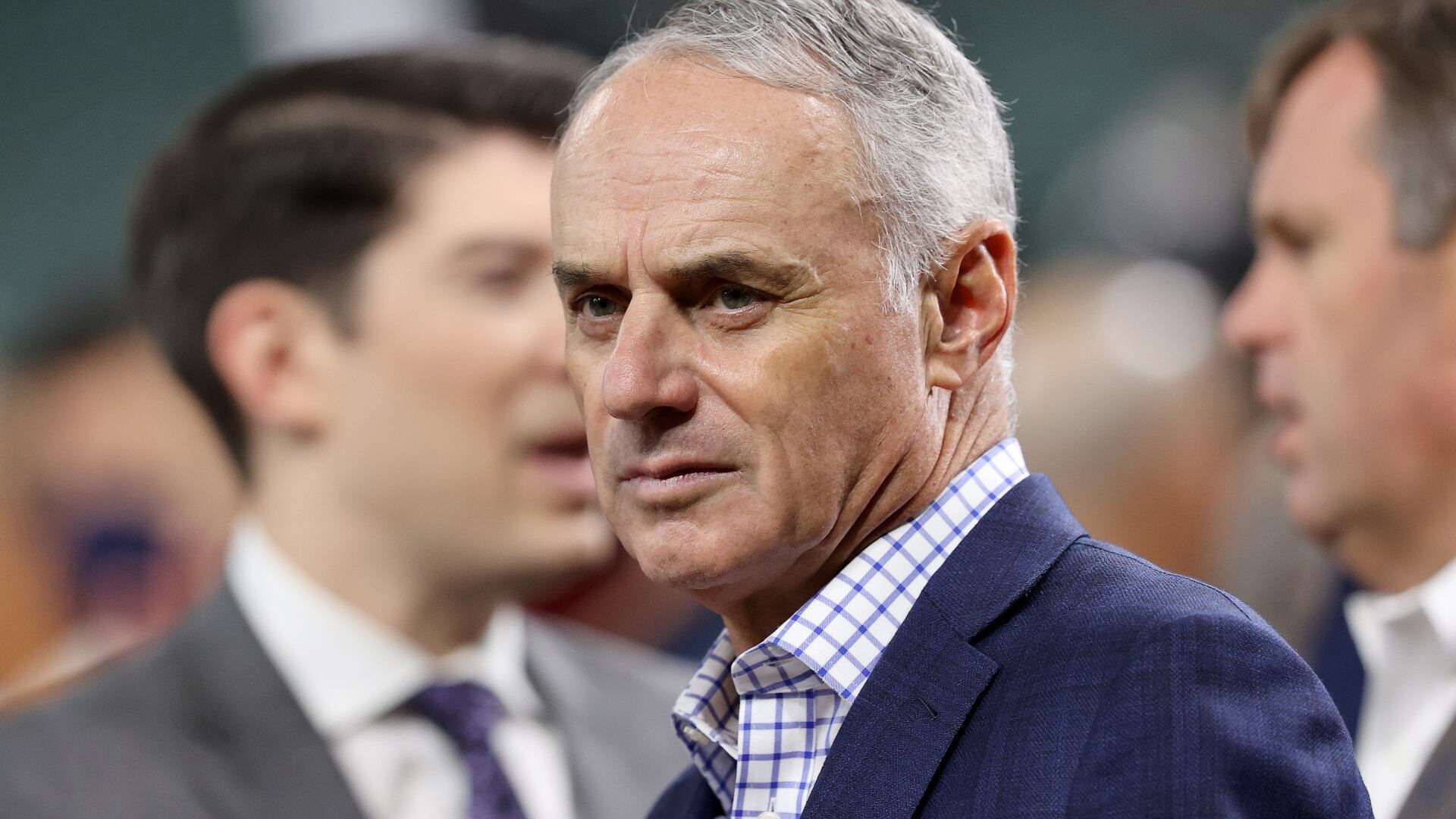
MLB commissioner Rob Manfred said both sides were unable to negotiate a new contract by that time, so the league locked out the players on Thursday at 12:01 a.m. The lockout also means trades and free agency deals have to stop for now. Dodgers Nation lead editor Clint Pasillas joined Cheddar News' Closing Bell to discuss.