A California city voted Tuesday night to require gun owners to carry liability insurance in what’s believed to be the first measure of its kind in the United States.

The San Jose City Council overwhelmingly approved the measure despite opposition from gun owners who said it would violate their Second Amendment rights and promised to sue.

The Silicon Valley city of about 1 million followed a trend of other Democratic-led cities that have sought to rein in violence through stricter rules. But while similar laws have been proposed, San Jose is the first city to pass one, according to Brady United, a national nonprofit that advocates against gun violence.

Council members, including several who had lost friends to gun violence, said it was a step toward dealing with gun violence that Councilman Sergio Jimenez called “a scourge on our society."

Having liability insurance would encourage people in the 55,000 households in San Jose who legally own at least one registered gun to have gun safes, install trigger locks and take gun safety classes, Mayor Sam Liccardo said.

The liability insurance would cover losses or damages resulting from any accidental use of the firearm, including death, injury, or property damage, according to the ordinance. If a gun is stolen or lost, the owner of the firearm would be considered liable until the theft or loss is reported to authorities.

However, gun owners who don't have insurance won't lose their guns or face any criminal charges, the mayor said.

The council also voted to require gun owners to pay an estimated $25 fee, which would be collected by a yet-to-be-named nonprofit and doled out to community groups to be used for firearm safety education and training, suicide prevention, domestic violence, and mental health services.

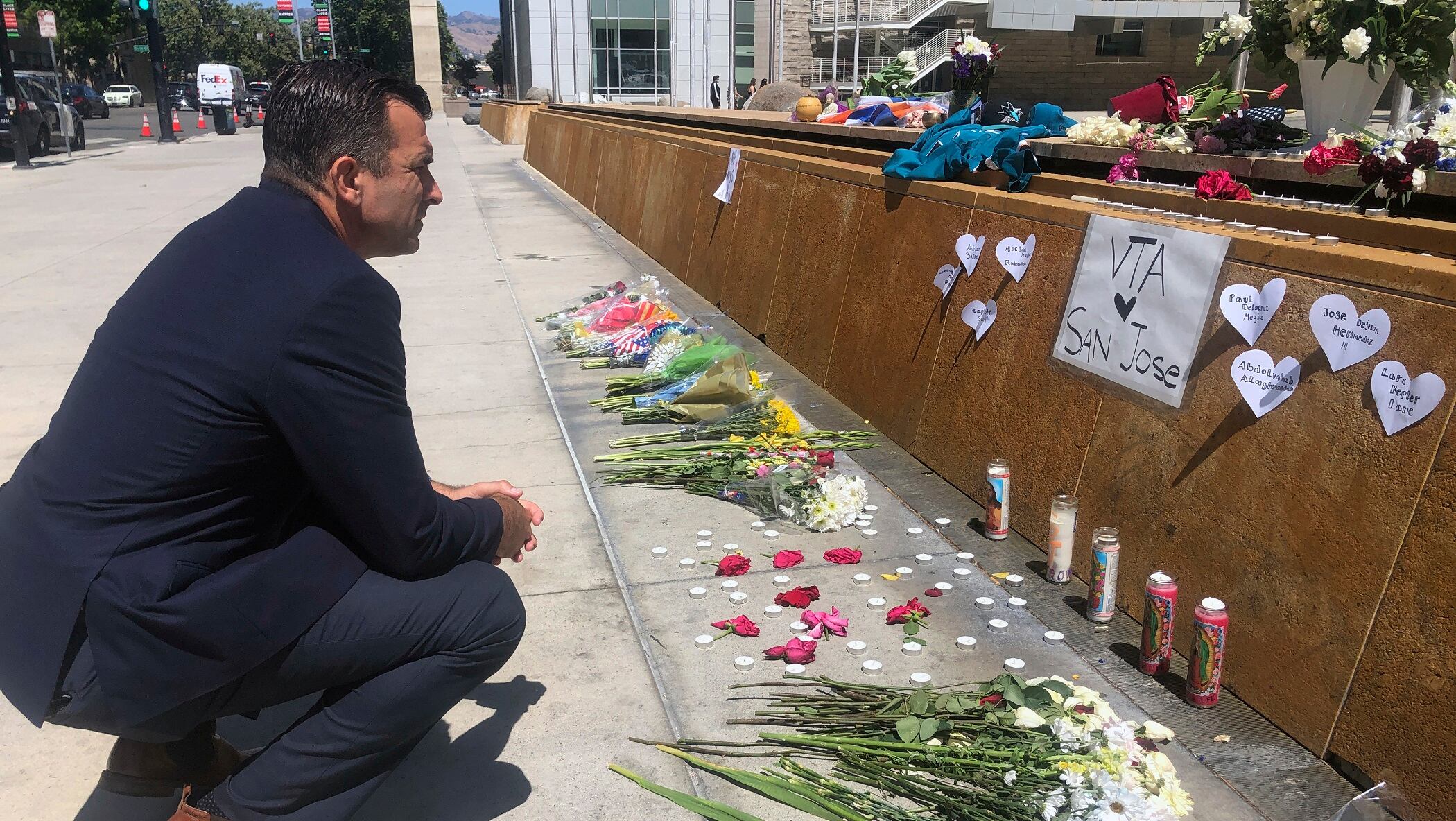
The proposed ordinance is part of a broad gun control plan that Liccardo announced following the May 26 mass shooting at the Santa Clara Valley Transportation Authority rail yard that left nine people dead, including the employee who opened fire on his colleagues then killed himself.

At an hours-long meeting, critics argued that the fee and liability requirements violated their right to bear arms and would do nothing to stop gun crimes, including the use of untraceable, build-it-yourself “ghost guns."

“You cannot tax a constitutional right. This does nothing to reduce crime,” one speaker said.

The measure didn't address the massive problem of illegally obtained weapons that are stolen or purchased without background checks.

Liccardo acknowledged those concerns.

“This won’t stop mass shootings and keep bad people from committing violent crime,” the mayor said, but added most gun deaths nationally are from suicide, accidental shootings or other causes and even many homicides stem from domestic violence.

Liccardo also said gun violence costs San Jose taxpayers $40 million a year in emergency response services.

Some speakers argued that the law would face costly and lengthy court challenges.

Before the vote, Sam Paredes, executive director of Gun Owners of California, said his group would sue if the proposal takes effect, calling it “totally unconstitutional in any configuration.”

However, Liccardo said some attorneys had already offered to defend the city pro bono.
Share:
More In Politics
The Affordable Care Act's 'Family Glitch,' Explained
Krutika Amin, associate director at the Kaiser Family Foundation for the Program on the Affordable Care Act, joins Cheddar Politics to discuss the Biden administration's plan to fix the so-called 'family glitch' in the Affordable Care Act preventing millions of Americans from accessing government-subsidized health plan.
House Votes to Hold Scavino, Navarro in Contempt
Abdallah Fayyad, opinion writer at the Boston Globe, joins Cheddar Politics to discuss the House's vote to hold former Trump aides Dan Scavino and Peter Navarro in contempt of Congress and send the recommendation to the Department of Justice. Fayyad also weighs in on the pressure facing Attorney General Merrick Garland to be more aggressive in prosecuting the January 6 case.
Biden Administration Extends Student Loan Pause to August
Those paying back federal student loans are getting a few extra months of relief. President Biden just announced another extension of the pandemic relief program allowing millions of borrowers to freeze their student loan payments. The pause began in March 2020 and it has been extended six times. Tomas Campos, co-founder and CEO of Spinwheel, joins Cheddar News to discuss.
Doctors, Medical Experts Divided on Second COVID-19 Booster
There has been notable disagreement in the medical community about a fourth COVID-19 vaccine dose. The FDA last week authorized a second booster dose for older and immunocompromised individuals, as some agency officials did not support the idea. The FDA made the decision without meeting with its advisory committee, as it had ahead of its recommendations on the previous COVID-19 vaccine doses. The CDC followed in the footsteps of the FDA and authorized a fourth dose as well. Reports say the agency also did not discuss the move with its own advisory team of vaccine experts. Now, a growing number of doctors are speaking out against the decisions - leaving people confused about whether they should get another vaccine dose. Dr. Julie Morita, a member of the CDC's advisory committee to the director, and the executive vice president of the Robert Wood Johnson Foundation, joins Cheddar News' Closing Bell to discuss.
JetBlue Bids on Spirit, Jeopardizing Frontier Deal
JetBlue made an unsolicited offer to buy low-cost carrier Spirit Airlines, potentially jeopardizing the original offer from Frontier Airlines. Several analysts sounding the alarm on JetBlue's proposed $3.6 billion merger, saying the deal doesn't quite make sense. Jim Corridore, Senior Insights Manager at Similarweb joined Cheddar's Opening Bell to discuss.
Biden Admin Latest Federal Student Loan Extension Adds to Borrower Uncertainty
The Biden administration is once again extending the pause on federal student loans payments — this time, through the end of August. In a statement, President Biden cited a recent analysis from the Fed that if the payments were to resume, millions of student loan borrowers would face significant "economic hardship, delinquencies, and defaults that could threaten America's financial stability." Sarah Foster, an analyst at Bankrate, breaks down the impact of the extension on borrowers, the economy, and the future of student loan forgiveness. "I think this is just an instance of the federal student loan forbearance program kind of creating additional uncertainty for borrowers, especially in the sense that these past four extensions from the Biden administration have kind of come at the 11th hour here," she said.
Load More