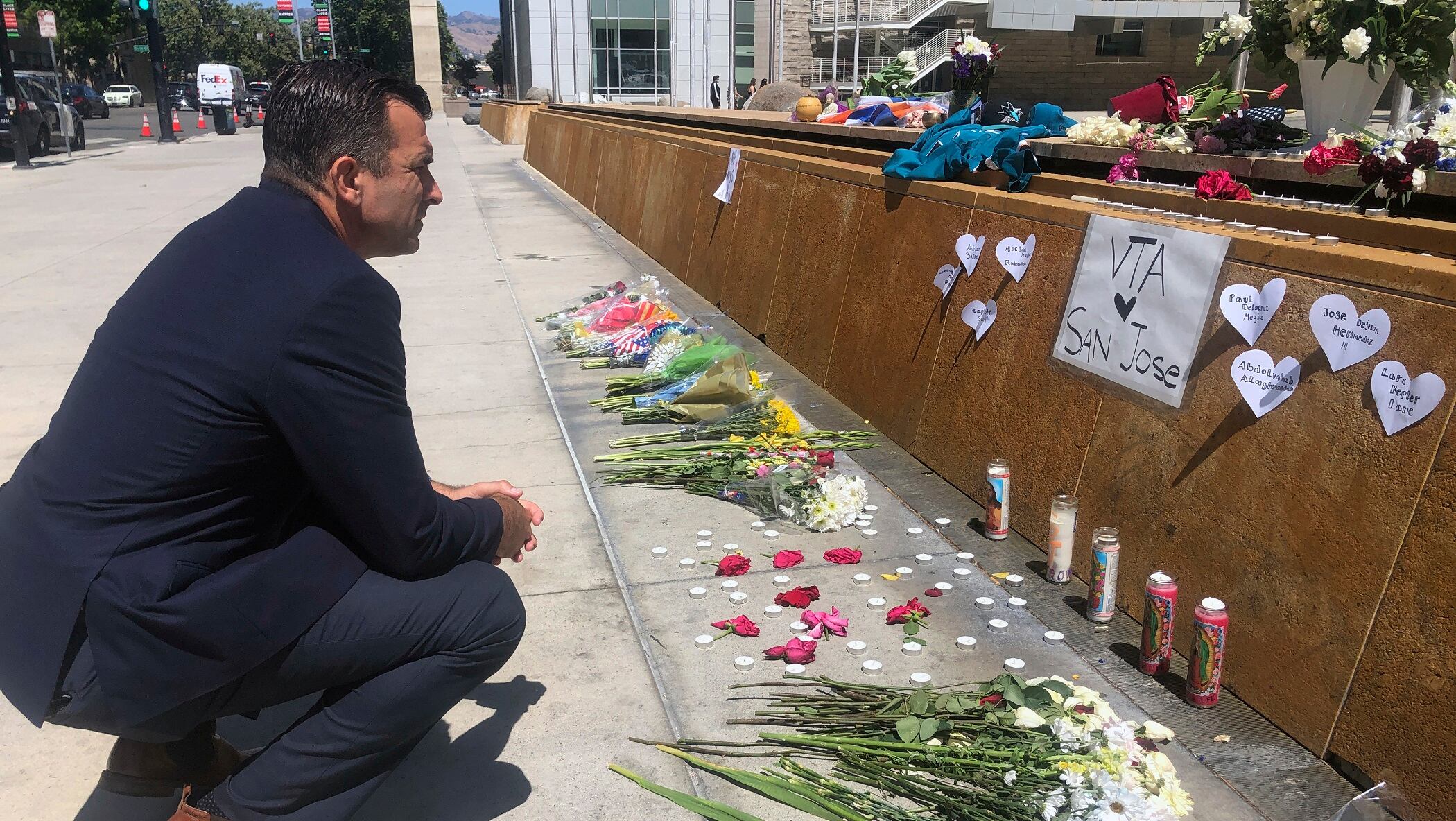
San Jose Mayor Sam Liccardo stops to view a makeshift memorial for the rail yard shooting victims in front of City Hall in San Jose, Calif., on May 27, 2021. Gun owners would be required to carry liability insurance and pay a fee under a proposed ordinance in the city of San Jose that officials say would be the first of its kind in the United States. Mayor Liccardo says it would also encourage the 5,500 households with a legally registered gun to have gun safes, trigger locks, and to take gun safety classes. (AP Photo/Haven Daley, File)
A California city voted Tuesday night to require gun owners to carry liability insurance in what’s believed to be the first measure of its kind in the United States.
The San Jose City Council overwhelmingly approved the measure despite opposition from gun owners who said it would violate their Second Amendment rights and promised to sue.
The Silicon Valley city of about 1 million followed a trend of other Democratic-led cities that have sought to rein in violence through stricter rules. But while similar laws have been proposed, San Jose is the first city to pass one, according to Brady United, a national nonprofit that advocates against gun violence.
Council members, including several who had lost friends to gun violence, said it was a step toward dealing with gun violence that Councilman Sergio Jimenez called “a scourge on our society."
Having liability insurance would encourage people in the 55,000 households in San Jose who legally own at least one registered gun to have gun safes, install trigger locks and take gun safety classes, Mayor Sam Liccardo said.
The liability insurance would cover losses or damages resulting from any accidental use of the firearm, including death, injury, or property damage, according to the ordinance. If a gun is stolen or lost, the owner of the firearm would be considered liable until the theft or loss is reported to authorities.
However, gun owners who don't have insurance won't lose their guns or face any criminal charges, the mayor said.
The council also voted to require gun owners to pay an estimated $25 fee, which would be collected by a yet-to-be-named nonprofit and doled out to community groups to be used for firearm safety education and training, suicide prevention, domestic violence, and mental health services.
The proposed ordinance is part of a broad gun control plan that Liccardo announced following the May 26 mass shooting at the Santa Clara Valley Transportation Authority rail yard that left nine people dead, including the employee who opened fire on his colleagues then killed himself.
At an hours-long meeting, critics argued that the fee and liability requirements violated their right to bear arms and would do nothing to stop gun crimes, including the use of untraceable, build-it-yourself “ghost guns."
“You cannot tax a constitutional right. This does nothing to reduce crime,” one speaker said.
The measure didn't address the massive problem of illegally obtained weapons that are stolen or purchased without background checks.
Liccardo acknowledged those concerns.
“This won’t stop mass shootings and keep bad people from committing violent crime,” the mayor said, but added most gun deaths nationally are from suicide, accidental shootings or other causes and even many homicides stem from domestic violence.
Liccardo also said gun violence costs San Jose taxpayers $40 million a year in emergency response services.
Some speakers argued that the law would face costly and lengthy court challenges.
Before the vote, Sam Paredes, executive director of Gun Owners of California, said his group would sue if the proposal takes effect, calling it “totally unconstitutional in any configuration.”
However, Liccardo said some attorneys had already offered to defend the city pro bono.
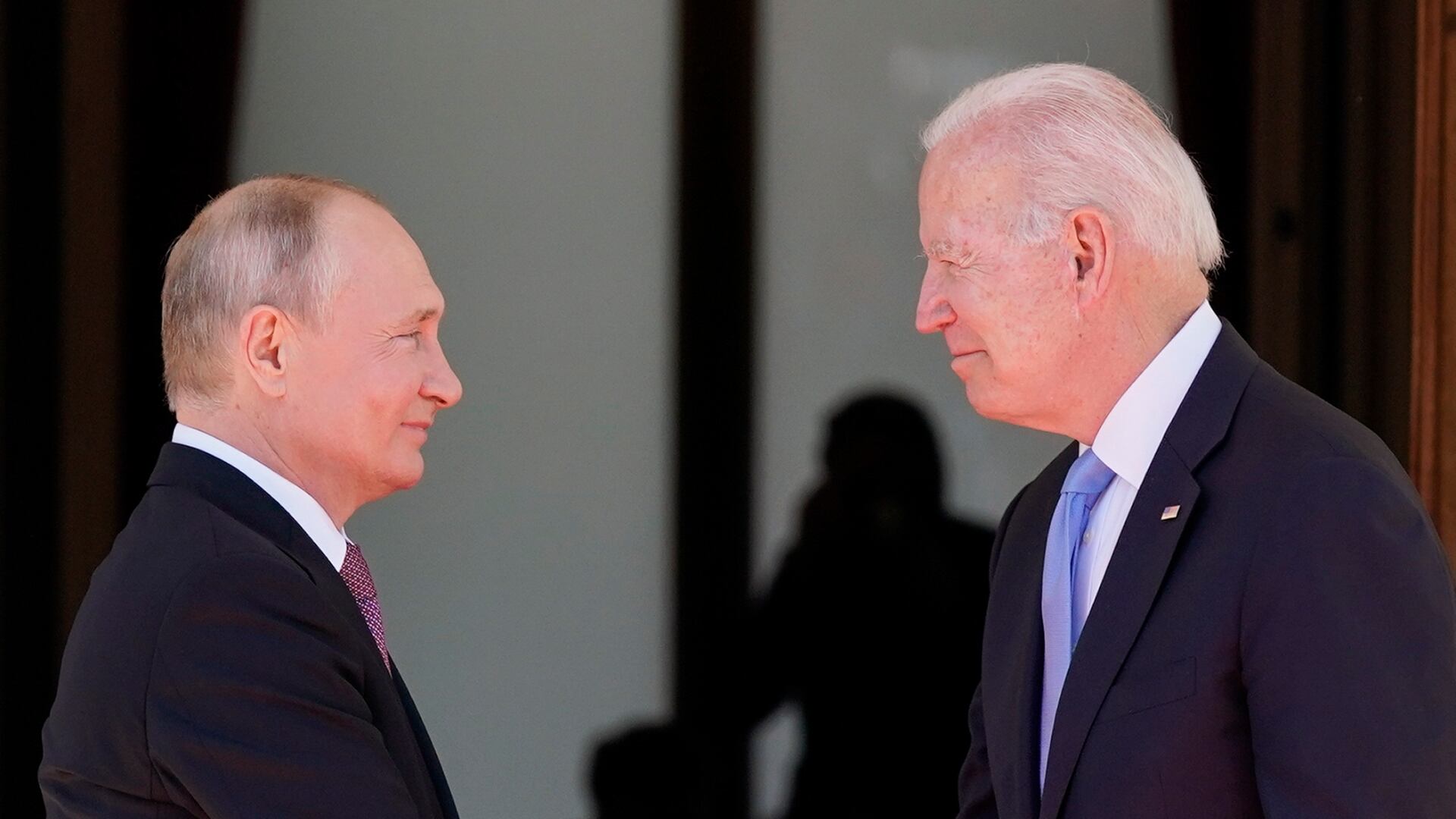
Face to face for just over two hours, President Joe Biden and Russia’s Vladimir Putin squared off in a secure video call Tuesday as the U.S. president put Moscow on notice that an invasion of Ukraine would bring enormous harm to the Russian economy.
Ahead of Instagram head Adam Mosseri's congressional hearing on the mental impact of the social platform on teens, the company announced a number of updates aimed at teen safety.
Troubled Chinese real estate giant Evergrande is once again nearing the brink of collapse. Shares of Evergrande sunk to a new record low on Monday, closing down 20 percent, as debt default fears resurfaced. Drew Bernstein, co-chairman at consultancy MarcumBP, joined Cheddar's Opening Bell to discuss. He said U.S. investors have to understand that "there is no company in China that's too big to fail, that's for sure," and that the Chinese government will be prioritizing the social welfare of the populace. Bernstein did note that it would be a managed collapse in some form.
Joan Greve, a politics reporter at The Guardian US, joined Wake Up With Cheddar to break down the implications of the Biden administration announcing a diplomatic boycott of the 2022 Beijing games in response to allegations of human rights abuses against Uyghur Muslims. She noted the significance of the move, assessing the already frayed relationship between the U.S. and China. "The Chinese have said that a boycott would be politically manipulative, and now they are actually threatening countermeasures," she said. "And that will certainly have an impact on the spirit of the games at the very least."
The Biden administration has reached an agreement with the Mexican government to resume the "Remain-in-Mexico" policy under court order. By reinstating a Trump-era border policy, asylum-seekers will be forced to stay in Mexico until their U.S. immigration court date. The program is set to resume on Monday. Ryan Devereaux, a reporter for The Intercept, joins Cheddar News to discuss.
The U.S. announced it will not send any official representation to the upcoming Beijing winter Olympics. Cheddar's Hena Doba speaks with East Asia expert Michael Swaine about the reasons behind the diplomatic move.
COVID-19 is still battering the nation's criminal justice system, causing a massive backlog in cases and delaying verdicts for months on end. This, combined with the fear of crowded prisons during a pandemic, has prompted many defendants to plead guilty in exchange for time served or probation. Tina Luongo, attorney-in-charge of the Criminal Defense Practice, joined Cheddar to discuss the court backlog, the rise in plea bargains, and why this was an issue long before the pandemic.
With so many high-profile court cases taking over the media, from the trial over the murder of Ahmaud Arbery to the trial of Kyle Rittenhouse to the ongoing Elizabeth Holmes trial, Cheddar took a look at these cases and why there is such a big interest in them. Rachel Fiset, a white collar criminal defense lawyer and partner with Zeiback, Fiset, and Coleman, and Bryan Hance, attorney-at-law, professor, and academic program director of the pre-law and paralegal studies program at National University, joined Cheddar for a roundtable discussion on why there is so much public interest in so-called courtroom drama.