By Banning Alex Jones, Facebook and YouTube Set New Standards
*By Conor White*
The decision by the web's biggest social platforms Monday to [remove content by the conspiracy theorist Alex Jones](https://www.washingtonpost.com/technology/2018/08/06/apple-facebook-spotify-remove-alex-jones-content/?utm_term=.da5ce4fff42e) and bar the Inforwars host from posting may set a new standard for what's appropriate speech on social media, says Sara Fischer, a media reporter for Axios.
Facebook, YouTube, Apple, and Spotify all removed Jones's incendiary podcasts and videos for hate speech and harassment.
In [a statement Monday](https://newsroom.fb.com/news/2018/08/enforcing-our-community-standards/), Facebook said it was removing content from four pages associated with Jones for "glorifying violence" and "using dehumanizing language." Google, which owns YouTube, told the Washington Post on Monday it terminated Jones's video channel for similar reasons.
“All users agree to comply with our Terms of Service and Community Guidelines when they sign up to use YouTube," Google said [according to The Post](https://www.washingtonpost.com/technology/2018/08/06/apple-facebook-spotify-remove-alex-jones-content/?noredirect=on&utm_term=.310b9280a077). "When users violate these policies repeatedly, like our policies against hate speech and harassment or our terms prohibiting circumvention of our enforcement measures, we terminate their accounts."
Jones has repeatedly spread the false claim that the deadly 2012 shooting at Sandy Hook Elementary School that killed 27 people was a hoax. Parents of some of the slain children are [suing Jones](http://www.chicagotribune.com/news/nationworld/ct-infowars-alex-jones-sandy-hook-lawsuit-20180801-story.html). They say they've been harassed by his followers ー at Jones's urging ー and have been forced to move. Jones has said that he was acting as a journalist and that his speech is protected.
"This is really dicey," Fischer said Monday in an interview on Cheddar. "If you're Facebook, you want to create a policy that can scale."
Blocking one person for his false views isn't a sustainable policy, she said. "You need to be able to scale that policy globally to every single viewpoint."
Infowars has also been cited repeatedly for promulgating "fake news," but Facebook said in its statement that misinformation is a different issue that the social network is trying to address separately. Jones's content was removed specifically for speech that violates the social network's community standards.
"The claims he's making have always been dangerous, but they seem particularly paranoid as of late," said Heather Dockray, a culture reporter at Mashable.
Companies wary of accusations of censorship have until now refrained from taking action against Jones, but Dockray said that Jones's increased rhetoric made the decisions to block Infowars an easy call.
"I think with Alex Jones it's the closest thing to a clear-cut case as you're ever going to get," Dockray said. "I mean this is someone who has shared the addresses of Sandy Hook parents a couple of years ago, and this is someone who a lot of critics say has engaged in targeted harassment campaigns."
Despite the actions of Facebook, Apple, and YouTube, one social platform, Twitter, has not removed Jones or InfoWars from its service. According to Bloomberg, a Twitter spokesperson InfoWars and related accounts were not [currently in violation](https://www.bloomberg.com/news/articles/2018-08-06/conspiracy-theorist-alex-jones-booted-from-youtube-other-online-services) of Twitter’s rules.
Still, the decisions by Apple, Spotify and Facebook may clear the way for other platforms to take action, now that a precedent has been established. And Fischer said that Facebook must feel it can apply the new standard universally, or the company would not have acted against one individual.
"This is a very big, massive step for Facebook to be removing some of Alex Jones's pages," Fischer said. "In doing so, they're essentially saying 'we don't think that viewpoint or whatever it is that he's putting out there is accurate, is true and is healthy, is safe."
World leaders are currently dealing with a handful of pressing issues, including Russia's invasion of Ukraine, inflation, and not to mention the COVID-19 pandemic; but it could be argued that the most pressing issue is one that has experienced its fair share of neglect in the past -- climate change. As tensions escalate between Russia and Ukraine, there is fear the focus on climate will once again be pushed aside. However, the White House appears to be making some effort to prevent that from happening. The White House Office of Science and Technology held a first-of-its-kind roundtable discussion with some of the nation's leading climate scientists on Thursday. Michael Mann, Director of the Earth System Science Center at Pennsylvania State University, and author of the book 'The New Climate War' joins Cheddar News' Closing Bell to discuss his experience as one of the climate scientists at the White House event.
U.S. stocks rebounded to end higher on Thursday after President Biden announced new sanctions against Russia following the country's attack on Ukraine. The Dow was down 859 points at its lowest point of the session, before ultimately finishing the day in the green. Melissa Armo, founder and owner of the Stock Swoosh, joins Cheddar News' Closing Bell to discuss.
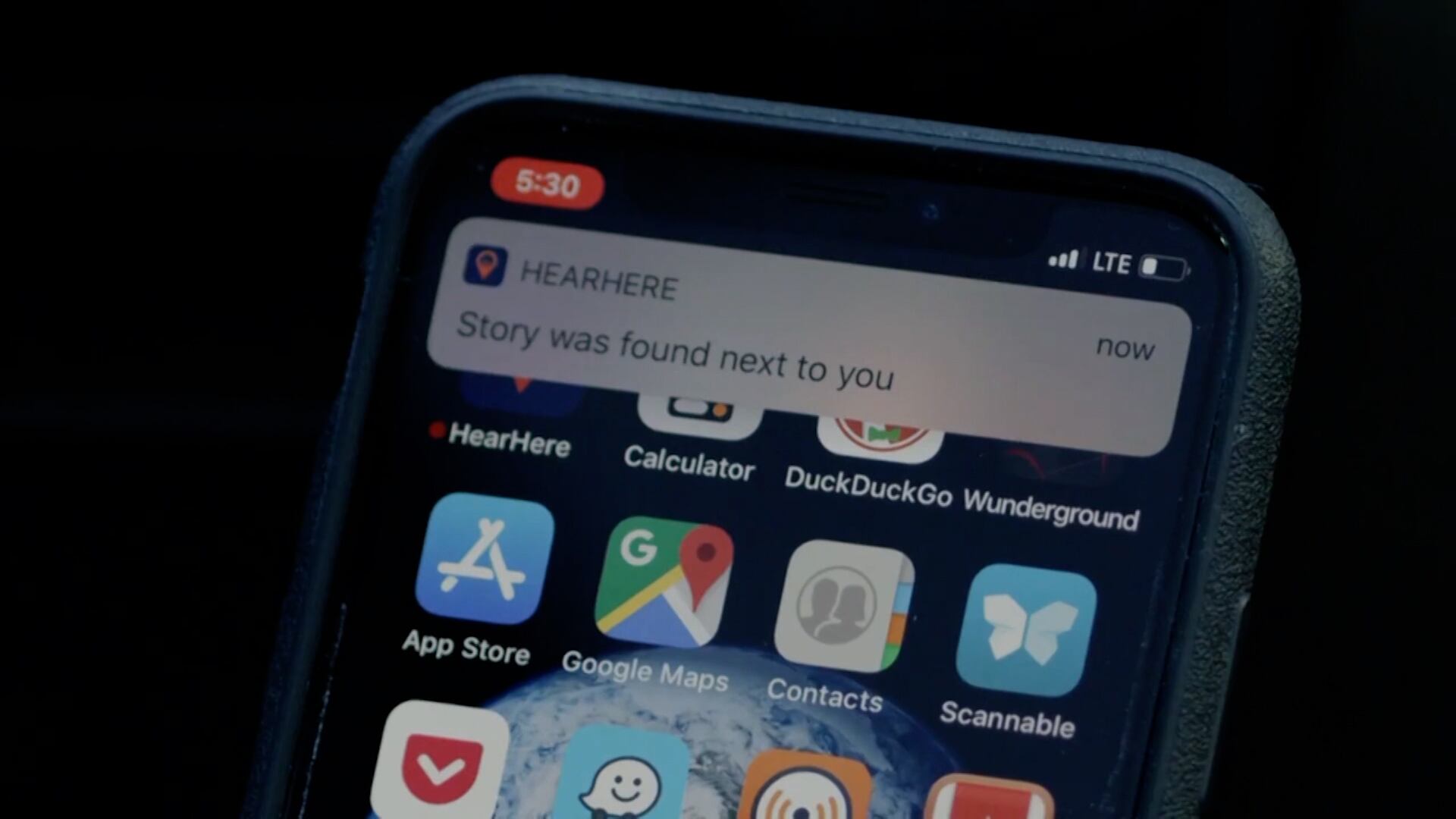
HearHere bills itself as a mobile audio entertainment app for road trips. The company just announced $3.2 million in seed funding led by Camping World, a retail company that sells recreational vehicles and camping supplies. HearHere's GPS-powered app offers over 8,880 stories across the continental U.S. and serves up the stories based on a users' geographic location and interests. The stories are narrated by some big-name celebrities including actor Kevin Costner, who is a co-founder of the company. Woody Sears, co-founder and CEO of HearHere, joins Cheddar News' Closing Bell to discuss.
On December 25, 2021, NASA got into the holiday spirit by launching the James Webb Space Telescope, the largest and most powerful space science observatory in history.
It is intended to succeed the Hubble Space Telescope as NASA's flagship mission in astrophysics and is able to view objects too old and distant for Hubble. Gregory Robinson, director of NASA's James Webb Space Telescope program, joins Cheddar News' Closing Bell to discuss the mission. "I think a lot of what we don't know today is what I'm expecting to find and certainly really understand what took place more than 13.5 billion years ago and see the formation of some of the first galaxies in our universe," said Robinson.
YouTube creator platform Spotter recently announced $200 million in Series D financing at a valuation of $1.7 billion, led by SoftBank Vision Fund 2. Spotter allows YouTubers to license the rights to their video catalogs in exchange for large sums of cash paid upfront. The company's clients include some of YouTube's most popular personalities, with a combined total of more than 1.2 billion subscribers. Aaron Debevoise, founder and CEO of Spotter, joins Cheddar News' Closing Bell to discuss.
The Russia-Ukraine conflict drags on — and global economies could see pandemic-era prices and supply chain issues come back full force. Both countries supply key commodities and materials, including semiconductor production. That sector, in particular, was hit hard by the pandemic and was just beginning to see a recovery when the invasion began. What happens next? Do companies have enough to fall back on and can they rely on pandemic-era measures to stay afloat? Everett Millman, Chief Market Analyst at Gainesville Coins, joins Closing Bell to discuss which sectors are being hit the hardest, rising prices, how consumers could feel the impact, and more.
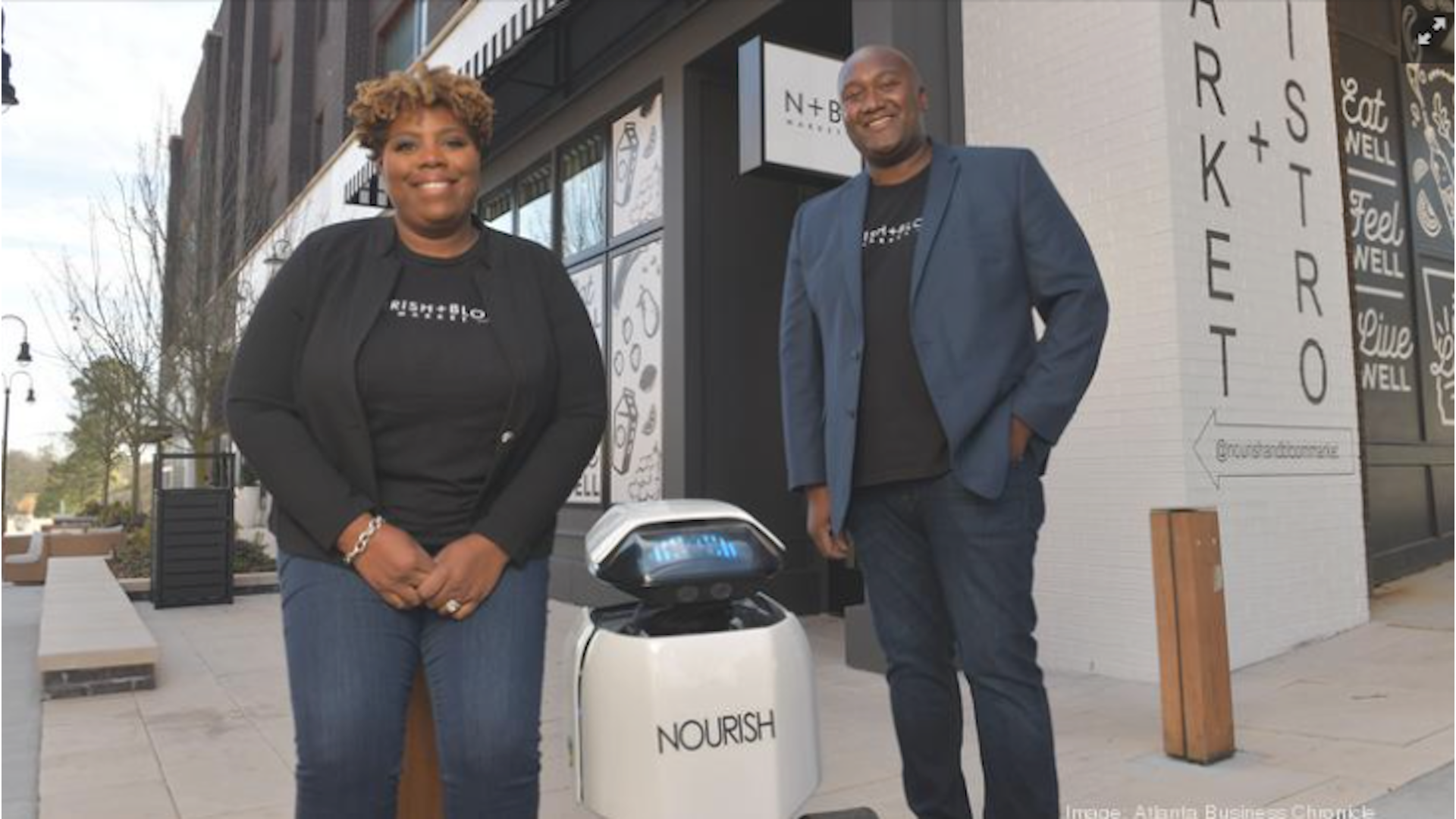
Jamie Hemmings and Jilea Hemmings, owners and founders of Nourish + Bloom Market, join Cheddar News to talk about the inspiration behind creating their cashierless grocery store.
While crypto exchanges have been used to aid Ukraine amid the Russian invasion, critics point to possible sanction evasion on the Russian side using the same technology. Cheddar's Alex Vuocolo takes a closer look.
TikTok is extending the maximum length of its platform's clips to 10 minutes in length, a big leap from its three-minute cap, in order to keep up with competitors such as YouTube and Instagram Reels.