By Banning Alex Jones, Facebook and YouTube Set New Standards
*By Conor White*
The decision by the web's biggest social platforms Monday to [remove content by the conspiracy theorist Alex Jones](https://www.washingtonpost.com/technology/2018/08/06/apple-facebook-spotify-remove-alex-jones-content/?utm_term=.da5ce4fff42e) and bar the Inforwars host from posting may set a new standard for what's appropriate speech on social media, says Sara Fischer, a media reporter for Axios.
Facebook, YouTube, Apple, and Spotify all removed Jones's incendiary podcasts and videos for hate speech and harassment.
In [a statement Monday](https://newsroom.fb.com/news/2018/08/enforcing-our-community-standards/), Facebook said it was removing content from four pages associated with Jones for "glorifying violence" and "using dehumanizing language." Google, which owns YouTube, told the Washington Post on Monday it terminated Jones's video channel for similar reasons.
“All users agree to comply with our Terms of Service and Community Guidelines when they sign up to use YouTube," Google said [according to The Post](https://www.washingtonpost.com/technology/2018/08/06/apple-facebook-spotify-remove-alex-jones-content/?noredirect=on&utm_term=.310b9280a077). "When users violate these policies repeatedly, like our policies against hate speech and harassment or our terms prohibiting circumvention of our enforcement measures, we terminate their accounts."
Jones has repeatedly spread the false claim that the deadly 2012 shooting at Sandy Hook Elementary School that killed 27 people was a hoax. Parents of some of the slain children are [suing Jones](http://www.chicagotribune.com/news/nationworld/ct-infowars-alex-jones-sandy-hook-lawsuit-20180801-story.html). They say they've been harassed by his followers ー at Jones's urging ー and have been forced to move. Jones has said that he was acting as a journalist and that his speech is protected.
"This is really dicey," Fischer said Monday in an interview on Cheddar. "If you're Facebook, you want to create a policy that can scale."
Blocking one person for his false views isn't a sustainable policy, she said. "You need to be able to scale that policy globally to every single viewpoint."
Infowars has also been cited repeatedly for promulgating "fake news," but Facebook said in its statement that misinformation is a different issue that the social network is trying to address separately. Jones's content was removed specifically for speech that violates the social network's community standards.
"The claims he's making have always been dangerous, but they seem particularly paranoid as of late," said Heather Dockray, a culture reporter at Mashable.
Companies wary of accusations of censorship have until now refrained from taking action against Jones, but Dockray said that Jones's increased rhetoric made the decisions to block Infowars an easy call.
"I think with Alex Jones it's the closest thing to a clear-cut case as you're ever going to get," Dockray said. "I mean this is someone who has shared the addresses of Sandy Hook parents a couple of years ago, and this is someone who a lot of critics say has engaged in targeted harassment campaigns."
Despite the actions of Facebook, Apple, and YouTube, one social platform, Twitter, has not removed Jones or InfoWars from its service. According to Bloomberg, a Twitter spokesperson InfoWars and related accounts were not [currently in violation](https://www.bloomberg.com/news/articles/2018-08-06/conspiracy-theorist-alex-jones-booted-from-youtube-other-online-services) of Twitter’s rules.
Still, the decisions by Apple, Spotify and Facebook may clear the way for other platforms to take action, now that a precedent has been established. And Fischer said that Facebook must feel it can apply the new standard universally, or the company would not have acted against one individual.
"This is a very big, massive step for Facebook to be removing some of Alex Jones's pages," Fischer said. "In doing so, they're essentially saying 'we don't think that viewpoint or whatever it is that he's putting out there is accurate, is true and is healthy, is safe."
Harry Yeh, Managing Director at Quantum Fintech Group, joins Cheddar News' Closing Bell, where he explains why his firm has a target estimate of $400,000 for Bitcoin this year.
California's new composting law will affect what residents do in their kitchens. As of this week, Californians will have to recycle excess food in an effort to reduce emissions caused by food waste. Cities and counties will turn recycled food into compost or use it as a renewable energy source. California's new law is the largest mandatory residential food waste recycling program in the country. Rachel Wagoner, Director of the California Department of Resources, Recycling and Recovery called the law 'the biggest change to trash' since recycling started in the 1980s. She joined Cheddar Climate to discuss.
Like the big changeover to e-commerce for retail, the COVID-19 pandemic has moved car buying trends to the digital showroom. Karl Brauer, an executive analyst at iSeeCars.com, joined Cheddar to talk about the "mindset shift" in consumers and businesses to order-based systems in the United States (something more common in other countries). While more than 60 percent of consumers still prefer to visit dealerships in-person, Brauer noted that consumers are better off ordering a car to spec, which would also help improve supply constraints. "It's really bad right now to be building cars and not really knowing who's going to buy them or when they're going to sell," he said. Manufacturing a car to order would maximize the efficiency of obtaining materials through the supply chain rather than "shotgunning it" at dealerships.
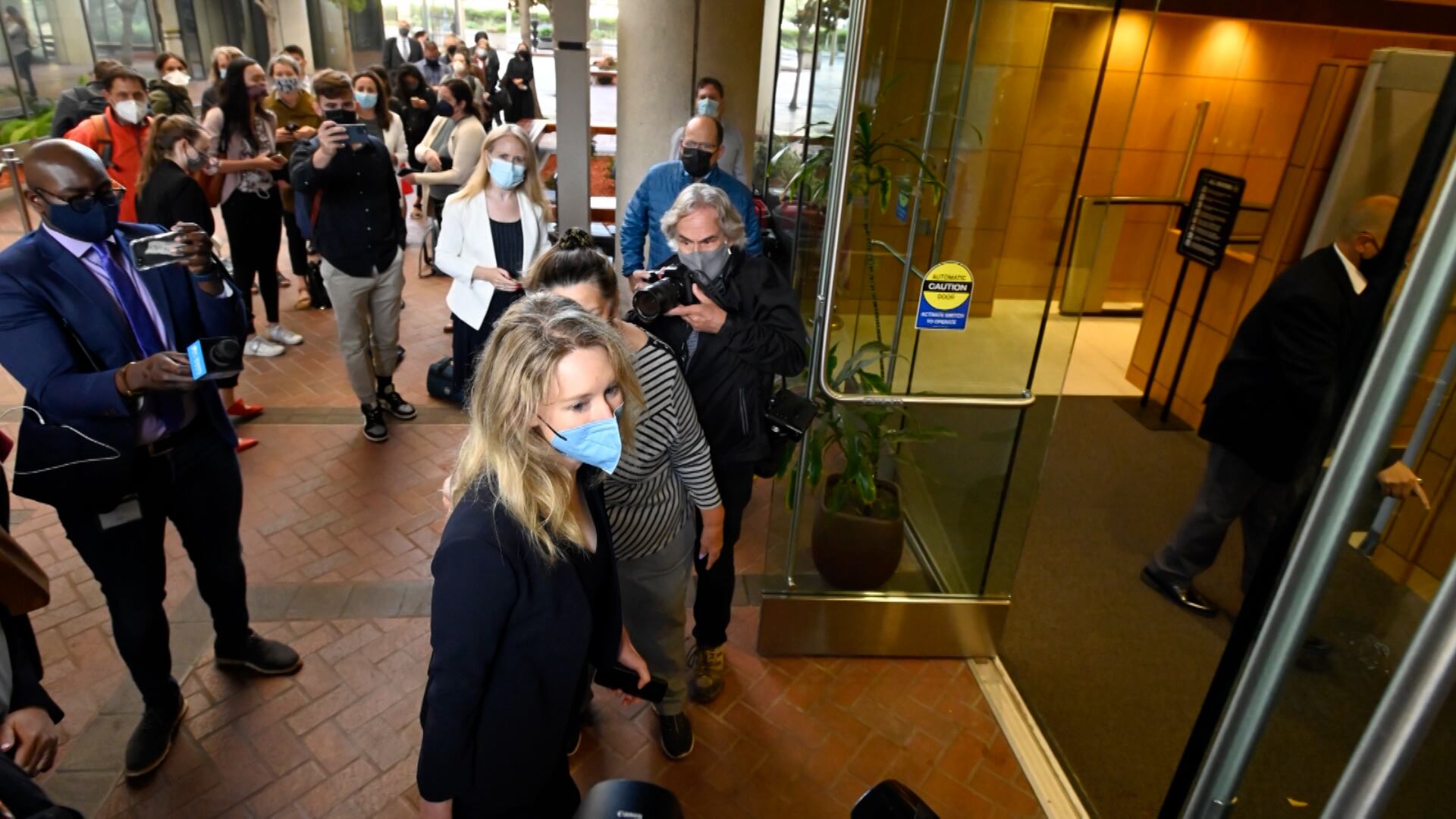
Mark MacDougall, attorney and former prosecutor with the criminal division of the Department of Justice, joined Cheddar to discuss the fraud conviction of Theranos founder Elizabeth Holmes. MacDougall addressed Holmes' stance that what she did was no different than any other Silicon Valley startup's approach to business and how this will shake out for the industry going forward. "I can't imagine it doesn't have some salutary effect on entrepreneurs and people involved in new ventures going forward," he said. Holmes was found guilty on 4 of 11 counts, with each carrying a maximum of 20 years in prison, but MacDougall explained that the lengthy prison sentences were unlikely.
Sports betting is going mainstream in the United States. Dozens of states have legalized it, California is set to do the same this year. Arizona, which legalized sports betting in September, set new national records for gambling in its first months. Daniel Graetzer, CEO of Maximbet, joins Cheddar News to discuss what's next for the booming industry.
A new report from ProPublica and the Washington Post found that Facebook Groups played a major role in the spread of misinformation linked to the January 6 insurrection with more than 650,000 posts claiming that Joe Biden's election victory was illegitimate.
On this episode of Cheddar Reveals, Dr. Anita Gupta, Adjunct assistant professor of anesthesiology and critical care medicine at the Johns Hopkins University School of Medicine, shares her forecast for the healthcare industry in 2022; Waseem Asghar, Ph.D., Associate Professor, Department of Computer & Electrical Engineering and Computer Science, Florida Atlantic University, breaks down the latest progress, trends, and innovations in wearable health tech; Cheddar gets a look at Curiosity Stream's 'Hacking our Biome.'
Waseem Asghar, Ph.D., Associate Professor, Department of Computer & Electrical Engineering and Computer Science, Florida Atlantic University, joins Cheddar Reveals to break down the latest progress, trends, and innovations in wearable health tech.
Ford is accelerating production of its highly anticipated electric F-150 Lightning with an expectation to pump out 150,000 vehicles annually to meet surging demand. Kumar Galhotra, Ford president of the Americas and international markets group, joined Cheddar to detail the plan to get more customers behind the wheel and to become the top of the competition in the electric vehicle space. "Within the next 24 months, we will have capacity, globally, to deliver 600,000 battery-electric vehicles per year," he said.