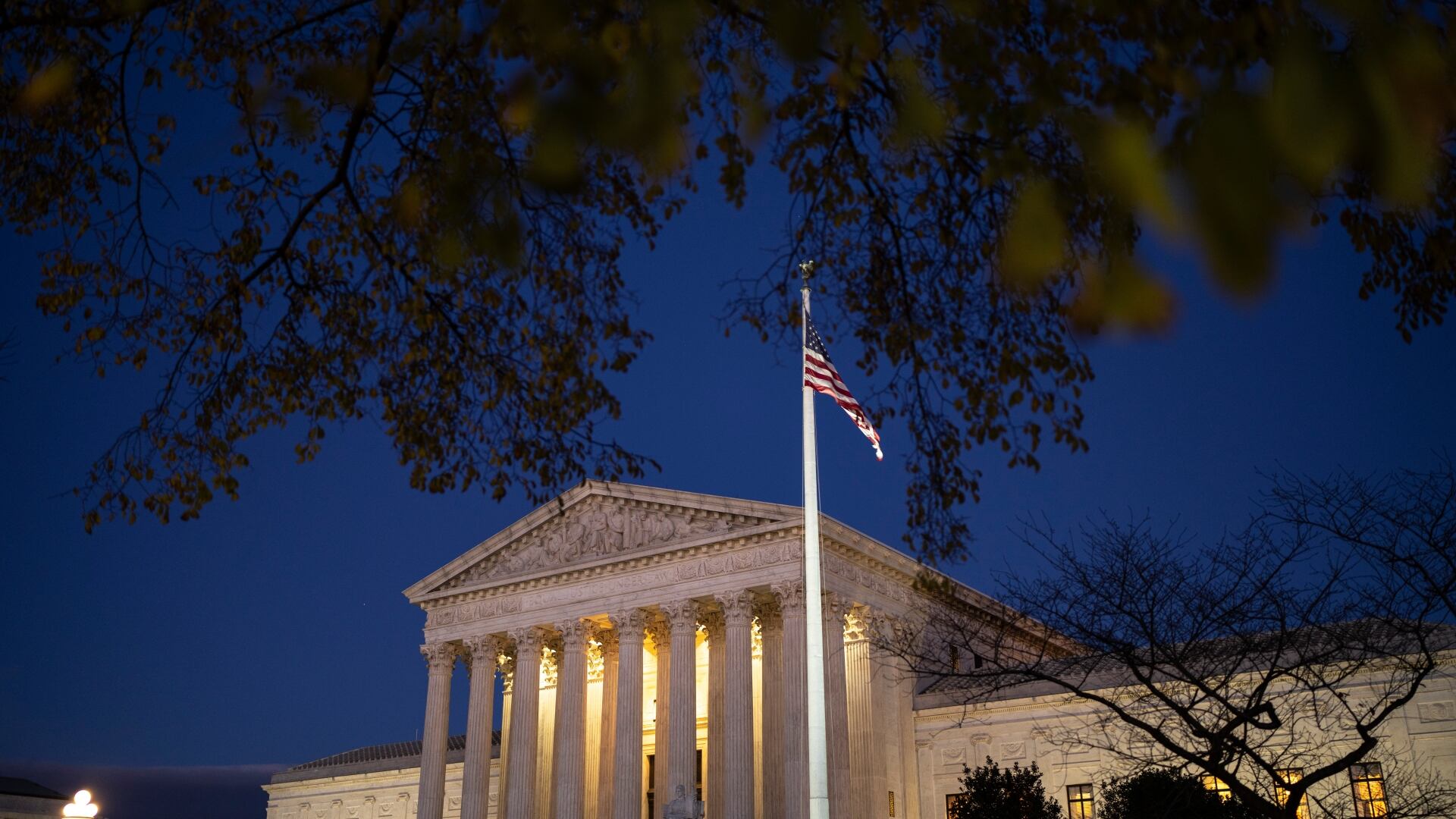
Appellate court judge Brett Kavanaugh is President Donald Trump's pick to fill the soon-to-be vacant spot on the Supreme Court bench. The 53-year-old would replace the retiring Justice Anthony Kennedy, who often served as a swing vote for liberals on social issues like gay marriage and abortion. Critics fear Kavanaugh, who has a long record of conservative-leaning decisions, would vote against those rulings and tilt the nation's top court to the right for decades to come. In accepting the nomination Monday night, Kavanaugh said, "My judicial philosophy is straightforward. A judge must be independent and must interpret the law, not make the law." He is, in many ways, similar to Trump's first Supreme Court pick Justice Neil Gorsuch, said Eric Boehm, reporter at Reason.com. "The two of them attended Georgetown prep together, they were just two years apart in high school," said Boehm. "We now have two guys who may have shared a locker room together in their high school gym class sitting on the Supreme Court, which is kind of crazy and maybe worthy of more criticism than it will get." Kavanaugh's nomination sets up a bitter fight in the Senate that could potentially have a knock-on effect in the midterm elections in November. Democrats have voiced their strong opposition to Kavanaugh's candidacy, with Sen. Chuck Schumer (D-NY) [tweeting](https://twitter.com/SenSchumer/status/1016493013143605248) after Monday's announcement that he'll oppose the nomination "with everything I have." Sen. Cory Booker (D-NJ) raised questions over Kavanaugh's support of presidential immunity, suggesting his candidacy is an attempt by Trump to avoid investigation by Special Counsel Robert Mueller. Booker's concerns stem from Kavanaugh's 1998 [law review article](http://www.minnesotalawreview.org/wp-content/uploads/2012/01/Kavanaugh_MLR.pdf), which he penned after working with independent counsel Kenneth Starr on the investigation into former president Bill Clinton. Though he authored the report that suggested grounds for Clinton's impeachment, Kavanaugh eventually came to reverse course, questioning whether a sitting president should be subject to the burdens of criminal proceedings. "A president who is concerned about an ongoing criminal investigation is almost inevitably going to do a worse job as president," Kavanaugh wrote. The GOP holds only a slight majority in the Senate of 51-49, meaning every Republican senator would have to vote along party lines to confirm the new addition to the Supreme Court. However, Sen. Susan Collins (R-ME) and Sen. Lisa Murkowski (R-AK) are two potential dissenters who could disrupt the equation. Both are pro-choice Republicans who may take issue with the fact that Kavanaugh could help overturn the landmark 1973 decision of Roe v. Wade that established abortion rights. To complicate the math further, with the midterms looming, some Democratic Senators in traditionally Republican states may also cross over and vote in favor of Kavanaugh, said Jon Miller, CRTV's White House correspondent. "We have Joe Donnelly \(D-IN\), Joe Manchin \(D-WV\), and Heidi Heitkamp \(D-ND\) who are up for re-election in really competitive races in deeply red states, so they're probably going to have to come on board too," said Miller. Kavanaugh has been a law and political insider for decades, with some referring to him as the "Forrest Gump of Republican politics." He clerked for the very judge he may end up replacing, Justice Kennedy. He was on President George W. Bush's team during the months-long 2000 recount case against candidate Al Gore. He also served as Bush's White House lawyer and staff secretary, helping Bush navigate legal issues after the 9/11 attack. In 2003, Bush nominated Kavanaugh for his current position as circuit judge for the U.S. Court of Appeals in Washington, DC. He was confirmed to the position in 2006.