By Mark Sherman
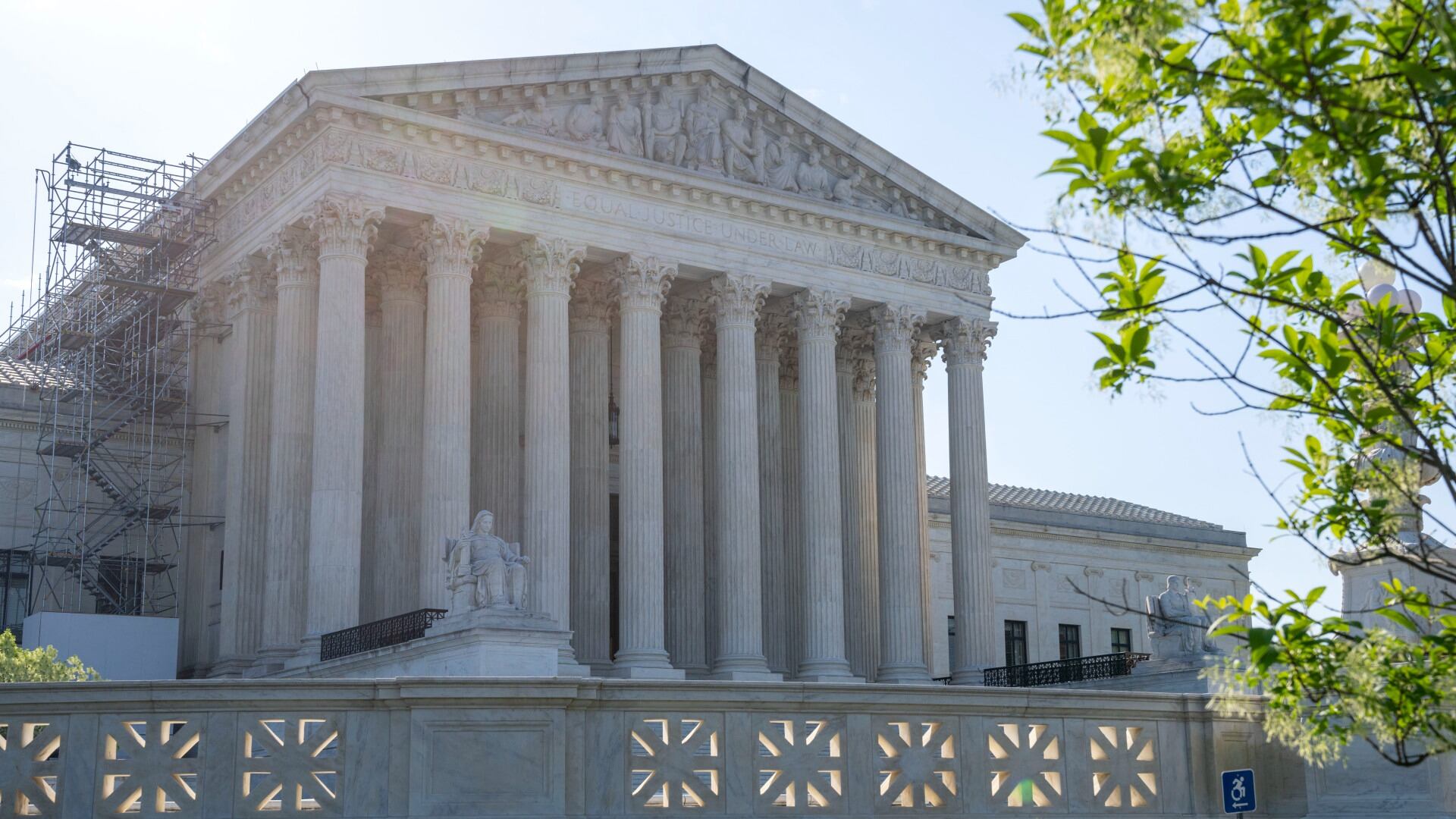
The Supreme Court on Thursday struck down affirmative action in college admissions, declaring race cannot be a factor and forcing institutions of higher education to look for new ways to achieve diverse student bodies.
The court's conservative majority overturned admissions plans at Harvard and the University of North Carolina, the nation's oldest private and public colleges, respectively.
Chief Justice John Roberts said that for too long universities have “concluded, wrongly, that the touchstone of an individual’s identity is not challenges bested, skills built, or lessons learned but the color of their skin. Our constitutional history does not tolerate that choice.”
Justice Clarence Thomas, — the nation's second Black justice, who had long called for an end to affirmative action — wrote separately that the decision “sees the universities’ admissions policies for what they are: rudderless, race-based preferences designed to ensure a particular racial mix in their entering classes.”
Justice Sonia Sotomayor wrote in dissent that the decision “rolls back decades of precedent and momentous progress.”
Both Thomas and Sotomayor, the two justices who have acknowledged affirmative action played a role in their admissions to college and law school, took the unusual step of reading a summary of their opinions aloud in the courtroom.
In a separate dissent, Justice Ketanji Brown Jackson — the court’s first Black female justice — called the decision “truly a tragedy for us all.”
Jackson, who sat out the Harvard case because she had been a member of an advisory governing board, wrote, “With let-them-eat-cake obliviousness, today, the majority pulls the ripcord and announces ‘colorblindness for all’ by legal fiat. But deeming race irrelevant in law does not make it so in life.”
The vote was 6-3 in the North Carolina case and 6-2 in the Harvard case. Justice Elena Kagan was the other dissenter.
President Joe Biden was expected to comment on the decision from the White House later Thursday.
Two former presidents offered starkly different takes on the high-court ruling.
Former President Donald Trump, the current GOP presidential frontrunner, wrote on his social media network that the decision marked “a great day for America. People with extraordinary ability and everything else necessary for success, including future greatness for our Country, are finally being rewarded.”
Former President Barack Obama said in a statement that affirmative action “allowed generations of students like Michelle and me to prove we belonged. Now it’s up to all of us to give young people the opportunities they deserve — and help students everywhere benefit from new perspectives.”
The Supreme Court had twice upheld race-conscious college admissions programs in the past 20 years, including as recently as 2016.
But that was before the three appointees of former President Donald Trump joined the court. At arguments in late October, all six conservative justices expressed doubts about the practice, which had been upheld under Supreme Court decisions reaching back to 1978.
Lower courts also had upheld the programs at both UNC and Harvard, rejecting claims that the schools discriminated against white and Asian American applicants.
The college admissions disputes are among several high-profile cases focused on race in America, and were weighed by the conservative-dominated, but most diverse court ever. Among the nine justices are four women, two Black people and a Latina.
The justices earlier in June decided a voting rights case in favor of Black voters in Alabama and rejected a race-based challenge to a Native American child protection law.
The affirmative action cases were brought by conservative activist Edward Blum, who also was behind an earlier affirmative action challenge against the University of Texas as well as the case that led the court in 2013 to end use of a key provision of the landmark Voting Rights Act.
Blum formed Students for Fair Admissions, which filed the lawsuits against both schools in 2014.
The group argued that the Constitution forbids the use of race in college admissions and called for overturning earlier Supreme Court decisions that said otherwise.
Roberts' opinion effectively did so, both Thomas and the dissenters wrote.
The only institutions of higher education explicitly left out of the ruling are the nation's military academies, Roberts wrote, suggesting that national security interests could affect the legal analysis.
Blum’s group had contended that colleges and universities can use other, race-neutral ways to assemble a diverse student body, including by focusing on socioeconomic status and eliminating the preference for children of alumni and major donors.
The schools said that they use race in a limited way, but that eliminating it as a factor altogether would make it much harder to achieve a student body that looks like America.
At the eight Ivy League universities, the number of nonwhite students increased by 55% from 2010 to 2021, according to federal data. That group, which includes, Native American, Asian, Black, Hispanic, Pacific Islander and biracial students, accounted for 35% of students on those campuses in 2021, up from 27% in 2010.
The end of affirmative action in higher education in California, Michigan, Washington state and elsewhere led to a steep drop in minority enrollment in the states’ leading public universities.
They are among nine states that already prohibit any consideration of race in admissions to their public colleges and universities. The others are: Arizona, Florida, Georgia, Nebraska, New Hampshire and Oklahoma.
In 2020, California voters easily rejected a ballot measure to bring back affirmative action.
A poll last month by The Associated Press-NORC Center for Public Affairs Research showed 63% of U.S. adults say the court should allow colleges to consider race as part of the admissions process, yet few believe students’ race should ultimately play a major role in decisions. A Pew Research Center survey released last week found that half of Americans disapprove of considerations of applicants’ race, while a third approve.
The chief justice and Jackson received their undergraduate and law degrees from Harvard. Two other justices, Elena Kagan and Neil Gorsuch, went to law school there, and Kagan was the first woman to serve as the law school’s dean.
Every U.S. college and university the justices attended, save one, urged the court to preserve race-conscious admissions.
Those schools — Yale, Princeton, Columbia, Notre Dame and Holy Cross — joined briefs in defense of Harvard’s and UNC’s admissions plans.
Only Justice Amy Coney Barrett’s undergraduate alma mater, Rhodes College, in Memphis, Tennessee, was not involved in the cases.
Updated with additional details.