Bombing Suspect Charged, but National Nerves Remain Frayed
*By Carlo Versano*
After a week of political finger-pointing and frayed national nerves ahead of a major election, a Florida man is in custody on federal charges that he sent at least 13 live explosive devices to prominent former and current Democratic officials, a news organization, a Hollywood actor, and liberal donors.
The latest device was intercepted in California, en route to Tom Steyer, a Democratic donor who has spent millions advocating for Trump's impeachment.
Federal authorities announced the arrest of Cesar Sayoc, 56, of Aventura, Fla., at the end of a week that began with a crude pipe bomb being discovered in the mailbox of George Soros, a left-leaning philanthropist vilified by the right.
As more bombs were found ー from the leafy suburbs of New York City to sprawling mail sorting facilities in Delaware ー and buildings evacuated, it became clear that a serial bomber was using the U.S. postal service to harm opponents and critics of the president and instill fear in a country wracked by political polarization just under two weeks before a pivotal U.S. election.
"This is a law and order administration," said Attorney General Jeff Sessions, announcing the five counts against Sayoc, which include mailing explosives and making threats against former presidents.
"We will not tolerate such lawlessness," Sessions said. He added that Sayoc "appears to be a partisan."
FBI Director Christopher Wray said investigators were able to pull a fingerprint from one of the two devices mailed to Rep. Maxine Waters (D-CA), which, along with other pieces of DNA, matched Sayoc's DNA from a prior arrest. "Today's arrest doesn't mean we're out of the woods," Wray said, cautioning that more devices may still be undiscovered in the postal system.
Wray made a point of saying that the devices were "not hoax devices" but real explosives. He would not comment on whether any were "functional." It was unclear if Wray was reacting to President Trump, who earlier lamented that the "'Bomb' stuff," using quotations around "bomb," was hurting GOP momentum going into Election Day.
Conspiracy theories have flooded the internet positing that the mail bombs were a "false flag" operation. "False flag" believers, including some high-profile conservatives like Rush Limbaugh and Ann Coulter, have speculated that the mail bombs were sent by a Democratic sympathizer who wanted to villainize Republicans in the eyes of voters going to the polls.
At least one of them, Geraldo Rivera, backed down after hearing the charges against Sayoc on Friday afternoon: "Never mind; outsmarted myself in conjuring false flag operation designed to hurt @realDonaldTrump & #GOP," he wrote in a tweet. "Actual alleged perp 56-year old #CesarSayoc is apparently stereotype most media assumed: a middle-aged, rabid, extreme right winger w a troubled past & long criminal record."
Sayoc was arrested at an Autozone store in the Miami suburb of Plantation, Fla. Cheddar's J.D. Durkin was there and spoke to the manager of a nearby business who witnessed the arrest. Tom Fiore, the president of West Broward Community Management, told Durkin he knew it was tied to the nationwide manhunt when he saw members of the NYPD in Florida.
Erin Blake, a senior political reporter at the Washington Post who has been following the story all week, told Cheddar that "all the evidence seems to be pointing in the right direction." With the threat subsiding, Blake said, this is a good time to figure out "who we are as a country."
Sessions, Wray, and other federal authorities praised the coordinated response and investigation. Trump added his plaudits for law enforcement on Twitter, though Blake said he doubted the events would lead to much of a cooling off period in terms of the heated political rhetoric, adding, "The president has shown that he is not terribly chastened by this whole thing."
If some members of Congress have their way, there might finally be a 'TLDR' on sites' terms of service, introduced by the terms-of-service labeling, design, and readability act – or TLDR for short. With this act, users will actually understand what they're agreeing to or the many ways in which their data is being used before pressing 'accept.' J.D. sat down with co-sponsor of the bill and Senator Bill Cassidy, to discuss.
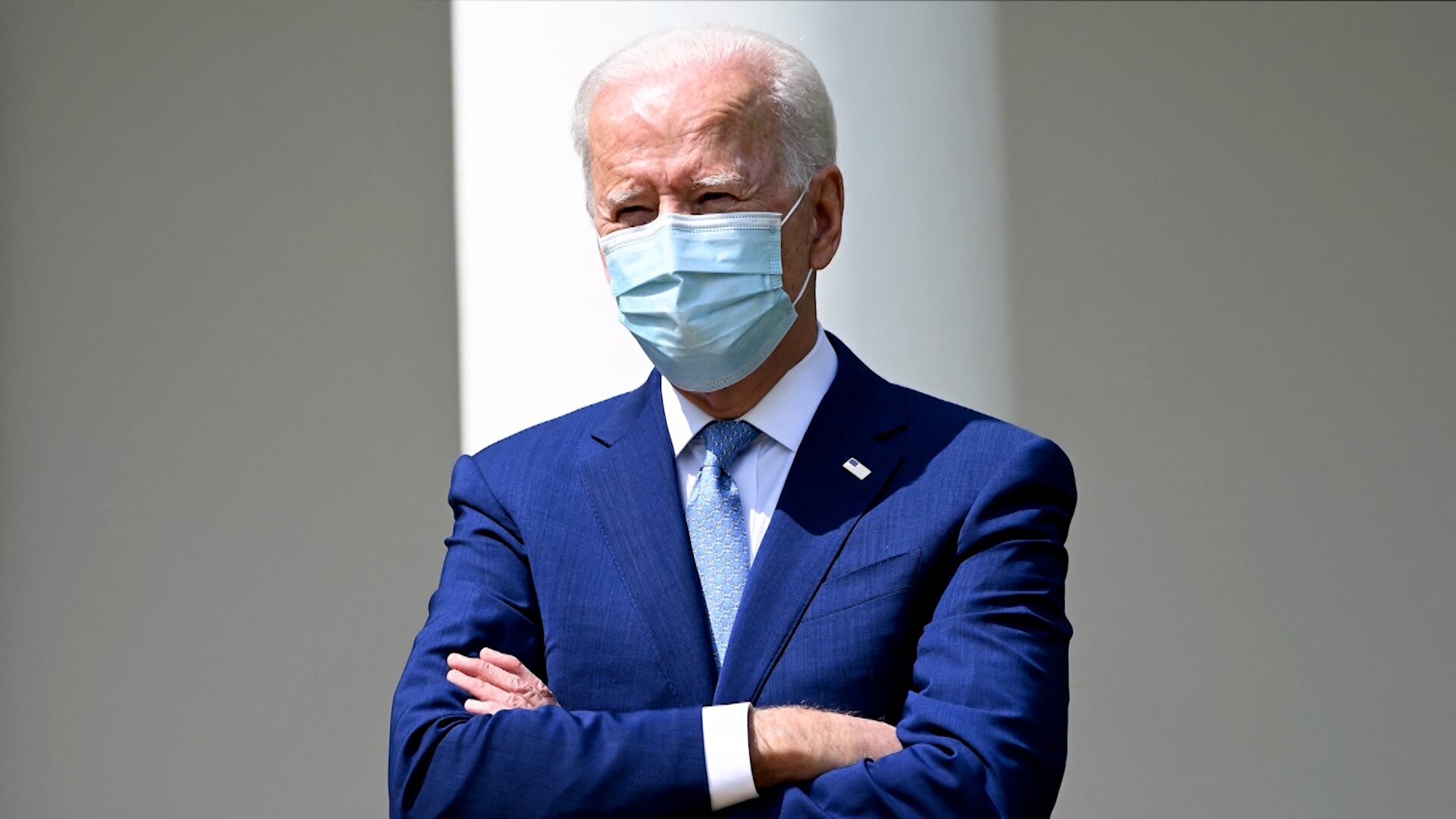
President Joe Biden's first year in office is wrapping up. What has he achieved, and what else remains on the table while the Democrats have control of Washington? Amid an ongoing pandemic and rising inflation, Biden's approval rating is at an all-time low and his party is plagued by infighting. Will he be able to continue pushing key parts of his agenda? Paul Glastris, former Bill Clinton speechwriter & Editor-in-chief of 'Washington Monthly,' joins Cheddar News' Closing Bell to discuss the president's achievements in his first year, where he's fallen short, and what he must do in order to get more of his agenda signed into law.
Tech giants Meta, Amazon, Alphabet, and Apple are faced with a bipartisan antitrust legislation effort underway in the Senate Judiciary Committee. The companies stand accused of promoting their own goods and services over smaller competitors on their platforms, holding too much monopolistic power via their app stores and services. Adam Kovacevich, founder and CEO of Chamber of Progress, a technology industry trade group, joined Cheddar to argue that the bills that are being debated currently could end up hurting consumers, rather than helping.
Concerns over inflation have become one of the biggest worries for executives. A survey from The Conference Board shows that more than 900 CEOs consider inflation a top tier concern, a major shift from last year's survey that had it as a low-level concern. Rebecca Ray, Executive Vice President, Human Capital, The Conference Board joined Cheddar's Opening Bell for more.
Jordan Zakarin, Media Producer at A More Perfect Union, joined Cheddar News to break down the latest from Colorado, where at least 8,700 Kroger employees walked off the job in demand of increased benefits and wages.
With the 2022 Winter Olympics in Beijing rapidly approaching, clouds of controversy continue to swirl around China's treatment of the Uyghur Muslim minority population, its surveillance state, and security for visiting athletes. Phelim Kine, China correspondent for Politico, joined Cheddar to break down the big storylines surrounding the Beijing Games and highlight what he saw as the complete disregard by top corporate sponsors like P&G, Airbnb, Intel, Visa, and Coca-Cola, for the controversies. "They spend $100 million for every Olympics that they sponsor, and they have frankly shown absolute willful indifference to any type of entreaty to essentially be more vocal about their concerns about human rights in China," he said. Kine also touched on the data privacy fears for athletes as visiting contingents are being told to carry burner phones to avoid security risks.
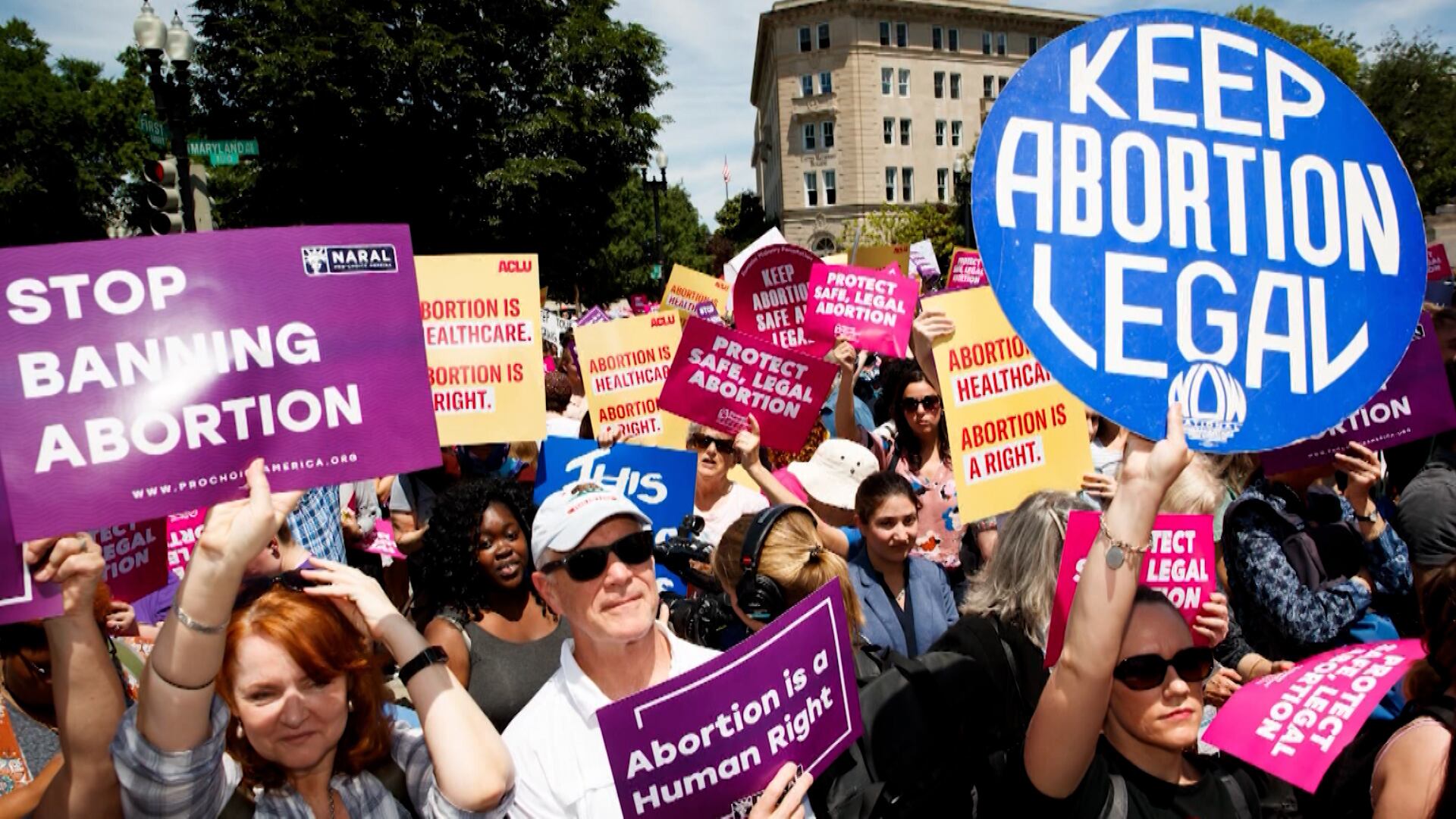
Texas's six-week abortion ban remains in effect after a federal appeals court ruling on Monday. The U.S. court of appeals for the fifth circuit temporarily transferred the case to the Texas Supreme Court, which is expected to leave the dispute in limbo for months to come. Katie Barlow, attorney and media editor of SCOTUSblog, joins Cheddar News to discuss.
Hugh Odom, founder and president of Vertical Consultants, shared his expertise on telecommunications with Cheddar on the safety issue raised about 5G deployment by airlines. The installation was partially delayed again on Tuesday as the airlines warned of potentially catastrophic delays in a letter to the Biden administration. Later, both Verizon and AT&T relented and put a pause on some of the implementations. "The first thing the Biden administration needs to do is get everybody in the room and say, look, aviation industry, identify the problem — wireless industry, come up with a solution," said Odom.
Dave Levinthal, deputy Washington Bureau chief at Insider, joins Cheddar News to discuss Gallup's new survey that reveals more Americans leaned Republican by the end of 2021.