Boeing said Wednesday that it lost $1.2 billion in the first quarter as it and took large write-downs and lost money in both its civilian-airplane and defense businesses.
The loss was bigger than Wall Street had forecast, and the company's quarterly revenue also fell short of expectations. Boeing burned through $3.2 billion in cash.
“Messier quarter than any of us would have liked," CEO David Calhoun acknowledged on CNBC.
Shares of Boeing Co., based in Chicago, fell 10% shortly after the opening bell Wednesday.
Boeing offered some optimism for improvement, however, saying that it has submitted plans to resume deliveries of its 787 airliner and it increased production and deliveries of the 737 Max passenger jet during the quarter.
Calhoun said the company was on track to generate positive cash flow over the entire year "despite the pressures on our defense and commercial development programs.”
The quarterly report brought disappointing news for Boeing shareholders on several fronts.
The company again pushed back the expected first delivery of a new version of its long-range, twin-aisle 777 passenger jet by at least a year until 2025. The move was widely expected, as Boeing adapts to certification standards that have been tightened since regulators approved the Max, then were forced to ground the planes after two deadly crashes.
The delay in expected approval for the 777-9 caused Boeing to forecast $1.5 billion in “abnormal” production costs.
Boeing took a $660 million charge for its program to build new presidential Air Force One jets, which it blamed on higher supplier costs, final technical requirements and schedule delays. It also took $367 million in charges on a military training jet.
Boeing said it submitted plans to the Federal Aviation Administration to resume deliveries of the 787 passenger jet. Those deliveries have been halted for more than a year by production issues that Boeing previously said would add about $2 billion in costs, of which $312 million was recorded in the first quarter.
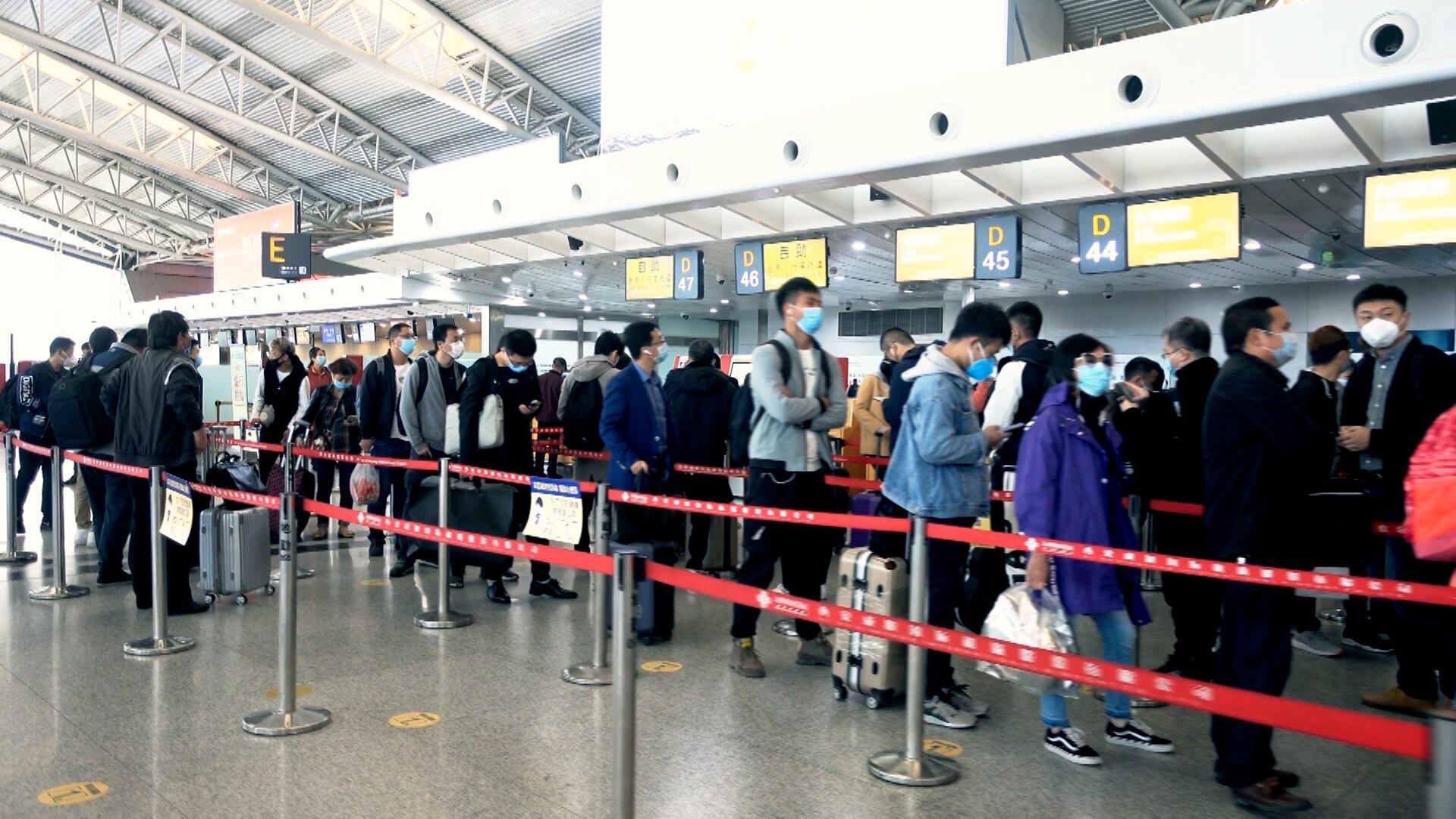
Airlines are expecting a boom summer, with travelers returning in huge numbers after two years of pandemic. But some of them, like American, have trimmed summer schedules because they haven't received the Boeing 787s that they ordered years ago.
“They have a busy summer schedule. We have already disappointed them with respect to the capacity on that summer schedule," Calhoun said. Just when Boeing will be cleared to resume deliveries of 787s is up to the FAA, but Calhoun said “We will be back in the air sooner rather than later.”
Boeing expects to boost production of the 737 Max to 31 planes a month in the current quarter, which runs through June. That plane was grounded worldwide for nearly two years after two deadly crashes.
And Boeing took $212 million in pretax charges related to Russia’s invasion of Ukraine. The company did not immediately explain the write-down.
In a memo to employees, Calhoun said Boeing is taking steps to improve long-term performance.
“We are a long-cycle business, and the success of our efforts will be measured over years and decades, not quarters,” he said.
Boeing's commercial-airplanes division lost $859 billion, hobbled by the inability to deliver 787 jets while Boeing tries to fix production flaws on the twin-aisle plane.
The defense business, long a bulwark against volatility in aircraft sales to airlines, lost $929 million as revenue fell 24%.
The company reported a loss attributable to shareholders of $1.22 billion, compared with a loss of $537 million a year earlier. The “core” loss was $2.75 a share on revenue of $13.99 billion. Analysts expected a loss of 25 cents per share on revenue of $16.02 billion, according to a FactSet survey.
Stocks closed lower on the last trading day of 2021, but all three major indexes ended the year with double-digit growth. The S&P 500, in particular, marked its third straight positive year. What's in store for 2022 amid the Federal Reserve's plans to speed up asset tapering and raise interest rates, and how could COVID-19 continue to impact stocks? Steve Sosnick, Chief Strategist at Interactive Brokers, joins Cheddar News' Closing Bell to discuss movement on the last trading day of 2021, market predictions for 2022, and more.
As the pandemic continues to evolve, and cases of the omicron variant increase, how will this impact economic growth and movement in the new year? Consumer behavior continues to shift, labor issues linger, and questions about whether the pandemic will eventually become endemic are on economists' minds as we enter 2022. Jason Ware, Economist & Chief Investment Officer at Albion Financial Group, joins Cheddar News' Closing Bell to discuss.
Mike Draper, Founder and Owner of Raygun, joins Cheddar News' Closing Bell, where he discusses how increases to the minimum wage in several states next year will help his company and explains why he advocates for it nationally.
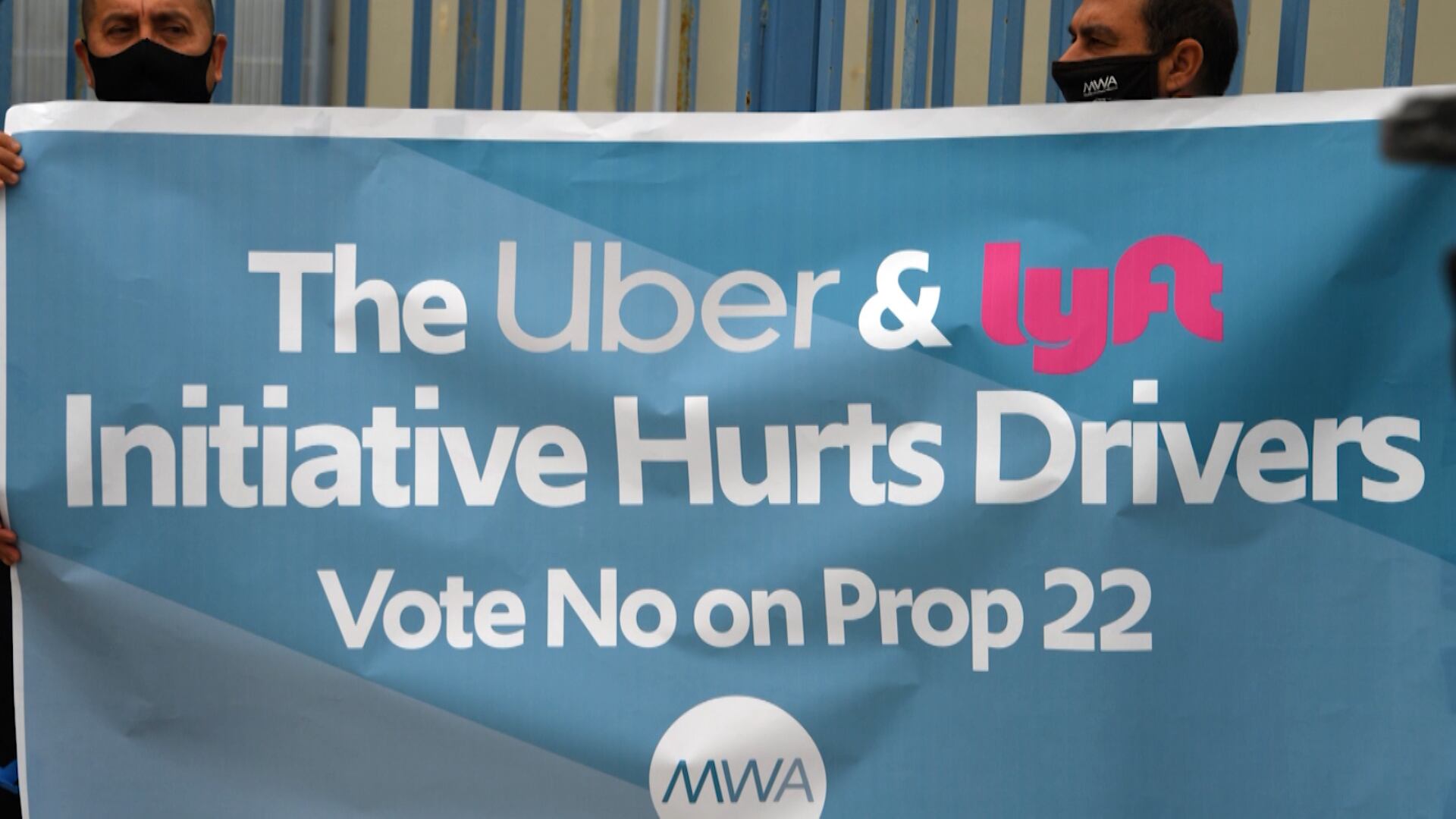
The push to regulate the gig worker economy is gaining steam as the share of workers who participate in freelancing through businesses like Uber and Lyft have also exponentially grown during the pandemic. Employment attorney Mark Kluger, founding partner at Kluger Healey, LLC, joined Cheddar to break down how the battle to reclassify gig workers will continue in the new year, and why the issue continues to generate conflict. "More and more workers are using gig work as their primary source of income and as a result of that they are not like employees in the sense that they don't have benefits like health insurance," Kluger noted.
Renewable energy company Heliogen has gone public via a SPAC merger with blank check company Athena Technology Acquisition Corp. on the NYSE. Joining Cheddar, founder and CEO Bill Gross went into why he felt the end of 2021 was the best time to get into the public markets. "If you think of the Industrial Revolution and the digital revolution, this renewable revolution is probably going to be as big or larger than that," he said. "So we're going to use this capital to scale our business, to meet more customer demand, to do more projects in parallel, and to scale our research and development to continue to drive down the price to be competitive with fossil fuels."
Carl "The Moon" Runefelt, a Bitcoin investment expert, recently made a hefty purchase of a $2 million Bugatti sports car at a Dubai dealership. The Swedish crypto evangelist joined Cheddar to talk about how he made the big acquisition of a luxury item he had long had his eye on and why he chose the dealership, The Car Vault, to make the unprecedented transaction. "They accepted crypto directly, and that was important to me," he said. "I am not going to go to any car dealership that don't accept crypto, and that's kind of a principle I have today."
Marjorie Mesidor, Partner at Phillips & Associates, joined Wake Up With Cheddar to break down the latest trends in the job market, as the demand for labor has recovered, but as the number of people willing to fill positions remains relatively low.
2021 proved that crypto currency is here to stay. This year saw more and more adoptions of crypto, from top athletes looking to be paid in bitcoin, to Elon Musk even experimenting with bitcoin and dogecoin payments for a bit over at Tesla. And it wasn't all bitcoin either - other cryptos like Cardano and Solana saw some action in 2021 as well. Patrick McConlogue, CEO of Overline and former Citadel Investment Group Engineer explains why 2021 was such a good year for crypto, and what to expect in 2022.
2021 saw markets continue to be impacted by the onslaught of the coronavirus pandemic -most recently in the form of the Omicron variant- in addition to the global supply chain shortage, and increased inflation. But it wasn't all bad news, as crypto soared throughout the year, and meme stocks continued to have a moment. With the year coming to a close, investors are keeping an eye out to see if they should expect more of the same in the new year. Chris Vecchio, Senior Analyst, at DailyFX tells us what market trends to be on the watch for in 2022.