Boeing said Wednesday that it lost $1.2 billion in the first quarter as it and took large write-downs and lost money in both its civilian-airplane and defense businesses.
The loss was bigger than Wall Street had forecast, and the company's quarterly revenue also fell short of expectations. Boeing burned through $3.2 billion in cash.
“Messier quarter than any of us would have liked," CEO David Calhoun acknowledged on CNBC.
Shares of Boeing Co., based in Chicago, fell 10% shortly after the opening bell Wednesday.
Boeing offered some optimism for improvement, however, saying that it has submitted plans to resume deliveries of its 787 airliner and it increased production and deliveries of the 737 Max passenger jet during the quarter.
Calhoun said the company was on track to generate positive cash flow over the entire year "despite the pressures on our defense and commercial development programs.”
The quarterly report brought disappointing news for Boeing shareholders on several fronts.
The company again pushed back the expected first delivery of a new version of its long-range, twin-aisle 777 passenger jet by at least a year until 2025. The move was widely expected, as Boeing adapts to certification standards that have been tightened since regulators approved the Max, then were forced to ground the planes after two deadly crashes.
The delay in expected approval for the 777-9 caused Boeing to forecast $1.5 billion in “abnormal” production costs.
Boeing took a $660 million charge for its program to build new presidential Air Force One jets, which it blamed on higher supplier costs, final technical requirements and schedule delays. It also took $367 million in charges on a military training jet.
Boeing said it submitted plans to the Federal Aviation Administration to resume deliveries of the 787 passenger jet. Those deliveries have been halted for more than a year by production issues that Boeing previously said would add about $2 billion in costs, of which $312 million was recorded in the first quarter.
Airlines are expecting a boom summer, with travelers returning in huge numbers after two years of pandemic. But some of them, like American, have trimmed summer schedules because they haven't received the Boeing 787s that they ordered years ago.
“They have a busy summer schedule. We have already disappointed them with respect to the capacity on that summer schedule," Calhoun said. Just when Boeing will be cleared to resume deliveries of 787s is up to the FAA, but Calhoun said “We will be back in the air sooner rather than later.”
Boeing expects to boost production of the 737 Max to 31 planes a month in the current quarter, which runs through June. That plane was grounded worldwide for nearly two years after two deadly crashes.
And Boeing took $212 million in pretax charges related to Russia’s invasion of Ukraine. The company did not immediately explain the write-down.
In a memo to employees, Calhoun said Boeing is taking steps to improve long-term performance.
“We are a long-cycle business, and the success of our efforts will be measured over years and decades, not quarters,” he said.
Boeing's commercial-airplanes division lost $859 billion, hobbled by the inability to deliver 787 jets while Boeing tries to fix production flaws on the twin-aisle plane.
The defense business, long a bulwark against volatility in aircraft sales to airlines, lost $929 million as revenue fell 24%.
The company reported a loss attributable to shareholders of $1.22 billion, compared with a loss of $537 million a year earlier. The “core” loss was $2.75 a share on revenue of $13.99 billion. Analysts expected a loss of 25 cents per share on revenue of $16.02 billion, according to a FactSet survey.
Private equity firms in 2021 spent $401.71 billion in U.S. tech investments — doubling 2020's level of $196.34 billion. As tech becomes increasingly interwoven into our lives amid the pandemic, investors grow bullish on the sector, especially software-as-a-service companies. How will 2022 stack up to 2021, and is there potential for parts of the tech sector to sink this year? John Jannarone, Editor in Chief at IPO-Edge, joins Cheddar News' Closing Bell to discuss 2021's record year of deals, how potential interest rate hikes will impact tech investments in 2022, the fastest-growing IPOs, and more.
Bed Bath & Beyond delivered disappointing fiscal third-quarter results for 2022. Shares initially dove more than 9% in premarket trading on the news but finished the day up nearly 8%. Bed Bath & Beyond has been a meme-stock target for online investors in the past -- so was meme-stock mania a factor in the recent stock movement for the company? Jaime Rogozinski, the founder of the subreddit WallStreetBets, joins Cheddar News' Closing Bell for more, as his forum helped spark the meme stock phenomena. He also discussed some decentralized finance services and trends for the retail investor to watch for in 2022.
College athletes scored big in 2021 when they were finally allowed to begin earning money based off of their name, image, and likeness, known as NIL. But how can young athletes best manage their money so they can set themselves up for years of success? Nicole Pullen Ross, Head of Goldman Sachs Sports and Entertainment Solutions, joins Cheddar News' Closing Bell to discuss why financial management for college athletes is important, common pitfalls they could run into, and more.
December's jobs report was weaker than expected: the economy only added 199,000 nonfarm payrolls compared to an estimate of 422,000. However, the unemployment rate hit a new pandemic-era low of 3.9%, beating expectations. One thing to consider is the fact that the impact of the COVID-19 omicron variant is not factored into these results as the read is taken around the middle of the month. So — how might the variant impact job reports over the next few months? Mark Zandi, Chief Economist at Moody's Analytics, joins Cheddar News' Closing Bell to discuss December's jobs numbers, his 2022 labor market outlook, how COVID-19 will continue to impact the labor market, and more.
Digital medical care provider Pear Therapeutics rang the closing bell on the Nasdaq Friday and President and CEO Dr. Corey McCann, joined Cheddar to talk about how the company plans to grow the business of software-based therapeutics and how the first FDA authorized prescription digital therapeutics company will go about treating illnesses like insomnia and addiction. "These really are pieces of software. In many cases, they're apps and in the cases of our addiction products, these are based on something called cognitive behavioral therapy or CBT," he said. "These products change the patient's brain circuitry to help them be abstinent, to help them stay in treatment, and that's exactly what we see in randomized clinical trials and that's what we see in the real world." He also addressed the ongoing mental health crises brought on by the pandemic. **copy updated to remove IPO information as Pear Therapeutics went public in December**
Gamestop shares were up on The Wall Street Journal report that the video game retail company plans to enter the NFT and crypto space. Adam Hollander, the founder of Hungry Wolves NFT, joined Cheddar to break down how it could be a lifeline for the struggling meme stock darling. "They're not resigning themselves to becoming the next Blockbuster story, and so while people may not be buying as many video games in a retail environment anymore, NFTs, in particular, people are starting to expect more gaming utility on the backend — at least for a variety of projects — and I personally think its a very smart move for them to do this," Hollander told Cheddar.
On Saturday, New York will join neighboring New Jersey and Connecticut in authorizing mobile sports betting. Matt Kalish, president and co-founder of Draftkings North America, joined Cheddar to talk about the landmark change that is estimated to rake in $500 million in annual tax revenue on a potential billion-dollar market. Kalish also addressed the possibility that legalized sports betting in the Empire State could cannibalize his company's revenues in the bordering states. "It's pretty inconvenient, you know, to go across the border to make a bet. And people were doing it, but I think it really stifled a lot of the opportunity," he said. "So while there's some of that going on, I think really a tremendous amount, like a giant percent, of New York will be very incremental."
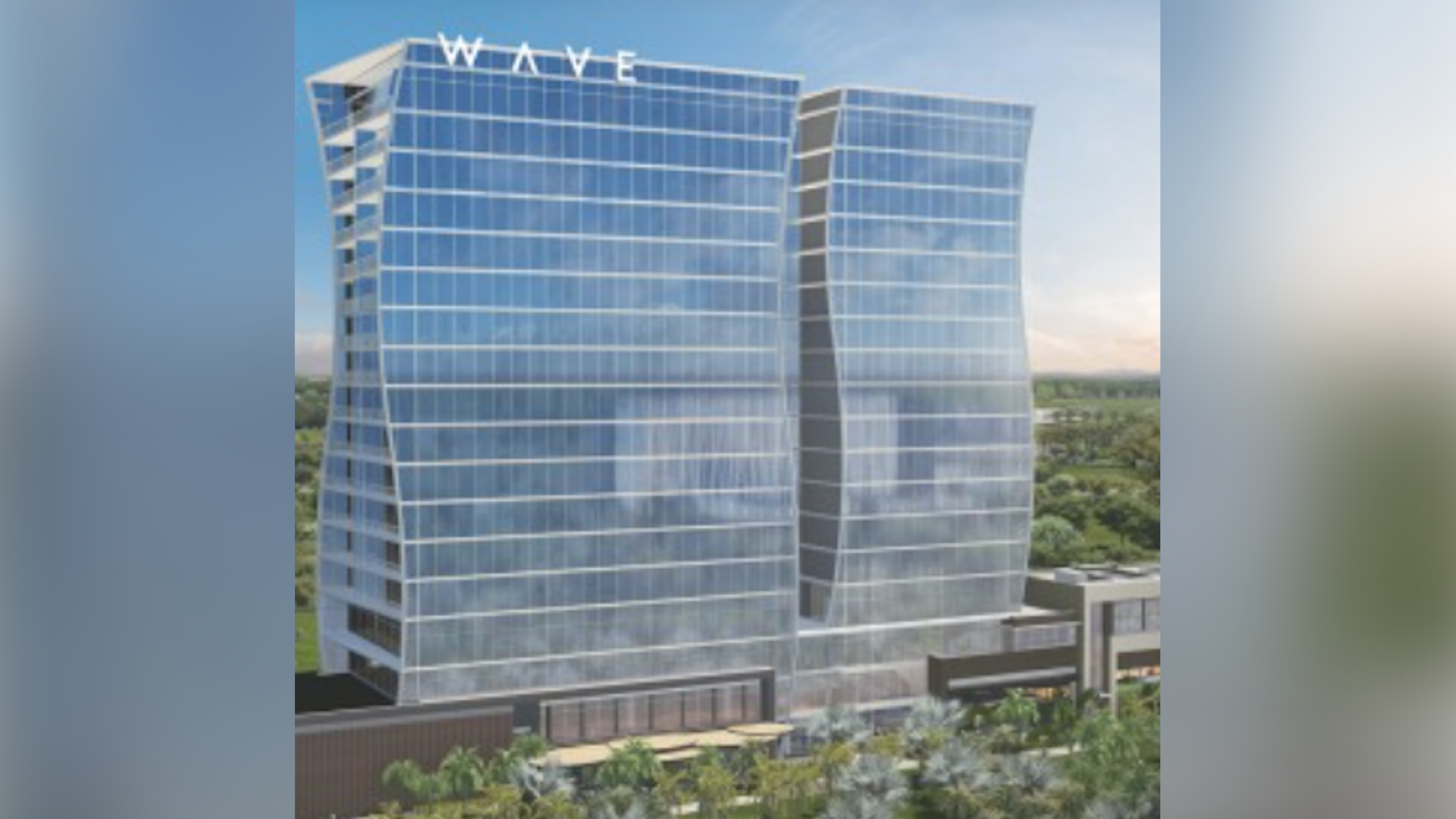
James Tattersall, director of sales and marketing for Lake Nona Wave Hotel, talks about the hotel's initiatives to foster diversity and how these amenities champion inclusivity in the Orlando area.
Desmond Howard, former NFL wide receiver and Modelo college football playoff ambassador, joins Cheddar News to talk about the Modelo sweepstakes honoring the 30th anniversary of his iconic punt return.
Satoshi Island is looking to become the world's first blockchain-driven economy. James Law, the chief architect of the planned private community, joined Cheddar to discuss the vision for the potential crypto capital of the world and how it will be brought to life. For people looking to live on the island, Law said they will be able to purchase land and homes and even design their own dwellings both in real life and via the metaverse. "Satoshi Island has already been digitally scanned. We have an absolute digital twin already in our metaverse," he said. Citizenship applications are expected to be launched via NFTs, he told Cheddar.