Boeing said Wednesday that it lost $1.2 billion in the first quarter as it and took large write-downs and lost money in both its civilian-airplane and defense businesses.
The loss was bigger than Wall Street had forecast, and the company's quarterly revenue also fell short of expectations. Boeing burned through $3.2 billion in cash.
“Messier quarter than any of us would have liked," CEO David Calhoun acknowledged on CNBC.
Shares of Boeing Co., based in Chicago, fell 10% shortly after the opening bell Wednesday.
Boeing offered some optimism for improvement, however, saying that it has submitted plans to resume deliveries of its 787 airliner and it increased production and deliveries of the 737 Max passenger jet during the quarter.
Calhoun said the company was on track to generate positive cash flow over the entire year "despite the pressures on our defense and commercial development programs.”
The quarterly report brought disappointing news for Boeing shareholders on several fronts.
The company again pushed back the expected first delivery of a new version of its long-range, twin-aisle 777 passenger jet by at least a year until 2025. The move was widely expected, as Boeing adapts to certification standards that have been tightened since regulators approved the Max, then were forced to ground the planes after two deadly crashes.
The delay in expected approval for the 777-9 caused Boeing to forecast $1.5 billion in “abnormal” production costs.
Boeing took a $660 million charge for its program to build new presidential Air Force One jets, which it blamed on higher supplier costs, final technical requirements and schedule delays. It also took $367 million in charges on a military training jet.
Boeing said it submitted plans to the Federal Aviation Administration to resume deliveries of the 787 passenger jet. Those deliveries have been halted for more than a year by production issues that Boeing previously said would add about $2 billion in costs, of which $312 million was recorded in the first quarter.
Airlines are expecting a boom summer, with travelers returning in huge numbers after two years of pandemic. But some of them, like American, have trimmed summer schedules because they haven't received the Boeing 787s that they ordered years ago.
“They have a busy summer schedule. We have already disappointed them with respect to the capacity on that summer schedule," Calhoun said. Just when Boeing will be cleared to resume deliveries of 787s is up to the FAA, but Calhoun said “We will be back in the air sooner rather than later.”
Boeing expects to boost production of the 737 Max to 31 planes a month in the current quarter, which runs through June. That plane was grounded worldwide for nearly two years after two deadly crashes.
And Boeing took $212 million in pretax charges related to Russia’s invasion of Ukraine. The company did not immediately explain the write-down.
In a memo to employees, Calhoun said Boeing is taking steps to improve long-term performance.
“We are a long-cycle business, and the success of our efforts will be measured over years and decades, not quarters,” he said.
Boeing's commercial-airplanes division lost $859 billion, hobbled by the inability to deliver 787 jets while Boeing tries to fix production flaws on the twin-aisle plane.
The defense business, long a bulwark against volatility in aircraft sales to airlines, lost $929 million as revenue fell 24%.
The company reported a loss attributable to shareholders of $1.22 billion, compared with a loss of $537 million a year earlier. The “core” loss was $2.75 a share on revenue of $13.99 billion. Analysts expected a loss of 25 cents per share on revenue of $16.02 billion, according to a FactSet survey.
The world of NFTs and cannabis are colliding as luxury cannabis company Peakz gears up to launch a digital dispensary in the metaverse. CEO Jessie Grundy and Tiffany McBride, managing director of social equity ventures at The Parent Company, an investor in Peakz, joined Cheddar to break down exactly how a digital dispensary would work. Grundy also talked about offering low-cost NFT courses in an effort to help Oakland, California, residents not miss out on new investing opportunities, and McBride discussed why the tech-forward vision of Grundy was worth investing in for The Parent Company. "He comes with really fresh ideas that he's vetted, that he's experienced in, and I really believe the thinking along Jessie's lines is the future of cannabis," she said. "He's more than just flower and a story. He comes with concepts that are new that are innovative, and that is easy for us to get behind."
Daniel O'Brien, president and global head of enterprise at HTC America, joined Cheddar's "Closing Bell" to discuss new products and services the virtual reality brand showed off at CES 2022, including a wrist tracker — in lieu of controllers — for more accurate interactions connected to its all-in-one headset, the VIVE Focus 3. O'Brien also described a cloud-based, 5G content delivery system. "We partnered up with Lumen Technologies and from six miles away we delivered high bandwidth VR to a headset directly in the Wynn Hotel during CES," he said. "And people were able to walk around in their virtual experience through a wireless signal."
Samsung unveiled a slew of new electronics and upgraded designs at CES 2022. With a heavy focus on gaming and the future of work, the company showed off its all new Odyssey Ark, which boasts a massive 55 in. curved display designed to give users a more immersive and captivating experience. Sang Kim, SVP, Samsung Electronics joined Cheddar's Michelle Castillo to discuss the company's biggest launches as well as major trends to watch in 2022.
Tesla's Austin, Texas-based gigafactory could be days away from opening its doors and beginning production. Dan Ives, managing director of equity research at WedBush Securities, joined Cheddar to talk about his estimate that the EV company will be running its factory within a week and noted that Tesla has been in a good position despite ongoing semiconductor shortages. "They're really almost Teflon-like relative to other automakers," he said, calling its production delays "containable." Amid another shortage — labor —, he said he thinks Tesla positioned itself well for access to talent months ago with expanded hiring amid the move to Texas from California.
The UK's Information Commissioner's office is scrutinizing Facebook's parent company Meta over child safety practices linked to the Oculus headset, according to a report. The agency is looking to question the tech giant about how it's protecting children from harmful experiences in virtual reality.
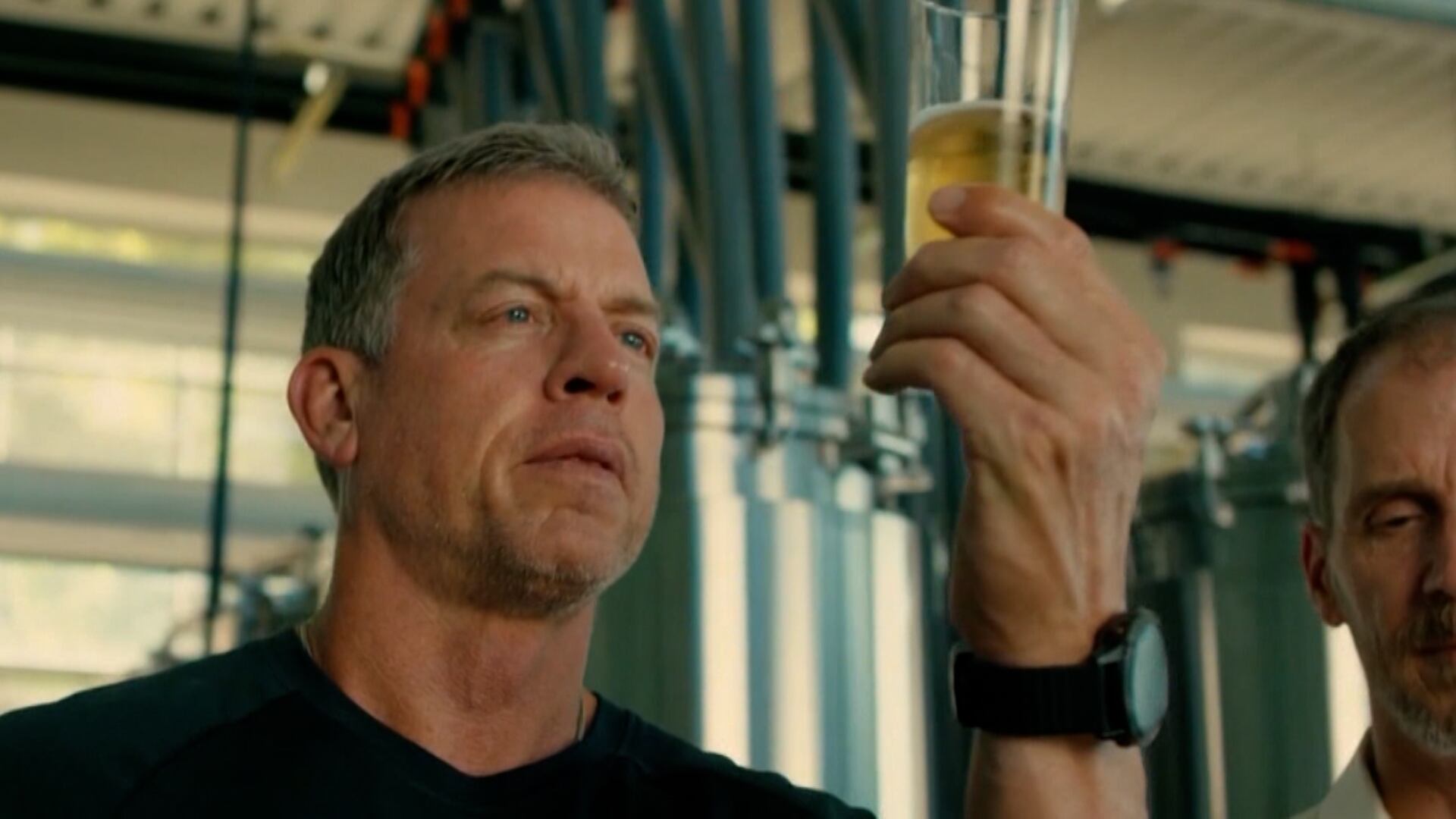
Hall of Fame quarterback Troy Aikman joined Cheddar's "Between Bells" to talk about his own brand of organic light beer called Eight (his jersey number with the Dallas Cowboys) and explained that he's had an interest in the industry since his days working for a distributor during college. "These brands that are on the market have been there for a long time and [I] felt that it was time for something fresh, something new, and I thought that we could do it in a way that was a better-for-you beer' and that's what we've done," he said. Aikman also provided some insight into the upcoming NFL playoffs and noted that he doesn't see a clear frontrunner for this year's Vince Lombardi trophy.
Disney has secured a patent for a digital world simulator for headset-free augmented reality expected to be accessible in parks by tracking smartphones and projecting personalized 3D displays, an indication that the entertainment giant is gearing up for its entry into the metaverse.
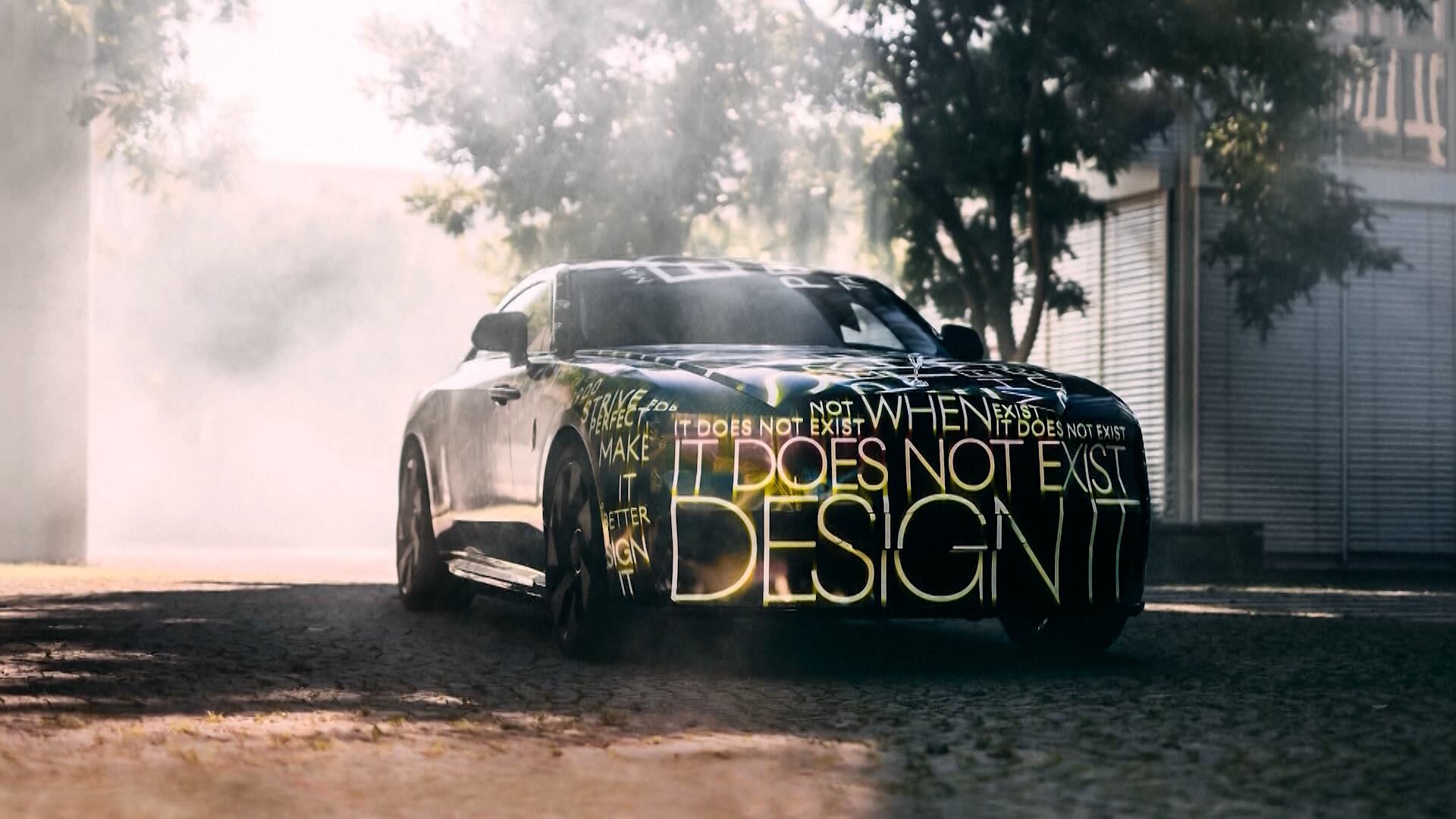
It has been a record year for luxury automaker Rolls-Royce despite the industry struggling to meet demand overall due to the ongoing semiconductor chip shortage. CEO Torsten Müller-Ötvös joined Cheddar to discuss the driving factors behind the company's 2021 success. He said after the pandemic forced the closure of factories in 2020 and people stopped making large purchases, they were open to spending more in 2021. "The entire luxury sector was fueled by there's money available, and people are prepared to spend money," he said.