By Jessica Gresko and Mark Sherman
On the evening before he was to argue a case before the Supreme Court years ago, Jeffrey Fisher broke his glasses. That left the very nearsighted lawyer with an unappealing choice. He could wear contacts and clearly see the justices but not his notes, or skip the contacts and see only his notes.
It wasn’t hard to decide. “I couldn’t imagine doing argument without seeing their faces,” Fisher said.
He won’t have a choice next month.
Because of the coronavirus pandemic the high court is, for the first time in its 230-year history, holding arguments by telephone. Beyond not being able to see the justices' nods, frowns and hand gestures, the teleconference arguments in 10 cases over six days present a range of challenges, attorneys said, but also opportunities.
Roman Martinez, who will argue in a free speech case, said the lack of visual cues may change what sense is most important. “Maybe it will concentrate the mind on listening,” he said.
The unprecedented decision to hold arguments by phone was an effort to help slow the spread of the virus. Most of the justices are at risk because of their age; six are over 65. And hearing arguments by phone allows them to decide significant cases by the court’s traditional summer break.
The attorneys arguing before the court include lawyers for the federal government and states as well as those in private practice. Only a few are women. Most have made multiple arguments and are familiar to the justices, although at least one lawyer is giving his first argument before the court. The Trump administration's top Supreme Court lawyer, Solicitor General Noel Francisco, will argue twice.
The cases the justices are hearing include fights over subpoenas for President Donald Trump’s financial records and cases about whether presidential electors are required to cast their Electoral College ballots for the candidate who won their state.
Justices have long said that the written briefs lawyers submit are vastly more important to the cases’ outcomes than what’s said in court. But the arguments also help them resolve nagging issues and occasionally can change a justice’s vote.
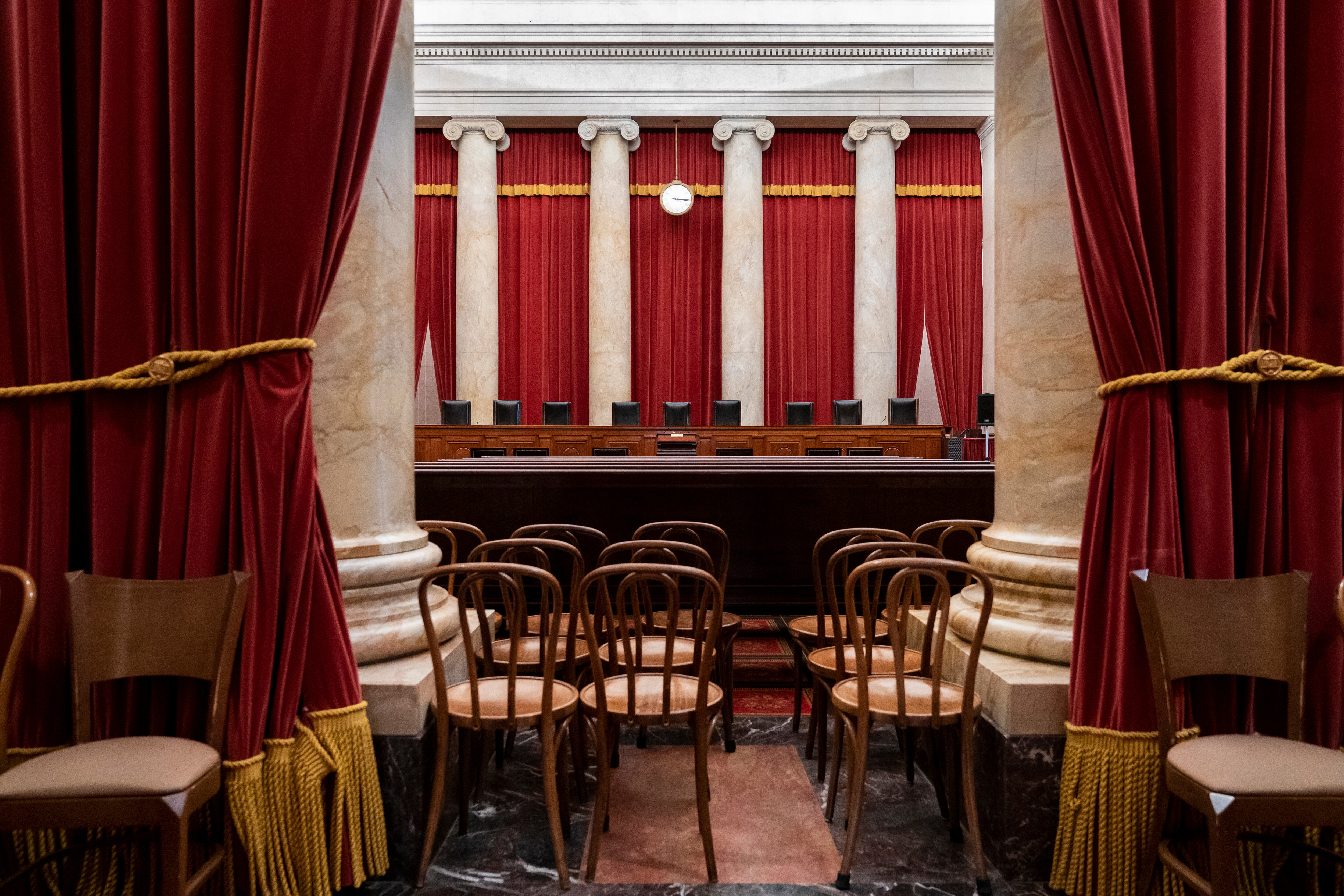
Beyond their importance to the justices, arguments in the soaring, columned courtroom can crackle with drama that would seem to be hard to replicate over the telephone. The court is taking steps to maintain the solemnity, however. The telephone sessions will begin with the traditional cry from the court's marshal of “Oyez! Oyez! Oyez!”
Noah Purcell, who is arguing on behalf of Washington state in one of the presidential elector cases, has one experience that makes him feel somewhat fortunate: A previous high-profile phone argument. In 2017 he argued by phone and won a challenge to Trump's travel ban before three appellate judges, although the Supreme Court later sided with the president.
This phone argument, with nine justices, presents different hurdles. Most of the justices have distinctive voices, but several lawyers said they feared mixing up Brett Kavanaugh and Neil Gorsuch, the two newest justices. The court removed that pitfall Tuesday when it announced the justices would ask questions in order of seniority instead of their usual free-for-all-style argument. Purcell had said he would “probably just say ‘your honor’” to be safe. And arguing from his home isn't really an option because there are “too many risks of interruption:" his children, ages 2, 5 and 7.
Purcell plans to go to his office, but because he's on the West Coast, his case will be heard at 7 a.m. PDT, making for an unusually early start to his day. It's tough to sleep on the night before a Supreme Court argument anyway, said Purcell, who is making his third argument before the high court.
Like other advocates, he's doing practice arguments by phone. Lawyers who already have done telephone arguments as the virus outbreak has forced courts around the country to move to phone or video hearings also have advice.
William Jay, who has argued Supreme Court cases both as a government lawyer and in private practice, said he took a friend’s suggestion and spread a towel over his desk to reduce the noise of shuffling papers when he had a recent appellate argument by phone.
He stood for the entire argument, as he would in court, but he didn’t put on a suit and tie. “I’m not going to tell you just how disheveled I might have been,” Jay said.
Being invisible to the justices has other advantages, too.
Ian Gershengorn, who will be at his home in Bethesda, Maryland, to argue in an Indian lands case, said he will probably hear from colleagues by text before he wraps up his arguments. If he were arguing in court, they might instead pass him a yellow sticky. And Gershengorn, who is making his 16th argument, said he won't memorize his opening as he usually does, because the justices won't be able to tell if he's looking at notes. Reading from a prepared script is frowned upon in the court's arguments guide for lawyers.
Some things won't change, including Gershengorn's muffin and Diet Coke on the morning of arguments. He'll try to relax. But instead of looking around at the courtroom's marble columns and friezes and thinking “this is pretty awesome that I get to do this for a living,” he expects he'll be at the desk in his guest bedroom. What will he think?
“This is a really weird way to do this,” he said. "Hopefully that will relax me too.”