*By Max Godnick*
TV writers are used to responding to notes from network executives. Now, they're catering to fans on Twitter, too.
Karin Gist, showrunner of Fox's "Star", and Kriss Turner Towner, executive producer of the OWN Network's "Greenleaf", are responsible for steering the creative direction of their respective shows. They said that viewers' reactions on social media helps determine some of the choices they make in their writers' rooms.
"Black Twitter has a lot of power in Hollywood," said Gist in an interview with Cheddar's Brad Smith at the American Black Film Festival in Miami.
The term "Black Twitter" is frequently used to refer to the network of users who collectively weigh in on matters of cultural, political, and societal importance. The notion has already helped bring memes, hashtags, and movements like Black Lives Matter to prominence. Gist and Turner Towner said they make content decisions with the abstract group in mind.
"We care about our audience and what does Black Twitter say, so we have a responsibility to our viewers," said Turner Towner, adding, "Because of social media, we take that into account more."
Gist and Turner Towner are two of just a few African-American women at the helm of major television shows. While their two current projects center on stories about underrepresented communities, they said they don't feel as though they're being limited in the types of stories they tell on screen.
"I no longer think of it as a box, I think of it as an opportunity and a privilege," said Gist.
Both women encouraged writers of colors to tell stories that are true to themselves, emphasizing their potential as a mechanism for progress in Hollywood's road to better diversity and inclusion.
"I think it's really important to kind of tell your story, be honest about it, and be unapologetic about it," said Gist.
"The box is freakin' fantastic," she said.
For the full interview, [click here](https://cheddar.com/videos/running-the-show-in-a-tv-writers-room).
Damali Peterman, founder and CEO of Breakthrough ADR, joins Cheddar News to discuss what Black professionals are up against in the workplace this year.
David Malott, founder and chief architect at AI PlanetWorks joins Cheddar News to discuss the release of its augmented reality NFTs for the metaverse called 'TERA.'
Jess Hunichen and Emily Ward, co-founder of Shine Talent Group join Cheddar News to talk about The BodCon conference and how it empowers men and women to feel confident.
Alia Kemet, vice president of creative and digital at McCormick, joins Cheddar News to discuss Frank's RedHot releasing an edible NFT ahead of the Super Bowl.
Xiaohua Yang, professor of international business and director of the China Business Studies Initiative at the University of San Francisco, joins Cheddar News to talk about the history of Lunar New Year.
After a number of tragic subway incidents, the MTA is facing increased pressure to install subway platform screens to help prevent injury or death. However, according to an earlier report from the MTA, installing these prevented measures isn't feasible. New York City Council Member Keith Powers, joined Cheddar to discuss more.
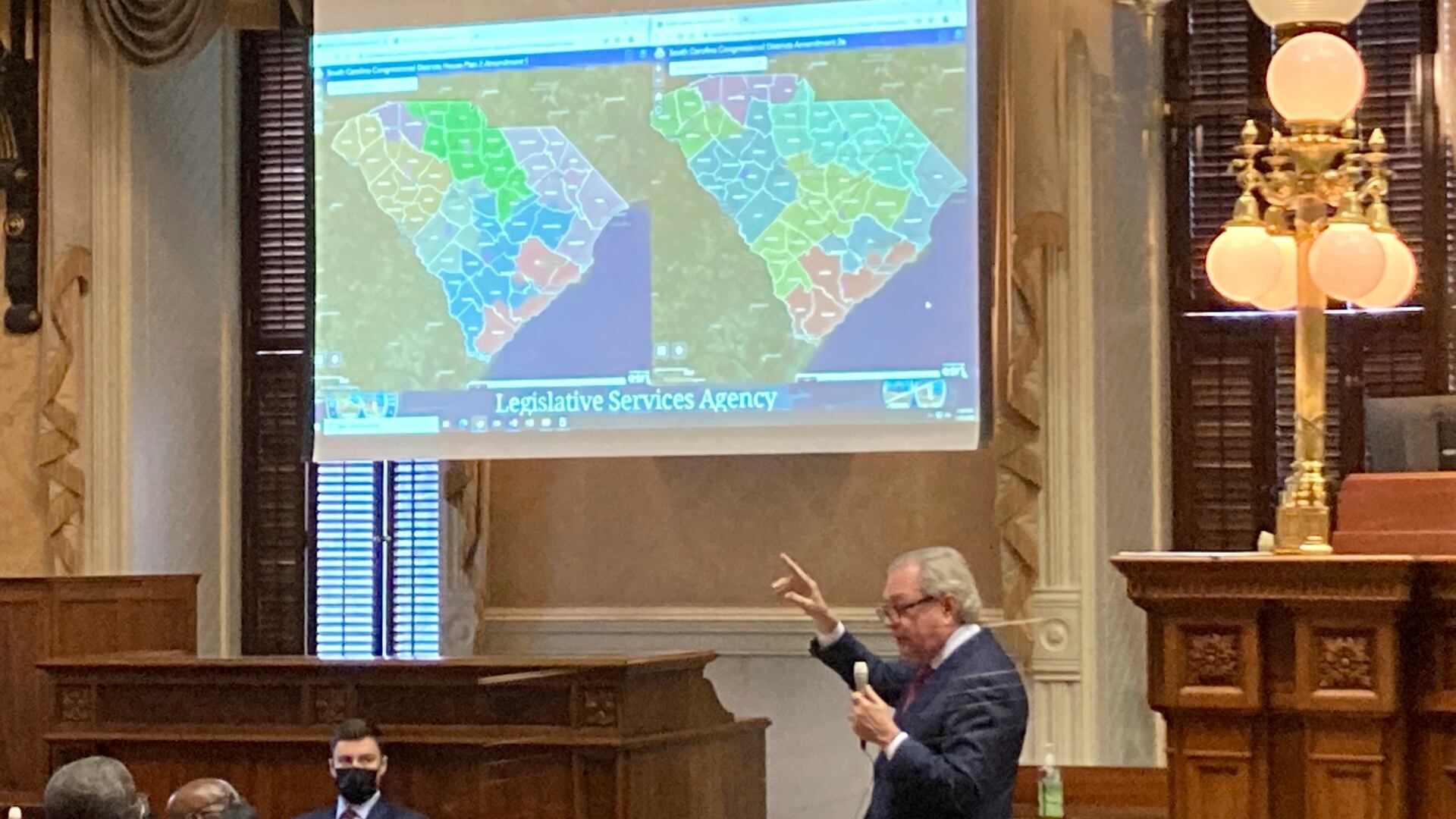
Across the country, states are working to redraw their congressional lines in what is often known as gerrymandering. These news lines are expected to determine the balance of power between Democrats and Republicans within the next decade. Senior Counsel for the Brennan Center's Democracy Program, Michael Li, joined Cheddar to discuss more.
AT&T announced earlier today it is spinning off its media properties in WarnerMedia in a merger with Discovery in a $43 billion deal.Scott Rostan, founder and CEO at Training The Street, joined Cheddar to talk about what the unwinding of the telecom giant's Time Warner media properties means for investors. "I think the investor sentiment is they're digesting the new information, and they're looking into the dividend, especially the reduction of the dividend," said Rostan, noting the transaction allows AT&T to focus on its core telecommunications business.
A 2021 report from UK Research and Innovation found that the shipping industry makes up at least 2.5 percent of the world's total CO2 emissions. It's a problem that energy solutions company, Leclanché, is trying to solve. Founded in 1909, the company has been developing and producing batteries for more than 100 years. Today, Leclanché's lithium-ion battery is used to electrify not just ships, but also railroad locomotives, trucks, and specialty vehicles. Cheddar News spoke with Pierre Blanc, chief technology and industrial officer of Leclanché, to discuss.