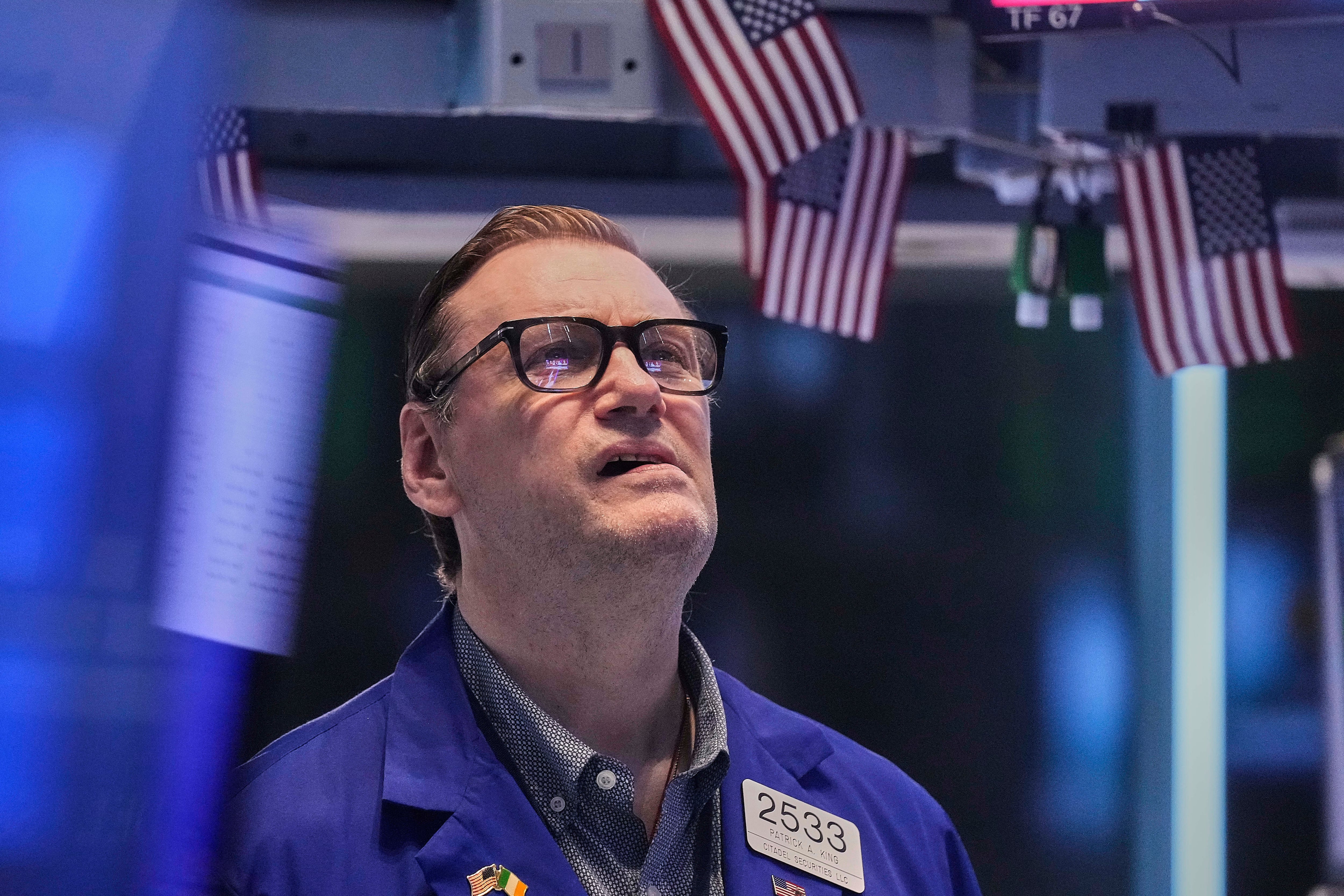
As President Donald Trump ratcheted up his rhetoric on Greenland, suggesting he might invade the Danish island and slap 25% tariffs on eight EU states, U.S. stock indices fell 2% in what looked like it could become a rout. Then on Wednesday, in the wee hours New York time, Trump gave a speech at Davos, where he said he wasn’t going to invade Greenland after all or impose tariffs. Markets zoomed back, and by midday Thursday, the Dow was up 500 points from its drop. The same thing happened multiple times during Trump’s first term (China tariffs, North Korean showdown, Government shutdown, the threat to leave NATO), and gained the name the “Trump Fade.” Now it’s called TACO, for “Trump Always Chickens Out.” The day the president announced his massive new tariff plans last April, the S&P dropped more than 3% and the Dow fell nearly 4%. By June, when many of the tariffs were rolled back, the markets had recovered, and investors were back in.
But how resilient are the U.S. markets? Each time, they go to the edge and then snap back, but will the bungee cord break at some point? “Consumer spending has so far outweighed the cocktail of Trump chaos,” Tim Mahedy, chief economist at advisory firm Access/Macro, told BBTW. But, he warned, the threats and even the modified actions Trump eventually takes are driving down investor confidence in the U.S. “It’s really just a question of when, not if, this drives us over the cliff.” For now, Mahedy said in an interview with BBTW, consumer spending is keeping the U.S. economy afloat, and investors keep buying at ever-higher valuations, desperate to continue the biggest bull market in U.S. history, with the S&P 500 returning over 235% in the past decade. Eventually, though, something may give, and Mahedy says to expect investors demand higher yields on U.S. treasuries.
The growing attacks by the Trump Administration on global trade are part of a longer-term trend, said Dan Boston, head of the global small company team at Polar Capital, which manages about $38 billion. “U.S. policy transmission has been more chaotic, increasing the perceived risk in the market,” Boston told BBTW. That’s already apparent in the dollar’s 12% slide against the euro since Trump returned to office. And investors are increasingly aware that other markets can have an appeal: “The U.S. is a dynamic market—it’s just not the only great market, nor does it hold a monopoly on the world’s best ideas,” said Boston, who runs a fund that invests mainly in European listed companies.
Mike Reynolds, vice-president for investment strategy at Glenmede, a U.S.-based investment advisor managing about $50 billion, says it’s hard for investors to handicap political risk. “There’s 100-plus years of history where markets have largely looked through geopolitical issues,” he said. But he warned that tariffs are a game-changer. Following through on threatened 25% tariffs on Europe would have cut 20 basis points off U.S. GDP. “It’s an escalation for sure, but it’s not on the scale that would put the U.S. economic expansion at risk,” said Reynolds. In fact, he says, markets have begun to bet on the TACO trade, that the Trump Administration won’t follow through on its threats.
“Over the last year, markets have been conditioned not to take the Administration literally, when it comes out with these new proposals,” said Reynolds. But, he warns that’s still a risky spot to be in, “It’s a dangerous thought process,” he said. “Because you could end up having the Administration follow through.” One case in point: Denmark threatened to dump its U.S. treasury holdings. Denmark alone isn’t a major holder of U.S. debt, but that could have provoked a cascade of European investors pulling out of the U.S. bond market, raising interest rates, and straining the government’s ability to pay its debts or even social security. “It hinted at a DEFCON 5 scenario,” he said.
But it’s the earnings of U.S. companies that are keeping things from going south, at least for now, argues Bill Mann, chief investment strategist at Motley Fool Asset Management. Eventually, Mann said in an interview, the “chaos reign” of the Trump Administration will lower the “overall trust in American markets.” That matters, said Mann, because the U.S. dollar is still the world’s reserve currency and the U.S. is still the world’s largest and most dynamic economy. But Mann says that we’ve entered a 10-year cycle where we won’t see the same growth we had for the past decade, or the high valuations of U.S. stocks (around 40x forward earnings), largely dependent on the Maginficent Seven tech stocks (Alphabet $GOOG , Amazon $AMZN , Apple $AAPL , Meta $META , Microsoft $MSFT , Nvidia $NVDA , and Tesla $TSLA ), Already, Mann says his Motley Fool Global Opportunities Fund is shifting to more foreign stocks than its benchmarks. “You see a lot of jawboning, but [nerovusness] hasn’t shown up in the US market,” Mann said. “Yet.”
All that global turmoil has been good for gold at least. Gold futures are up 74% in the past twelve months, with the metal now trading at $4,800 an ounce, and analysts say it could break $7,000 next year, as investors seek to put some of their riches into a safe haven.
All that global turmoil has been good for gold at least. Gold futures are up 74% in the past twelve months, with the metal now trading at $4,800 an ounce, and analysts say it could break $7,000 next year, as investors seek to put some of their riches into a safe haven.
“There’s no question that damage has been done to the economy,” said Mahedy. “The economy did quite well under Trump, but that means it would have done even better had these crazy policies not taken hold.”
—Peter S. Green
Watch Big Business This Week on Cheddar—and YouTube!
Big Businesses mentioned this week:
$AAPL ( ▲ 0.39% ) $AMZN ( ▲ 1.11% ) $AVO ( ▲ 2.59% ) $BAC ( ▲ 0.62% ) $BRK.B ( ▲ 0.04% ) $COST ( ▼ 0.84% ) $COP ( ▼ 0.37% ) $CVGW ( ▲ 0.08% ) $CVX ( ▲ 0.12% ) $GOOG ( ▲ 0.73% ) $GS ( ▼ 0.13% ) $HAL ( ▲ 1.6% ) $JPM ( ▲ 0.42% ) $KHC ( ▲ 1.43% ) $META ( ▲ 9.65% ) $MS ( ▼ 0.15% ) $MSFT ( ▲ 1.35% ) $NATH ( ▼ 0.01% ) $NFLX ( ▼ 2.41% ) $NSC ( ▲ 0.03% ) $NVDA ( ▲ 0.74% ) $PSKY ( ▲ 1.25% ) $RYAAY ( ▲ 0.95% ) $SFD ( ▼ 0.07% ) $TSLA ( ▲ 3.46% ) $TGT ( ▼ 0.09% ) $UNP ( ▲ 0.66% ) $WBD ( ▼ 0.58% ) $WMT ( ▼ 1.25% )
The usual suspects
- Netflix goes all cash: If you’ve got it, flaunt it. That seems to be Netflix $NFLX CEO Ted Sarandos’ plan to best Larry and David Ellison’s Paramount $PSKY in the battle for control of Hollywood studio Warner Bros. Discovery $WBD. With its share price down 30% in the past three years, Netflix says it’s putting up all cash in its $83 billion offer for most of WBD’s assets (the cable networks, broadcast channels, and CNN will be spun off first). Paramount wants to buy the TV and cable pieces, too, but its $100-billion plus offer is backed with a pile of debt and financing from Middle Eastern investment funds that could have trouble passing muster with U.S. regulators. Netflix’s results, in this week, show why the streaming giant needs WBD: Revenue growth, at 16% last year, is expected to reach only 13% in 2026, and its 325 million subscribers are thirsty for new content, hence the desire for the studio and WBD’s vast library, which include the DC superheroes franchise and HBO.
- Playing with the Big (Box) Boys: Amazon $AMZN has spent nearly two decades trying to build a brick-and-mortar presence to match its online shopping supremacy. Whole Foods, which it bought in 2017, has been the sole success story. Those Amazon Go convenience stores are down to just 16 outlets in four states, half their 2023 peak, but now Jeff Bezos’ juggernaut is aiming for the world of big box stores, with plans for a 230,000-square-foot retail outlet in Orland Park, Illinois, outside Chicago. Half the space would house an Amazon-branded supermarket, including things you don’t find at Whole Foods, like diapers. The rest would be another fulfillment warehouse. What’s propelling the move: Despite Amazon’s ubiquity, in-store purchases still make up 80% of what U.S. consumers buy, and Amazon wants a piece of what Costco $COST , Walmart $WMT, and Target $TGT are getting.
- Your mother was right. Ketchup doesn’t go on Mac ‘n’ Cheese. And Greg Abel, Warren Buffett’s successor at Berkshire Hathaway $BRK.B , may just be channeling her, filing paperwork to potentially dump his 27.5% stake in food giant Kraft Heinz $KHC, which Buffett helped create by urging the two food giants to merge in 2015. The combined entity’s shares are down 70% since then. And last year, Berkshire took a $3.8 billion write-down on the stake. Kraft Heinz is now planning a split. As Buffett said last year, “It certainly didn’t turn out to be a brilliant idea to put them together.”
The short stack
- Hot Diggity Dog! Smithfield Foods, $SFD, the North Carolina-based ham maker, may have bitten off a lot more than Joey Chestnut can chew. Smithfield has agreed to buy the famed Coney Island hot dog brand, Nathan’s Famous $NATH, for $102 a share, or about $450 million. Shares were up over 8% on the news. Smithfield’s has been making and marketing Nathan’s hot dogs for years, and the deal would consolidate its control over the company.
- Slippery rock: So how’s that Venezuela oil thing going? Halliburton $HAL, the oil field services firm once led by the late Vice President Dick Cheney, is one of the few U.S. companies enthusiastic about getting back into Venezuela’s oil business. That’s probably because estimates of reviving the country’s moribund oil industry rank as high as $183 billion. It may also be because Halliburton had a disappointing fourth quarter, with lower profits and flat revenue from a year earlier. Halliburton left Venezuela in 2019 to comply with Trump’s first sanctions. But the clients who’d pay Halliburton to fix Venezuela’s infrastructure are less enthusiastic. Chevron, $CVX, the only U.S.oil major operating in Venezuela, says it wants to see some political and economic stability before it gets anywhere near Trump’s call for U.S. oil firms to invest $100 million there. Conoco $COP is in no hurry either. Its Venezuela chief was kidnapped there in 2002, and it pulled out of the country in 2007 after refusing to let then-president Hugo Chavez nationalize its business. Still, the U.S. intervention has emboldened some oil traders, the Wall Street Journal reports, including Vitol and Trafigura, which won licenses from the Trump administration, and raised prospects that some Greek oil tanker owners might profit from the end of the shadow fleet that was taking most of Venezuela’s oil to market. Meanwhile, the Trump Administration said it’s taken the proceeds from oil it seized from Venezuela and deposited it in offshore accounts. That includes one in Qatar, where it’s apparently being held to pay both Venezuela and some of its creditors. That’s raised concern in Congress that the money is being hidden from congressional oversight.
- That’s a lotta guac. Who knew avocado growers were a hot commodity? Mission Produce, whose ticker symbol is $AVO, agreed to buy rival Calavo Growers $CVGW for a 20% premium to its closing price Tuesday as Mission, one of the largest publicly traded avocado producers in the U.S., beefs up its market share. Mission gets more farmland, two Mexican packing houses, and to offset seasonal dips in avocado supply, it’s getting Calavo’s tomato and papaya lines, along with, of course, a guac factory. It’s all just in time for the Super Bowl, when America goes peak guac, salsa, and wings!
- Wrong Track: The largest U.S. railroad merger to date has been temporarily derailed by the Surface Transportation Board, which told the Union Pacific $UNP and Norfolk Southern $NSC railroads to redo their homework and submit more details about their likely joint market share if the two lines complete a planned $71.5 billion merger. The merged rail systems would create the first company controlling coast-to-coast rail shipments. Unions and rival rail systems have complained that the merged line would have too much market power, eroding competition and lowering wages.
Get Big Business This Week in your inbox every week—and read it before everybody else! Sign up today.
Trumplandia
- See you in court: President Trump has sued JPMorgan Chase $JPM and its CEO Jamie Dimon for allegedly dropping him and several of his resorts as clients for “political reasons,” after the Jan. 6, 2021 insurrection in Washington. The suit, filed in a Florida court, seeks $5 billion in damages. The suit says Dimon agreed to place the Trump businesses on a “blacklist,” and comes a day after Dimon, speaking in Davos, said Trump’s plan to cap credit card interest rates at 10% would be “an economic disaster” cutting many Americans off from credit. Dimon also slammed Trump’s immigration crackdowns. A JPM spokesperson said the suit has “no merit.” But, she added, “We do close accounts because they create legal or regulatory risk for the company.”
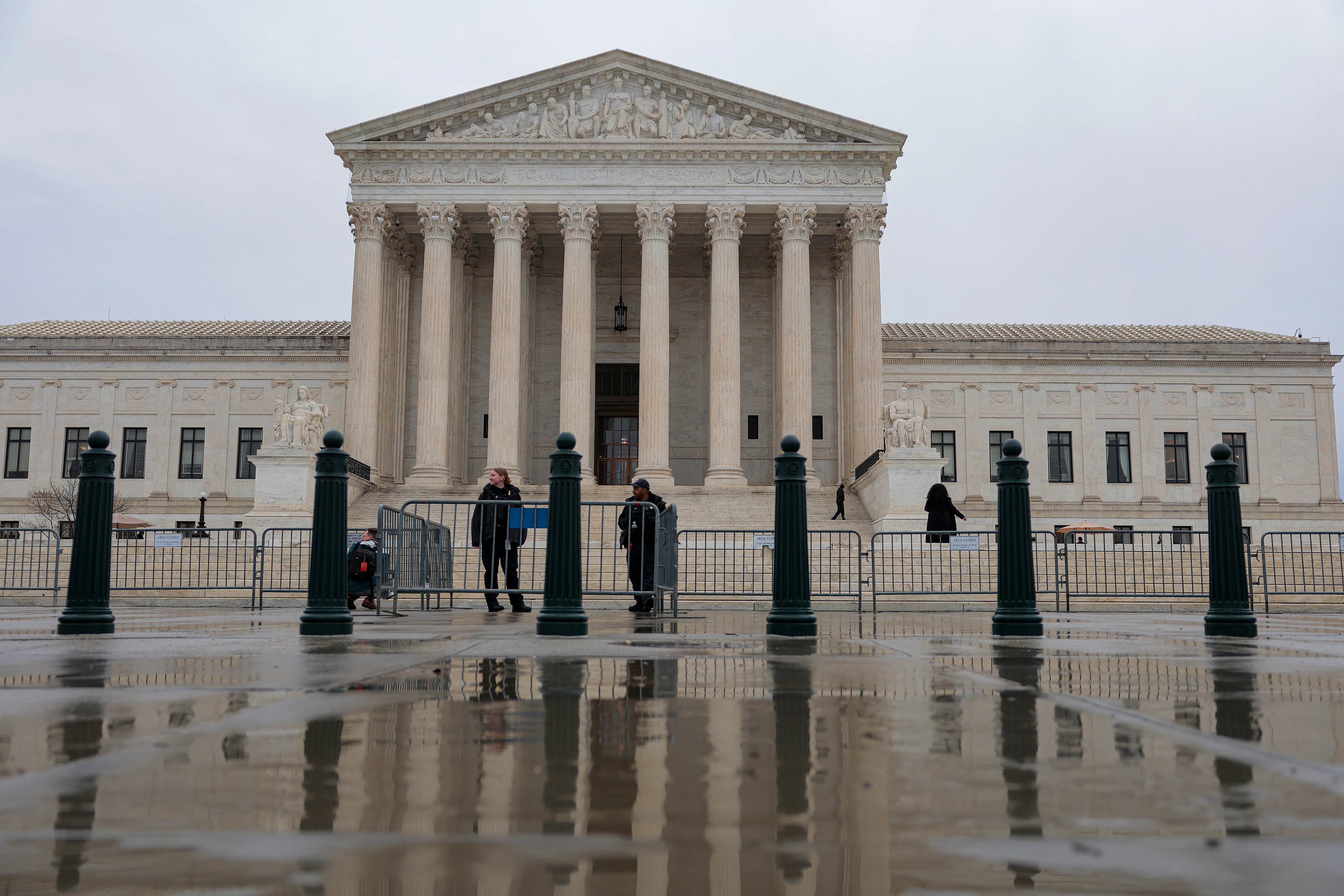
- Cooked: President Trump’s effort to impose his will on the Fed appears to have hit another roadblock: the Supreme Court. The Justices appeared skeptical of the Administration’s claims during oral arguments this week that it could fire Fed governor Lisa Cook over unproven allegations that she’d falsely claimed two houses as primary residences to get favorable mortgage rates. Fed Chair Jerome Powell sat through the hearings, where Justice Brett Kavanaugh warned that letting Trump sack Cook would “weaken, if not shatter,” the Fed’s independence. “Once these tools are unleashed, they are used by both sides,” he warned.
- Who’s paying for the tariffs? According to a study by Germany’s Kiel Institute for the World Economy, 96% of the tariff burden is being paid by U.S. consumers, not by foreign producers. Fewer goods are being imported, which reduces competition and raises prices. “The tariffs are an own goal,” says Julian Hinz, Research Director at the Kiel Institute and an author of the study. “The claim that foreign countries pay these tariffs is a myth. The data show the opposite: Americans are footing the bill.”
- Family Affair: Wondering just how much the Trump family has made since Mr. Trump took over the presidency? The New York Times has a fascinating infographic. They peg the total at $1.4 billion and growing.
Elon’s World
- Rockets go up (And IPOs, too). Elon Musk has reportedly lined up four banks to underwrite an IPO of SpaceX, according to multiple press reports. Musk once said he wouldn’t take the rocket firm public until he’d landed a spaceship on Mars. What’s changed? AI.SpaceX is racing to be the first into space with satellites that run on unfiltered solar power and can host AI data centers. But that takes billions of dollars in debt that Musk doesn’t have in cash. The money would also help Musk’s beleaguered xAI raise cash to compete with rival firms OpenAI and Anthropic. Last month, Bloomberg reported a SpaceX IPO could raise $30 billion and value the company at as much as $1.5 trillion. Insiders name the banks involved as Bank of America $BAC, Goldman Sachs $GS, JPMorgan Chase $JPM, and Morgan Stanley $MS. Will investors buy in? SpaceX may have to reduce the number of its rockets that blow up.
- Ryanair and “The Big Idiot.” When Ryanair $RYAAY, Europe’s discount airline, opted not to install Starlink satellites in its planes, saying they’d never be a moneymaker for the no-frills carrier, Musk said Ryanair CEO Michael O’Leary was misinformed about the cost. “I frankly wouldn’t pay any attention to anything that Elon Musk puts on that cesspit of his called X,” O’Leary said on an Irish radio show. “He’s an idiot. Very wealthy, but he’s still an idiot.” Musk retorted (on X), “Ryanair CEO is an utter idiot. Fire him,” and then said he might buy the airline and replace O’Leary with someone named Ryan. He also called O’Leary an “insufferable, special needs chimp.” O’Leary says Musk is welcome to become a shareholder (EU law bars him from owning more than 49% of a European airline). Ryanair’s $37 billion market cap pales next to Musk’s $677 billion net worth, but Ryanair’s been making book on the feud, launching a “Big Idiot” sale, only available for Elon Musk and other ‘idiots’ on X,” with 100,000 tickets available for 16.99 euros ($19.91). But perhaps the market tells the tale: Ryanair is up about 60% in the past 12 months. Tesla $TSLA is up 1.4% over the same period.
- Feud styles of the rich and AI: Elon Musk and Sam Altman are at it again. This time, the X owner and the OpenAI founder are arguing over whose AI has killed more people. On Tuesday, Musk boosted a post saying OpenAI’s ChatGPT has been linked to nine deaths. “Don’t let your loved ones use ChatGPT,” Musk wrote. Altman countered with a jab at Tesla’s $TSLA A not-quite-self-driving feature: “Apparently more than 50 people have died from crashes related to Autopilot,” he replied on X.
Want more Cheddar?
You’re clearly into smart people talking about even smarter things. Lucky for you, that’s literally our whole deal at Cheddar. We interview the brightest minds in business, finance, and tech. If you’d like more in-depth analysis from interesting people, lcheck out our where to watch page and turn us on 24/7! Your wallet will thank you and so, more importantly, will your mind. But also your wallet. Remember that.
Peter S. Green is a veteran reporter and editor who has spent more than two decades covering business and finance from Eastern Europe to New York City, and has worked for Bloomberg News, The New York Post, The New York Times and The Messenger. He lives in New York City and is always looking for the next big story.