The U.S. and Israeli bombing of Iran had a swift effect, if not on regime change, then at least on the global economy. Oil prices have shot up, home mortgage rates climbed back above 6%, and the specter of inflation returned. With President Donald Trump now saying the war could last four or five weeks, or perhaps “far longer than that,” Big Business This Week’s Peter Green sat down with Gregory Daco, chief economist at EY-Parthenon, an arm of the consulting firm formerly known as Ernst & Young, to discuss what happens next.
You outlined two scenarios for the conflict’s economic impact, one where a short war would have a moderate impact on the economy, and one where a prolonged war could have a severe impact. Where do those take us?
The moderate one would essentially see oil prices rise into the $80 range and gas prices rise around the 50-euro per megawatt hour range. The difference is that this moderate escalation scenario would see some persistence in the shock. We would be talking about prices in that range until the second half of the year and then some resumption to lower oil prices in the second half of 2026. A more severe scenario would entail further escalation in oil prices, further market volatility, and downward pressure on stocks alongside an appreciation of the U.S. dollar. In that scenario, oil prices would rise to $110 per barrel and last into 2027.
Beyond oil and energy, what other economic factors are likely to be affected?
It’s not just energy. Crude and natural gas are the two prime gauges of the uncertainty and the stress. But it’s also financial assets and financial market indicators. You would likely see a correction in terms of equity prices. You would likely see increased market volatility. You would see different degrees of U.S. dollar appreciation. And you would likely see movements in the 10-year yield. There’s an open question as to whether the dollar would play a safe haven refuge role in a severe scenario. Because so far it has not. Yields have risen when you typically would expect them to fall.
We’ll get back to the dollar, but why might bond yields rise during a global shock when they historically fell?
The economic paradigm today is heavily influenced by supply shocks, which is very different from pre-pandemic, where most of the shocks were essentially demand-driven. The results from supply shocks tend to be stagflationary. You tend to have higher inflation and lower output. Investors are pricing in higher inflation expectations. And in an environment where there are supply shocks, in part driven by the U.S., investors are looking to diversify their holdings. They’re not necessarily seeking refuge in dollar-denominated assets to the same extent that they once were.
Oil markets seemed oversupplied before the crisis. Why are prices suddenly spiking?
You start from a structural position of a surplus state. When you have a highly volatile situation in a region that is highly important in terms of production, refining, and transportation, then there start to be questions not just about stocks but about flows. If you have a stall of navigation in the Straits of Hormuz, that creates questions around flows. Markets and investors are trying to price what is happening in terms of these flows and what the risks are in terms of the provisioning of energy across the world. What you’re seeing is not necessarily the reflection of a sudden change in the stock picture. There are strategic reserves in China and the U.S., and other economies. There is crude currently on ships. It’s just a question of whether that is satisfying demand. As of right now, the answer is no. So, what we’re seeing is essentially a pricing of these flow disruptions.
Could this crisis disrupt global supply chains beyond energy?
It could. The main pressure point right now is transportation, and the potential impacts are disruptions to travel times and the cost of the fuel for the ships and trucks. If you increase distance and fuel costs more, that becomes an additional cost that will eventually be passed on to the consumer. So it’s not just about commodities. It’s a broader set of implications for transportation and for the cost of goods.
What channels transmit this shock into global growth and inflation?
There are three transmission channels:
- The first is the cost of energy and commodities. Economies that are more energy dependent will see a greater hit.
- The second is uncertainty and volatility. Businesses may hold off on investment or hiring decisions.
- The third is the financial transmission channel. What happens to financial conditions? Is there a plunge in stock prices? Movements in the dollar? Dollar appreciation helps ease inflationary pressures in the U.S. but exacerbates inflationary pressures in other parts of the world. Europe would be a prime example.
Those three channels lead to divergent impacts on economic activity around the world.
How long might the economic effects last?
In the moderate scenario it’s a few quarters. You see a shock that lasts around three months and then dissipation over the remaining couple of quarters. The severe escalation is a multiyear process where you see a notable hit to growth and potential recessionary conditions across the world.
Watch Big Business This Week on Cheddar—and YouTube!
| $WBD ( ▲ 0.18% ) $PSKY ( ▼ 2.57% ) $NFLX ( ▲ 0.52% ) $XYZ ( ▲ 3.28% ) $LYV ( ▲ 0.72% ) $JBS ( ▼ 4.16% ) $TSN ( ▼ 1.37% ) $SFD ( ▼ 2.3% ) $TGT ( ▲ 0.23% ) $LULU ( ▼ 0.02% ) |
The usual suspects
- You can say one thing about Anthropic CEO Dario Amodei (pictured, above): He doesn’t back down. Faced with a threat from Defense Sec. Pete Hegseth, Amodei walked away last Friday from a lucrative government contract, refusing to let Anthropic’s models be used for mass surveillance in the U.S. or for building autonomous killing machines. OpenAI chief Sam Altman quickly jumped into Hegseth’s arms, promising cooperation. “We haven’t given dictator-style praise to Trump (while Sam has), we have supported AI regulation which is against their agenda, we’ve told the truth about a number of AI policy issues (like job displacement), and we’ve actually held our red lines with integrity rather than colluding with them to produce ‘safety theater’,” Amodei said in a memo to employees. It doesn’t look like the move has hurt Anthropic, which is still a public benefit corporation. In fact, Anthropic is on track to generate nearly $20 billion in revenue this year, up from a $9 billion run rate at the end of 2025. Most of that’s down to businesses adopting Anthropic and its $211 a month Claude Code coding tool, while OpenAI chases consumers with $25 subscriptions to ChatGPT. Anthropic is valued at $380 billion, while Open AI is valued at $730 billion, and expects to lose $14 billion this year. Anthropic expects to be cash-flow positive next year.
- Is Netflix the real winner in the Warner Bros. sale? The swift reversal on Friday by the board of Warner Bros Discovery $WBD accepting a sweetened, debt-ridden offer from Larry and David Ellison’s Paramount Skydance $PSKY looked like a loss for Netflix $NFLX, whose all-cash offer for part of the company was rejected. But investors, at least, think Netflix did a Roadrunner and dodged an anvil, walking away from an $83 billion cash and debt deal. For one thing, it collected a $2.8 billion breakup fee, but more importantly, Netflix faces a simpler future with less regulatory threat to its 20% share of the U.S. streaming market (roughly equal to Amazon’s $AMZN Prime Video). That sent Amazon shares up 14% on Friday after the breakup was announced. The deal will cause a lot of hurt in Hollywood, and could end up too much of a stretch for Paramount, whose market cap is just $13.75 billion, and which will be struggling to pay off $58 billion in debt from the WBD deal and a total debt load of $79 billion, with a newly reduced junk-level credit rating, all while hoping for $6 billion in “synergy” savings that has many WBD employees fearing for their careers, and some wishing that Netflix had won. That’s partly because Paramount has a lot more overlap with WBD. Who made out like a bandit? David Zaslav, for one, who put Warner and Discovery together in the first place, saw its share price tank until Netflix and Paramount began their bidding war. He’s cashing out just over 4 million shares for $114 million at $31 a share, according to an SEC filing listing the sale date as March 3, days after Paramount clinched the deal. “Merging with Paramount Skydance is like a shotgun wedding with your dumb cousin: I fear for the health of the kids,” producer Gregory Orr, a stepgrandson of Warner Bros founder Jack Warner told The Hollywood Reporter.
- Is Jack Dorsey’s (pictured, above) layoff excuse too good to be true? Twitter founder Jack Dorsey said last week that Block $XYZ, the payments firm he started, will fire 4,000 workers, 40% of its workforce, because AI can do their jobs better. AI-watchers wondered if this was a harbinger of an AI-powered unemployment apocalypse poised to sweep techland. Understandable, as it came just days after “the Citrini memo,” an AI-Doomsday thought experiment that momentarily sparked a mini market rout. But not everyone is buying the story. Instead, analysts say the company had over-hired massively, and its margins were hurting. Block’s headcount jumped from about 3,000 in 2018 to nearly 13,000 in 2023. Meanwhile, net margins plummeted from 8% at the end of 2019, to -3% at the end of 2022. Layoffs began soon after, and Block’s profit margin topped 13% in the third quarter of 2025.
- Live target: Sick of high ticket prices for your favorite band or your home team’s games? So is the Justice Dept., and this week prosecutors opened an anti-trust trial against Live Nation $LYV, which through subsidiaries including Ticketmaster, has, the department says, exercised an extensive and illegal monopoly over live music and sports in the U.S. Live Nation’s size is no joke: Last year, it presented 55,000 events and sold 646 million tickets around the world. It owns or controls 460 venues and manages more than 300 artists. Among the accusations: that Live Nation pressures venues to sign exclusive ticketing deals, and forces artists to use its marketing arm if they want to play in its venues. Kid Rock is expected to be a government witness, but Live Nation is blaming any issues on the feds, who allowed it to merge with Ticketmaster in 2010. Shares in Live Nation are up 77% in 5 years and 16% in the past 12 months.
The short stack
- Chopped Meat: Ask a cattle rancher why it’s so hard to make money in the business, and he (or she, but most of them are men) will point to the Big Four meatpackers, Brazilian-owned JBS $JBS, Cargill, Tyson $TSN, and National Beef. Add Japanese-owned Smithfield $SFD for pigs, and the big four have about 85% of the U.S. beef market and 65% of pork. That’s bad for ranchers who see cattle prices drop as the cost of feeding livestock rises. The U.S. Dept of Agriculture says reduced competition in meatpacking means lower prices for cattle. “This evidence is reflected in sharply increased spreads between cattle prices and wholesale beef prices,” the USDA wrote in 2024. Now, Sen.Charles Schumer (D-NY) is introducing a bill to slim down the meat-packing oligopoly.
- I fought the law, and the law won. Or did it? On Monday, the Justice Dept. cried uncle, and said it wouldn’t fight a court ruling that President Trump’s executive order against Big Law firms was unconstitutional for threatening to revoke their security clearances and strip them of government business. Then on Tuesday, the Justice Dept. reversed itself and said it will fight the court ruling. The fate of the government’s appeal is now in the hands of a judge, but legal observers say it’s unlikely the President’s order will withstand scrutiny even at the Supreme Court. Still, nine Big Law firms bowed to Trump, even as four firms pursued the appeal.
- A Target target? After 13 consecutive quarters of weak or falling sales, Target $TGT finally has a plan, at least according to new CEO Michael Fiddelke. The plan: Spend $6 billion on stores, workers, and technology, slim the corporate workforce and add store associates, and revamp some of its fading categories, with a renewed emphasis on groceries. Will it work? Shares shot up 6.7% on Tuesday after Fiddelke’s announcement, but sales were down again in the quarter ending Jan 31, this time by 2.5%, and the share price has dropped more than 55% since a 2022 high.
- When life gives you Lululemon, make Lululemonade. Lululemon $LULU founder Chip Wilson is at war with the company’s board, which he says lacks the marketing and creative expertise to revive the fading athleisure brand. Wilson is the firm’s largest individual shareholder, with more than 8% of the company. The company says it’s been engaging with Wilson, and has pledged more transparency, but Wilson notes the company hasn’t recovered from a second see-through leggings fiasco earlier this year.
Get Big Business This Week in your inbox every week—and read it before everybody else! Sign up today.
Trumplandia
The Iran War by Numbers (since Feb. 28):
| Airline stocks (NYSE Arca Global Airline Index Since 2/26) | Down 11.2 percent |
|---|---|
| S&P 500 (Since 2/25) $SPX | Down 2% |
| Oil and Gas stocks Dow Jones U.S. Oil & Gas Index (SJUSEN) | Down 1% Since March 2 |
| Brent Crude | +22% ($82/barrell) |
| Gas price HHW00 | Up 1.73% since Friday |
| Dow Jones Industrials.DJI | Down 2.45% since 2/27 |
| Mortgage rates (Bankrate) | Up 0.05 points to 6.15% this week |
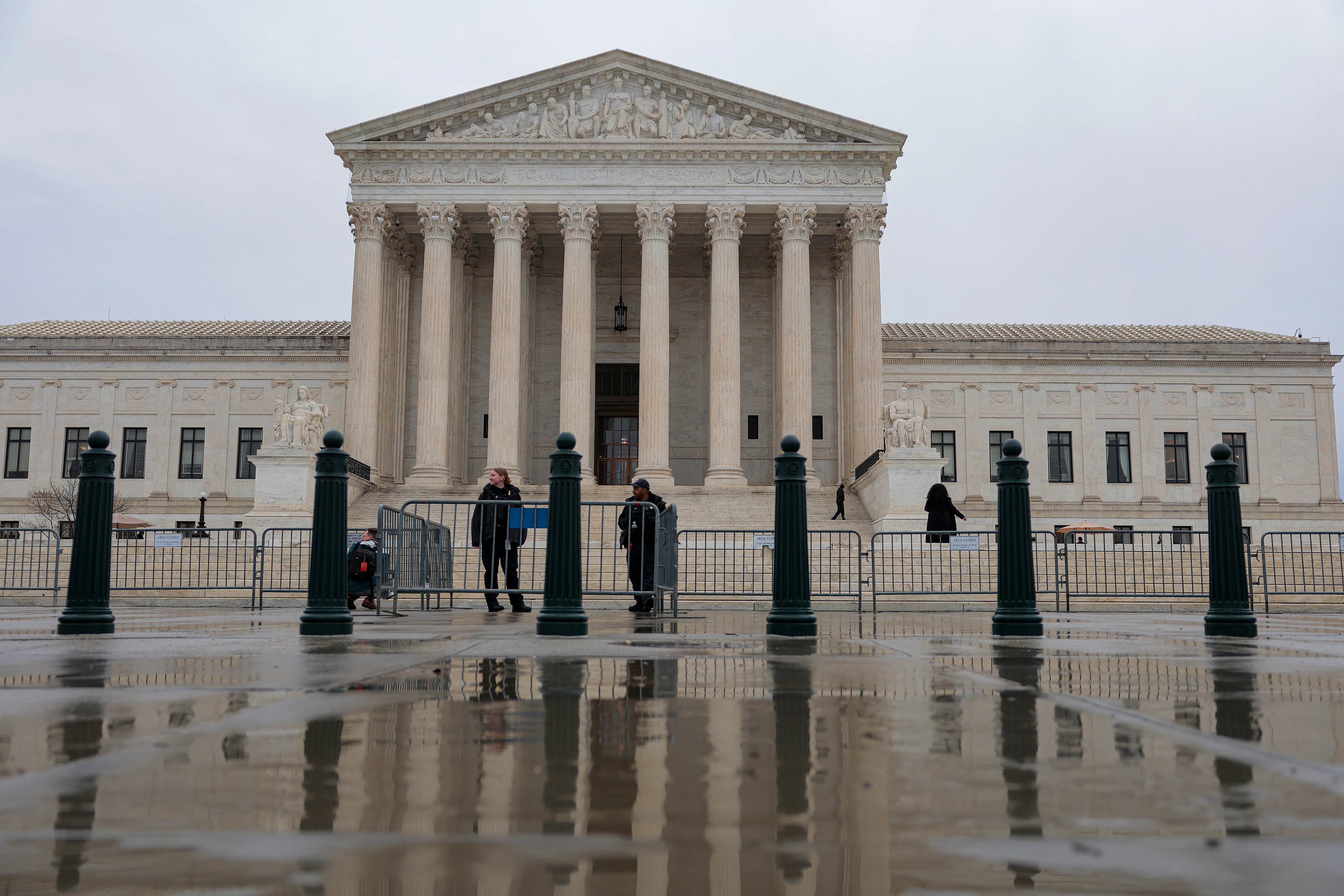
- And…about those tariffs: International tariffs just rose 50% to 15% across the board, front the 10% duty Trump imposed on all imports after the Supreme Court’s February dismissal of his more onerous emergency tariffs. This time, Trump is using a rule that allows him to place duties on imports for 150 days, in order to reduce the balance of payments deficit. On Wednesday a judge ruled that the administration must begin repaying $130 billion in tariff payments from international companies, but the administration is expected to appeal.
Peter S. Green is a veteran reporter and editor who has spent more than two decades covering business and finance from Eastern Europe to New York City, and has worked for Bloomberg News, The New York Post, The New York Times and The Messenger. He lives in New York City and is always looking for the next big story.