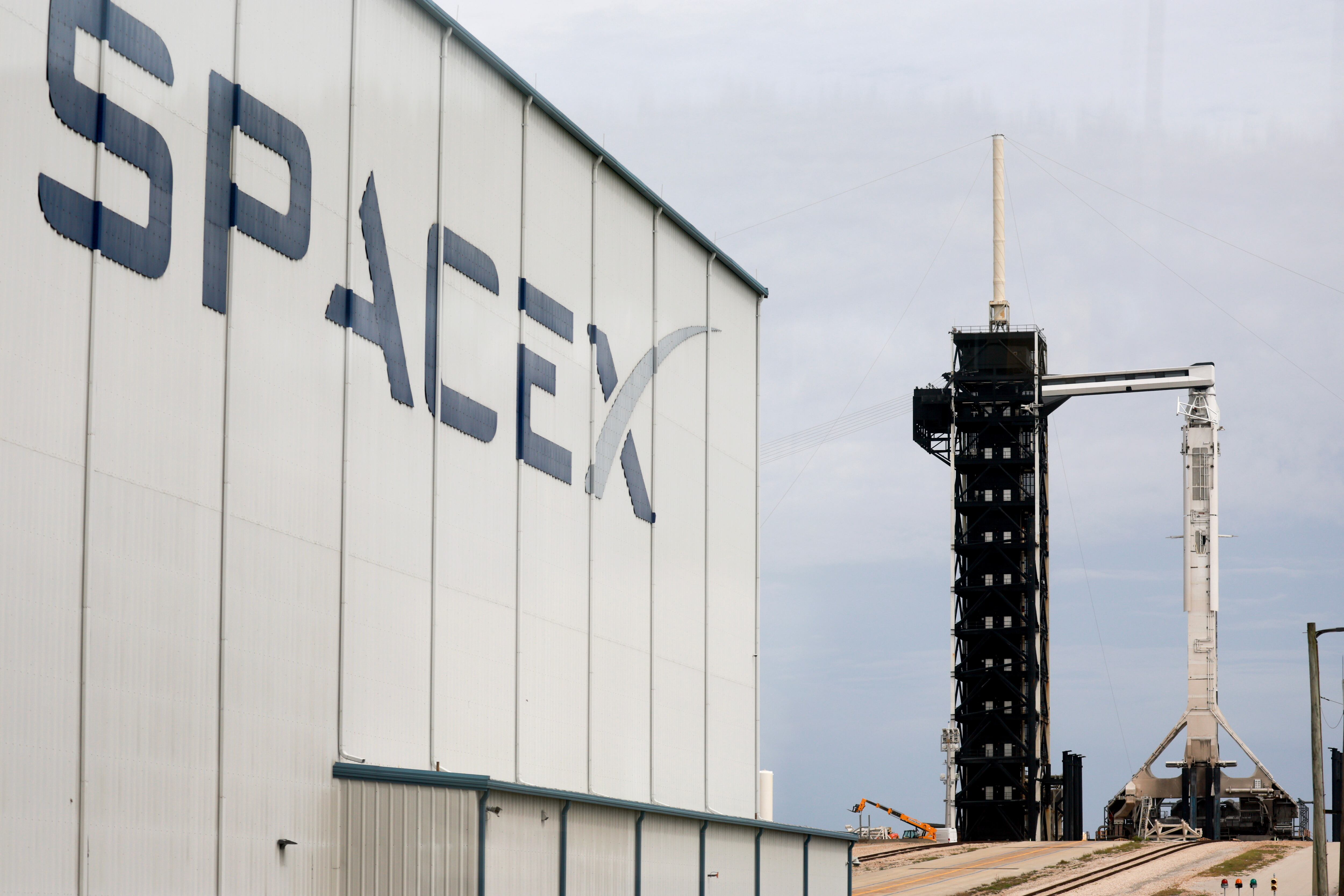
Raising $50 billion, turning SpaceX into a public company is expected to be the largest initial public offering in history. A lot of people stand to get very rich, with the company’s overall value expected somewhere between $1.5 trillion and $2 trillion, an astronomical sum for a niche company that is quite literally shooting for the stars. Early investors in SpaceX’s capital stack could make as much as 20x their initial investment.
Musk’s plan to offer as much as 30% of the shares to individual investors and his followers would seem like an opportunity for a lot of investors to cash in on a company that could grow to a $7 trillion market cap in the next decade. But is the SpaceX IPO a good deal for individual investors? Can the company live up to the hype?
We spoke with bulls and bears.
The bull case for the company is straightforward. SpaceX has turned what was a bespoke business, launching rocket ships, into an industrial operation, launching 165 Falcon 9 missions, about 52% of all global orbital launches, reducing the cost of a launch by about 65%, according to Pitchbook analyst Franco Granda. Starlink has been remarkably profitable, doubling the number of customers last year to nearly 10 million and generating $5.8 billion in EBITDA on $10.6 billion in revenue.
SpaceX’s vertical integration reduces costs, and Musk’s expertise in manufacturing with Tesla suggests a lean, AI-powered manufacturing model will bring costs down further, and open more markets for the company.
What about the bear case? The biggest distraction could be the way Musk has used SpaceX to wrap up some of his less successful ventures, including Twitter and xAI. SpaceX spent $250 billion, most of it in the form of shares to be cashed out at the IPO, to buy xAI and Twitter. But xAI threw off only about $500 million last year, and now SpaceX says it will pay as much as $60 billion for AI company Cursor.
“The con case is much easier to make nowadays,” Granda said in an interview. He said he first thought SpaceX’s success came from being “the dominant supplier of space launches, plus the leading provider of satellite based Internet.” But the xAI and Cursor tie-ups don’t add value, he said, even if SpaceX solves a host of technical issues to put solar-powered, space-cooled AI data centers into orbit. In fact, Granda said, the offer for Cursor, plus a deal announced this week to lease much of xAI’s Colossus data center to Anthropic, shows xAI has no clear horizon, and that should worry retail investors. “It’s a red flag. Because it just says, you’re kind of making it up as you go,” said Granda.
“There’s risk because of where XAI sits in the competitive landscape today. No matter how much you embed Grok into your company, if it is a lagging model, you just won’t get all the juice out of it,” Granda added.
Musk’s promises of ever greater things to come, like colonizing Mars or the end of work, might keep the stock at a sky high valuation, he said. But Musk’s non-stop X-posting and his pronouncements on everything from politics to his current feud with OpenAI chief Sam Altman, also pose a risk, one that Granda crunched the numbers on when he looked at Tesla stock movements over several years: “Actual business-related events drove the stock up 12% on average. But when Elon was involved, it was largely negative, and it was down 5%.”
Still, many investors may not have a choice. If you’re in an exchange traded fund that tracks the Nasdaq, new rules will have SpaceX in the index within 15 days, pushing many investment funds to buy and forcing up the price.
Gabriel Shahin, whose Falcon Wealth Planning was an early investor in SpaceX through a Special Purpose Vehicle, says despite the key person risk that it’s all riding on Musk, buying into the SpaceX IPO is probably a good move for retail investors. “It’s priced to perfection,” said Shahin, of the estimated $600 IPO price. For Shahin, SpaceX is a massive growth story, and investors should see themselves buying a piece of what may well be an effective communications monopoly as Musk brings SpaceX mobile phones on the market.
“He could be our modern day Lex Luthor,” Shahin said in an interview. “He’ll know all of our data, all of our information. He can move satellites as fast as he wants for imagery in space. He has X that is real time news and information. This has all the potential in the world to be the largest company ever.”
Not that anyone wants a Superman villain to run the world, but as Shahin said in an interview, “From an investor point of view, it’s a good thing. I think we want to be on the side of somebody who’s changing the world.”
So will SpaceX shares ever come back down to Earth? Granda doesn’t think so.
One other big worry is: How big is too big? Jay Ritter, director of the IPO Initiative at the University of Florida’s Warrington College of Business, notes that the sheer size of the IPO, at more than 100 times trailing revenue, limits the upside for investors: “For almost all of the companies that have gone public at such a high multiple, everything has not gone quite right, and so the average return has underperformed the market by quite a bit, and that’s where I have reservations about SpaceX’s valuation.”
If retail investors are going to buy SpaceX — and shares are thought to be coming online as early as June — they ought to be prepared to hold the stock for five years or more. Early investors won’t be able to sell their shares for six months according to initial reports of the IPO terms, so once the lockup ends, many of the investors may seek to cash out those 20X gains. And the low float - just 2.5% of the company’s initial valuation, means small share sales could see the stock price fluctuate wildly for the first couple of years, until the business model is proven and cash flow stabilizes.
The question for most investors may be whether investing in an Elon Musk company is worth all the agita that the company’s founder brings with it. From a pure stock price perspective it seems the short-term answer is, most likely, that it is. (Although this certainly doesn’t constitute financial advice). But don’t expect a comfortable ride.
—Peter S. Green
Watch Big Business This Week on Cheddar—and YouTube!
War Story
- Strait Talk: As Winston Churchill said about peace negotiations, “Jaw, jaw is better than war, war,” (it even rhymes, if you imagine Gary Oldman saying it while wearing too much makeup). With Iran and the U.S. appearing to be engaged in some kind of talks near week’s end, oil prices have dropped about 15% from late April highs, as Brent crude fell to about $98 and West Texas intermediate dropped below $92 a barrel. The S&P was up about 2% since last Friday, while the Dow stayed flat. The U.S. even guided a U.S. flagged tanker through the Strait of Hormuz. British Petroleum $BP quarterly profit doubled to $3.23 billion from a year ago, and Shell’s $SHEL profits zoomed to $6.92 billion from $5.58bn. Congressional Democrats are talking about a windfall profits tax and U.S. refiners are not planning to plug the supply gap (as much as 20% of global oil supply is cut off because of the blockade in the Strait of Hormuz) because prices may well fall in the year or more it would take to get new wells online.
The usual suspects
- More than a meme Stock? GameStop $GME, the brick and mortar video game retailer (market cap $11.3 billion) said it’s making an offer for Ebay $EBAY (market cap $48.13 billion), the ailing e-commerce company that pioneered the online garage sale, only to lose its top spot to Amazon $AMZN and wind up in third place behind Walmart $WMT. As GameStop CEO Ryan Cohen tells it, the deal is a right-swipe on M&A tinder: GameStop’s 1600 retail outlets and Cohen’s management skills will revive eBay’s fortunes and let it go head-to-head with Amazon. But GameStop’s $9 billion cash-on-hand make swallowing eBay (market cap $46 billion) a bit like a python swallowing an alligator. And then there’s GameStop’s own checkered history: The company nearly went bust but was saved by fans who turned it into a meme stock, taking on short sellers, who finally abandoned their, er…game after losing $20 billion in 2021. The eBay bid came in for a reality check when Cohen was interviewed by CNBC’s Andrew Ross Sorkin, who asked Cohen where he would find the money. Cohen kept insisting he didn’t understand the question, while Sorkin kept adding up the numbers and the company’s stock took a dive.
- Berkshire without Buffett: Warren Buffett is a tough act to follow. Just ask Greg Abel, the Berkshire Hathaway’s $BRK.B CEO, who hosted his first annual meeting since the Sage of Omaha retired. Buffett was famous for his folksy meetings and long-winded annual letter to shareholders, and the annual meeting attracted thousands of small holders of the company’s Class B stock, earning the meeting its nickname as the Woodstock of finance. Abel’s dry runthrough of the company’s holdings had some attendees walking out partway through his presentation. Shareholders are hoping that Abel’s strong performance will help Berkshire’s shares recover some of the 13% they lost since Buffett announced his departure last May. Abel said he’ll stick to Buffett’s famed value investing principles, while adding to Berkshire’s $380 billion cash pile, and waiting for the kind of undervalued strong businesses that kept the firm growing for decades. But that may take some time. Buffett told CNBC during the meeting that the markets are becoming a casino. “We’ve never had people in a more gambling mood than now,” he told Becky Quick.
- Banking bummers: The private credit crisis just claimed a few billion dollars in damage: The collapse of British mortgage lender Market Financial Solutions has forced a slew of top banks to report massive losses on loans they are unlikely to recover. They include HSBC $HSBC which has just had to write off $400 million of the $540 million it loaned to MFS through Leon Black’s Apollo Global Management $APO and its Atlas SP subsidiary. Last week Barclays $BCS wrote off $300 million that it had loaned to MFS. At the heart of the collapse is the lack of regulation and transparency in the private credit market, where outsized returns carry outsized, and often underreported, risk. In this case, there was an apparent fraud in which MFS pledged the same collateral to more than one lender, creating the illusion that it was more solvent than it really was.
- Morgan Stanley’s Offshoring Oops: In an apparent effort to cut costs, Wall Street bank Morgan Stanley $MS hired junior bankers from across Europe, moved them to low-cost offices in Budapest, and had them working on sensitive financial deals for U.S. clients, without the necessary licenses or supervision. The Wall Street Journal has the details on the junior bankers, who were promised transfers to New York or London but were paid as little as $1,755 a month, a fraction of what junior bankers get in New York, and were expected to work through the night to support colleagues in the big apple. Now, the U.S. Financial Industry Regulatory Agency is investigating.
- The Great Mickey Makeover: Disney $DIS CEO Josh D’Amaro said the storied entertainment firm is going to focus on streaming, making Disney+ “the primary relationship between Disney and its fans,” and promising not to sell off its linear TV networks, including ABC and ESPN. At the top of D’Amaro’s to-do list: Cutting the churn on Disney+ subscriptions. That means more short-form content and better recommendation tools to keep more eyeballs on Disney’s screen longer. Long-term, that’s all going even more interactive with games and theme park visit planning tools. D’Amaro said he’s also still looking at AI options. The market seems to approve, with shares up 7% on news that earnings rose 7% and EPS was up 8%. The stock is still down about half from its highs in 2021, though, so D’Amaro has a long way to go.
- There’s a Harley in your future: Harley-Davidson’s $HOG new CEO wants to sell you a cheaper hog. Boosting sales by bringing in younger riders is the key to the company’s future, he says. But Artie Starrs’ plan also runs right up against Harley’s biggest historic selling point: Most of Its bikes have been made in the U.S.A. until now. So: A new $10,000 Sportster, with a more efficient engine, will be made in York, Pennsylvania. But the $6,000 Sprint, with a 440 cc engine, will be made in Thailand. Harley’s stock has lost half its value in the past five years, but it’s up 35% since mid-March on the plans.
- Spirit gives up the ghost: It’s official. Spirit airlines $SAVEQ ceased operations last weekend, amid a 78% rise in jet fuel prices due to the Iran War, and objections by some creditors to the Trump Administration’s planned $500 million bailout for the discount carrier. On its last day of service, April 30, Spirit flew 50,000 passengers. Its demise reduces pressure on rival airlines to provide low-cost fares on key routes, meaning all our air fares are likely to go up.
Tech talk
- Now it’s OpenAI’s turn to release its AI supercybervillain: the lovingly named “GPT-5.5-Cyber,” which CEO Sam Altman said will be released shortly to “critical cyber defenders” before its general release, just as Anthropic last month held back its Claude Mythos Preview. The news eases some fears that AI firms lack the chips and data centers needed to power their models for enough clients to make back the prolific amounts they are spending on infrastructure. It also eases some fears that OpenAI is spending too heavily and moving too slowly in the battle for the first Super-powered Gen AI to hit the market. Meanwhile, all that spending is drying up the market for solid state hard drives, and raising prices for groups like Wikipedia parent Wikimedia and the Internet Archive. As 404media reports, a 2TB external Samsung SSD sold last fall for $159 and now costs $575.
- AI tools are changing so fast that even top tier investment companies like Blackstone and Goldman Sachs $GS can’t keep up. So they’re creating their own help desk, a $1.5 billion joint venture with Anthropic to speed the adoption of Claude AI in their portfolio companies and their own operations. Blackstone $BX and buyout shop Hellman & Friedman will each put up $300 million and Goldman’s investment funds will put up $150 million for the tech assistance. The new firm will place engineers inside client companies to help implement AI workflows.
- Deep Cash? Remember DeepSeek, China’s budget AI that was really built and trained with ChatGPT? Well it’s baaack, baby, with a “few billion dollars,” from Chinese state-backed venture firms, the Wall Street Journal reports. The influx would value Deep Seek at $50 billion. For Beijing, it’s a way back to a commanding position in the AI-led future, where U.S. firms including OpenAI, Anthropic and xAI (a.k.a. Grok) dominate.
- Meanwhile, AI is having its day(s) in court. Apple $AAPL has agreed to pay $250 million to iPhone users who were told their iPhone 15s and 16s would run with Apple Intelligence. But Apple hit some speed bumps while rolling out its AI, and the features weren’t available on those phones. Indigenous actress Q’orianka Kilcher has sued Disney $DIS and director James Cameron for using her likeness to create the face of the blue-skinned warrior-princess Neytiri (which happens to be phonetic Greek for “Yes, cheese”) in the 2009 film Avatar. “In the age of A.I., our likeness is no longer safe,” Kilcher, 36, told the New York Times “This case is about the future of identity.” Kilcher says Cameron told her she “inspired” Neytiri’s look. Meanwhile, a bunch of publishers and novelist Scott Turow have sued Meta $META, saying the social media company illegally used their writings to train Meta’s AI. Meta argues that courts say using copyrighted material for training is “fair use.”
- In case you planned to hide those Bitcoin profits, Anthropic and banking software provider Fidelity National Information Services $FIS are launching a new AI software suite that monitors bank accounts for evidence of financial crime. The tool won’t just alert banks to potential midsdeeds, it will amass evidence that prosecutors can use in criminal cases. So, watch out!
Get Big Business This Week in your inbox every week—and read it before everybody else! Sign up today.
Media Mirror
- Is a new media mogul battle brewing? IAC $IAC chief Barry Diller says he wants to buy CNN before Paramount $PSKY chief David Ellison “ruins” it by merging the cable news giant with Paramount’s crumbling CBS News. Diller said he talked to CNN’s current owner Warner Bros. Discovery $WBD before it agreed to sell itself to Paramount. “I would do it tonight,” Diller said of buying CNN, adding that CNN is ripe for innovation. He may get his chance: The Paramount deal is beginning to look shaky, as Middle East sovereign wealth funds that also pledged cash for the purchase redirect their money away from the U.S.
- Murdoch Junior? Rupert Murdoch’s least-favorite son James (the leftish-leaning one who sued over dad’s decision to hand the media company to rightwing son Lachlan) is building his own media empire. Multiple news reports say he’s in discussions with Vox to buy part or all of the podcast and publishing firm that includes SB Nation and New York Magazine from current publisher Jim Bankoff. Murdoch Junior reportedly has over $1 billion in cash after settling up with Dad over ownership of News Corp, and evidently he’s eager to spend it.
Peter S. Green is a veteran reporter and editor who has spent more than two decades covering business and finance from Eastern Europe to New York City, and has worked for Bloomberg News, The New York Post, The New York Times and The Messenger. He lives in New York City and is always looking for the next big story.