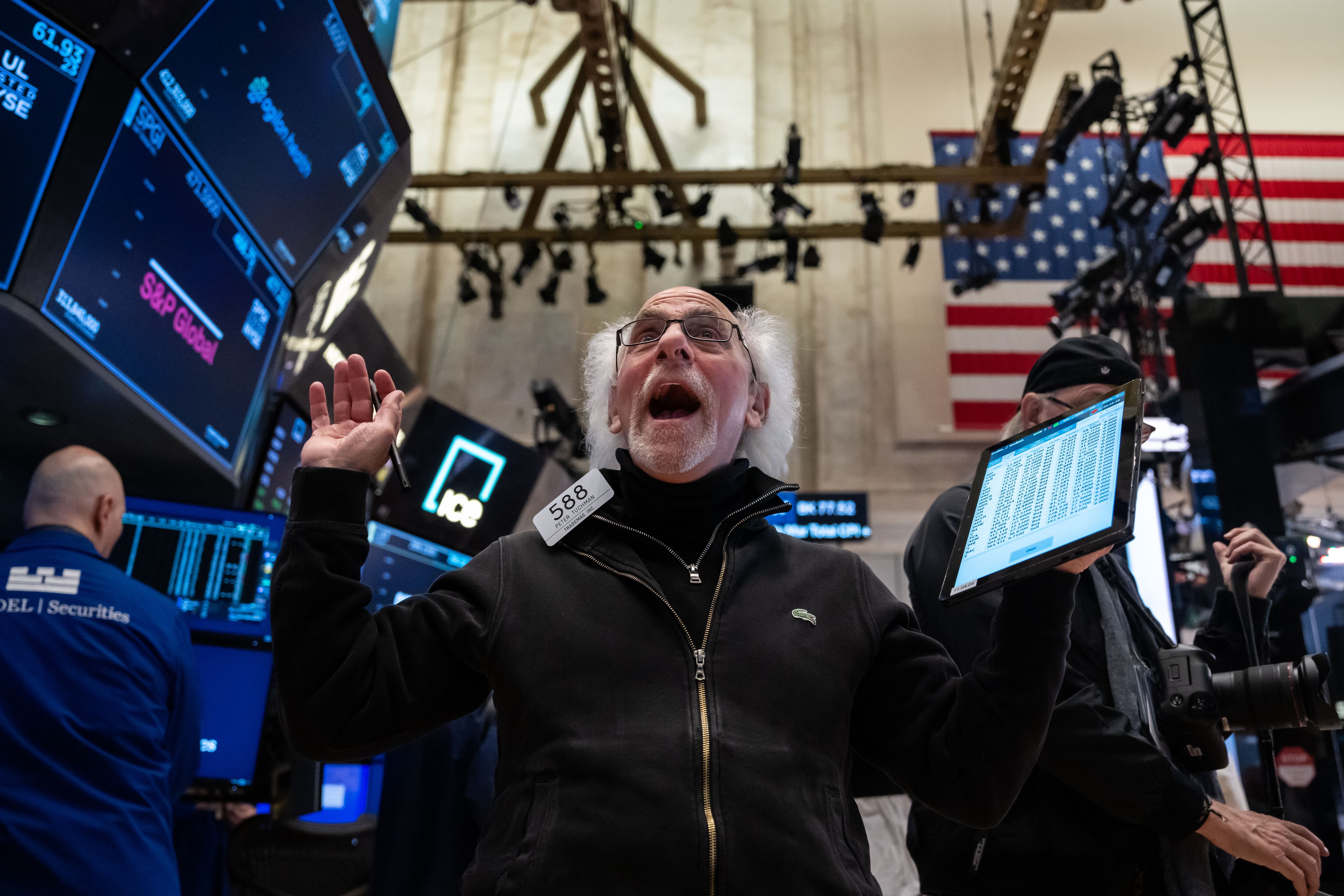
Editor Peter Green spoke with experts about the trends that will shape big business and the economy in 2026.
Energy
We spoke with Carolyn Kissane, a professor at New York University’s Center for Global Affairs, where she teaches and researches on the geopolitics of energy.
BBTW: What happened to the ‘great energy transition’ that was supposed to leave oil, gas and coal on the dustheap of history?
Carlyn Kissane:The world is increasingly divided into electro-states and petro-states.The U.S. is becoming a petro-state: We see an increase in the use of oil, natural gas, and even coal. And part of that is just driven by a number of different factors, we have AI, we have electrification, we have the fact that people still have a desire to drive and fly.Chinais an electro-state. They’re really building out electrification. China is the great disruptor to the U.S. energy dominance model. When you look at the future demand outlook for oil and gas, China can get renewables in place faster than oil and, particularly, gas, which needs very expensive infrastructur. Meanwhile, they’re locking in consumers for their renewable energy technologies that are going to displace fossil fuels. Still, we are a bit of a hybrid. We produce the most oil, the most natural gas, but we also continue, even in the face of antagonism, to build out renewable energy technologies.
Where are oil and gasoline prices going? Crude is down 20% this year and it’s dipped below $60 a barrel. Do we go into the lower end of the $50 market?
That’s possible. And that’s where you get into some interesting scenarios, because U.S. producers will not find the low 50s very attractive for continuing production. So there might be some reining in of production, which will then ultimately lead to a tighter market over the medium to long term. Gasoline will stay within the mid $2 a gallon range, which will hurt EV sales. Plus, you have the rollback of fuel efficiency standards and EV incentives. Historically, when prices at the gas pump go down, Americans tend to think, ‘well, it’s a good time to buy a bigger car.’
What about Venezuela? There’s talk that one motive behind the U.S. confrontation with the Maduro regime is to get access to Venezuela’s oil reserves.
We’re not going to see additional barrels coming out of Venezuela without a lot of investment in infrastructure. Again, there’ll be a question as to whether companies are willing to go in, given the cost outlook, the capex that it would require, and whether or not we actually need additional barrels on the market in the medium to long term.
Affordability
BBTW spoke withMike Konczal, senior director of the Economic Security Project, and a former senior economic adviser to President Joe Biden. Mr. Konczal focuses on affordability, the new watchword in economic policy, and he’s a close watcher of economic data. BBTW asked him what to expect with jobs, interest rates, and the GDP.
What are we likely to see in 2026?
Mike Konczal:The trends that accelerated in 2025 and are likely to continue: It’s going to be a very low-hire economy — unemployment will probably continue to go up, not because people are being laid off, but because businesses aren’t hiring. People who are new to the labor market, especially young people, will find it hard to find a job, and that will mechanically increase the unemployment rate. Even if no one loses their job, the fact that people can’t find jobs, which really stands out in the data, is quite important. That will create a fair amount of discontent and discomfort with how the economy is doing, regardless of the headline numbers.
What about consumer spending—it’s been surprisingly robust despite tariffs and unemployment, and continuing inflation.
That’s the second trend: there was a slowdown in consumer spending, a slight one. It wasn’t huge, but in the first half of 2025 in particular, perhaps because people were most nervous about the tariffs and what exactly that would look like. During the Biden administration, people hated the economy in consumer sentiment surveys, but they kept spending, and that kept the economy going pretty strong in ‘23 and ‘24. Now people hate the economy, and they’re not spending as much. The pro case is that the stock market’s booming, and that’s making people feel very rich and allowing more affluent people to keep the economy going, the so-called “K-shaped economy.” But with healthcare premiums likely to spike, people are going to feel that quite a bit.
With fewer jobs, inflation stuck just below 3%, and consumers having to spend a lot more on healthcare, what will that do to Gross Domestic Product and interest rates? Will we have a recession?
A slowdown in spending would cause lower growth, and in turn, a Fed that’s not super excited to cut rates because inflation is still slightly above target…it will be less like, there’s a giant recession, or it’s the 1970s again, or unemployment’s going to skyrocket, which I don’t think is true. But we will be a little bit poorer, and things will work a little bit less, and it’ll be a little bit harder than it needs to be. I don’t think that’s great for the American people.
Get Big Business This Week in your inbox every week—and read it before everybody else! Sign up today.
Management
Since the end of World War Two, the U.S. has been the world’s dominant economic power, but now that’s changing. China and the EU are each on track to overtake the U.S. in economic activity by the middle of this century. Are America’s CEOs ready? BBTW spoke with Hal Gregersen, senior lecturer in leadership and innovation at MIT’s Sloan School of Management, a former executive director of the MIT Leadership Center.
BBTW: What does America’s corporate management have to do to react to this fast-changing and unpredictable economic and political environment?
Hal Gregersen:Well, do you have a couple of days? The data show that the average CEO is late 50s, early 60s. Their experience base has very little to do with the current environment that they’re facing, and relatively few of them have any expertise level in or sense of the technologies that are compounding and combining. And you look below that group of people, and it’s people reporting to the CEOs, at most will be there five years on average, so most senior executives, and most CEOs are in their role at most seven-ish years, which means that there’s very little incentive or capability for the average senior leadership team to care about the future they’re walking into, or be capable of doing something about it. They’re already painted into a corner.
How do they get out of that painted corner?
The first question I ask senior leaders now, board members, CEOs, C-suite teams, is about AI. I ask: “AI is impacting your world but what specific skills and roles and parts of your identity are you going to let go of and new ones take on in the next five to ten years?” Less than 5% of any group I’ve dealt with in the last 12 months will acknowledge either verbally or with their eyes that they’ve thought about that question before. The degree to which they fail to look at themselves before they start making sweeping changes across an organization is just stunning to me. That’s the starting point, being aware that this is how my world is changing because of these technological changes. So that thing sort of stacked up against them.
Many of these leaders came through training programs or got their MBAs long before AI was in widespread use. Do they have the tools to handle this new world?
Relatively few of the senior leaders have a technology background or a science background to understand these compounding and combining technologies, and as a result, what they don’t understand, they often delay in terms of making significant choices. And this is not the time to be delaying. It’s the time to be looking very far forward. Some companies and leaders do make sure they plan far into the future: BlackRock, it’s 30 years; for Jensen Huang at NVIDIA, it’s at least 10 to 15 years. Same for Lisa Su at AMD. I often ask the second set of questions after presenting some information about sensors and IoT, semiconductors, AI, the quantum economy, biotechnology, energy technology, space technology, autonomous systems. We’ll ask these same senior leaders, number one, which of these technologies or combinations are most deeply impacting your world today? And then we’ll ask them, which do you think will be impacting your world tomorrow? They pick maybe one or two. Then you ask them how many of these technologies do you actually track personally and understand what they are and what their implications are for you? I did this with a group of 200 board members and CEOs two weeks ago. I’m not kidding, no more than 10 hands went up in the room. People just fail to grasp that all of these things, either directly or indirectly, are reshaping their world.
How do these executives begin that process of looking at themselves?
We change organizations by changing individuals. The first piece becomes, are these leaders genuinely challenge-driven, and do they have clarity about the challenge, and are they transparent about the challenge? One of the top three needs is creative thinking. The elite set of leaders who are creating the ways that we’re living are constantly thinking down the road and acting in the present to get there. Even though that intent in the future is foggy at times, they’re doing it by design: Whether it’s individually or as an organization, as we enter 2026, we’re going to be different in the future. But are we going to be different by design or by default? They need to think about what are the challenges we care about? What are their horizons on those challenges? Are they big enough for where we need to go? What are the skills, roles, and identities required to get there? What are we going to have to let go of in order to take on these new things, to create that kind of new us? And that’s the direction the successful folks go.
Can the old dogs learn these new tricks?
There’s roughly 10 or 15% sitting in a room hearing the same stuff, for whom it finally clicks, and they decide, ‘I am going to do something about this.’ It’s that I’ve thought carefully about who I am and the organization I’m in, and I’ve come to conclusions about something that’s going to sound weird when I say it, and we’re still not maybe 100% set on the language, but it works for the moment. What are, as a leader, my truth-seeking mechanisms in a rapidly changing world?
What’s one tool leaders can use?
It’s called the questionverse. If you and I were in a meeting like we are right now and you got a challenge at the beginning of the day, I would say to you, let’s do a questionverse, and here’s what I mean by that. We’re going to set a timer for four minutes. We’re going to generate as many questions as we can together in those four minutes. No answers, no explanations. Let’s try to get 20 questions in four minutes. And if we suspend our conviction enough to stop and try that simple exercise, 85% of the time, we reframe our challenge, and we get at least one idea to move it forward.
Want more Cheddar?
You’re clearly into smart people talking about even smarter things. Lucky for you, that’s literally our whole deal atCheddar. We interview the brightest minds in business, finance, and tech. If you’d like more in-depth analysis from interesting people, lcheck out ourwhere to watchpage and turn us on 24/7! Your wallet will thank you and so, more importantly, will your mind. But also your wallet. Remember that.
Peter S. Green is a veteran reporter and editor who has spent more than two decades covering business and finance from Eastern Europe to New York City, and has worked for Bloomberg News, The New York Post, The New York Times and The Messenger. He lives in New York City and is always looking for the next big story.