By Steve Peoples and Will Weissert
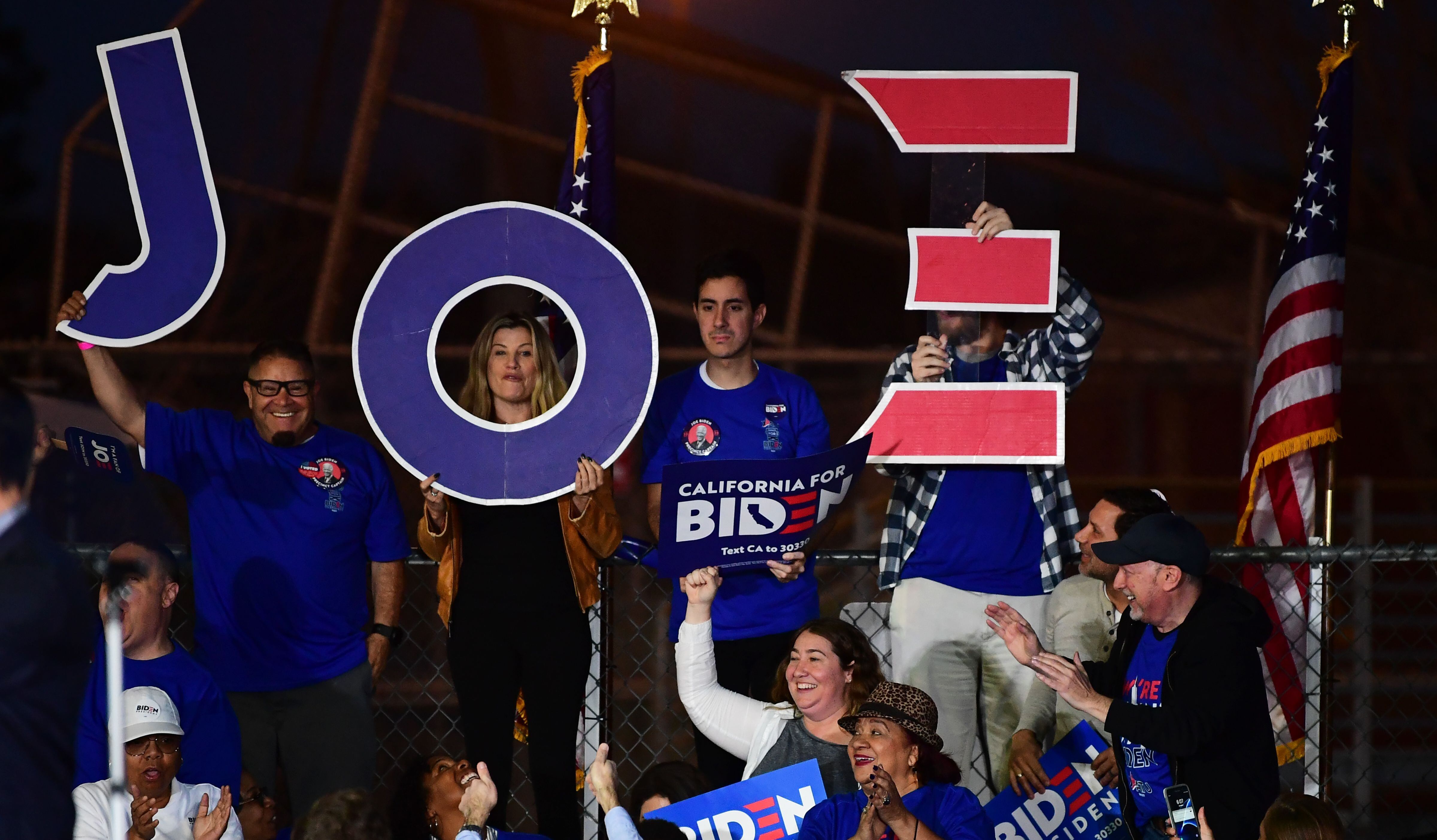
A resurgent Joe Biden scored sweeping victories across the country with the backing of a diverse coalition and progressive rival Bernie Sanders seized Super Tuesday’s biggest prize with a win in California as the Democratic Party’s once-crowded presidential field suddenly transformed into a two-man contest.
The two Democrats, lifelong politicians with starkly different visions for America’s future, were battling for delegates as 14 states and one U.S. territory held a series of high-stakes elections that marked the most significant day of voting in the party’s 2020 presidential nomination fight. The winner will take on President Donald Trump in the November general election.
The other two high-profile candidates still in the shrinking Democratic field, New York billionaire Mike Bloomberg and Massachusetts Sen. Elizabeth Warren, were teetering on the edge of viability. Warren finished in an embarrassing third place in her home state, and Bloomberg planned to reassess his candidacy on Wednesday after spending more than a half billion dollars to score a single victory — in American Samoa.
The new contours of a nomination fight pitting Biden against Sanders, each leading coalitions of disparate demographics and political beliefs, were crystallizing by day's end as the former vice president and the three-term senator spoke to each other from dueling victory speeches separated by 2,500 miles (4,000 kilometers) Tuesday night.
“People are talking about a revolution. We started a movement," Biden charged in Los Angeles, knocking one of Sanders' signature lines.
And without citing his surging rival by name, Sanders swiped at Biden from Burlington, Vermont.
“You cannot beat Trump with the same-old, same-old kind of politics,” Sanders declared, ticking down a list of past policy differences with Biden on Social Security, trade and military force. “This will become a contrast in ideas.”
The balance of Super Tuesday's battlefield — with Biden winning at least eight states and Sanders four — raised questions about whether the Democratic primary contest would stretch all the way to the July convention or be decided much sooner.
Biden's strong finish punctuated a dramatic turnaround in the span of just three days when he leveraged a blowout victory in South Carolina to score sweeping victories on Tuesday that transcended geography, class and race. And lest there be any doubt, he cemented his status as the standard-bearer for the Democrats’ establishment wing.
The former vice president showed strength in the Northeast with a win in Massachusetts, won Minnesota in the upper Midwest and finished on top across the South in Virginia, Alabama, North Carolina, Tennessee and Arkansas — in addition to Oklahoma
Sanders opened the night as the undisputed Democratic front-runner and was in a position to claim an insurmountable delegate lead. And while he scored the night's biggest delegate-prize in California, he scored just three other decisive victories, winning his home state of Vermont, along with Utah and Colorado.
Still, Sanders proved he could deliver in perhaps the greatest test of his decades-long political career. His success was built on a base of energized liberals, young people and Latinos. And his conclusive win in California marks a huge reversal in a state he lost four years ago.
Biden racked up his victories despite being dramatically outspent and out-staffed. Moderate rival Bloomberg, for example, poured more than $19 million into television advertising in Virginia, while Biden spent less than $200,000.
A key to Biden’s success: black voters. Biden, who served two terms as President Barack Obama’s vice president, won 60% of the black vote in Alabama, where African Americans made up more than half the Democratic electorate on Tuesday. Bloomberg earned 25%, and Sanders won about 10% of African American votes, according to AP VoteCast, a wide-ranging survey of the electorate.
The Democratic race has shifted dramatically over the past three days as Biden capitalized on his commanding South Carolina victory to persuade anxious establishment allies to rally behind his campaign. Former rivals Amy Klobuchar and Pete Buttigieg abruptly ended their campaigns in the days leading up to Super Tuesday and endorsed Biden.
In Biden and Sanders, Democrats have a stark choice in what kind of candidate they want to run against Trump.
Sanders is a 78-year-old democratic socialist who relies on an energized coalition of his party’s far-left flank that embraces his longtime fight to transform the nation’s political and economic systems. Biden is a 77-year-old lifelong leader of his party’s Washington establishment who emphasizes a more pragmatic approach to core policy issues like health care and climate change.
Across the Super Tuesday states there were early questions about Sanders’ claims that he is growing his support from his failed 2016 presidential bid.
Biden bested him in Oklahoma, though Sanders won the state against Hillary Clinton four years ago. In Virginia, where Democratic turnout this year surpassed 2016's numbers by more than 500,000 votes, Sanders’ vote share dropped significantly. And in Tennessee, Democratic turnout was up more than 30% from 2016, but Sanders' raw vote total was only a few hundred votes greater than four years ago.
Meanwhile, Bloomberg was trying to look beyond the primary to the November election against Trump, who racked up easy victories in lightly contested Republican primaries across the country.
"We have the resources to beat Trump in swing states that Democrats lost in 2016,” he said Tuesday night while campaigning in Florida.
The billionaire former New York mayor, who threw more than a half a billion dollars into the Super Tuesday states, will reassess his campaign on Wednesday, according to a person close to his operation who spoke on the condition of anonymity to describe internal deliberations.
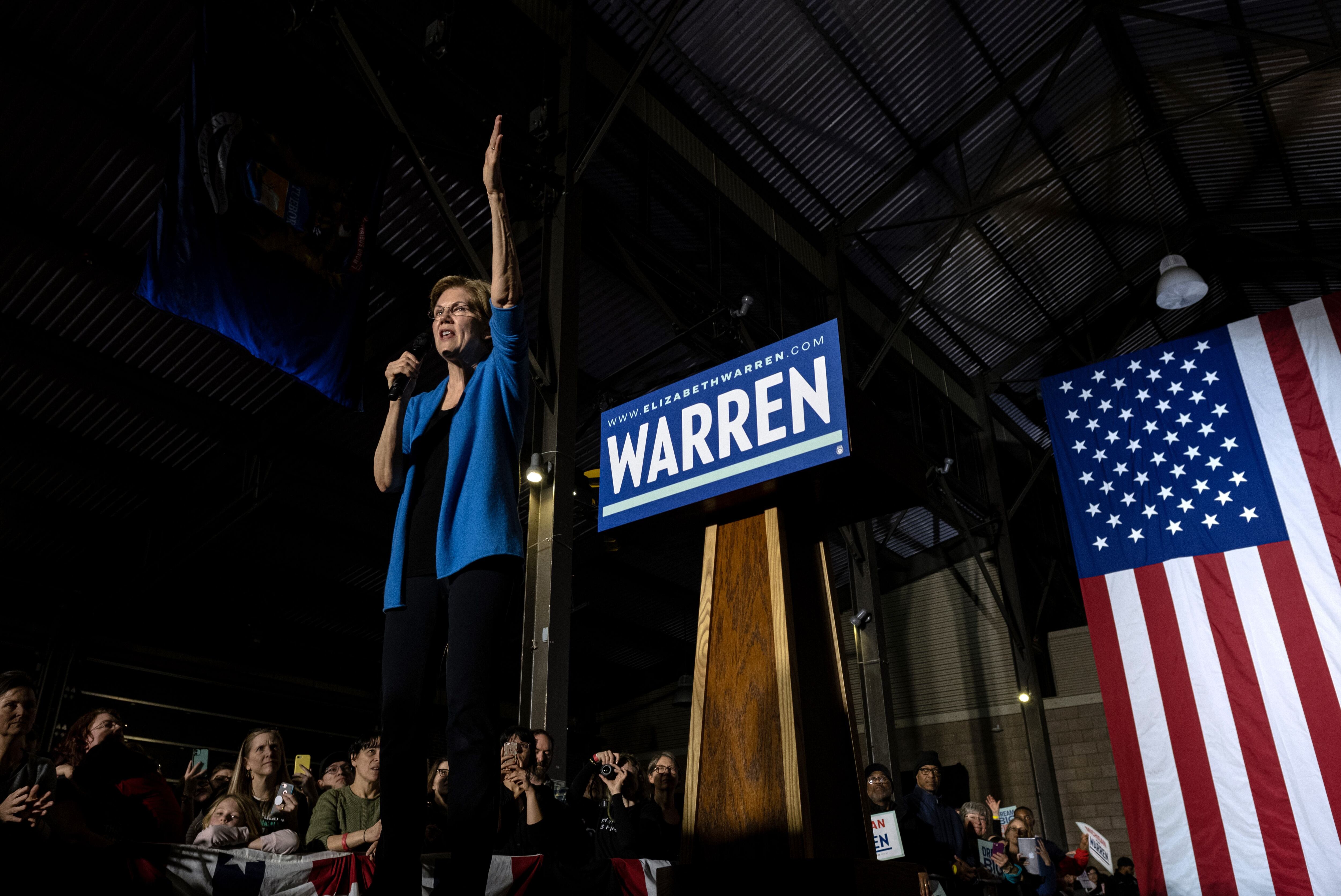
Warren was also fighting to be optimistic.
Facing a roaring crowd in Michigan before news of her disappointing home-state finish was announced, she called on her supporters to ignore the political pundits and predictions as her advisers insist she’s willing to go all the way to a contested convention in July even if she doesn’t claim an outright victory anywhere.
“Here’s my advice: Cast a vote that will make you proud. Cast a vote from your heart,” Warren declared. She added: “You don’t get what you don’t fight for. I am in this fight.”
With votes still being counted across the country, The Associated Press has allocated 362 to Biden, 285 delegates to Sanders, 30 to Bloomberg, 20 to Warren and one for Rep. Tulsi Gabbard. The numbers are expected to shift dramatically throughout the night as new states, none bigger than California, report their numbers and as some candidates hover around the 15% vote threshold they must hit to earn delegates.
The ultimate nominee must ultimately claim 1,991 delegates, which is a majority of the 3,979 pledged delegates available this primary season.
Associated Press writers Zeke Miller and Brian Slodysko in Washington and Kathleen Ronayne in Los Angeles contributed to this report.