By Josh Boak

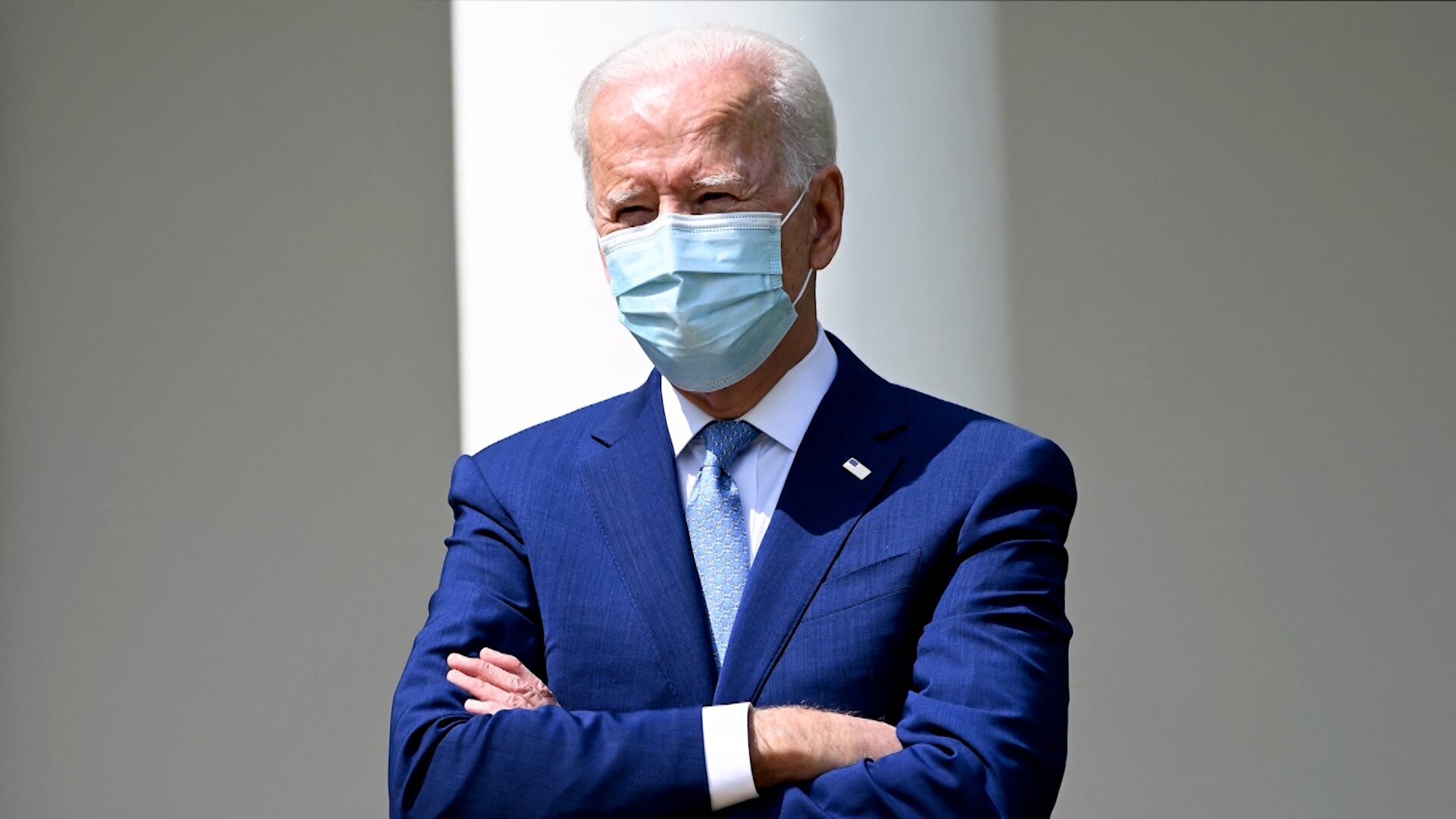
President Joe Biden is hoping to get the bipartisan infrastructure deal on track by highlighting its expected economic benefits, stressing its $973 billion would include the largest investment in transportation in nearly a century and millions of jobs would be created.

White House officials issued an internal memo highlighting the impact on jobs and growth ahead of Biden leaving Tuesday for Wisconsin to make his case directly to voters. The memo, obtained by The Associated Press, notes that the total is four times the size of the infrastructure investment made a dozen years ago in response to the Great Recession and the biggest infrastructure package since Franklin Roosevelt's New Deal.

It also emphasizes an analysis suggesting that 90% of the jobs generated by the spending could go to workers without college degrees, a key shift as a majority of net job gains before the pandemic went to college graduates.

“This is a blue-collar blueprint to rebuild America,” the memo says.

Potential economic gains were a shared incentive for the group of Democratic and Republican senators who agreed to the deal on Thursday. But the process briefly fell into disarray as Biden suggested the deal would be held up until he also received a separate package for infrastructure, jobs and education that would be determined solely by Democrats through the budget reconciliation process.

Biden said Saturday that this was not a veto threat and by Monday the package appeared back on track.

White House Press Secretary Jen Psaki said Monday that Biden is “eager” for both bills to be approved by Congress and is going to “work his heart out” to make it happen.

“The president intends to sign both pieces of legislation into law,” Psaki said at her daily briefing.

Approval of both bills by Congress remains a long haul with this summer's initial votes expected in July. Senate Republican Leader Mitch McConnell questioned the legislative process ahead and mounted fresh obstacles speaking Monday in Kentucky.

McConnell said he has not yet decided if he will support the bipartisan package, but he wants Biden to pressure House Speaker Nancy Pelosi and Senate Democratic leader Chuck Schumer to say they will allow the bipartisan arrangement to pass without mandating that the much larger and broader follow-up bill be in place.

“I appreciate the president saying that he’s willing to deal with infrastructure separately, But he doesn’t control the Congress,” McConnell said at a press conference in Louisville.

The two bills had always been expected to move in tandem, and that is likely to continue as Biden drops his veto threat but reaches across the aisle for the nearly $1 trillion bipartisan package and as well as his own broader package. The Democratic leaders are pressing ahead on the broader bill, which includes Biden's families and climate change proposals as well as their own investments in Medicare, swelling to some $6 trillion.

The Democratic leaders did not immediately respond to McConnell's remarks.

The prospect of additional economic gains might be a way to garner public support and soothe partisan tensions. Biden also faces pressure from Democrats such as New York Rep. Alexandria Ocasio-Cortez, who told NBC's “Meet the Press” that the spending isn't as huge as it might seem because the sums are spread out over multiple years.

The eight-page White House memo comes from Brian Deese, director of the National Economic Council, and senior adviser Anita Dunn. It indicates that the $110 billion for roads and bridges would help relieve traffic and congestion that costs the economy over $160 billion annually. The memo justifies the $48.5 billion planned for public transit by citing studies that link light rail and buses to increased earnings and employment for workers. It defends the $66 billion for repairs and upgrades for rail lines by saying that current delays and disruptions weigh on growth.

The bipartisan agreement also would help nurture the market for electric vehicles, improve broadband access, repair water lines and create resilience against damage from extreme weather events.

Associated Press writer Lisa Mascaro in Washington and Bruce Schreiner in Louisville, Ky. contributed to this report.

Share:
More In Politics
TLDR Act Provides the 'TLDR' on Sites' Terms of Service
If some members of Congress have their way, there might finally be a 'TLDR' on sites' terms of service, introduced by the terms-of-service labeling, design, and readability act – or TLDR for short. With this act, users will actually understand what they're agreeing to or the many ways in which their data is being used before pressing 'accept.' J.D. sat down with co-sponsor of the bill and Senator Bill Cassidy, to discuss.
All Eyes on Biden: Amid Inflation, Pandemic, How Can President Push Agenda While His Party Controls Washington?
President Joe Biden's first year in office is wrapping up. What has he achieved, and what else remains on the table while the Democrats have control of Washington? Amid an ongoing pandemic and rising inflation, Biden's approval rating is at an all-time low and his party is plagued by infighting. Will he be able to continue pushing key parts of his agenda? Paul Glastris, former Bill Clinton speechwriter & Editor-in-chief of 'Washington Monthly,' joins Cheddar News' Closing Bell to discuss the president's achievements in his first year, where he's fallen short, and what he must do in order to get more of his agenda signed into law.
Senate Bills to Reign in Big Tech Anticompetitive Practices Could Hurt Consumers
Tech giants Meta, Amazon, Alphabet, and Apple are faced with a bipartisan antitrust legislation effort underway in the Senate Judiciary Committee. The companies stand accused of promoting their own goods and services over smaller competitors on their platforms, holding too much monopolistic power via their app stores and services. Adam Kovacevich, founder and CEO of Chamber of Progress, a technology industry trade group, joined Cheddar to argue that the bills that are being debated currently could end up hurting consumers, rather than helping.
Inflation Among Biggest Concern for CEOs in 2022
Concerns over inflation have become one of the biggest worries for executives. A survey from The Conference Board shows that more than 900 CEOs consider inflation a top tier concern, a major shift from last year's survey that had it as a low-level concern. Rebecca Ray, Executive Vice President, Human Capital, The Conference Board joined Cheddar's Opening Bell for more.
Beijing Olympics Sponsors Accused of Indifference Amid Human Rights Concerns
With the 2022 Winter Olympics in Beijing rapidly approaching, clouds of controversy continue to swirl around China's treatment of the Uyghur Muslim minority population, its surveillance state, and security for visiting athletes. Phelim Kine, China correspondent for Politico, joined Cheddar to break down the big storylines surrounding the Beijing Games and highlight what he saw as the complete disregard by top corporate sponsors like P&G, Airbnb, Intel, Visa, and Coca-Cola, for the controversies. "They spend $100 million for every Olympics that they sponsor, and they have frankly shown absolute willful indifference to any type of entreaty to essentially be more vocal about their concerns about human rights in China," he said. Kine also touched on the data privacy fears for athletes as visiting contingents are being told to carry burner phones to avoid security risks.
Texas's Six-Week Abortion Ban Remains in Effect
Texas's six-week abortion ban remains in effect after a federal appeals court ruling on Monday. The U.S. court of appeals for the fifth circuit temporarily transferred the case to the Texas Supreme Court, which is expected to leave the dispute in limbo for months to come. Katie Barlow, attorney and media editor of SCOTUSblog, joins Cheddar News to discuss.
Breaking Down the 5G Deployment Disconnect Between Airlines and Telecoms
Hugh Odom, founder and president of Vertical Consultants, shared his expertise on telecommunications with Cheddar on the safety issue raised about 5G deployment by airlines. The installation was partially delayed again on Tuesday as the airlines warned of potentially catastrophic delays in a letter to the Biden administration. Later, both Verizon and AT&T relented and put a pause on some of the implementations. "The first thing the Biden administration needs to do is get everybody in the room and say, look, aviation industry, identify the problem — wireless industry, come up with a solution," said Odom.
Load More