After a year of unprecedented government spending amid the coronavirus pandemic, how revenue will be collected to pursue future aid and to keep running the United States is under scrutiny. Republican incumbent Donald Trump and Democratic challenger Joe Biden have significantly disparate views on tax collection in their platforms for the presidency.
Top Earners
Largely, the president would like to keep in place his 2017 income tax cuts (set to expire in 2025) that provided a reduction on the top marginal rate from 40 to 37 percent for the wealthiest earners.
Biden plans to return the rate back to near 40 percent and eliminate the $10,000 cap on state and local deductions that had the effect of raising taxes on households in high-tax states such as New York and California.
Middle-Income Earners
Both candidates say they want to cut taxes on households in the middle brackets. President Trump made a proposal prior to COVID-19 that would have lowered the 22 percent tax bracket down to 15 percent.
Meanwhile, Biden offers more incentivized tax breaks to encourage retirement savings, child care spending, and first-time home buying.
Corporate Taxes
Trump is sticking to the reduction made by his 2017 tax law that lowered corporate taxes to 21 percent from 35 percent.
Challenger Joe Biden would like that rate to be bumped up to 28 percent.
Both men offer plans to create tax incentives for domestic manufacturing.
Capital Gains
The 2020 presidential candidates differ particularly in taxing profits on stocks. President Trump would like to drop the top current rate from 20 percent to 15 percent and has even considered a temporary capital gains tax holiday.
Former Vice President Biden, however, plans to change existing rules in order to tax profits as ordinary income, which could potentially lead to a 40 percent tax on top earners on profits of more than $1 million.
Read More on Trump and Biden's Plans:
Trump vs. Biden on Raising the Federal Minimum Wage
Biden vs. Trump on Student Loans and Higher Education
The Department of Justice has informed former Vice President Mike Pence 's legal team that it will not pursue criminal charges related to the discovery of classified documents at his Indiana home.
Fending off a U.S. default, the Senate gave final approval late Thursday to a debt ceiling and budget cuts package, grinding into the night to wrap up work on the bipartisan deal and send it to President Joe Biden's desk to become law before the fast-approaching deadline.
He wasn't hurt and later joked that he "got sandbagged."
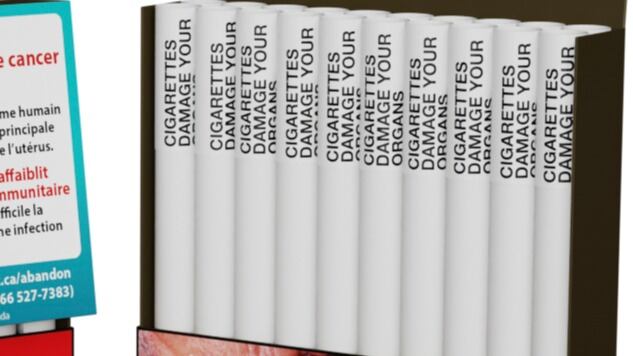
Canada will soon become the first country in the world where warning labels must appear on individual cigarettes.
Vice President Kamala Harris said Thursday that federal agencies are taking new steps to stop racial discrimination in appraising home values by proposing a rule intended to ensure that the automated formulas used to price housing are fair.
Centrist Democrats and Republicans pushed it to approval over blowback from conservatives and some progressives. The Senate is expected to act quickly by the end of the week.
The Oklahoma Supreme Court ruled on Wednesday that two state laws banning abortion are unconstitutional, but the procedure remains illegal in the state in nearly all cases except life-threatening situations.
A New York City police officer is speaking out against the use of “courtesy cards” by friends and relatives of his colleagues on the force, accusing department leaders of maintaining a sprawling system of impunity that lets people with a connection to law enforcement avoid traffic tickets.
A Pennsylvania restaurant owner who screamed death threats directed at then-House Speaker Nancy Pelosi while storming the U.S. Capitol was sentenced on Tuesday to more than two years in prison.
Hard-fought to the end, the debt ceiling and budget cuts package is heading toward a crucial U.S. House vote as President Joe Biden and Speaker Kevin McCarthy assemble a coalition of centrist Democrats and Republicans to push it to passage over fierce blowback from conservatives and some progressive dissent.