After a year of unprecedented government spending amid the coronavirus pandemic, how revenue will be collected to pursue future aid and to keep running the United States is under scrutiny. Republican incumbent Donald Trump and Democratic challenger Joe Biden have significantly disparate views on tax collection in their platforms for the presidency.
Top Earners
Largely, the president would like to keep in place his 2017 income tax cuts (set to expire in 2025) that provided a reduction on the top marginal rate from 40 to 37 percent for the wealthiest earners.
Biden plans to return the rate back to near 40 percent and eliminate the $10,000 cap on state and local deductions that had the effect of raising taxes on households in high-tax states such as New York and California.
Middle-Income Earners
Both candidates say they want to cut taxes on households in the middle brackets. President Trump made a proposal prior to COVID-19 that would have lowered the 22 percent tax bracket down to 15 percent.
Meanwhile, Biden offers more incentivized tax breaks to encourage retirement savings, child care spending, and first-time home buying.
Corporate Taxes
Trump is sticking to the reduction made by his 2017 tax law that lowered corporate taxes to 21 percent from 35 percent.
Challenger Joe Biden would like that rate to be bumped up to 28 percent.
Both men offer plans to create tax incentives for domestic manufacturing.
Capital Gains
The 2020 presidential candidates differ particularly in taxing profits on stocks. President Trump would like to drop the top current rate from 20 percent to 15 percent and has even considered a temporary capital gains tax holiday.
Former Vice President Biden, however, plans to change existing rules in order to tax profits as ordinary income, which could potentially lead to a 40 percent tax on top earners on profits of more than $1 million.
Read More on Trump and Biden's Plans:
Trump vs. Biden on Raising the Federal Minimum Wage
Biden vs. Trump on Student Loans and Higher Education
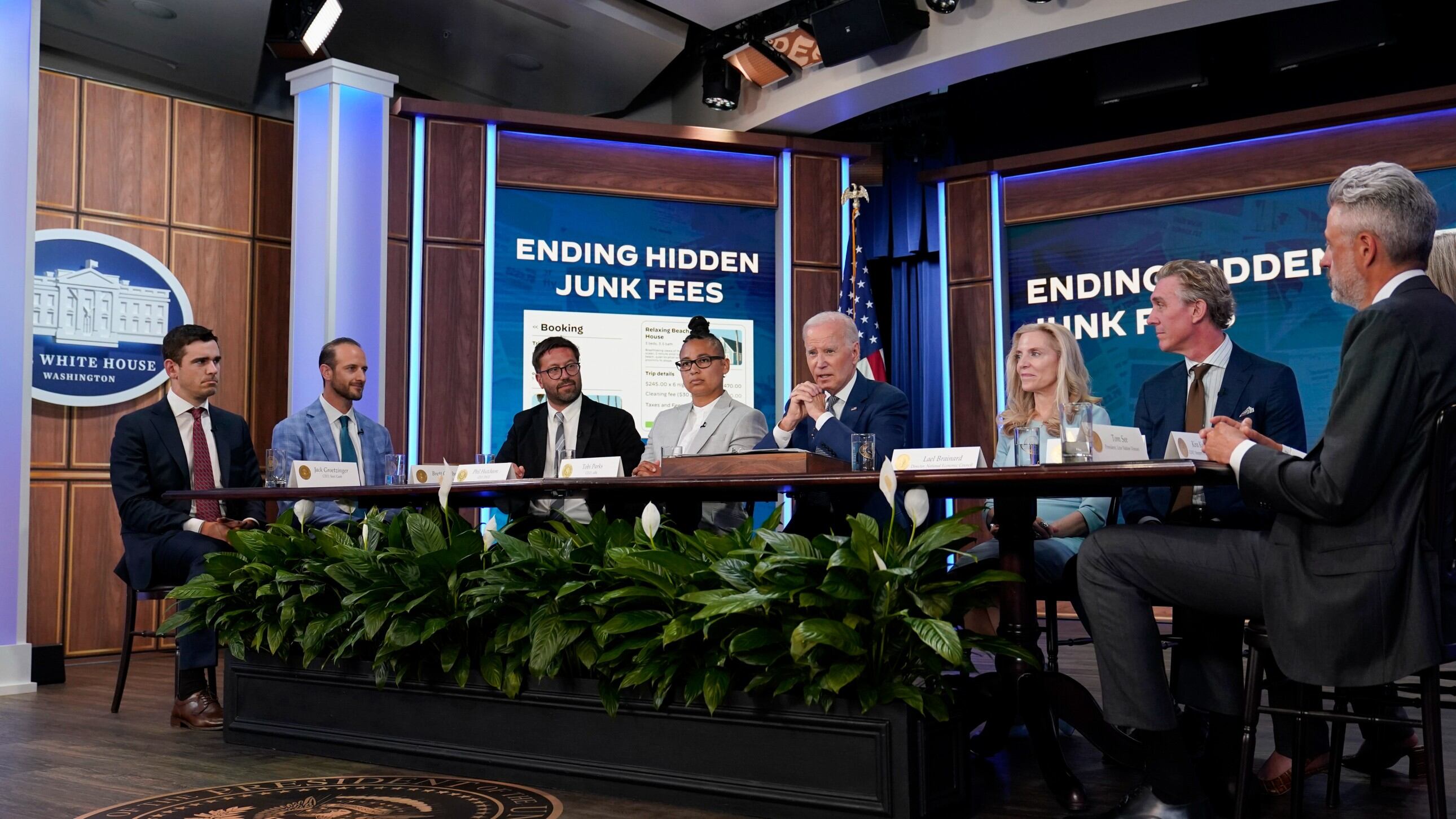
President Joe Biden highlighted progress in chipping away at so-called junk fees as a “win for consumers” Thursday, as he met at the White House with executives from Live Nation, Airbnb and other companies that have taken steps to embrace more transparent pricing.
Texas Gov. Greg Abbott sent a busload of migrants to downtown Los Angeles on Wednesday, prompting Mayor Karen Bass to respond to Abbott's move as a "despicable stunt."
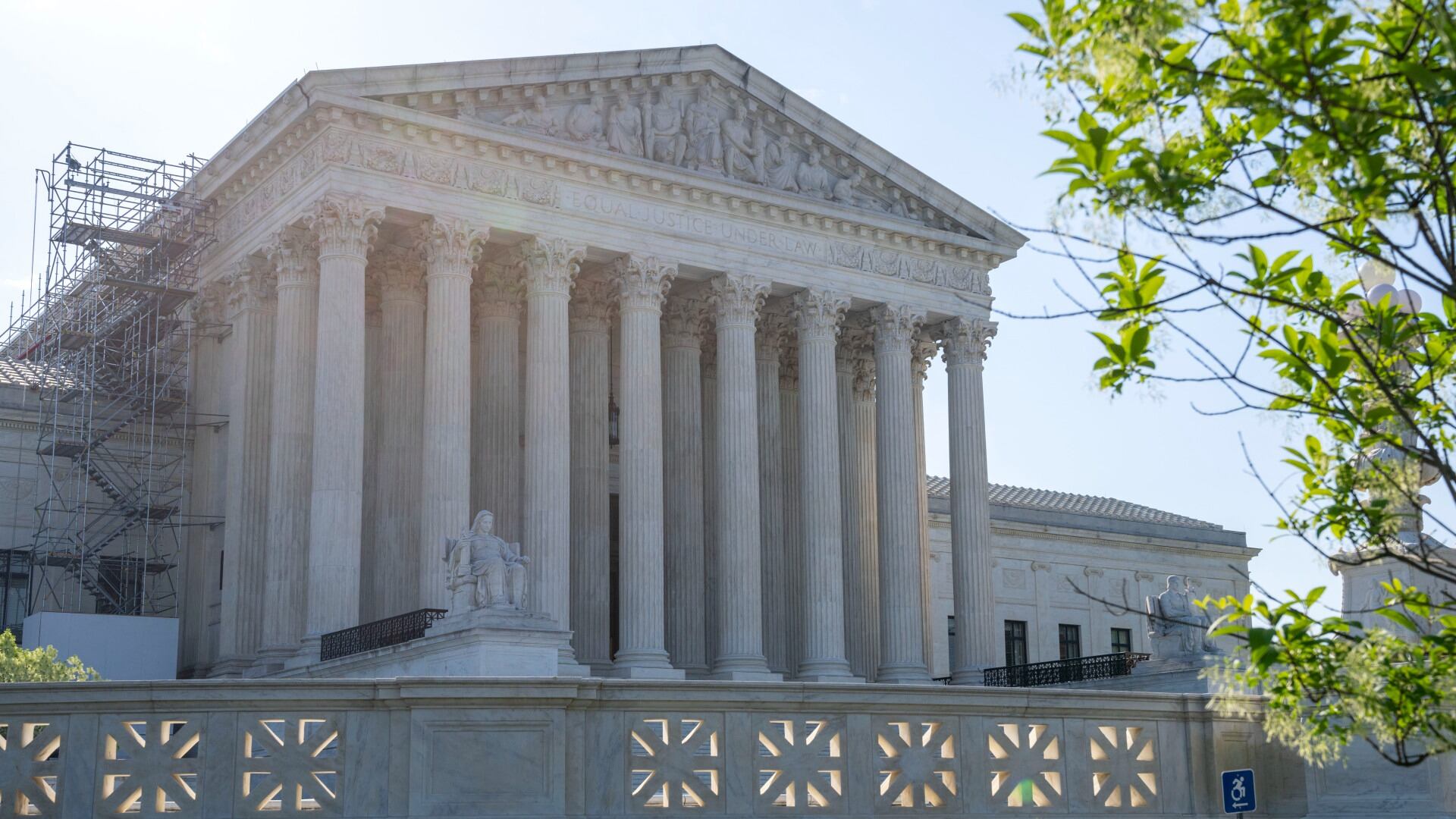
The Supreme Court on Thursday preserved the system that gives preference to Native American families in foster care and adoption proceedings of Native children, rejecting a broad attack from some Republican-led states and white families who argued it is based on race.
The U.S. Department of Agriculture said Wednesday it hopes to weed out false or misleading animal-welfare claims on meat and poultry packaging with new guidance and testing.
New York City is paying to house newly-arrived migrants in hotel rooms. Cheddar News takes a closer look at one of the hotels, the Holiday Inn, which is housing about 15,000 migrants over the next 15 months.
We've been closely following the migrants that were sent to various cities across the United States. Now New York City is paying for hotel rooms for migrants who were sent there. Cheddar's own Ashley Mastronardi has a closer look at one of the hotels.
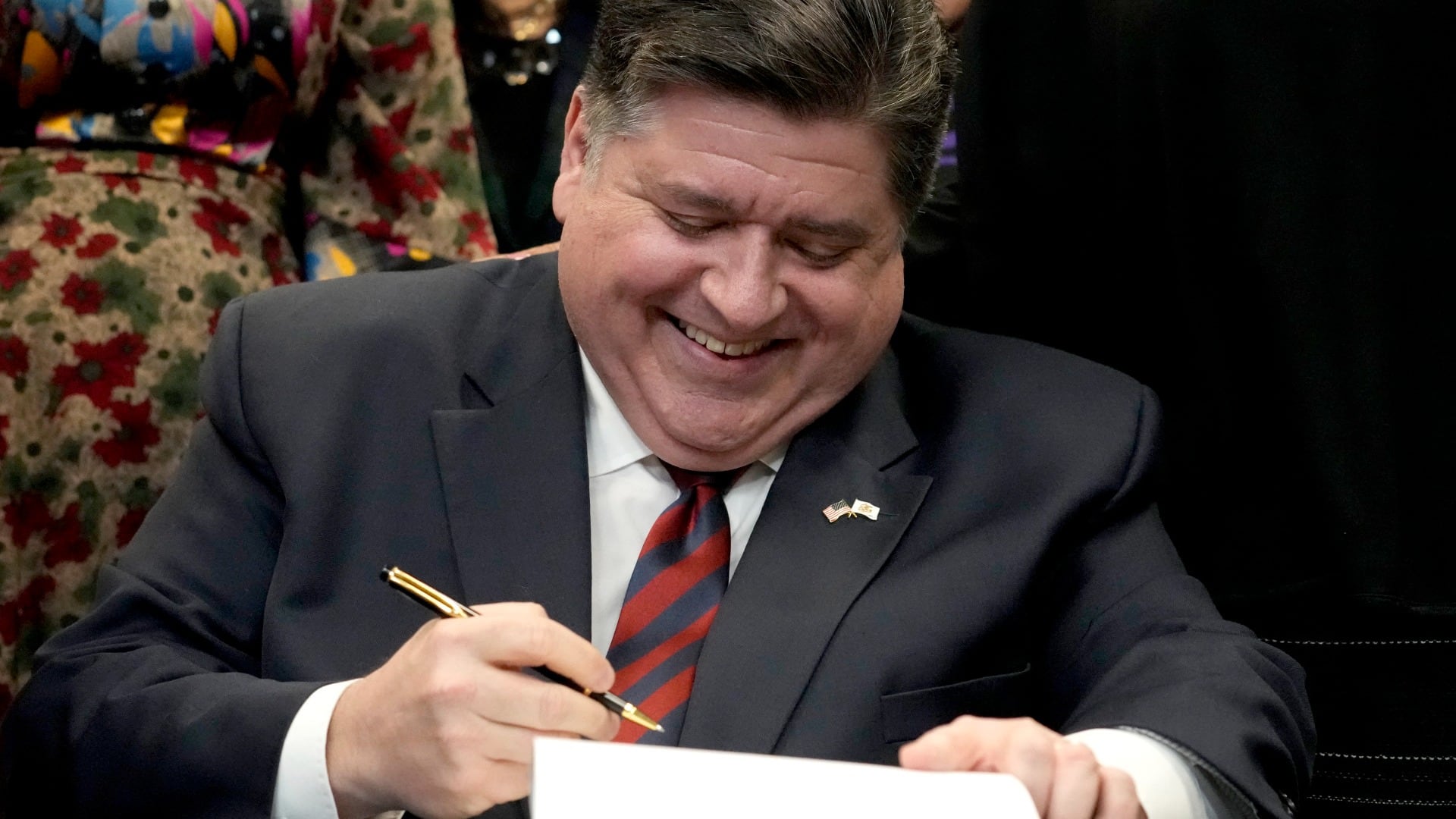
Illinois Governor J.B. Pritzker signed a bill that stops public schools and libraries from banning books.
The Biden administration reached a deal to preserve a federal mandate requiring health insurers to cover preventive care at no extra cost for patients.
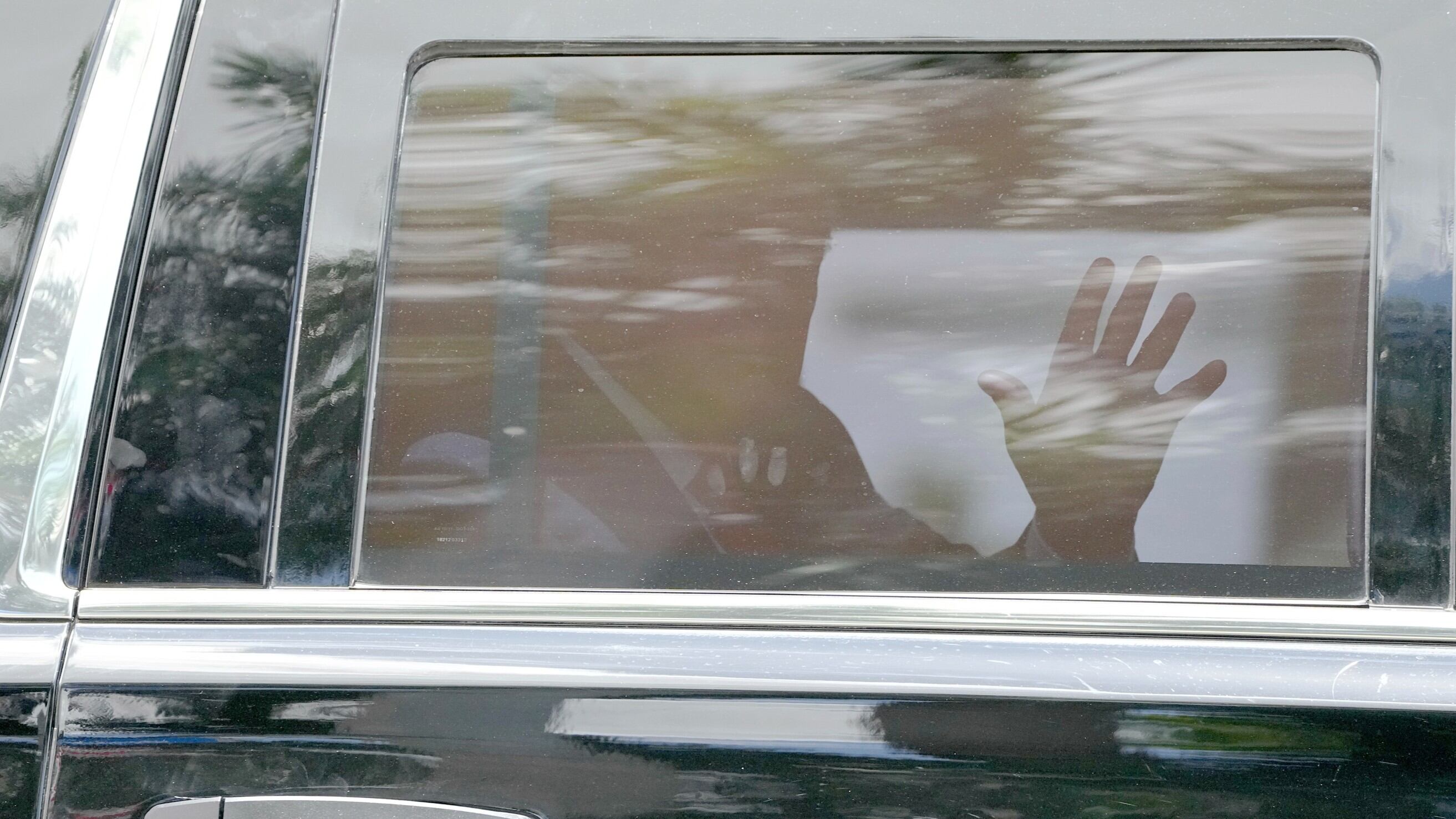
Former President Donald Trump arrives for his arraignment in Miami.
The government can keep enforcing “Obamacare” requirements that health insurance plans cover preventative care — such as HIV prevention, some types of cancer screenings and other illnesses — while a legal battle over the mandates plays out, under a court agreement approved Tuesday.