By Steve Peoples
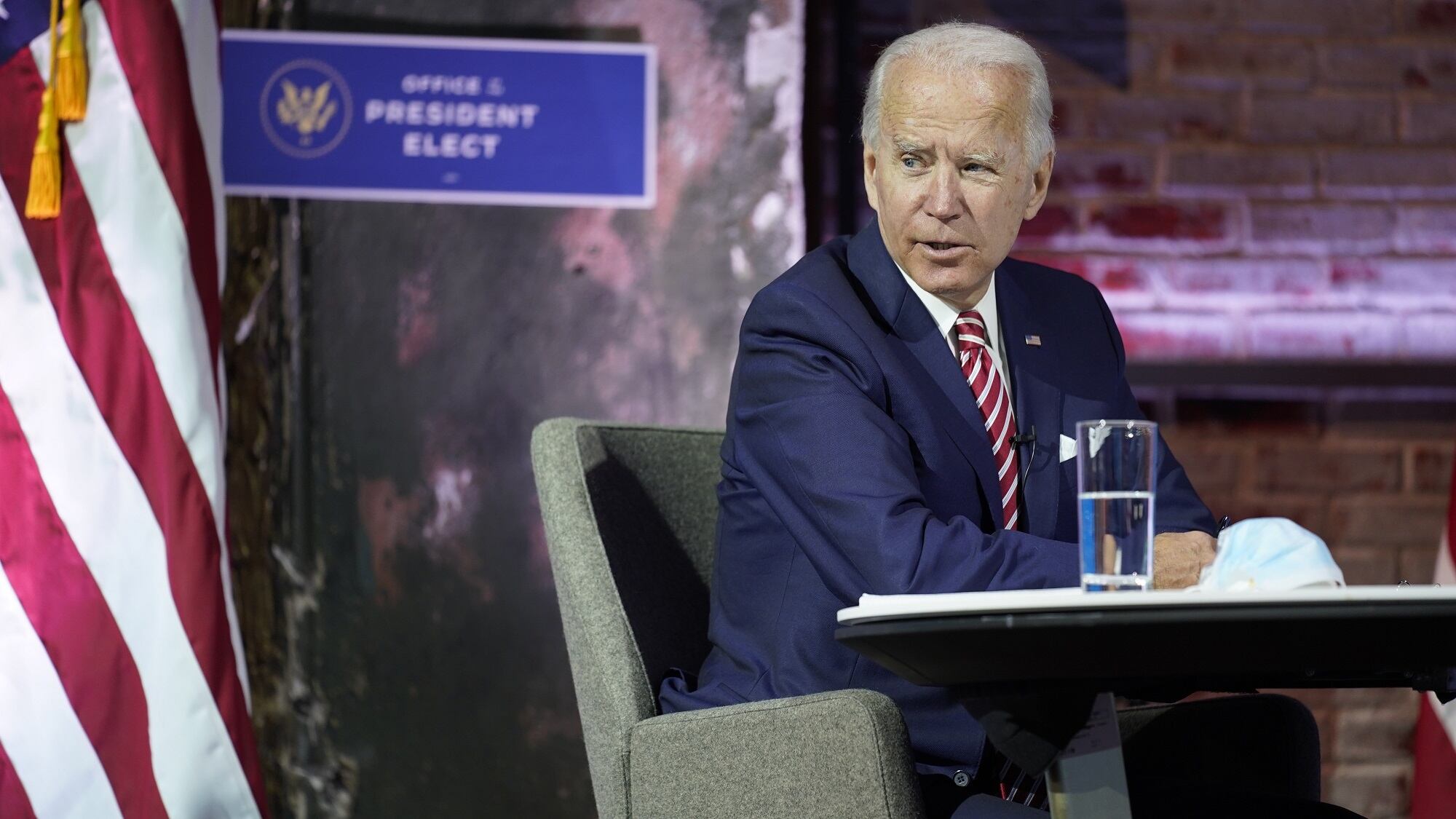
Acknowledging that the nation is in a “dark” place, President-elect Joe Biden on Monday said his administration would strengthen the country's vulnerable economy despite the exploding pandemic as he pushed forward with the business of preparing to assume the presidency.
Biden, who will take office on Jan. 20, offered an optimistic assessment of the next four years during a meeting with several business and labor leaders ahead of an afternoon economic address from his makeshift headquarters in Delaware.
“To state the obvious, we seem to be turning a pretty dark corner now,” Biden told the group, their faces projected on video screens, as the meeting began.
“I don't want to be falsely optimistic,” he continued. But “I think we can do this.”
Biden, a Democrat, has vowed to spend trillions of dollars to reinvigorate U.S. manufacturing, expand health care coverage and combat climate change, among other priorities. But his chief priority remains controlling the coronavirus pandemic, which is surging to record levels and forcing state and local leaders to implement new rounds of restrictions on local businesses.
The president-elect has so far tried to sidestep difficult questions about whether he might support a short-term national lockdown to arrest the surge of coronavirus cases. Since defeating Trump, Biden has devoted most of his public remarks to encouraging Americans to wear masks and embrace social distancing measures.
But members of his coronavirus advisory board have been more specific. One member, Dr. Michael Osterholm, recently suggested a four- to six-week national lockdown with financial aid for Americans whose livelihoods would be affected. He later walked back the remarks and was rebutted by two other members of the panel who said a widespread lockdown shouldn’t be under consideration.
Speaking Monday on “CBS This Morning,” Osterholm was not asked about a potential lockdown, but he said the nation needs “a standard set of principles.”
“Right now, we don’t have a standardized set so you’re hearing all these governors and mayors are scrambling to try to find what is the right answer for us, and it would surely help all of them, and that’s what I’m hearing from them, that we have a standardized set of recommendations and protocols,” he said.
Recent reports suggest that at least two vaccines are close to winning approval, though mass distribution is likely several months away.
Trump seemed to acknowledge Biden's victory for the first time on Sunday before walking back the remark and repeating false claims of widespread voter fraud. Despite mounting public pressure, the Trump administration has refused to initiate the traditional transition briefings for the incoming president's team on national security and policy issues.
Trump is also blocking Biden's team from being briefed on efforts to control the pandemic and distribute prospective vaccines.
“We now have the possibility ... of a vaccine starting perhaps in December or January,” Biden’s chief of staff, Ron Klain, said Sunday. “There are people at HHS making plans to implement that vaccine. Our experts need to talk to those people as soon as possible so nothing drops in this change of power we’re going to have on Jan. 20.”
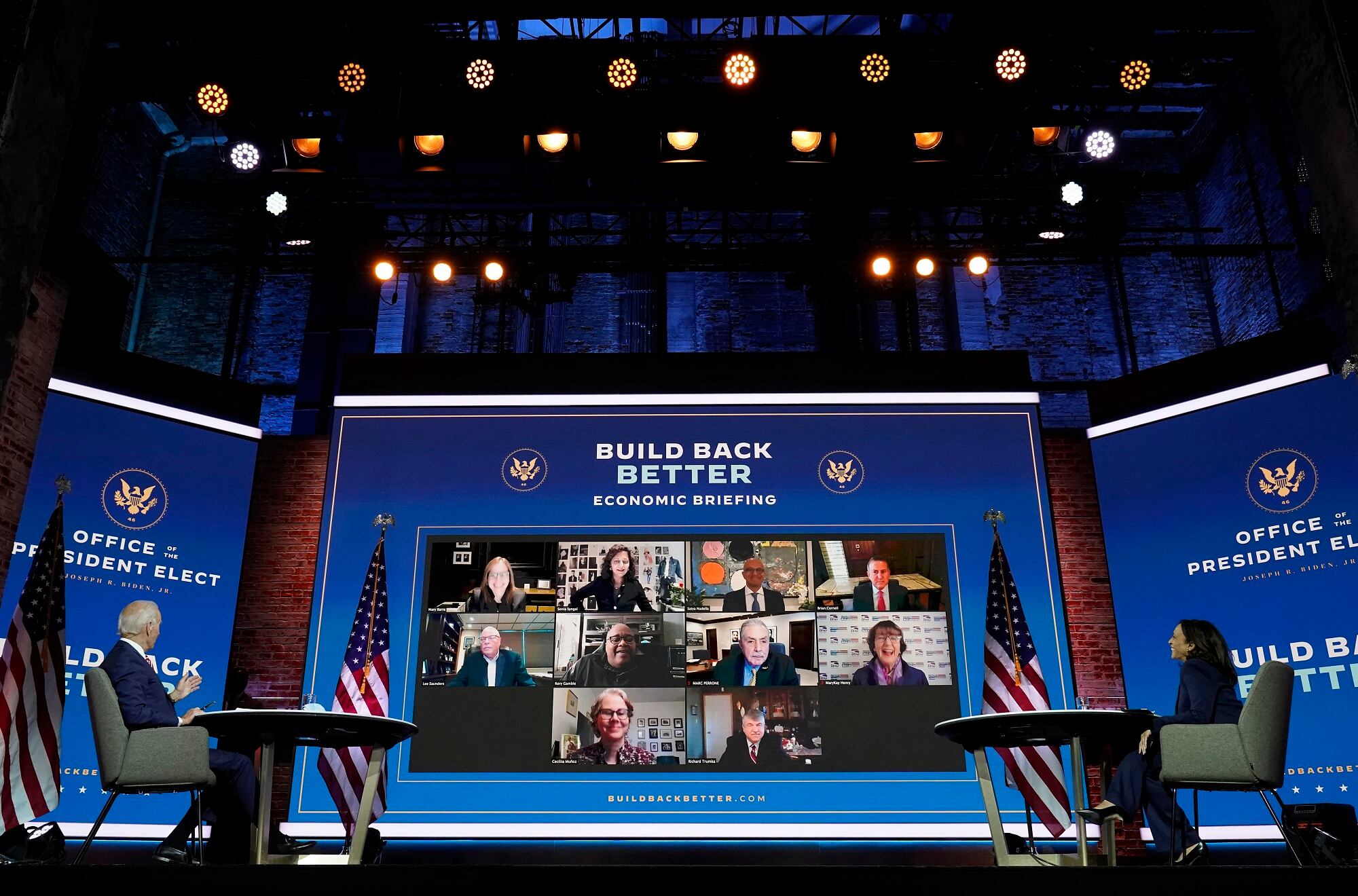
Before his Monday address, Biden and Vice President-elect Kamala Harris held virtual meetings with AFL-CIO President Richard Trumka, General Motors CEO Mary Barra and Microsoft President and CEO Satya Nadella, among others.
Biden and Harris were speaking at a particularly tricky time for economic policy.
The U.S. economy has recovered from the pandemic-induced shutdowns this spring more quickly than most economists expected. The unemployment rate dropped a full percentage point last month to 6.9% and those who still have jobs — many of them working from home — have stepped up their spending on cars, electronics and home renovations.
But much of the rebound was fueled by $2 trillion in stimulus money that has largely run its course. And there are signs that the ongoing increases in confirmed virus cases are making Americans more cautious about traveling and shopping.
Consumers cut back on spending in early November, according to JPMorgan Chase, which tracks spending on 30 million of its debit and credit cards. Spending declines have been larger in some states with severe outbreaks, such as Iowa and North Dakota.
Most economists support another round of stimulus funding, including loans to small businesses, extended unemployment benefits and support for states and cities. Congressional Democrats have previously backed another $2 trillion in aid.
Sen. Mitch McConnell, the Republican majority leader, has pointed to the falling unemployment rate as evidence that much less stimulus is needed.
Associated Press writer Christopher Rugaber in Washington contributed to this report.