By Will Weissert
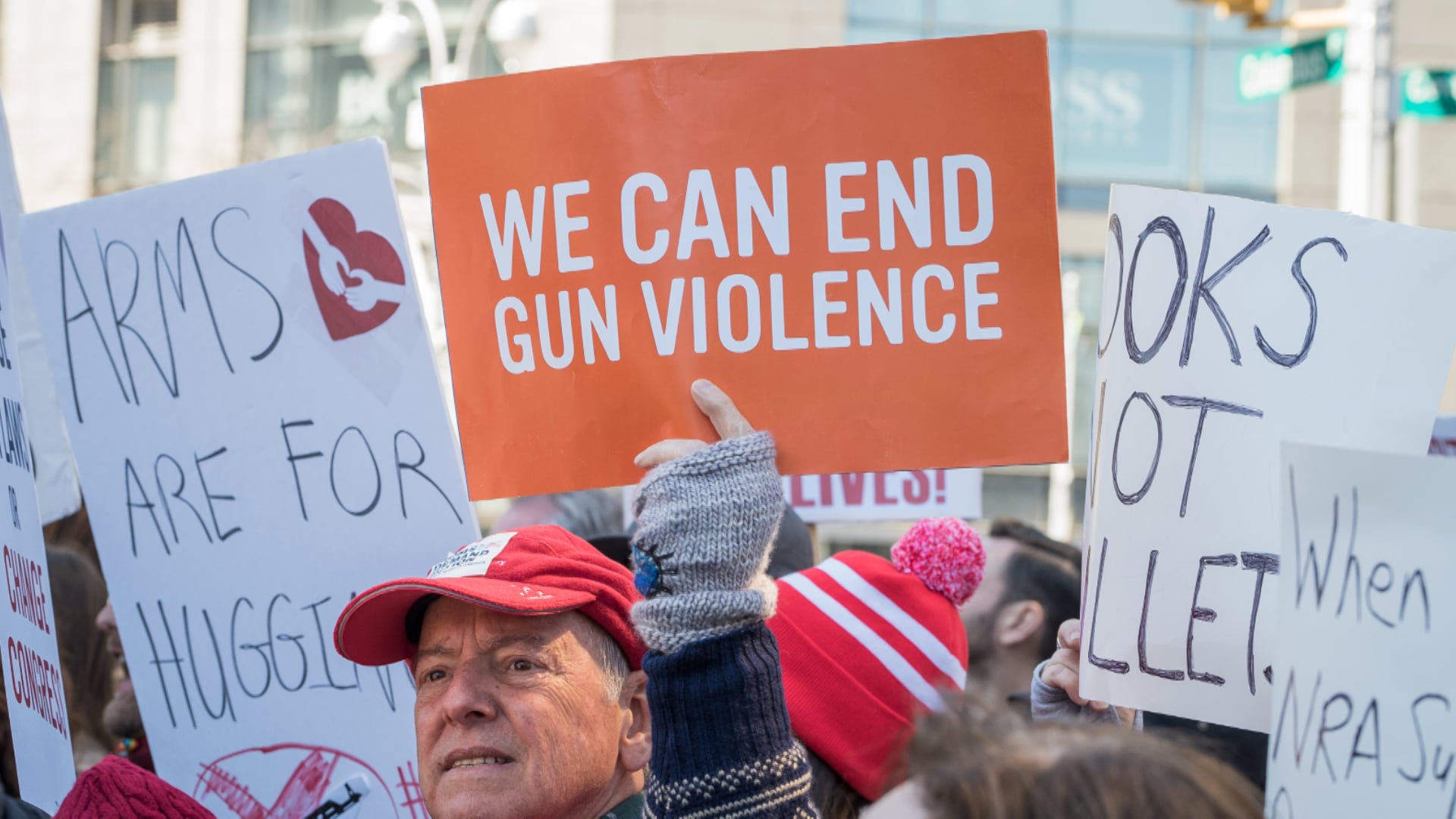
President Joe Biden is delivering an address to the nation Thursday night about the latest wave of mass shootings, attempting to increase pressure on Congress to pass stricter gun limits after such efforts failed following past outbreaks.
The speech follows last week's shootings by an 18-year-old gunman, who killed 19 students and two teachers at an elementary school in Uvalde, Texas, and another attack on Wednesday in Tulsa, Oklahoma, where a gunman shot and killed four people and himself at a medical office.
And those came after the May 14 assault in Buffalo, New York, where a white 18-year-old wearing military gear and livestreaming with a helmet camera opened fire with a rifle at a supermarket in a predominantly Black neighborhood, killing 10 people and wounding three others in what authorities described as “racially motivated violent extremism.”
All major broadcast networks planned to break away from regular programing to carry Biden’s remarks at 7:30 p.m. EDT, before the start of primetime shows. The White House said the president would address “tragic mass shootings, and a need for Congress to pass commonsense laws to combat the epidemic of gun violence that is taking lives every day.”
“He’s going to renew his call for action to stop the epidemic of gun violence that we’ve seen in Uvalde and in Tulsa and in Buffalo in just a few short weeks," said press secretary Karine Jean-Pierre. She said Biden did not plan to announce any new executive actions and that “tonight’s speech is going to focus on what Congress needs to do."
“It’ll be basically making sure that his voice is out there and calling to action and making sure that the American people know that he’s still continuing to speak on their behalf,” she said.
Biden has used national speeches in the past to speak about the coronavirus pandemic and the chaotic withdrawal of U.S. forces from Afghanistan. But the president has used such addresses sparingly during his nearly 18 months in office, especially during evening hours
Earlier Thursday, Vice President Kamala Harris spoke about the Oklahoma shooting, saying, “All of us hold the people of Tulsa in our hearts, but we also reaffirm our commitment to passing commonsense gun safety laws.”
“No more excuses. Thoughts and prayers are important, but not enough," Harris said. "We need Congress to act.”
Before marking Memorial Day on Monday, Biden told reporters at the White House that there may be some bipartisan support to tighten restrictions on the kind of high-powered weapons used by the gunman in Uvalde. But he also noted that, while he had taken some steps via executive actions, he didn't have the power as president to “outlaw a weapon.”
He also said that “things have gotten so bad that everybody’s getting more rational, at least that’s my hope," adding, “There’s realization on the part of rational Republicans” who realize ”we can’t keep repeating ourselves."
Visiting Uvalde on Sunday, Biden mourned privately for three-plus hours with anguished families. Faced with chants of “do something” as he departed a church service, the president pledged: “We will.”
His Thursday night address coincided with bipartisan talks that are intensifying among a core group of senators discussing modest gun policy changes. Republican Sen. Susan Collins of Maine said the group is “making rapid progress," and Biden has spoken to Connecticut Sen. Chris Murphy, among those leading their party's efforts on the issue.
Democrats are hoping Biden uses the remarks to encourage the bipartisan Senate talks and build pressure on the Republicans to strike an agreement. Jean-Pierre said Biden is “encouraged” by congressional negotiations but the president wants to give lawmakers “some space” to keep talking.
The private discussions in the Senate, which is split 50-50 between Democrats and Republicans, are not expected to produce the kinds of sweeping reforms being considered by the Democratic-led House — which has approved expansive background checks legislation and will next turn to an assault weapons ban.
But even a House package debated Thursday that is less sweeping but includes a provision raising the required age for buying semi-automatic firearms to 21, faces slim chances in the Senate.
Instead, the bipartisan senators are likely to come up with a more incremental package that would increase federal funding to support state gun safety efforts — with incentives for bolstering school security and mental health resources. The package may also encourage “red-flag laws” to keep firearms away from those who would do harm.
Jean-Pierre suggested Biden would use his speech to call for expanded background checks and red flag laws — as well as a ban on assault weapons and high-capacity magazines. She said he would focus on two audiences: congressional negotiators and also the general public.
Any major action is still a long shot. While the Senate approved a modest measure to encourage compliance with background checks after a 2017 church mass shooting in Texas and one in Parkland, Florida, the following year, no major legislation cleared the chamber following the devastating massacre of 20 children at Sandy Hook Elementary School in 2012.
__
Associated Press Writer Lisa Mascaro contributed.
Updated on June 2, 2022, at 5:20 p.m. ET with further press secretary pre-speech comments. Speech at 7:30 p.m.