By Josh Boak, Lisa Mascaro, and Jonathan Lemire
The Biden administration will put in place a new eviction moratorium that would protect areas where 90% of the U.S. population lives, a turnaround after progressive lawmakers pushed the White House to do more to prevent some 3.6 million Americans from losing their homes during the COVID-19 crisis.
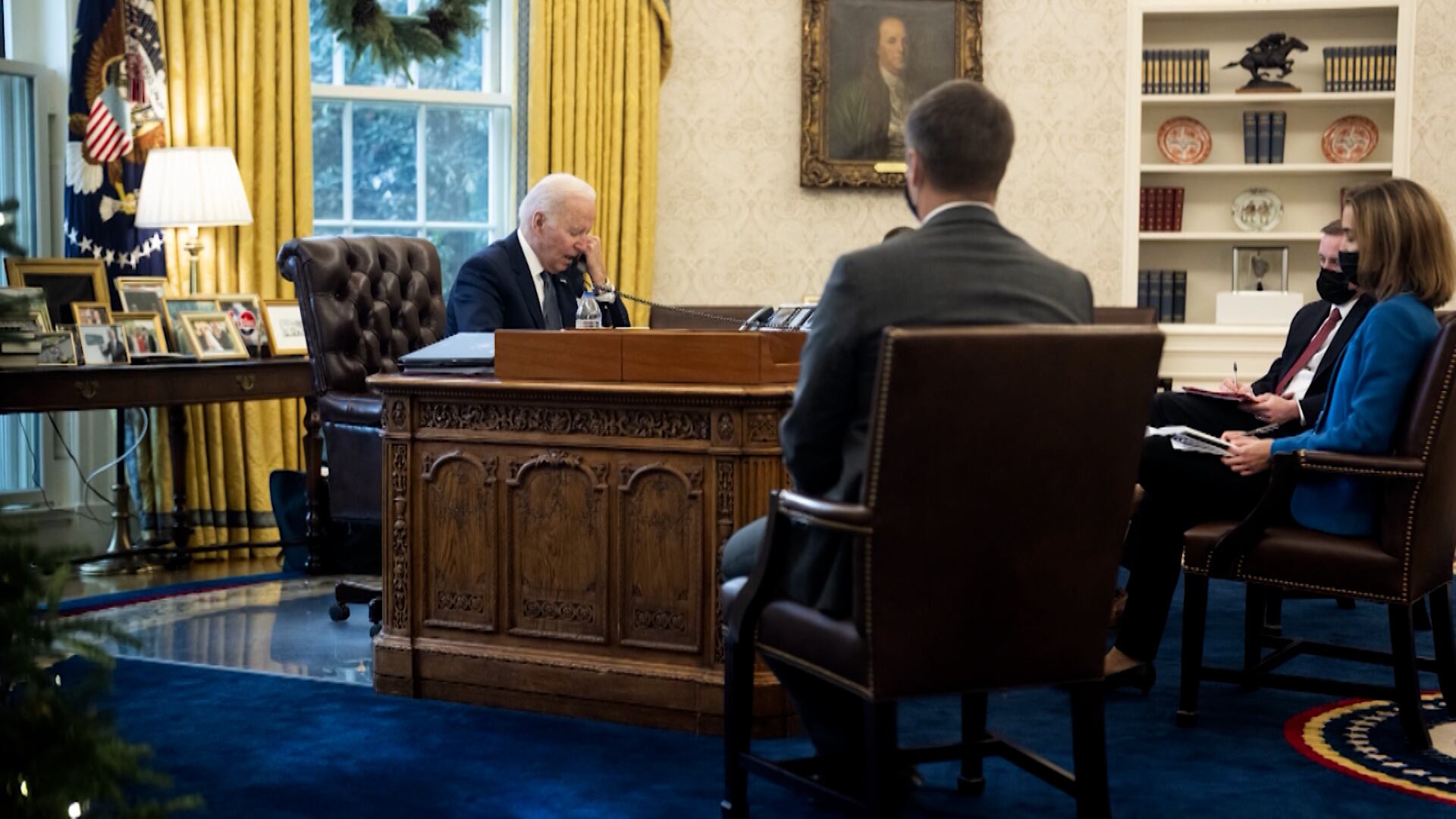
President Joe Biden stopped short Tuesday of announcing the new ban on evictions during a press conference at the White House. But the new 60-day eviction moratorium would protect areas heavily impacted by the coronavirus, where about 90% of the U.S. population lives, according to three people familiar with the plans who insisted on anonymity to discuss the forthcoming announcement.
“My hope is it’s going to be a new moratorium,” Biden told reporters.
The Centers for Disease Control and Prevention has identified a legal authority for a new and different moratorium for areas with high and substantial increases in COVID-19 infections.
The extension, expected to be announced later Tuesday, could help heal a rift with liberal Democratic lawmakers who were calling on the president to take executive action to keep renters in their homes as the delta variant of the coronavirus spread and a prior moratorium lapsed over the weekend.
“For 5 days, we’ve been out here, demanding that our government acts to save lives,” tweeted U.S. Rep. Cori Bush of Missouri, who led the protest outside the U.S. Capitol since the moratorium expired. “Today, our movement moved mountains.”
Administration officials had previously said a Supreme Court ruling stopped them from setting up a new moratorium without congressional backing, saying states and cities must be more aggressive in releasing nearly $47 billion in relief for renters on the verge of eviction.
The president said he sought input from legal scholars about whether there were options and said the advice was mixed, though some suggested, "It’s worth the effort." Biden also said he didn't want to tell the CDC, which has taken the public health lead in responding to the pandemic, what to do.
“I asked the CDC to go back and consider other options that may be available,” he said.
The new policy came amid a scramble of actions by the Biden team to reassure Democrats and the country that it could find a way to halt potential evictions. Progressive lawmakers, who camped for days outside the Capitol with dozens of supporters to pressure Biden to act, saw the administration's move as a vindication of their efforts.
Biden also insisted there is federal money available — some $47 billion previously approved during the COVID-19 crisis — that needs to get out the door to help renters and landlords.
“The money is there,” Biden said.
Treasury Secretary Janet Yellen briefed House Democrats Tuesday on the administration's efforts to prevent widespread evictions after the moratorium lapsed.
Yellen told Democrats on a private call about the work underway to ensure some $47 billion in federal housing aid makes it to renters and landlords. She provided data so that lawmakers could see how their districts and states are performing with distributing the relief, according to a person on the call.
The White House has said state and local governments have been slow to push out that federal money and is pressing them to do so swiftly.
The treasury secretary tried to encourage Democrats to work together, even as lawmakers have said Biden should act on his own to extend the eviction moratorium, according to someone on the private call who insisted on anonymity to discuss its contents.
Yellen said on the call, according to this person, that she agrees "we need to bring every resource to bear” and that she appreciated the Democrats' efforts and wants "to leave no stone unturned.”
The administration had repeatedly resisted another extension because the Supreme Court appears likely to block it. When the court allowed the eviction ban to remain in place through the end of July by a 5-4 vote, one justice in the majority, Brett Kavanaugh, wrote that Congress would have to act to extend it further.
As the eviction crisis mounts, the White House has frequently said Biden is doing all he can under legal constraints to keep renters in their homes and landlords paid what they are owed. While as many as 3.6 million Americans are at risk of eviction, the administration has emphasized that money has already been approved and many Americans will be able to stay housed with the efforts underway.
Biden faced stinging criticism, including from some in his own party, that he was was slow to address the end of the moratorium. Some people were at immediate risk of losing their homes.
House Speaker Nancy Pelosi had called the prospect of widespread evictions “unfathomable.” The Congressional Black Caucus, the Congressional Hispanic Caucus and other progressive lawmakers intensified pressure on the White House to issue an immediate extension.
Late last week, Biden announced he was allowing the ban to expire, pushing Congress to act, but lawmakers were unable to swiftly rally the votes as even Democrats questioned prolonging the eviction ban for a few more months.
The CDC put the eviction ban in place as part of the COVID-19 response when jobs shifted and many workers lost income. The ban was intended to hold back the spread of the virus among people put out on the streets and into shelters.
The White House noted that state-level efforts to stop evictions would spare a third of the country from evictions over the next month.
Gene Sperling, who oversees the administration’s coronavirus relief plans, said Monday that the administration will continue looking for additional legal avenues to keep people in their homes. Yet he stressed the complexity of the problem by also noting that the Trump administration developed guidelines for providing aid to renters and landlords that were unworkable. Those guidelines which required extensive documentation were changed once Biden was in office.
“This is not an easy task,” Sperling said. “We as a country have never had a national infrastructure or national policy for preventing avoidable evictions.”
Democratic lawmakers said they were caught by surprise by Biden’s decision to end the moratorium, creating frustration and anger and exposing a rare rift with the administration. The CDC indicated in late June that it probably wouldn't extend the eviction ban beyond the end of July.
Rep. Maxine Waters, the powerful chair of the Financial Services Committee, has been talking privately for days with Yellen and urged the treasury secretary to use her influence to prod states to push the money out the door.
But Waters also called on the CDC to act on its own. “I don’t buy that the CDC can’t extend the eviction moratorium — something it has already done in the past! Who is going to stop them?” Waters said in a tweet. “C’mon CDC — have a heart! Just do it!”
___
Associated Press writer Alexandra Jaffe contributed to this report.
Updated on August 3, 2021, at 6:01 p.m. ET with the latest details.